The Lagos State Police Command has again put cultism in the spotlight after operatives arrested five suspected members of the Aye Confraternity and recovered 500 SIM cards, weapons, hard drugs, mobile phones, laptops and other items believed to be linked to criminal activity.
The breakthrough, which followed an intelligence-led stop and search operation along the Ago/Festac Bridge axis, is more than another routine arrest. It is a reminder that cult groups in Lagos may be evolving beyond street violence into a more organised and technologically enabled criminal structure.
According to the police statement issued on Tuesday, June 30, 2026, operatives first intercepted a Toyota Camry XLE saloon car occupied by Emmanuel John, 24, and David Godwin, 28. A search allegedly turned up substances suspected to be hard drugs.
The statement said, “During preliminary interrogation, both suspects confessed to being members of the Aye Confraternity.” That confession, police said, widened the probe and led investigators to three more suspects identified as Samuel Owubokiri, 25, Adetona Seyi, 20, and David Chigozie, 25.
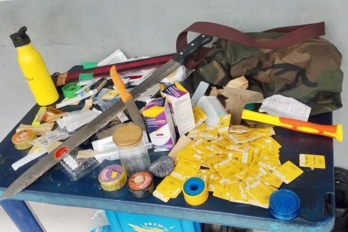
What has made this case stand out is not only the arrest of five suspected cultists but the scale of the haul. The command said exhibits recovered from the suspects included military camouflage, two machetes, one battle axe, one knife, 500 SIM cards, five mobile phones, five laptops, charms and various substances suspected to be hard drugs.
The police also said the suspects confessed to membership of the confraternity. In a state where violent gangs, cult clashes and street intimidation remain recurring threats, such quantities of communication assets and weapons invite a far deeper forensic question than the arrest notice alone answers.
The 500 SIM cards are particularly significant. Nigeria’s telecom regulator says all persons using mobile networks are required to register SIM cards and link them to the NIN database.
That makes a stockpile of hundreds of SIM cards suspicious on its face, even though the police have not yet said what the cards were intended for or whether they were activated, cloned, registered fraudulently or kept for operational use.
On the facts presently available, the safest conclusion is an inference, not a certainty, but the recovery strongly suggests a possible communications or identity laundering network rather than simple personal possession.
That is where the investigative value of this arrest becomes much larger. Groups accused of cult activity often rely on secrecy, rapid communication, burner lines, intimidation and locally assembled networks to coordinate attacks and evade detection.
A cache of SIM cards, together with laptops and mobile phones, raises the possibility of planning, financial fraud, impersonation, extortion or broader coordination across cells. Police have not publicly detailed any such link, and that restraint is important, but the evidence recovered gives investigators a substantial digital trail to pursue.
The Lagos Police Command has not presented this as an isolated incident. Only weeks earlier, the command said it arrested four suspected cultists in Egbeda after acting on credible intelligence about an alleged midnight initiation ceremony, while recovering firearms, ammunition and a knife.
In April, the command also announced the arrest of 23 suspected cultists in coordinated raids across Ikorodu, Lagos Island, Okoko, Ilasan, Ogba and Iju, alongside the recovery of five firearms and other exhibits. Taken together, these operations indicate a sustained crackdown rather than a one off raid.
That pattern matters because cultism in Lagos is not merely a campus issue or a matter of youthful delinquency. It has become an urban security problem that overlaps with robbery, thuggery, violent reprisals and street level fear.
The police have repeatedly said such groups terrorise residents, operate with motorcycles, and attack unsuspecting members of the public at gunpoint. The latest arrest fits into that wider security picture, even if the command has not yet disclosed whether the suspects were tied to any recent attacks, rival clashes or financial crimes.
Commissioner of Police, Lagos State Command, CP Tijani Fatai, said the operation reflected the command’s resolve to rid the state of cultism and violent crime.
The police statement quoted the commissioner as commending operatives for their “professionalism and swift response”, while urging residents to continue providing “timely and credible information” to the police. That appeal is a familiar one, but in Lagos it remains central. Intelligence, not chance, is what often breaks the secrecy that cult groups depend on.
The unanswered question now is what the 500 SIM cards were really for. Were they being prepared for coordinated calls, fraud, anonymous threats, multiple identities or some other form of criminal logistics. Were they registered, unregistered or mixed. Were the laptops and phones used to manage contacts, payments or encrypted conversations.
Until the police release more detail, the public is left with a strong but incomplete picture of what may be a broader and more sophisticated network. What is already clear is that the Lagos Police Command has uncovered a haul that goes well beyond the usual cult arrest, and the next phase of the case will depend on how thoroughly investigators follow the digital and forensic trail.
For Lagos residents, the message is blunt. Cult activity has not gone away. It has simply adapted. And when a stop and search along a bridge axis yields weapons, hard drugs, camouflage, laptops and 500 SIM cards, the real story is not only who was arrested. It is what the evidence says about the changing face of urban crime in Nigeria’s commercial cap.
Follow us on our broadcast channels today!
- WhatsApp: https://whatsapp.com/channel/0029VawZ8TbDDmFT1a1Syg46
- Telegram: https://t.me/atlanticpostchannel
- Facebook: https://www.messenger.com/channel/atlanticpostng