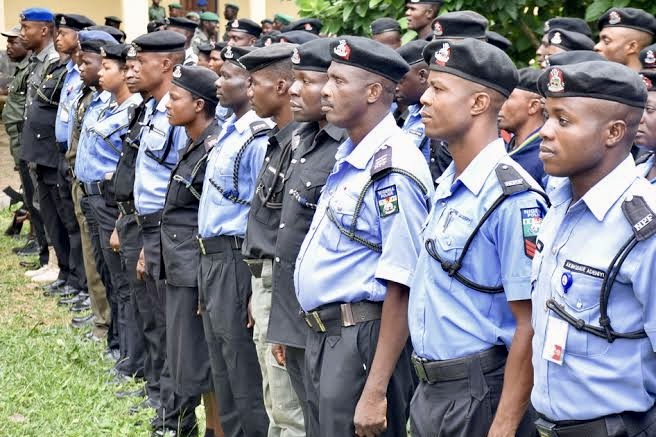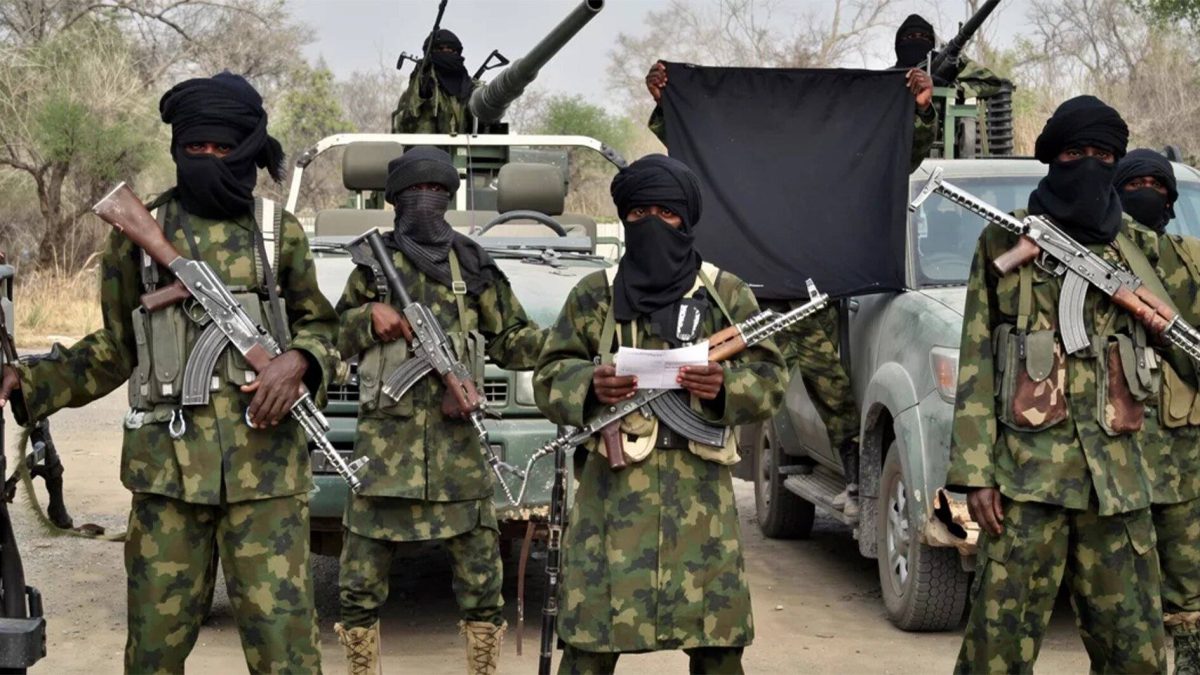
Residents of Woru and surrounding communities say abducted families are sometimes left to negotiate with armed groups themselves, while alleged instructions from security personnel expose ransom couriers to further danger. Atlantic Post examines the claims, the ransom trail and the unanswered questions for Nigeria’s security agencies.
Residents of Woru and neighbouring communities in Ilorin East Local Government Area of Kwara State have raised disturbing allegations that some police and military personnel allegedly direct families of abducted residents to locations where terrorists demand ransom payments.
The allegations, if established, would raise serious questions about operational conduct, intelligence handling and the protection afforded to families caught in kidnapping crises.
The residents told SaharaReporters that security personnel sometimes fail to respond promptly when terrorists attack or abduct people, leaving relatives to negotiate directly with the criminals.
They alleged that the situation becomes even more dangerous when kidnappers demand that ransom be delivered at a particular location.
According to the residents, terrorists sometimes tell families that, if they do not know where to take the money, they should approach police or military officers on nearby roads.
The security personnel, they alleged, then direct the families towards the locations specified by the kidnappers.
One resident said:
“The problem we are having with these terrorists is that the security operatives are working with them.”
The resident added:
“If they attack us and we call the police or the military to rescue us, the security operatives would not even bother to come.”
Those are allegations, not established facts. Atlantic Post found no public evidence proving that police or military authorities have an institutional policy of directing ransom couriers to terrorist camps.
But the allegations deserve investigation because they concern an area where security agencies themselves have acknowledged an active kidnapping threat.
A ransom trail already exists in Woru axis
The allegations also come against the backdrop of an established ransom economy around the wider Obudu/Woru axis.
On 12 August, the Kwara State Police Command announced the arrest of Muhamodu Sanni, who it said was allegedly attempting to withdraw ransom proceeds linked to a recent abduction.
Police said the arrest followed the abduction of three people during an armed attack on Obudu Village on 28 July.
The command said investigators had tracked the kidnappers’ communications, logistics and financial channels before intercepting Sanni at a Point-of-Sale terminal.
The police described the operation as an intelligence-led penetration of the support structure of a kidnapping syndicate operating around the Obudu/Woru area.
That official account is significant.
It establishes that ransom proceeds connected to kidnapping were moving through the same general area about which residents are now making the more serious allegation that families are sometimes directed towards terrorists’ locations.
It does not, by itself, establish that any police or military officer participated in, facilitated or knowingly assisted the kidnappers.
That distinction matters.
Families say the most dangerous journey begins after the ransom demand
Another resident alleged that military personnel had, on several occasions, directed families taking ransom payments towards locations where terrorists were waiting.
“Many times, the military will direct us to where these terrorists are hiding to drop the ransom for them,” the resident alleged.
The resident added:
“The same police and military that are supposed to protect us are now working with these terrorists.”
That claim presents an immediate public-safety concern.
A family attempting to deliver ransom is already operating under extreme pressure. Sending civilians into an area believed to be controlled by armed criminals could expose them to kidnapping, robbery, ambush or death.
It also raises a basic operational question: who authorises such movement, and what intelligence assessment supports it?
If security personnel really direct ransom couriers to particular locations, there should ordinarily be some form of operational record.
That could include radio communications, incident reports, intelligence logs, patrol records, command instructions, telephone contacts, checkpoint records or other documentation.
Those records would be critical in establishing whether the practice described by residents is genuine, misunderstood, informal or the result of individual misconduct.
One family allegedly paid ₦5m — but the hostage was not released
The residents cited the case of the son of the Magaji, or traditional chief, of Woru as an example of how ransom demands have become increasingly difficult for families to navigate.
According to the residents, terrorists demanded ₦5 million, a Bajaj motorcycle, two smartphones and 20 bottles of alcohol in exchange for the victim’s release.
The family allegedly supplied the items and the money.
The victim, they said, was not released.
About three days later, the terrorists allegedly contacted the family again and demanded another ₦5 million.
“We supplied all these to them hoping they would release him,” one resident said.
“They said all the items and the money we paid before were not enough.”
The episode illustrates the central problem confronting families in ransom kidnappings: payment does not necessarily end the ordeal.
For a family already struggling to raise millions of naira, a second demand can be financially devastating.
More seriously, it can create a cycle in which each successful payment demonstrates to kidnappers that another demand may also be met.
At least seven people allegedly remain in captivity
Residents told SaharaReporters that at least six other people had been abducted from Woru and surrounding communities between August and September.
Together with the traditional chief’s son, they put the number of people allegedly still in captivity at at least seven.
The residents also described an atmosphere of fear on the roads linking rural communities to Ilorin.
One resident said:
“It even took God’s grace for us to come to Ilorin this morning without being kidnapped by them.”
The resident further alleged that armed men were operating on roads used by motorists and farmers.
These accounts could not be independently verified by Atlantic Post. But they fit into a wider pattern of continuing kidnapping incidents in Kwara.
In late August, for example, the Kwara Police Command announced the rescue of the Onigbesi of Igbesi and two other abducted victims following a joint security operation. Police said the operation was driven by intelligence and cooperation between security forces and local actors.
Woru is not the same as Woro
There is an important geographic distinction that should not be lost in reporting the Kwara crisis.
The Woru/Obudu axis is in Ilorin East Local Government Area, where the police reported the July kidnapping and August arrest linked to ransom proceeds.
The much larger and widely reported Woro attack took place in Kaiama Local Government Area.
In August, the Federal Government said 163 people abducted from Woro were among 308 citizens rescued in a major joint security operation involving the Armed Forces, DSS, police and the National Counter-Terrorism Centre.
Kwara State later reunited 146 of the rescued Woro victims with their families after rehabilitation and provided financial assistance to help them restart their lives.
The distinction is important because combining Woru and Woro figures or incidents could produce a misleading picture of the scale and location of particular attacks.
It also demonstrates how widespread the security challenge has become across different parts of Kwara.
The security agencies have a different public record
The allegations from Woru sit uneasily alongside the public record of recent police and military operations in the state.
The Kwara Police Command says it has pursued kidnapping networks through intelligence gathering, financial investigations and targeted operations.
Its August operation against the alleged ransom collector around Obudu/Woru was explicitly presented as an effort to attack the support structure of a kidnapping syndicate rather than merely respond to individual abductions.
The command has also recorded successful rescue operations elsewhere in the state.
In the Igbesi case, police said a joint operation involving security personnel and local vigilantes located and rescued victims after a gun battle with suspected kidnappers.
The Federal Government, meanwhile, has highlighted the use of intelligence-driven operations in major hostage rescues.
President Bola Tinubu, after the August rescue of victims from Kwara and Niger states, directed security agencies to improve early-warning systems, community intelligence gathering and rapid-response capabilities.
Those official claims do not invalidate residents’ allegations.
They make them more important to investigate.
What happened to the families’ ransom money?
The most important unresolved question is not simply whether families paid ransom.
It is how the ransom was transported, who knew about it, where it was delivered and what security arrangements, if any, were made around the transaction.
Where a family is instructed by an armed group to take millions of naira into a remote area, several points should become the subject of an investigation.
Who contacted the family?
Who advised them on how to travel?
Did the family report the demand to the police?
Was the location known to security agencies before the payment?
Was a surveillance or rescue operation considered?
Were officers at nearby checkpoints aware that a civilian was carrying ransom?
Were any military or police personnel present when the money or other requested items were delivered?
Were communications between the family and security officials recorded?
And most importantly, what happened to the victim afterwards?
These questions should be answered through documentary evidence rather than competing allegations.
Nigeria already recognises the danger of the ransom economy
The wider Nigerian security system has long treated ransom as a major problem.
The Nigeria Police Force has previously stated publicly that it does not encourage payment of ransom and has urged victims’ relatives to exercise caution while involving the police during kidnapping incidents. The Force has described ransom as potentially counterproductive because it can reinforce the kidnapping economy.
The financial dimension is also receiving greater scrutiny.
The Nigerian Financial Intelligence Unit has identified kidnapping-for-ransom as a significant money-laundering and terrorism-financing concern, noting that ransom proceeds can pass through financial channels and potentially support wider criminal or terrorist activity.
The issue has become so large that lawmakers have begun examining the scale of Nigeria’s ransom economy.
A recent House of Representatives probe cited estimates that Nigerians paid about ₦2.23 trillion in ransom between January 2021 and June 2025, while also raising concerns about the exploitation of POS operators and other financial channels in ransom transactions.
That figure was cited by lawmakers and should therefore be treated as an estimate rather than a definitive national audit.
But it shows why a suspected ransom transaction in a rural Kwara community is not simply a private family matter.
It is part of a wider security and financial ecosystem.
The allegation raises a command-and-control question
Perhaps the most serious issue arising from the residents’ claims is the alleged involvement of state security personnel in the final stage of ransom delivery.
If the allegations are false, the affected agencies need a transparent way of establishing that.
If they are partly true because individual personnel have acted improperly, those individuals should be identified and investigated.
If the practice is widespread, the implications are far greater.
It could indicate a breakdown in command discipline, intelligence sharing and operational accountability.
It could also place families in an impossible position.
They would be told to trust the state while simultaneously being required to negotiate with the people attacking them.
That is precisely the kind of situation in which public confidence in security institutions can collapse.
The families need protection, not just advice
The residents’ complaint points to a practical weakness in Nigeria’s kidnapping response.
Families frequently become the immediate crisis managers once a relative is taken.
They must raise money, maintain contact with criminals, interpret threats and decide whether to move towards a dangerous location.
A professional response should reduce that burden rather than transfer more of the operational risk to civilians.
The state cannot simply tell families to report kidnappings and then leave them to negotiate alone.
Where ransom demands are made, there should be a clear emergency protocol for families, with designated points of contact, secure communication, intelligence assessment and documented instructions.
That would also make it easier to detect rogue personnel.
The unanswered questions
The allegations from Woru now demand a formal investigation by the relevant authorities.
At minimum, investigators should establish:
Who are the officers allegedly giving the directions?
Were the instructions authorised by a superior command?
Were the ransom drop points already known to security agencies?
Were families ever advised to travel to those locations without an escort or surveillance?
Were any of the alleged payments tracked?
Did the victims return after payment, or were new demands made?
Were police, military or intelligence records created for these incidents?
Have any security personnel been disciplined over complaints of collaboration with kidnappers?
Those questions should be answered with evidence.
A community cannot be secure if its roads are controlled by criminals
For farmers, motorists and rural residents, the danger extends beyond kidnapping.
When roads become known as potential ambush points, farmers may stop travelling to their fields.
That can reduce cultivation, increase transport costs and put additional pressure on food prices.
Businesses that depend on rural supply routes also become vulnerable.
The immediate cost is measured in ransom and lost property.
The longer-term cost is measured in abandoned farms, disrupted trade, displaced families and communities that increasingly feel cut off from government.
The residents of Woru are therefore raising a wider question than whether ransom has been paid.
They are asking whether the state still controls the roads linking their communities to Ilorin.
That is a question that cannot be answered by press releases alone.
What the public should do
Families whose relatives are abducted should avoid taking independent action that could expose them to unnecessary danger.
They should preserve call logs, messages, account details and other evidence connected to ransom demands and report them promptly to recognised security authorities.
At the same time, security agencies must ensure that families know exactly which officer or unit is responsible for their case and what instructions have been formally authorised.
The allegation that security personnel may direct families to terrorists’ locations is too serious to be dismissed as rumour.
It is also too serious to be reported as proven fact without evidence.
The appropriate response is an independent investigation that establishes what happened, who gave the instructions, whether any money changed hands and whether any public officer knowingly facilitated a criminal operation.
Until those questions are answered, the most vulnerable people in the Woru communities remain caught between two forms of fear: the fear of the kidnappers and the fear that the people they call for protection may not be able to protect them.
Atlantic Post could not independently verify the residents’ specific allegations of police or military collusion. The original account stated that Kwara Police PPRO SP Adetoun Ejire-Adeyemi and Army spokesperson Col. Appolonia Anele had been contacted for comment but had not responded at the time of filing. No public statement located by Atlantic Post has since established that security personnel routinely direct ransom couriers to terrorist locations.
Follow us on our broadcast channels today!
- WhatsApp: https://whatsapp.com/channel/0029VawZ8TbDDmFT1a1Syg46
- Telegram: https://t.me/atlanticpostchannel
- Facebook: https://www.messenger.com/channel/atlanticpostng