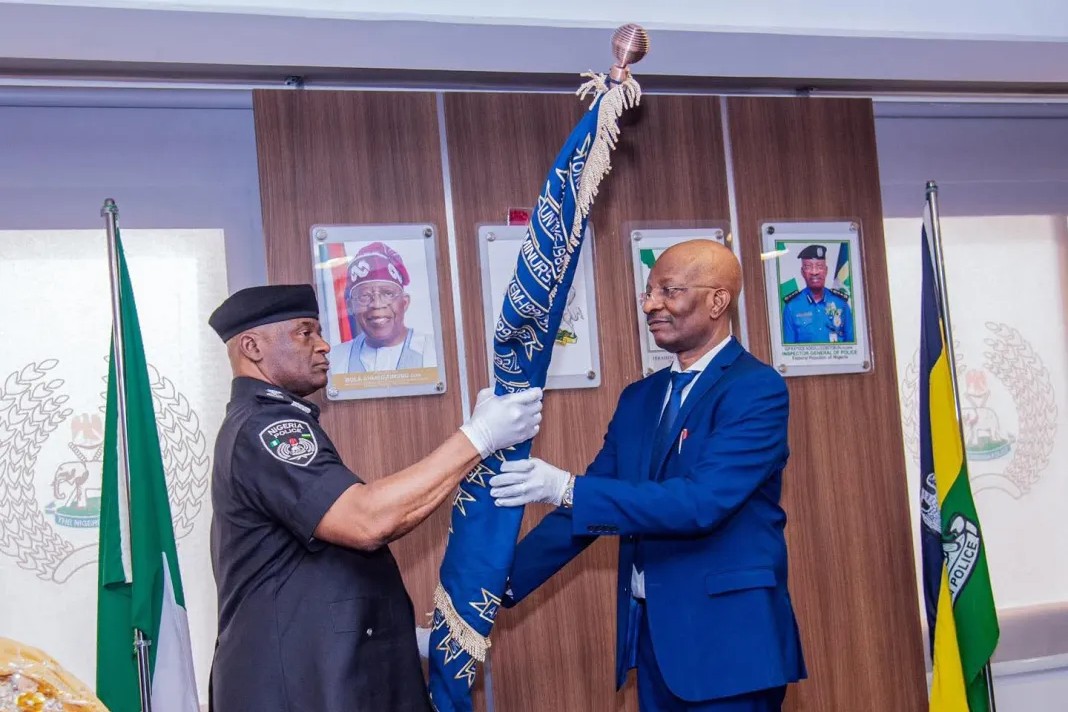
A reader’s allegations of unpaid police promotion arrears dating back to 2016 have raised fresh questions about payroll accountability, financial oversight and whether a new verification exercise will finally deliver money owed to serving and retired officers.
A call for an independent investigation into Nigeria’s police payroll system is gaining urgency after a reader alleged that serving and retired officers have waited years for promotion-related salary arrears, despite official promotion records and repeated submissions of payroll documents.
The comment, published in response to Atlantic Post’s report on the police directive to identify officers still owed arrears from 2017 promotions, asks Inspector-General of Police (IGP) Olatunji Rilwan Disu to establish an investigative panel to examine the relevant police budget offices, the Integrated Personnel and Payroll Information System (IPPIS) and the Mechanised Salary Section (MSS).
The reader claims that some officers experienced delays in receiving salaries attached to their new ranks, only to discover that the additional money paid later did not include the arrears accumulated during the intervening months.
“The cheating is just too much,” the commenter wrote, urging the current police chief to intervene.
These are serious allegations, but they remain unverified. The comment provides no named complainants, individual payslips, promotion signals or bank records that would independently establish the extent of the alleged non-payment. It should therefore be treated as a lead for further investigation, not proof that officials deliberately withheld officers’ money.
The immediate context is significant. A police wireless message dated 15 October 2026, reported by Atlantic Post in its 17 October publication, directed formations to identify serving and retired personnel promoted in 2017 who had not received their promotion arrears. The request sought information including officers’ personnel numbers, bank details, IPPIS numbers and promotion signals. It did not state how many officers remained affected, the total liability or when payments would be completed.
Nearly nine years after the promotions in question, the central issue is no longer simply whether affected officers can be identified. It is whether the system can establish what each officer is owed, explain why payment has been delayed and demonstrate that the money has reached its intended recipient.
A Complaint That Extends Beyond the 2017 Promotions
The commenter says the alleged problem stretches from 2016 to 2026, claiming that officers promoted to higher ranks had their new salaries delayed and subsequently received the revised salary without all the arrears accumulated during the delay.
The account raises three distinct questions: whether the promotions were formally approved, whether the payroll was adjusted from the correct effective date, and whether the outstanding difference was calculated and paid.
The distinction is important because a promotion letter does not, by itself, establish the amount an officer should receive in arrears. That requires a comparison of the promotion’s effective date, the applicable salary scale, payroll records and payments already made.
The commenter also alleges that the necessary “Advice of Change” documents were prepared, signed and submitted to the MSS, but that officers were subsequently told that no allocation was available.
Those documents have not been supplied to Atlantic Post for independent examination. It is therefore not possible to establish whether they were submitted, when they were processed, whether they were rejected, or whether funding was unavailable in the individual cases described.
The records could nevertheless provide a decisive starting point for an investigation.
If an officer’s promotion was approved, the relevant salary adjustment was properly documented, and payment remained outstanding, investigators should be able to trace where the claim stopped and identify the administrative reason.
If the required documentation was incomplete, that should also be established and explained. Neither outcome should be assumed before the evidence is examined.
Previous Complaints, Previous Denials
The concerns expressed in the Facebook comment are not the first publicly reported allegations of police promotion-related salary arrears in Nigeria.
In August 2024, The Punch reported that a group of Concerned Police Inspectors in Akwa Ibom State alleged that about 1,500 officers were owed 11 months of salary arrears following their promotion from Inspector II to Inspector I.
The officers claimed that they continued to receive salaries associated with their former rank, despite receiving promotion confirmation letters. Their appeal reportedly put the outstanding shortfall at more than ₦550,000 per affected officer.
That complaint concerned a different promotion cohort from the officers covered by the October 2026 wireless message. It does not establish that the same officers, administrative failures or financial circumstances are involved.
More importantly, the police disputed the 2024 allegations.
In a statement reported by The Punch on 17 August 2024, the then Force Public Relations Officer, Olumuyiwa Adejobi, said salary disbursements were the responsibility of the federal payroll system, rather than the police authorities.
The statement said:
“This responsibility lies with the Integrated Personnel and Payroll Information System (IPPIS), under the Federal Ministry of Finance.”
The police also maintained that officers should take payment complaints through the appropriate internal channels, including their pay officers and MSS personnel.
That response is relevant to the present controversy. It suggests that responsibility for resolving an arrears claim cannot necessarily be assigned to one police office without examining the administrative process.
But referring officers to another office is not the same as demonstrating that their claims have been resolved.
The appropriate test is whether the relevant offices can produce a reconciled record showing the approved entitlement, the payment made and any outstanding balance.
IPPIS and the Budget Office: What the Records Show
A federal government circular issued on 6 March 2025 provides important context for understanding how promotion arrears are processed.
In its statement on salary-shortfall complaints, the Office of the Accountant-General of the Federation said that promotion arrears were processed through a Standing Committee on Promotion and Salary Arrears in the Budget Office of the Federation.
The committee, it explained, was responsible for compiling and vetting salary and promotion arrears submitted by ministries, departments and agencies before forwarding cases in batches to IPPIS for payment. The office said batches one to six had been paid at the time, with further batches awaited from the Budget Office.
This is a critical distinction.
The circular describes a general federal payroll process. It does not confirm that the specific police officers promoted in 2017 have been paid, that their claims were included in those batches, or that their outstanding arrears were resolved.
It does, however, establish that the payment process involves more than identifying an officer and submitting bank details.
The records must be compiled, checked, passed through the appropriate administrative stages and submitted for payment.
That creates several points at which an investigation could establish what happened to an individual claim.
Was the promotion recorded correctly? Was the Advice of Change received? Was the claim included in the relevant submission to the Budget Office? Did it pass verification? Was it forwarded to IPPIS? If payment was processed, did the officer receive the full amount?
The answers should exist in administrative records, even if different institutions hold different parts of the evidence.
The Police Service Commission also has a defined role in promotion administration. Its published responsibilities include maintaining promotion records and processing complaints and petitions from officers seeking redress over long-overdue promotions and other career progression matters. That does not make it the sole authority responsible for paying salary arrears, but its records could help establish whether the underlying promotions were properly documented.
The distinction matters when determining whom to investigate and what evidence to demand.
Should IGP Disu Establish an Investigative Panel?
The commenter’s central request is that IGP Disu establish a panel to investigate the relevant budget and payroll offices, including their staff and MSS personnel.
An investigation would be a reasonable accountability measure if it were properly constituted, evidence-led and empowered to trace claims across the institutions involved.
The IGP should not presume that the allegations are true. Nor should the investigation begin by assuming that a particular officer or department is responsible.
Instead, the panel should establish the facts.
First, it should obtain the complete list of officers covered by the 2017 directive, separating serving officers from retirees and identifying any cases in which the officer has died.
Second, it should reconcile the list against official promotion signals, effective dates, nominal rolls and available payroll records. This would establish which claims are valid and the period for which each officer may be owed an adjustment.
Third, investigators should trace the relevant Advice of Change documents, recording when they were prepared, where they were submitted, whether they were accepted and what action followed.
Fourth, they should reconcile the arrears calculation against payments already made, using appropriate payroll records and bank-payment evidence. That would help distinguish an unpaid claim from an incomplete payment, a rejected submission or a dispute over the amount owed.
Finally, investigators should determine whether delays resulted from missing documentation, administrative errors, funding constraints, failures to act on approved claims or misconduct. Any finding of deliberate withholding or diversion would require specific evidence.
The scope should also be clear. The October directive concerns a defined group promoted in 2017. The reader’s wider allegation, covering 2016 to 2026, would require a separate, broader review of different promotion cohorts. The two should not be conflated.
A credible panel should include personnel and payroll expertise, independent financial scrutiny and a clear mechanism for referring evidence of suspected misconduct to the appropriate investigative authorities.
Its findings should identify the number of valid claims, the total outstanding liability, the reasons for delays and the status of each category of claim. Individual officers’ bank details and payroll identifiers should remain confidential.
Police Welfare Is Already Under Government Review
The arrears question is emerging amid broader government attention to the welfare of serving and retired police personnel.
On 4 August 2026, the Ministry of Police Affairs announced a review of police salary structures, allowances, insurance, pension-related benefits and other welfare obligations.
The ministry said the committee considering the issues was examining outstanding benefits and options for more sustainable funding, alongside proposals to improve the welfare of serving officers and retirees.
That initiative demonstrates official recognition that police welfare obligations require attention. It does not establish that the 2017 promotion arrears have been settled or that the specific allegations in the Facebook comment have been substantiated.
The distinction is essential. A review of salary structures and allowances cannot substitute for a verified account of what individual officers are already owed.
Nor should the existence of a committee become a reason for another open-ended wait.
For officers who say they have spent years chasing earned entitlements, progress must be measured by decisions made and payments received, not by the number of meetings held or documents collected.
What the IGP and Government Should Publish
The immediate priority is a transparent reconciliation of the 2017 arrears claims.
The police should publish aggregate figures showing how many serving officers and retirees have been identified, how many claims remain under verification, how many have been approved, how much has been paid and what liability remains outstanding.
The Budget Office and IPPIS should clarify the status of claims referred to them, including those awaiting documentation, those awaiting approval and those cleared for payment but not yet disbursed.
Where an officer’s claim cannot be approved, the authorities should provide a reason and a process for correcting or challenging the decision.
The review should also establish whether any of the alleged outstanding payments overlap with arrears addressed through previous federal payroll exercises. That would prevent double counting and help determine whether claims were omitted, rejected or only partially settled.
Atlantic Post has not independently verified the number of officers affected, the aggregate amount owed or the alleged reasons for the delays. The evidence currently available does not establish deliberate wrongdoing by any named official or department.
Those gaps are precisely why a records-based investigation would be valuable.
The commenter ended with an appeal to the IGP:
“I strongly believe that our present faithful IGP will do something about it. Peace and Love.”
The appeal places a measure of public confidence in Disu’s leadership. It also presents an opportunity for the police chief to demonstrate that accountability extends beyond operational policing to the administration of the force itself.
The strongest outcome would be more than an instruction to submit names and account details. It would be a verifiable settlement process that identifies legitimate claims, explains unresolved cases and pays the amounts established as due.
For officers promoted in 2017, the question is straightforward: after years of waiting, can the authorities show precisely what is owed, who is responsible for processing it and when eligible officers will receive their money?
That is the standard by which the latest exercise should be judged.
Follow us on our broadcast channels today!
- WhatsApp: https://whatsapp.com/channel/0029VawZ8TbDDmFT1a1Syg46
- Telegram: https://t.me/atlanticpostchannel
- Facebook: https://www.messenger.com/channel/atlanticpostng


Join the debate; let’s know your opinion.