By Editor
Ken Saro-Wiwa and the Unyielding Cry for Justice: 29 Years On, Ogoni Remains Scarred by Injustice and Ecological Destruction

November 10, 2024, marks 29 years since the Nigerian military government silenced the voice of Ken Saro-Wiwa and eight fellow Ogoni activists. This was not merely a calculated act of brutality by a dictatorial regime; it was a condemnation of the Ogoni people’s very identity and rights to live, work, and thrive on their land. Their “crime” was the pursuit of justice, not only for themselves but for an entire population besieged by the environmental horrors of unchecked oil extraction. Today, almost three decades later, Ogoniland remains a haunted symbol of this injustice, its land bearing scars from both the bloodshed and the toxins embedded within its soils and waters.
The military tribunal’s ruling in 1995, a kangaroo court widely discredited by human rights advocates, sentenced Ken Saro-Wiwa, Saturday Dobee, Nordu Eawo, Daniel Gbooko, Paul Levera, Felix Nuate, Baribor Bera, Barinem Kiobel, and John Kpuine to death. Their executions were carried out with ruthless efficiency by the regime of General Sani Abacha, a dictator who had already become infamous for his brutal disregard for human rights. These men were hanged because they dared to envision a future in which the Ogoni people, ravaged by the reckless exploitation of oil resources, could see justice and reclaim their lands from the grip of foreign oil companies and government-sanctioned degradation.
The Ogoni Bill of Rights: A Blueprint for Justice and Dignity
In the years leading up to 1995, the Ogoni people, under the banner of the Movement for the Survival of the Ogoni People (MOSOP), galvanised an unprecedented grassroots movement. MOSOP, led by Saro-Wiwa and his comrades, issued the Ogoni Bill of Rights, a document that captured the Ogoni people’s grievances, aspirations, and demands. The bill demanded that the Nigerian government halt the ecological devastation caused by oil extraction, hold Shell accountable for its environmental crimes, and restore the livelihoods of a population that had endured decades of systematic pollution.
The Ogoni Bill of Rights was not a radical manifesto; it was a call for basic justice. MOSOP sought to expose the poverty, neglect, and environmental ruin inflicted on Ogoniland as foreign oil companies, particularly Shell, profited. Oil production left Ogoniland degraded, its air polluted, and its rivers and farmlands poisoned with oil spills. The bill also made the bold yet necessary demand that the Ogoni people benefit fairly from the wealth generated by their land—a wealth they had long been denied.
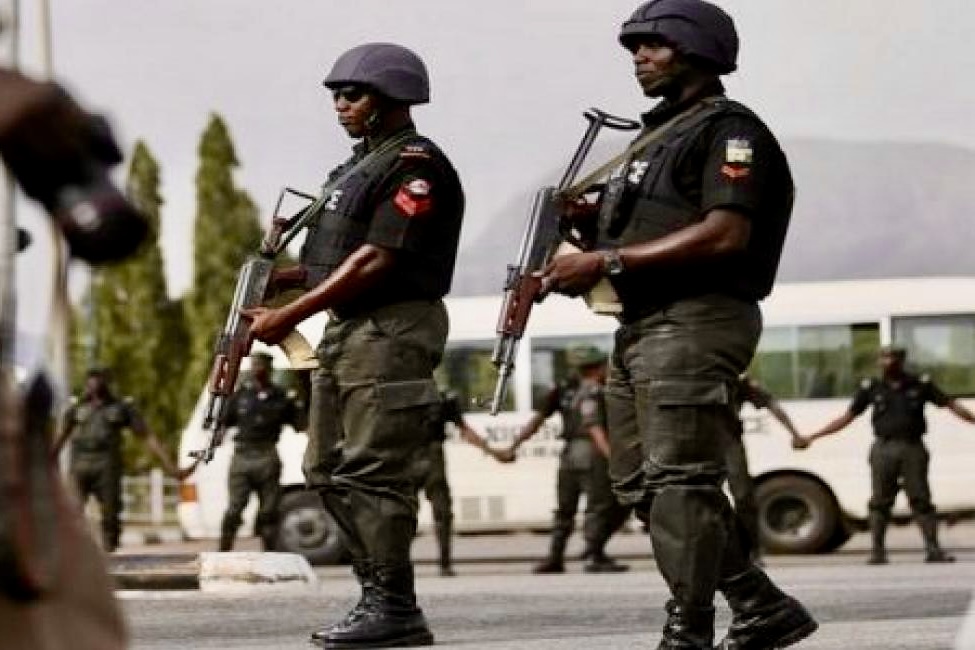
The Nigerian government, however, interpreted these demands not as legitimate calls for justice but as threats to its control and interests. Rather than respond with understanding or reform, it opted for military force, casting Ogoniland as a site of occupation rather than as a home to its people.
The Orchestration of a “Mockery of Justice”
The execution of the Ogoni Nine was a watershed moment that highlighted the brutal lengths to which the Nigerian government was willing to go to stifle dissent. Following a sham trial by a so-called tribunal, the men were denied the right to appeal, an egregious denial of due process that condemned them to die without the faintest chance of clemency. Legal experts, human rights organisations, and international observers widely condemned the trial as a “mockery of justice” orchestrated to crush Ogoni resistance. For Shell, which had long been accused of collusion with the military government, the crackdown was convenient—it allowed the company to resume operations without facing organised resistance from the Ogoni people.
Ken Saro-Wiwa’s last words before his execution, “I predict that the rivers will flow with oil,” were prophetic. He foresaw that without justice, the exploitation would persist, only deepening the suffering of his people. His prediction held true. Despite global condemnation and the outcry that followed their execution, the Nigerian government continued to militarise Ogoniland, repressing any opposition and branding advocates for environmental justice as threats to national security.
UNEP Report and the Unfulfilled Promises of Remediation
In 2011, sixteen years after Saro-Wiwa and the other activists were executed, the United Nations Environment Programme (UNEP) conducted a landmark environmental assessment of Ogoniland. UNEP’s findings were a resounding confirmation of what MOSOP and the Ogoni people had been asserting for decades. The study documented extensive pollution of the land, air, and water, revealing that areas of Ogoniland were so heavily contaminated that they posed an immediate health risk to residents. It found evidence of benzene—a carcinogenic chemical—at levels 900 times above WHO guidelines, making even the air that the Ogoni people breathed a daily poison.
UNEP’s report called for an emergency response and outlined a series of recommendations for the Nigerian government, including an immediate halt to the use of contaminated water sources, a full-scale cleanup of the environment, and the provision of adequate health resources for affected communities. UNEP estimated that a comprehensive clean-up could take as long as thirty years and that the process would require billions of dollars in funding. However, despite these grim findings and the clarity of UNEP’s recommendations, successive Nigerian administrations have taken little action beyond empty pledges and symbolic gestures. Nearly thirteen years have passed since the UNEP report, and the promised clean-up remains incomplete, with only sporadic and insufficient remediation efforts in isolated areas.
Oil and Profit Over People: The Resumption of Extraction in Ogoniland

Adding insult to injury, the Nigerian government has made recent moves to resume oil extraction activities in Ogoniland, further igniting the outrage of the Ogoni people and human rights advocates. For the Ogoni people, the push to resume oil production, while the scars of past exploitation remain untreated, represents the height of cruelty. How, they ask, can a government that has done nothing to repair the damage caused by previous oil spills justify opening the doors to new ones?
The decision to resume oil extraction is widely seen as a disregard for the suffering that decades of pollution inflicted upon the Ogoni people. It reveals a mindset that views Ogoniland not as a community of people with lives, hopes, and histories, but merely as an oilfield—a resource to be exploited, its inhabitants collateral damage in the pursuit of profit. Activists point out the contradiction in the government’s actions: while it has failed to implement UNEP’s recommendations fully or provide adequate compensation to affected communities, it is moving swiftly to secure new avenues for extraction.
Global Injustice and the Role of Shell
Shell’s role in Ogoniland has become a textbook example of the consequences of corporate impunity and exploitation in the Global South. The Ogoni Nine were executed not simply by the hand of a military regime but with the tacit approval, if not outright collusion, of Shell. The company’s partnership with the Nigerian government has long been seen as mutually beneficial; the government protects Shell’s interests, while Shell provides revenue streams that enable state power and, at times, repression.
For many, Shell’s activities in Ogoniland epitomise a legacy of Western corporations extracting resources from African nations at the expense of the environment and human rights. Shell has continually denied responsibility for the environmental degradation in Ogoniland, claiming that oil spills and leaks were caused by sabotage. However, investigations have repeatedly found that Shell’s infrastructure is old, poorly maintained, and often at fault for spills. Reports from various international watchdogs have underscored that Shell failed to meet even the minimum standards for environmental protection, leaving Ogoni land and water vulnerable to repeated contamination.
Persistent Health Crises and Socio-Economic Hardships in Ogoniland
The enduring environmental degradation in Ogoniland has brought about a health crisis that compounds the socio-economic hardships faced by the people. Cancer, respiratory diseases, skin conditions, and reproductive health issues have become rampant in Ogoni communities. The benzene-laden air and the toxic water sources cited in the UNEP report are not theoretical dangers; they translate into real suffering for the Ogoni people, who are forced to contend with illnesses caused directly by environmental poisoning. Children are born into a world where the very land and water are hazardous, and generations of Ogoni people have been forced to survive in these perilous conditions.
Moreover, the pollution has decimated traditional livelihoods, as fishing and farming—once the backbone of the Ogoni economy—have become nearly impossible. Fish stocks have dwindled in contaminated rivers, and crops fail to thrive in oil-drenched soils. This has left many Ogoni people trapped in poverty, reliant on unstable and often exploitative jobs outside of their communities. These socio-economic struggles have perpetuated cycles of disenfranchisement, where families that were once self-sufficient now rely on precarious income sources, undermining both the economic and social fabric of Ogoniland.
The lack of meaningful support from the Nigerian government and Shell has left the Ogoni people to bear the burden of pollution alone, struggling to rebuild in an environment that actively undermines their health and prosperity. This systemic neglect of the Ogoni people’s health, well-being, and rights stands as a powerful indictment of the government’s indifference and the corporate exploitation underpinning the region’s economic inequality.
We the People’s Declaration and the Global Call for Justice
“We the People,” an advocacy organisation dedicated to amplifying voices of environmental justice, released a powerful statement marking the anniversary of Saro-Wiwa’s execution. This statement—signed by Ken Henshaw, its Executive Director—reaffirms the group’s commitment to justice for the Ogoni Nine and the restoration of Ogoniland’s environmental health. Their message, however, is not only aimed at Nigerian authorities; it is a clarion call to the global community, urging nations, human rights organisations, and activists worldwide to join the Ogoni people in their quest for justice.
The declaration by We the People underscores a stark truth: the Ogoni people cannot secure justice and restoration on their own. They face a deeply entrenched system in which powerful corporations and state actors have little incentive to pursue environmental accountability. The group’s call to action is an invitation to the world to recognise the Ogoni struggle as part of a larger, global fight for corporate accountability, environmental sustainability, and human rights.
In their statement, We the People also demanded that Shell not only cease further operations in Ogoniland but be held accountable for the damage already inflicted. This would mean legally binding commitments to fund and facilitate a genuine clean-up process, as well as compensation for the communities affected. We the People advocates for a form of justice that would be more than symbolic, calling for reparations that could directly improve the lives of those harmed by Shell’s negligence.
Global Pressure and Corporate Accountability: Lessons from Ogoniland
The case of Ogoniland has increasingly served as a rallying point for environmental justice advocates around the world. Ken Saro-Wiwa’s legacy has inspired a global movement that has grown steadily over the years, with activists drawing parallels between Ogoniland and other sites of environmental exploitation worldwide. From the Amazon in South America to indigenous territories in Canada, activists are linking their causes to Ogoniland, creating a unified front against corporate abuses and extractive practices that prioritise profits over people and the planet.
In recent years, several countries have sought to hold corporations accountable for their actions in foreign territories, creating a legal precedent for cases like Ogoniland. Notably, in 2021, a Dutch court ruled that Shell was partially responsible for oil spills in Nigeria, marking a rare victory for environmental advocates. This ruling, though limited in its immediate impact, represented a shift in the willingness of international courts to scrutinise corporate activities abroad. It is a glimmer of hope for the Ogoni people and others fighting similar battles, suggesting that Shell’s claims of innocence may not hold indefinitely.
However, the pressure from international legal bodies remains inconsistent and insufficient. For Ogoniland, justice requires a sustained and concerted effort from the global community to ensure Shell faces the consequences of its actions. Activists argue that meaningful accountability will come only when governments, particularly in Europe and the United States, adopt binding regulations on corporate environmental practices abroad.
The Urgent Need for Institutional Reform in Nigeria
The plight of the Ogoni people also sheds light on the broader issues within Nigeria’s institutional and political landscape. Corruption and lack of accountability within the Nigerian government have exacerbated the suffering of Ogoniland, as political leaders have historically been complicit in the exploitation of the Niger Delta. The oil industry’s close ties to Nigerian officials have enabled corporations like Shell to evade accountability while government bodies, designed to protect the people, have repeatedly prioritised corporate interests over those of the communities they serve.
Reforming Nigeria’s institutions to be more transparent, responsive, and accountable is not only crucial for justice in Ogoniland but also for the nation’s development as a whole. There is a need for strong environmental regulations that prevent the kind of unchecked pollution seen in Ogoniland, alongside a judicial system that can hold both Nigerian and international corporations accountable for violating these laws.
To address this, We the People and other advocates have called for the creation of independent environmental regulatory bodies and a strengthened judiciary capable of addressing corporate misconduct without interference. They argue that Ogoniland’s experience should catalyse Nigeria toward broader institutional reforms, fostering a system where the rights and health of citizens are protected against exploitation.
Conclusion: A Legacy That Demands Action
As the world reflects on the 29 years since Ken Saro-Wiwa and his fellow activists were executed, it becomes clear that Ogoniland’s tragedy is both an emblem of environmental injustice and a powerful symbol of resistance. The Ogoni people’s struggle for justice, led by figures like Saro-Wiwa, has become a beacon for environmental activists worldwide who confront similar issues of corporate greed, government corruption, and environmental degradation. The Ogoni Nine may have been silenced, but their legacy endures, challenging Nigeria and the international community to confront uncomfortable truths about power, profit, and justice.
We the People’s latest statement echoes a persistent call for accountability, one that resonates beyond Nigeria’s borders. In their words, Ogoniland will only find peace when those responsible for its suffering—both corporate and state actors—face the full weight of justice. But beyond the legal demands, the Ogoni people’s plea is deeply human: it is a demand for dignity, for the right to live in a clean environment, to work their land, and to drink from their rivers without fear of illness or death.
Ogoni’s fate remains uncertain, but its story continues to inspire and mobilise. With each passing anniversary, the voices demanding justice grow louder, forcing the world to confront a fundamental question: will it continue to allow the exploitation of the vulnerable, or will it finally take a stand to protect the rights of communities like the Ogoni? The answer to that question will determine not only the future of Ogoniland but the direction of global environmental justice for decades to come.