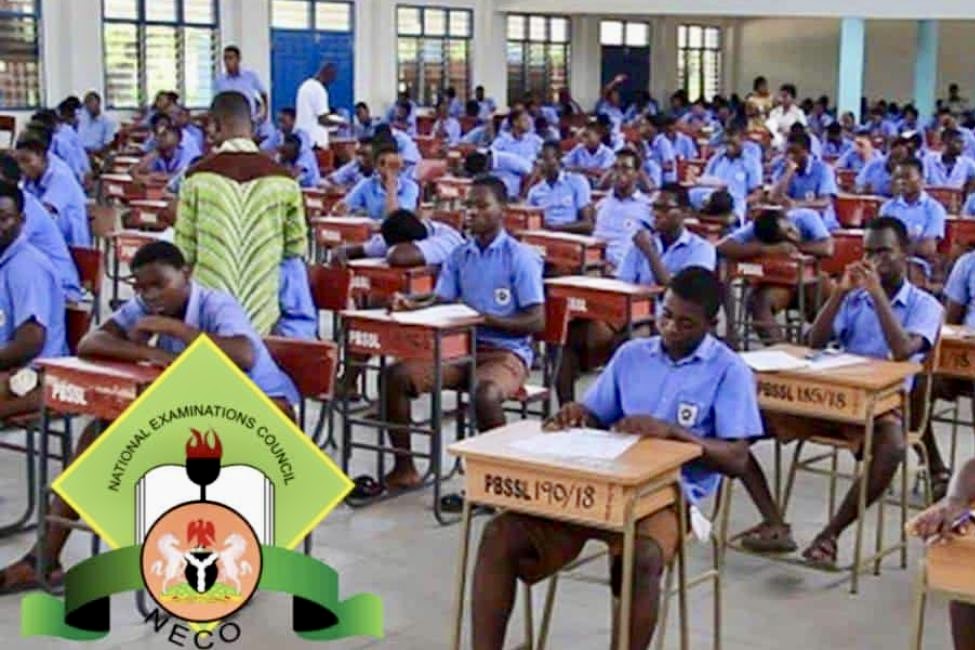
Kano has produced the largest absolute number of candidates meeting NECO’s five-credit benchmark for a second straight year. Yet the data also raises a harder question: does having the most successful candidates mean the state has the strongest education system?
The headline from Kano is impressive.
For the second consecutive year, the state recorded the highest number of candidates who obtained at least five credits, including English Language and Mathematics, in the National Examinations Council Senior School Certificate Examination.
NECO figures released on 24 September show 74,413 candidates from Kano meeting the benchmark. Lagos followed with 72,496 and Oyo with 55,543. NECO said 804,948 candidates nationwide, representing 58.67 per cent of those who sat the examination, achieved the same benchmark.
Kano therefore led Lagos by 1,917 candidates.
That is a real achievement.
But it is also where the numbers become more interesting.
The number tells a story about scale
The 74,413 figure is a count of successful candidates, not Kano’s percentage success rate.
That distinction matters.
NECO’s national statistic is calculated from the number of candidates who sat the examination and the number who reached the five-credit benchmark. Its state ranking, as reported by the Council, placed states according to the number of candidates reaching that threshold. NECO separately provided classifications by state, gender and geopolitical zone.
In other words, a state with a much larger examination population can produce more successful candidates without necessarily having a higher success rate.
Kano has historically had one of Nigeria’s largest NECO candidate populations. In the 2025 examination, 136,762 Kano candidates sat the examination. That large candidate base helped produce 68,159 candidates who achieved five credits including English and Mathematics.
That is why the phrase “best-performing state” requires some care.
It accurately describes the state’s position on the particular NECO ranking based on the absolute number of candidates meeting the benchmark.
It does not automatically establish that Kano had the highest success rate among its candidates.
That distinction became a major point of contention after the 2025 results.
Premium Times analysed the 2025 state data and calculated that Kano’s five-credit benchmark rate was about 49.84 per cent, compared with 83.31 per cent for Abia. On that measure, the absolute number of successful candidates was being driven heavily by Kano’s much larger candidate population.
The Kano government rejected that interpretation, arguing that NECO itself had declared Kano first in the relevant state ranking and that critics were selectively interpreting the statistics.
That dispute gives the 2026 result an important context.
Kano has unquestionably topped the absolute-number ranking again.
What remains a separate statistical question is how the state’s success rate compares with every other state.
Kano’s improvement is significant, but the national picture changed
Kano’s 74,413 successful candidates represent an increase of 6,254 from its 68,159 in 2025, roughly 9.2 per cent.
That is notable because the national picture moved in the opposite direction.
In 2025, 818,492 candidates, or 60.26 per cent, secured five credits including English and Mathematics. In 2026, the figure fell to 804,948, or 58.67 per cent.
So Kano’s absolute number increased while the national total and national benchmark rate declined.
That suggests that something positive happened in Kano, but the available headline figures alone cannot tell us precisely why.
Possible explanations include changes in the size and composition of Kano’s candidate pool, improved access to examinations, government payment of examination fees, changes in school participation and actual improvements in learning.
The data supplied by NECO does not allow those possibilities to be treated as interchangeable.
The ₦4.4 billion question
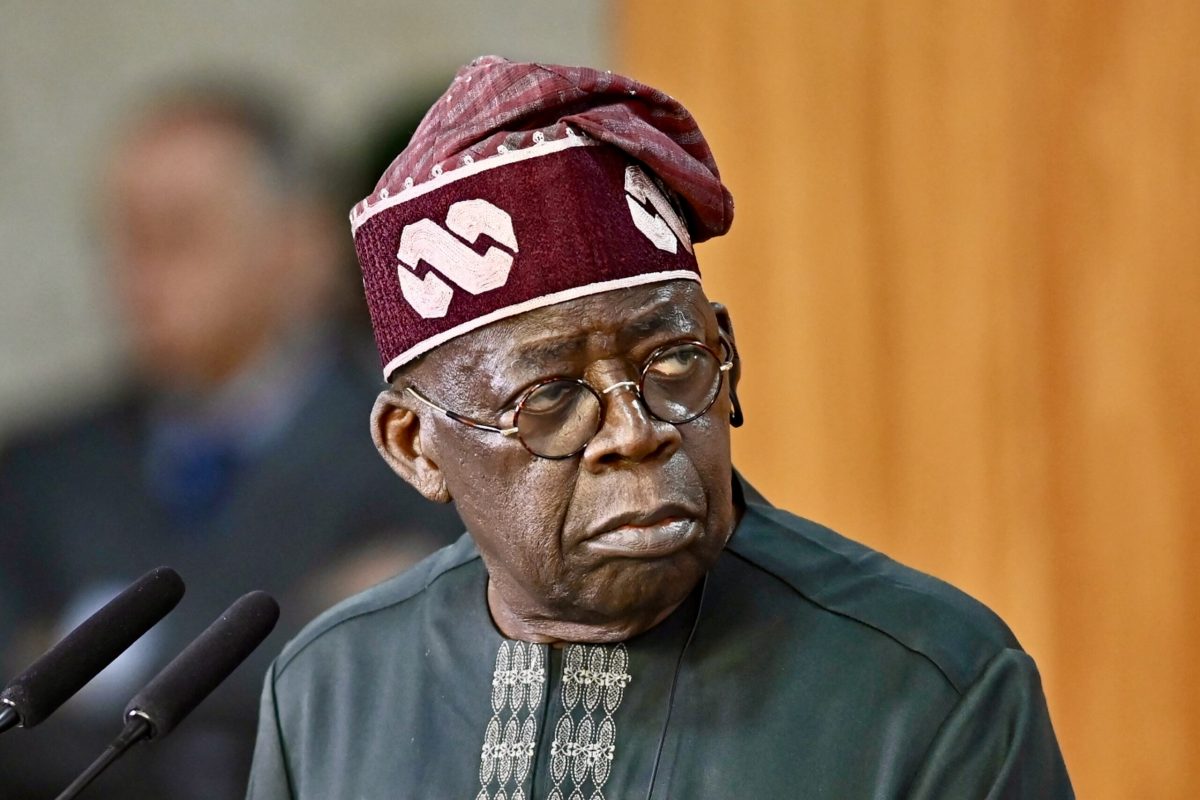
Governor Abba Kabir Yusuf has linked the result directly to his administration’s education investment.
“We have spent more than ₦4.4 billion in 2026 to sponsor candidates for the Senior School Certificate Examination, particularly indigent students,” Yusuf said.
He said the programme was designed to remove financial barriers and allow more young people to sit the examination.
This is an important intervention in a state where household income can determine whether a child remains in school.
It also complicates any simple interpretation of the NECO numbers.
Removing examination fees can increase participation.
More students sitting an examination can, in turn, increase the absolute number who achieve the required five-credit benchmark.
That does not make the result less meaningful. It simply means that access and learning outcomes are two different measurements.
The government’s spending may have helped more students reach the examination stage. The harder question is how many more students are actually learning at the required level.
The budget tells a more complicated story
Governor Yusuf has repeatedly pointed to Kano’s unusually large education allocations.
The government says education received ₦95.39 billion in the 2024 budget, ₦168.35 billion in 2025 and about ₦405.35 billion in 2026.
The broad direction is clear: education has been given substantial budgetary priority.
But the percentages require closer examination.
Kano’s official 2024 budget proposal allocated ₦95.39 billion to education and described that as 29.95 per cent of the budget.
The problem is that Kano subsequently signed a 2024 budget of about ₦437.3 billion, while a supplementary budget later took the year’s total to about ₦536.56 billion.
So the 29.95 per cent figure should be understood as a figure attached to the earlier budget structure, rather than casually presented as the share of the final 2024 expenditure framework.
The same issue appears in 2025.
Kano’s original 2025 budget proposal was ₦549.16 billion, with ₦168.35 billion, or about 31 per cent, allocated to education.
But the governor later signed a 2025 appropriation of ₦719.755 billion.
That means the 31 per cent figure cited today relates to the earlier budget denominator. The public record therefore contains two different 2025 totals, and the education share needs to be tied to the correct version before being used as evidence of spending intensity.
There is an even clearer discrepancy in 2026.
The government’s own 2026 records do not show the same education figure
In November 2025, Governor Yusuf proposed a ₦1.368 trillion 2026 budget, saying education would receive about ₦405 billion, or 30 per cent.
But Kano’s official 2026 budget-performance reports use a different approved total.
The state’s second-quarter Budget Implementation Report puts the 2026 original approved budget at ₦1.47783 trillionand lists ₦424.497 billion for the Education programme. That is about 28.7 per cent of the approved budget, not 30 per cent.
This is not a minor accounting detail.
The performance report is the document that shows what the government budgeted and what it actually spent.
By June 2026, Kano had recorded ₦117.175 billion in cumulative expenditure under the broad Education programme, representing 27.6 per cent of its original 2026 education budget.
The report therefore provides a much more useful test of the government’s education strategy than the size of the appropriation alone.
The most striking line is buried inside the education budget
The second-quarter report divides education spending into specific programmes.
The allocation for “Increase in access, retention, and completion rate at all levels” stood at ₦23.032 billion, with ₦12.109 billion spent by the end of June, representing 52.6 per cent implementation.
But the line labelled “Improved quality of teaching and learning outcomes” had an allocation of ₦1.339 billion and recorded zero expenditure by the end of June.
That figure requires context.
Zero expenditure on that particular programme does not prove that Kano’s schools recorded no improvements in teaching quality. Education interventions can appear under other budget lines.
It does, though, raise an obvious accountability question.
If the central political argument is that higher education spending is producing better examination outcomes, how much of the spending is explicitly directed towards improving learning quality, and how much is going into access, administration, infrastructure and other areas?
That distinction could determine whether Kano’s NECO success is primarily an access story, a teaching-quality story, or both.
Kano still faces a foundational learning problem
The examination result also needs to be viewed against the conditions facing younger pupils.
UNICEF said in January 2025 that only 9.6 per cent of primary-school pupils in Kano demonstrated reading proficiency, while 11.2 per cent possessed basic numeracy skills. UNICEF also cited the 2021 Multiple Indicator Cluster Survey in reporting that nearly one million primary-school-age children in Kano were out of formal education.
Those figures do not contradict the 2026 NECO result.
They measure different stages of the education pipeline.
A state can improve outcomes among its secondary-school examination population while still facing a major foundational-learning problem among younger children.
That may be one of the most important lessons from Kano’s latest result.
The real test is not simply how many students pass at the end of secondary school.
It is whether the system is steadily producing children who can read, calculate, remain in school and progress through the education system long before they reach NECO.
The North-West context matters
The scale of the challenge is regional.
UNICEF said in June 2026 that the North-West is home to about 60 million people and continues to face some of Nigeria’s highest levels of multidimensional poverty. More than half of children in the region were reported to be out of school, with education, health, nutrition and household income challenges overlapping.
Against that background, getting more Kano students into the examination system is significant.
So is reducing the financial burden on poorer families.
So is recruiting teachers and rebuilding classrooms.
But examination rankings cannot by themselves settle whether those interventions are delivering sustained improvements in learning.
The 2026 result deserves recognition and scrutiny
There is no need to diminish what Kano has achieved.
The state again produced Nigeria’s largest absolute number of candidates who met NECO’s five-credit benchmark including English and Mathematics. Its number rose by more than 6,000 from the previous year even as the national benchmark rate declined.
Governor Yusuf has promised to continue funding education, renovating schools, recruiting and training teachers, providing learning materials and supporting disadvantaged students.
His broader objective, he said, is to equip young people for higher education, employment, innovation and leadership.
The more difficult test now is measurable.
Can Kano show that the number of successful students is rising because a larger share of students are learning effectively?
Can the state publish a consistent picture of education allocations across the original, revised and approved budgets?
Can it show how much of the education budget is actually reaching classrooms?
And can future results demonstrate stronger performance not only in absolute numbers, but also in the proportion of candidates who succeed?
Those are the questions that sit behind the 74,413 figure.
Kano has won the headline for a second year.
The next headline should tell Nigerians how many more children are learning, not simply how many more candidates are passing.