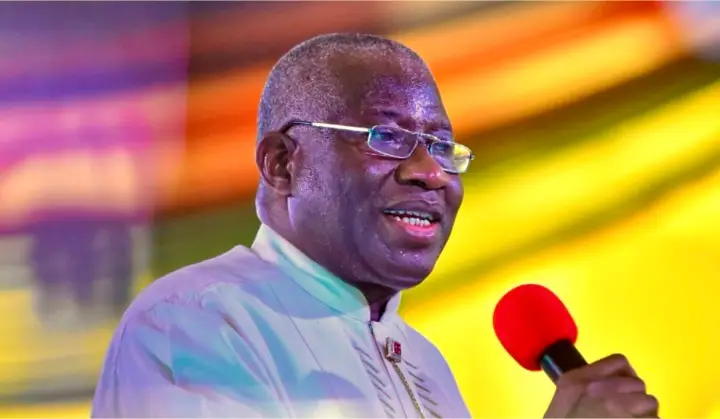
Former President Goodluck Jonathan criticised Nigeria’s electoral system during a conference, highlighting issues like “ghost voters,” political pressure, and regional biases that undermine democratic integrity. He emphasised the need for ethical leadership and electoral reforms to restore public confidence, drawing comparisons with successful elections in Ghana and Liberia as models for improvement.
ABUJA, Nigeria — In a scathing address delivered at the YIAGA Africa Reflection Conference on Democratic Elections in West Africa in Abuja, former President Goodluck Jonathan levelled severe criticism at Nigeria’s electoral system, alleging that “ghost voters” and undue political pressure are undermining the integrity of vote counts.
Drawing on decades of political experience and an unwavering commitment to democratic ideals, Jonathan’s remarks have rekindled debates over electoral reforms in Nigeria and the broader West African region.
A System in Crisis
Jonathan’s damning critique centres on the enduring problem of “ghost voters” – individuals whose names remain on the register despite their absence, often exploited to distort vote counts.
“In Nigeria, you can’t get an accurate count of votes because I believe that we have too many ghost voters,” he asserted.
According to Jonathan, the inclusion of these phantom names on voter lists is not merely a technical glitch but a manifestation of deeper systemic malaise.
The former president argued that unless electoral management bodies are staffed by men and women of unyielding integrity – who are willing to resign rather than compromise their principles under political duress – the nation will continue to be trapped in a cycle of electoral manipulation.
The Pressure to Compromise
Jonathan did not mince words when addressing the issue of political interference. Citing insights from former INEC Chairman Attahiru Jega, he emphasised that any individual holding an electoral office must be prepared to walk away if pressured into unethical practices.
“If you are accepting to be Chairman of INEC or to be a commissioner of INEC, then you should be ready to say, ‘If I’m pressurised to do what is wrong, I will take care of the democratic people and walk away’,” he declared.
This call for principled leadership resonates deeply in a political climate where incumbents and powerful elites are often accused of manipulating electoral processes to secure their hold on power.
Ghost Voters: The Invisible Saboteurs
The issue of ghost voters is not new to Nigeria, but its persistence continues to fuel controversies and legal battles following previous elections.
Critics argue that ghost voters – a by-product of poor voter registration systems and deliberate manipulation – erode public trust in electoral outcomes.
Jonathan’s remarks have rekindled memories of past elections, where allegations of inflated voter lists and rigged counts marred the democratic process.
His analysis suggests that until electoral bodies can purge these ghost entries and institute a more reliable verification mechanism, every Nigerian election is destined to be viewed through a lens of scepticism.
The Technological Conundrum
In a bid to modernise the electoral process, Nigeria has introduced systems such as the Bimodal Voter Accreditation System (BVAS) and the Results Viewing Portal. However, Jonathan’s commentary casts doubt on whether these technological advances can overcome the entrenched issues of corruption and inefficiency.
While technology holds promise for enhancing transparency, its effectiveness is ultimately contingent upon the integrity of those who operate it.
The former president warned that without a foundational change in the ethical standards of electoral officials, even the most sophisticated systems will falter in the face of human fallibility and coercion.
Regionalisation and the Erosion of Democracy
Jonathan also lambasted the deeply entrenched practice of regionalisation within Nigeria’s electoral framework. He argued that regional loyalties – whether based on ethnicity, religion, or historical affiliations – have seeped into every corner of the political process.
“Sometimes, if I listen to the prediction by religious men and women and so on, their predictions tend to go towards the regional interest,” he noted, implying that regional biases can skew the electoral process even before the first vote is cast.
This regionalisation, he contended, not only hampers the emergence of competent national leaders but also perpetuates divisions that weaken the democratic fabric of the nation.
Comparative Analysis: Lessons from West Africa
Jonathan’s critique extended beyond Nigeria’s borders, drawing comparisons with other West African nations. He cited Ghana’s recent general elections as a beacon of hope – a testament to what can be achieved when elections are conducted with a commitment to transparency, even with limited technological intervention.
Ghana’s Electoral Commission, alongside diligent security authorities, managed to orchestrate a process that was both peaceful and credible.
Similar praise was extended to Liberia and Senegal, where elections, despite some technical limitations, proceeded without the intense disruptions witnessed in countries with heavy technological deployments like Nigeria and Sierra Leone.
In Liberia, for example, the peaceful transition of power following President George Weah’s concession after a closely fought runoff set a precedent for democratic resilience.
Senegal’s electoral process, despite initial disruptions marked by protests and the detention of opposition figures, ultimately delivered a free and fair outcome.
These examples underline Jonathan’s broader point: that the human element – characterised by ethical leadership and an unwavering commitment to democratic principles – remains the cornerstone of credible elections.
The Broader Implications for Democracy
Jonathan’s address is a clarion call for a radical overhaul of Nigeria’s electoral management system. His proposal is simple yet profound: electoral officials must be empowered to resign rather than capitulate to political pressures.
This suggestion, if implemented, could pave the way for a more transparent and accountable electoral process. Yet, it also raises challenging questions about the feasibility of such reforms in a system where political patronage and corruption have long held sway.
The former president’s analysis points to a systemic problem that extends beyond the mechanics of vote counting. It is a reflection of a broader democratic deficit – a failure to cultivate an electoral culture where ethical conduct is not just encouraged, but mandated.
Without such cultural and structural changes, the deployment of technology and procedural reforms may prove insufficient in restoring public confidence in Nigeria’s democracy.
The Role of Youth and the Future of Democracy
Amidst the litany of challenges, Jonathan stressed the importance of engaging Nigeria’s youth in the electoral process.
He contended that a new generation of politically aware citizens, coupled with robust electoral reforms and the effective use of technology, could catalyse a transformation in how elections are conducted.
This youth engagement is critical, not only as a means of infusing fresh energy into the democratic process but also as a bulwark against the entrenched interests that have long stymied progress.
A Call for Regional Democratic Resilience
The former president’s comments also carry a broader message for West Africa. Despite setbacks such as the recent coups in Mali, Burkina Faso, and Niger, Jonathan underscored the progress that the region has made since the days of pervasive military rule.
West Africa’s transition to a system where elections are the primary means of transferring power is a significant achievement – one that deserves to be protected and built upon.
By addressing issues such as ghost voters, political interference, and regionalisation, Nigeria can set a powerful example for its neighbours.
Conclusion: The Imperative of Reform
Jonathan’s impassioned speech is a stark reminder that the legitimacy of any electoral process is only as strong as the integrity of its custodians. His insistence on the need for principled leadership, coupled with a robust and reformed electoral system, serves as a wake-up call for policymakers and political stakeholders alike.
In a country as diverse and dynamic as Nigeria, the pursuit of a clean, credible electoral process is not merely a technical challenge – it is a fundamental requirement for the preservation of democracy.
As the nation continues to grapple with the challenges of modernising its electoral processes, one thing remains clear: the future of Nigerian democracy hinges on the courage and integrity of those who are entrusted with its conduct.
It is a future that demands bold reforms, unwavering commitment, and above all, a steadfast dedication to the democratic ideals that underpin the nation’s collective aspirations.
- Additional report by Osaigbovo Okungbowa, Atlantic Post Senior Political Correspondent