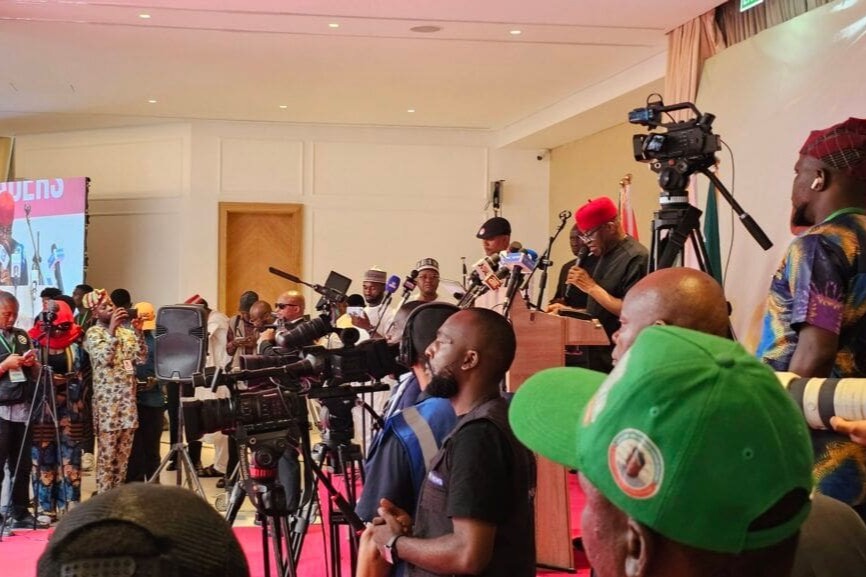
JAMB admits errors, reschedules UTME for 379,997 South-East and Lagos candidates; Oloyede takes full responsibility as fresh dates roll out May 16–18.
The Joint Admissions and Matriculation Board (JAMB) has commenced the rescheduling of the Unified Tertiary Matriculation Examination (UTME) for 379,997 candidates after technical glitches disrupted sittings in Lagos and South‐East centres; candidates began receiving rescheduling text messages on Thursday, May 15 2025, and one candidate’s slip shows a new date of Saturday, May 17 2025 at 12 noon in Igando, Alimosho LGA, Lagos.
Prof. Ishaq Oloyede publicly admitted full responsibility, describing the errors as a “sabotage” of the examination process, a confession that has ignited fierce debate over JAMB’s operational integrity, political interference, and the future of Nigeria’s higher-education standards.
JAMB identified 157 affected Computer-Based Test (CBT) centres across two zones: 65 in the Lagos zone impacting 206,610 candidates, and 92 in the Owerri zone covering the five South-East states with 173,387 candidates.
The total number of affected students stands at 379,997, representing nearly one in five of the 1.9 million who sat the UTME this year.
Investigation revealed that a service-provider patch failed on centre servers, disrupting the upload of candidate responses during the initial exam days of Friday, April 25 2025.
In his Abuja press briefing on Wednesday, May 14 2025, Prof. Oloyede disclosed that the board worked “within 24 hours of rigorous work” to isolate the problem’s origin.
Oloyede’s rare public apology—delivered with visible emotion—has divided stakeholders: some praise his transparency, while others demand his resignation over perceived administrative negligence.
Student groups and parents have flooded social media with calls for an independent probe into alleged “internal sabotage” and fears of grade manipulation.
Ohanaeze Ndigbo, representing South-East interests, has rejected the resit proposal, insisting on a minimum 300-score waiver for their candidates, a stance that risks stoking regional tensions.
Meanwhile, one tragic report—unverified by JAMB—claims a despairing candidate took her life following the glitches, fuelling a moral outcry over the board’s human impact.
This episode exposes systemic vulnerabilities in Nigeria’s key entrance examination and raises questions about JAMB’s governance, vendor oversight, and crisis-management protocols.
University admissions timelines may be disrupted, amplifying anxiety among aspirants and potentially delaying academic sessions nationwide.
Critics argue that without structural reforms—including transparent audits, digital-security upgrades, and political insulation—future UTMEs remain at risk of similar collapses.
As candidates prepare for new dates beginning Friday, May 16 through Sunday, May 18 2025, JAMB must rebuild trust through consistent communication and demonstrable technical competence.
The rescheduling saga marks a watershed moment for Nigeria’s higher-education entry system. Prof. Oloyede’s contrition, while commendable, is but a first step in restoring credibility.
Stakeholders now await concrete reforms to ensure that no young Nigerian’s academic destiny hinges on preventable technical failure.
Failing that, the very legitimacy of JAMB—and by extension the equity of tertiary admissions—will remain under unrelenting scrutiny.