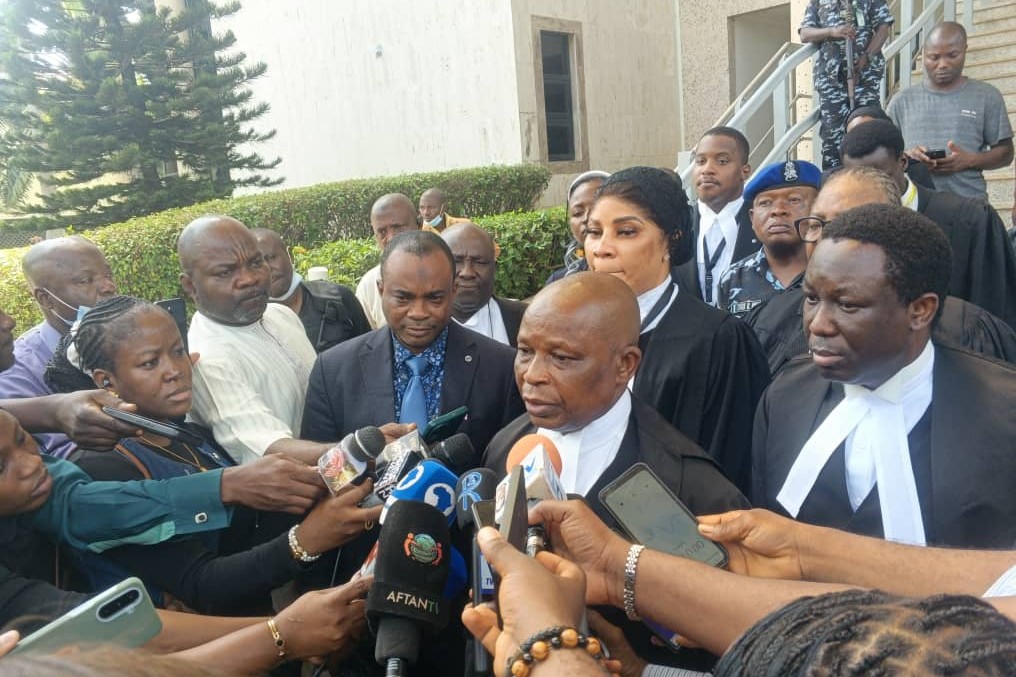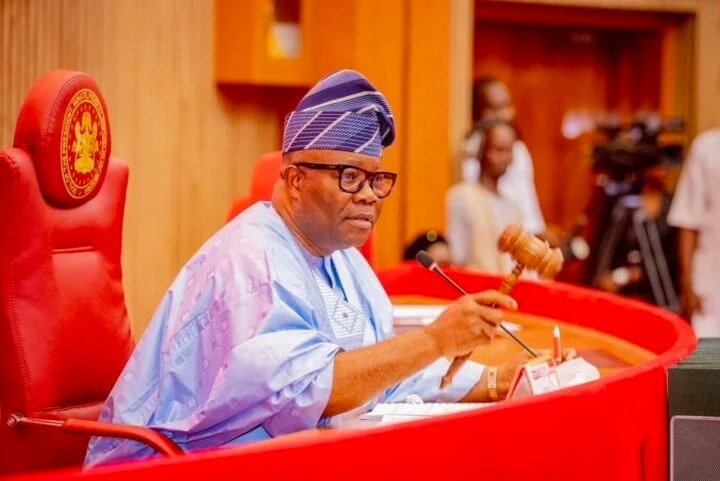
The latest chapter in the long-running legal battle over United States government records concerning President Bola Ahmed Tinubu has detonated a fresh political firestorm in Nigeria, with investigative journalist David Hundeyin arguing that the most important revelation is not what the FBI may eventually release, but what the bureau says it cannot explain publicly.
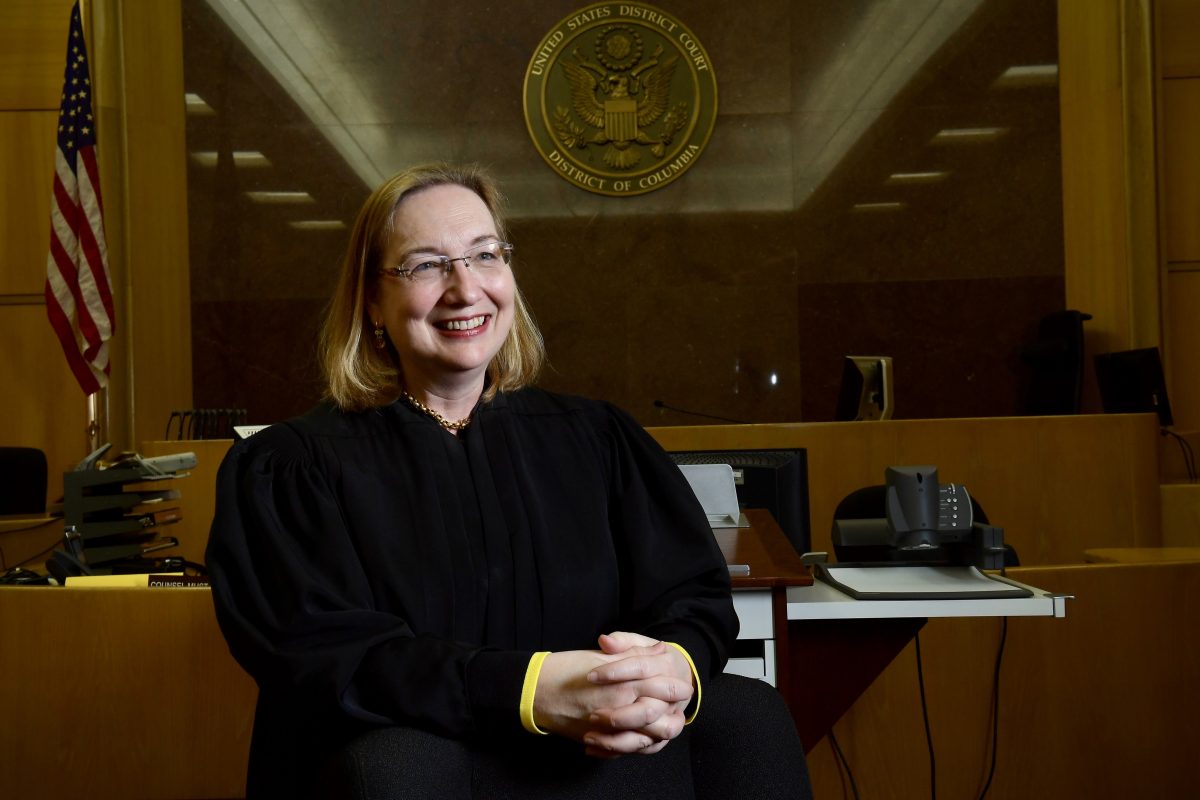
Hundeyin’s explosive commentary followed an August 20, 2026 filing in the US District Court for the District of Columbia in which the FBI asked Judge Beryl A. Howell for permission to provide part of its justification for withholding records privately, through an ex parte, in-camera declaration.
The FBI said it could not place its full explanation concerning certain withholdings under Freedom of Information Act (FOIA) Exemptions 7(E) and 7(F) on the public record because doing so could expose the very information those exemptions are designed to protect. It asked to explain the matter to the judge privately.
That procedural development is significant.
But it is not, on the evidence currently available, the intelligence confession Hundeyin says it is.
And that distinction matters.
What Hundeyin is alleging
Hundeyin, reacting on social media, accused Sahara Reporters publisher Omoyele Sowore’s platform of deliberately distracting Nigerians from what he considers the more consequential part of the FBI filing.
“As usual, Sowore Reporters has been activated to deliberately misreport the story and deflect attention away from the (more serious) thing that the FBI actually admitted,” Hundeyin wrote.
He focused on the FBI’s statement that it could not publicly disclose the full basis for invoking Exemptions 7(E) and 7(F), arguing that the only way the bureau could explain the matter was through a sealed submission to Judge Howell.
Hundeyin then made the leap at the centre of the controversy.
“That is the closest thing you are going to get to a signed confession stating that the subject of this case is an active secret intelligence asset,” he declared, adding that the issue was supposedly “above the pay grade of the Attorney General or the FBI Director to order the release of these files”.
“It is CIA territory,” he asserted.
He went further, claiming that Judge Howell’s decision to allow the confidential process demonstrated that she understood “what it means to step on the CIA’s tail”.
“They’ve basically all but admitted under oath that you people’s president works for the Agency,” Hundeyin wrote.
Those are extraordinary allegations.
The available court record, however, does not establish them.
What the FBI actually said
The FBI’s filing concerns records sought by American transparency advocate Aaron Greenspan, founder of PlainSite, in a FOIA lawsuit that has been running since 2023.
Among Greenspan’s requests were one seeking “the entire FBI file for Bola Ahmed Tinubu” and another seeking FBI Form 302 interview records concerning Tinubu from FBI Case No. 245-IP-71386-UUUUUU covering 1992–1993.
The FBI said it had invoked FOIA Exemptions 6, 7(C), 7(D), 7(E) and 7(F) in relation to the records.
The important language cited in the filing states:
“The FBI has determined that it cannot provide on the public record the full basis for the application of Exemptions 7(E) and 7(F) to certain withholdings and that, therefore, an ex parte, under seal declaration is necessary.”
That wording is real.
So is the FBI’s assertion that some withheld material could reveal law-enforcement techniques and procedures, or that disclosure “could reasonably be expected to endanger the life or physical safety of any individual”.
But there is a crucial legal point.
Exemption 7(E) is not a CIA exemption.
Under FOIA, it is designed to protect law-enforcement techniques, procedures and certain investigative guidelines where disclosure could risk circumvention of the law. Exemption 7(F), meanwhile, protects law-enforcement information where disclosure could reasonably be expected to endanger an individual’s life or physical safety.
Neither provision, by itself, establishes that a subject is a covert intelligence operative.
Indeed, the US Department of Justice’s own FOIA guidance documents examples of courts allowing sensitive investigative techniques and safety-related information to be considered privately because publicly describing the justification could itself reveal protected information.
In other words, the need for a sealed explanation is not unique to intelligence agencies, nor does it automatically mean the CIA is involved.
The phrase “under oath” deserves scrutiny
There is another important distinction in Hundeyin’s argument.
He described the FBI’s position as something it “admitted under oath”.
The publicly reported August 20 filing, however, is described as a motion/application by the FBI, accompanied by its request to submit confidential declarations. Reporting on the filing says the FBI contemplated “two ex parte, in camera declarations”.
That is not the same procedural thing as an FBI director personally appearing in open court and giving sworn testimony that President Tinubu is a CIA asset.
The distinction is not semantic.
A legal filing can contain representations made to a court, while the confidential declaration contemplated by the FBI would be a separate submission for judicial review. The public record currently does not disclose the contents of that proposed declaration.
Consequently, no responsible reading of the available documents can convert the FBI’s request for secrecy concerning particular material into proof that Tinubu works for the CIA.
What Judge Howell actually decided in 2025
The strongest evidence against the more dramatic interpretation comes from Judge Howell’s earlier ruling in the same litigation.
On April 8, 2025, Howell ruled that the FBI and Drug Enforcement Administration could no longer maintain their earlier Glomar responses concerning Tinubu.
A Glomar response allows an agency to refuse to confirm or deny whether responsive records exist when acknowledging their existence—or non-existence—would itself disclose information protected by FOIA.
Howell rejected that position for the FBI and DEA in relation to Tinubu and ordered them to search for and process non-exempt responsive records. The Department of Justice’s Office of Information Policy summarised the ruling as requiring the FBI and DEA’s Glomar responses to be lifted.
Howell’s reasoning was rooted in something much less mysterious than a supposed CIA command structure: official public disclosures already contained in US government court documents.
The judge concluded that prior Department of Justice disclosures had officially acknowledged FBI and DEA involvement in investigations concerning Tinubu.
Her decision was therefore a victory for disclosure against the FBI and DEA—not evidence that the agencies were operating outside the authority of the US Justice Department.
And there is an even more damaging complication for the CIA theory.
The CIA was actually treated differently
In the same April 2025 judgment, Howell did not order the CIA to abandon its Glomar response.
The judge expressly ruled that the CIA could maintain its refusal to confirm or deny the existence of responsive records concerning Tinubu. Her reasoning was straightforward: Greenspan had not demonstrated that the CIA had officially acknowledged the existence of records responsive to his request.
The court rejected the argument that records showing CIA interest in Nigerian narcotics trafficking during the 1980s constituted official acknowledgment of Tinubu-specific files.
As the judgment put it:
“Logical deductions are not … official acknowledgments.”
The court therefore upheld the CIA’s Glomar response while ordering the FBI and DEA to proceed with searches and processing of non-exempt records.
This is perhaps the most important fact missing from the viral interpretation of the current dispute.
The court record does contain a CIA secrecy ruling—but it was made in 2025 and it was not based on the FBI’s latest invocation of Exemptions 7(E) and 7(F).
Why are the records controversial?
The underlying case concerns a Chicago-area narcotics investigation from the early 1990s.
A 1993 civil forfeiture proceeding resulted in the United States forfeiting $460,000 held in an account in Tinubu’s name. The forfeiture decree stated that the funds represented proceeds of narcotics trafficking or were involved in financial transactions in violation of US money-laundering statutes.
But an important legal distinction must be retained.
The forfeiture proceeding was civil, and Tinubu was not criminally convicted of drug trafficking in the United States. Contemporary reporting and the political record have repeatedly noted that he was never charged in the narcotics matter.
The American court’s 2025 FOIA ruling also did not convict Tinubu of anything.
It dealt with access to government records.
That distinction is critical because a court ruling requiring an agency to search for records is not a judicial declaration that every allegation contained in those records is true.
The August 2026 twist
The immediate drama now centres on whether the FBI can justify withholding particular sections of its records.
The bureau’s argument is narrower than the viral political interpretation.
It says some information is protected because it could reveal investigative techniques or potentially expose individuals to physical danger. Those are recognised FOIA categories, and courts have previously examined such material privately when public disclosure of the explanation itself could compromise the protected information.
The plaintiff, Greenspan, opposed the FBI’s request for private declarations, according to reporting on the August 20 filing.
A further development was reported on August 21: Washington-based lobbying and policy firm Von Batten-Montague-York said Judge Howell had granted the FBI permission to present the sensitive material privately and had set August 28 as the deadline for the FBI, DEA, DOJ and Tinubu to file their opposition to disclosure.
There is, however, an important caveat.
Early reports noted that the claimed permission had not yet appeared on the public court docket at the time the information was first circulated and was based on the lobbying firm’s account.
That makes the August 28 deadline the next major evidentiary checkpoint—not proof that the most sensational claims circulating online have already been established.
What Hundeyin gets right—and where the argument breaks
Hundeyin is right about one fundamental point: the FBI considers at least some of the withheld information sufficiently sensitive that it says its full justification cannot safely be explained publicly.
That is a meaningful development.
He is also right that whatever is placed in the sealed declaration will not initially be available for public scrutiny.
But his conclusion—that this amounts to an admission that Tinubu is an “active secret intelligence asset” working for the CIA—goes well beyond the evidence currently available.
There is no public court finding cited in the present record establishing that proposition.
There is no disclosed FBI declaration saying Tinubu is a CIA asset.
There is no public statement from the CIA confirming such an arrangement.
And, notably, Judge Howell’s own 2025 ruling sustained the CIA’s Glomar response precisely because there had been no official CIA acknowledgement of Tinubu-specific records.
That does not prove that no intelligence relationship exists.
It means something more modest and more defensible: the public evidence does not presently prove that one exists.
The Sowore angle
Hundeyin’s second major argument is that Sahara Reporters is deliberately distracting Nigerians through “constant, never-ending misdirection”.
Sahara Reporters’ recent headline reported the FBI’s warning that release of some withheld Tinubu records could “endanger life” and its request for a secret court review.
That report is not obviously unrelated to the FBI filing Hundeyin was discussing. In fact, the headline reflects one of the agency’s express arguments under Exemption 7(F).
Hundeyin may reasonably object to the emphasis or framing.
But his separate accusation that Sowore operates at the direction of unnamed “owners” is an allegation for which no supporting evidence was produced in his commentary.
It therefore belongs in the category of political accusation—not established fact.
What the public should watch next
The real test is now judicial rather than social-media driven.
The crucial question is what the FBI puts before Judge Howell under seal, what portions the court accepts as properly exempt under FOIA, and how much of the underlying records remain legally capable of disclosure.
That process could produce genuinely consequential material.
It could reveal sensitive investigative techniques.
It could identify information relating to confidential sources or people whose safety the FBI says could be threatened.
It could also produce little more than heavily redacted pages.
At this stage, nobody outside the sealed process knows.
And that is precisely why the most sensational conclusion should be treated with caution.
The fascinating story is not yet that America has secretly confessed that Nigeria’s president works for the CIA.
The demonstrable story is that, more than three years after Greenspan began the FOIA litigation, the US government is still fighting over access to historical investigative records involving Tinubu; that Judge Howell previously forced the FBI and DEA to abandon their Glomar strategy; that the CIA successfully maintained its own Glomar position; and that the FBI now says some of the information it is withholding is so sensitive that even its full justification cannot safely be placed on the public record.
The difference between those statements—and the claim that the FBI has just confessed to a CIA operation—is the difference between investigative journalism and inference.
For Nigerians, the next milestone is August 28.
That is when the legal battle over secrecy moves another step closer to the moment when the public may finally discover what the FBI is prepared to release, what it will continue to conceal, and why.
Until then, the files remain the story.
Not the theories about them.
Follow us on our broadcast channels today!
- WhatsApp: https://whatsapp.com/channel/0029VawZ8TbDDmFT1a1Syg46
- Telegram: https://t.me/atlanticpostchannel
- Facebook: https://www.messenger.com/channel/atlanticpostng