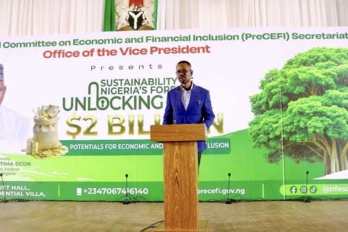
When history comes to be written about the Border Communities Development Agency, Dr Dax George-Kelly will likely be remembered as the man who gave the institution a sharper purpose, wider reach and a far more compelling national profile.
For years, the BCDA remained one of those federal agencies that many Nigerians barely noticed. It was present in name, but not always in public conversation. Under George-Kelly’s leadership, however, the agency began to shed that obscurity and step into a more strategic role in the country’s development architecture.
According to available records, the transformation was not cosmetic. It was practical, institutional and investment-driven. In one of the most notable achievements recorded under his watch, major Chinese companies committed a $2 billion investment to Jigawa State before his resignation, in a deal facilitated by the agency.
The package was presented as a major boost for industrial activity, border economy expansion and wider investment confidence in the North.
The Jigawa investment plan is particularly significant because it combines production, processing and export ambition in a single framework. At the centre of the proposal is a cattle processing plant with the capacity to produce 300,000 tons of meat per year, with export targets directed towards China.
In a country where agricultural value chains have often been underdeveloped, such a facility carries strong promise for local livestock producers, logistics operators, processors and traders.
Beyond meat processing, the investment package also includes the development of manufacturing industries for security equipment.
That element alone speaks to a broader industrial vision. It suggests a move away from dependence on imports and towards domestic production capacity in a sector that has obvious relevance to national security, border management and job creation.
The expected impact is considerable. The update says the project is anticipated to generate thousands of direct and indirect jobs. That alone makes it more than an investment story. It becomes a development story, a livelihoods story and, in many respects, a confidence story for border communities that have too often been excluded from major economic planning.
George-Kelly’s tenure was also marked by institutional reform. Rather than treating BCDA as a passive agency, he appears to have approached it as a platform that needed modern tools, better structure and stronger investor-facing systems.
That approach is reflected in the creation of a Geographic Information Systems division, designed to improve mapping, planning and data management for border communities.
The significance of that reform should not be underestimated. In development administration, good data is often the difference between guesswork and impact. With GIS capacity in place, the agency was better positioned to identify needs, plan interventions and monitor implementation with greater precision.
For an agency responsible for communities spread across difficult and sometimes remote border terrain, such modernisation is not merely helpful. It is essential.
He also established a specialised Public Private Partnership office, a move that points to a more outward-looking and finance-savvy BCDA. In an era when public agencies are under pressure to do more with less, PPP structures can unlock capital, expertise and long-term collaboration.
By setting up such an office, George-Kelly signalled an understanding that border development would require more than federal allocations alone. It would need partnerships, investor confidence and institutional flexibility.
Another major milestone under his stewardship was the establishment of the first fully operational BCDA office in Lagos. That move gave the agency a stronger presence in Nigeria’s commercial capital and brought it physically closer to investors, development partners and key stakeholders.
For an agency seeking visibility and strategic relevance, having a functioning office in Lagos was both symbolic and practical. It placed BCDA where deals are discussed, partnerships are shaped and capital is mobilised.
Perhaps the most telling claim in his record is that, for the first time, the BCDA in collaboration with the National Assembly facilitated the execution of over 200 projects across Nigeria’s core border communities in fulfilment of its statutory mandate. If sustained and properly documented, that would represent a meaningful shift from rhetoric to delivery.
In a country where public agencies are often judged by the gap between promise and performance, project execution matters. The fact that these interventions were spread across core border communities gives the achievement added weight. Border areas are frequently the hardest to reach and the easiest to neglect. Any administration that improves visibility, coordination and delivery in such places deserves close attention.
The broader picture here is one of an agency that moved from the margins towards the centre of national development discussion. Under George-Kelly, BCDA appears to have embraced innovation, attracted international interest, strengthened its institutional machinery and positioned itself as a more relevant actor in Nigeria’s economic future.
That is why many observers now describe his tenure as a period of renewal. Under his leadership, BCDA gained visibility, secured international partnerships, adopted modern systems and asserted itself as a strategic institution for national development and economic growth in Nigeria’s border regions.
Even as George-Kelly moved on to pursue his governorship ambition in Rivers State on the platform of the APC, the record left behind at BCDA remains politically and administratively significant. It tells the story of an agency that was once low-profile but began to matter more, not because of publicity alone, but because of tangible institutional shifts and investment outcomes.
For border communities that have long waited for meaningful federal attention, the implications are encouraging. For policymakers, the lesson is equally clear. When leadership is matched with vision, structure and investor engagement, even a quiet agency can become a powerful driver of development.
And for Dr Dax George-Kelly, the BCDA chapter may well stand as one of the clearest proofs that public service, when properly directed, can leave behind more than statements. It can leave behind projects, partnerships and a stronger national footprint.
Follow us on our broadcast channels today!
- WhatsApp: https://whatsapp.com/channel/0029VawZ8TbDDmFT1a1Syg46
- Telegram: https://t.me/atlanticpostchannel
- Facebook: https://www.messenger.com/channel/atlanticpostng