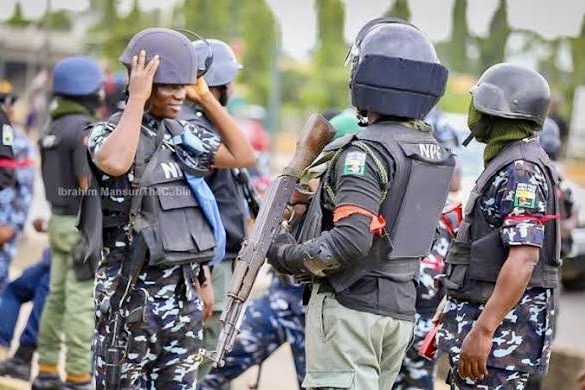
ABUJA, Nigeria — A fresh confrontation between Nigeria’s military establishment and the Indigenous People of Biafra (IPOB) has erupted over a reported operation in Anambra State in which the Nigerian Army says three suspected IPOB/Eastern Security Network (ESN) members were killed, three suspects arrested and three alleged camps dismantled.
IPOB, however, has rejected the military’s account in its entirety, accusing the Army and what it called the Nigerian “propaganda machinery” of manufacturing a security narrative to divert attention from the continuing legal battle involving its imprisoned leader, Nnamdi Kanu.
The dispute is significant because it arrives at a politically and legally sensitive moment. Kanu, convicted and sentenced to life imprisonment by the Federal High Court in Abuja in November 2025, has appealed the judgment and is challenging both his conviction and sentence at the Court of Appeal. His family said in late July and early August 2026 that he intends to remain at the Sokoto Custodial Centre pending the appellate court’s determination of issues connected with his imprisonment.
The Army’s operation, according to its account published on 15 August, was conducted by troops of the newly established 15 Brigade under Joint Task Force South-East, Operation UDO KA, working with personnel of the Department of State Services (DSS) and members of the Agunechemba Vigilante Group.
The target was identified as three alleged IPOB/ESN camps at Osuakwa, around the boundary between Ihiala and Ogbaru Local Government Areas of Anambra State. The Army said the operation was intelligence-led and followed what it described as credible information about suspected IPOB/ESN activities in the area.
The military said the joint force came under hostile fire and responded with force.
According to the Army, the resulting firefight left three suspected IPOB/ESN members “neutralised”, while the three alleged camps were overrun and destroyed.
The Army described the operation as a major operational success.
“Three suspected IPOB/ESN members were neutralised, while all three camps were successfully overrun and destroyed to prevent their future use as operational bases,” the Army said.
What the Army Says It Found
The military’s evidence narrative rests heavily on the items it says were recovered during the operation.
Its stated haul included one FN rifle loaded with 10 rounds of 7.62mm NATO ammunition, one pump-action shotgun with five cartridges and 15 sticks of dynamite.
The soldiers also reportedly recovered four motorcycles, a gas cylinder, three hybrid batteries, two car batteries and three handheld radio chargers.
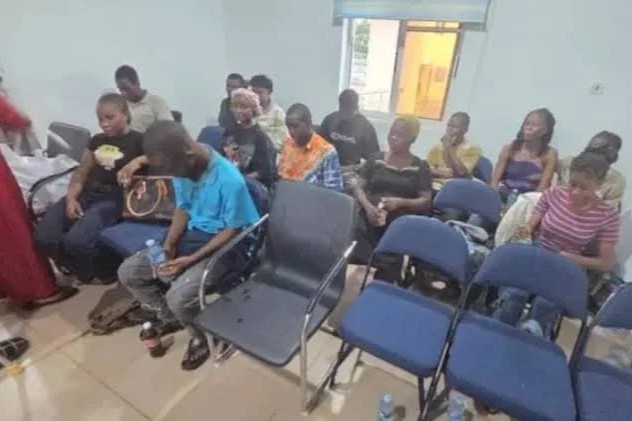
The Army further said that subsequent exploitation of the area resulted in the arrest of a suspected IPOB/ESN member identified as Chijioke, alongside another male suspect and a female suspect. According to the military, the three were found in the company of six children.
The Commander of 15 Brigade commended the troops, DSS personnel and members of the Agunechemba Vigilante Group for what he described as their “courage, discipline and outstanding inter-agency cooperation”.
He described the operation as “another major setback for criminal and terrorist elements seeking to undermine peace and security in the South East”.
The Army subsequently stated that the new brigade would continue intelligence-led operations with sister agencies and local stakeholders to locate and dismantle criminal networks in Anambra and the wider South-East.
That assertion is consistent with a broader pattern of joint military and intelligence operations against suspected IPOB/ESN networks in the region.
In June 2026, for example, the DSS and Army said they had disrupted an alleged plan to kidnap students sitting the West African Senior School Certificate Examination, recovering eight AK-47 rifles, magazines and hundreds of rounds of ammunition from an alleged ESN armoury in Enugu.
In March, soldiers also reported dismantling suspected IPOB/ESN camps and an improvised explosive device facility at Orsumoghu in Ihiala Local Government Area of Anambra State.
Those earlier operations make the Army’s claim of another camp raid in Anambra neither isolated nor unprecedented.
But that history also sharpens the central question raised by IPOB: whether the military’s operational claims in every individual case are independently verifiable.
IPOB Calls It a “Manufactured Media Frenzy”
IPOB’s response was not a cautious denial.
It was a frontal attack on the credibility and timing of the military announcement.
In a statement signed by its spokesperson, Emma Powerful, the separatist organisation described the raid as a “manufactured media frenzy” intended to draw attention away from the Biafran question and Kanu’s ongoing legal battle.
“There are two immediate developments that Nigerians and the international community must place side by side with this latest propaganda,” IPOB said.
The organisation argued that one of those developments was renewed international attention on Biafra, including what it described as a recent programme on Israel’s Channel 14 that touched on the Biafran question and alleged persecution of Christians in Nigeria.
IPOB alleged that rather than answer those international discussions, Nigerian authorities had resorted to an old strategy of changing the news cycle through a fresh security operation.
“Rather than confront the substance of that international discussion, the Nigerian propaganda machinery has apparently chosen its familiar diversion: invent another ESN-camp story and flood the media with photographs and sensational claims,” the group alleged.
Atlantic Post could not independently verify the specific Channel 14 programme cited by IPOB through the publicly indexed sources reviewed for this report. That does not establish that the programme did not occur; it means only that the claim could not be independently substantiated from the available material.
Kanu’s Appeal Is the Bigger Battlefield
The timing argument advanced by IPOB centres on Kanu’s legal battle.
The former leader of IPOB was convicted on seven terrorism-related counts in November 2025 and sentenced to life imprisonment on several counts, with additional prison terms on other counts. He has appealed the decision, asking the Court of Appeal to overturn his conviction and sentence.
His appeal contains multiple legal objections, including arguments concerning fair hearing, the law under which he was convicted and sentencing procedure. His lawyers also argued that the life sentence was imposed without allocutus, the opportunity for a convicted person to address the court before sentencing.
The appeal has therefore become the central institutional arena for Kanu’s attempt to reverse the outcome of his trial.
IPOB has repeatedly sought to portray the appellate proceedings as a test of Nigeria’s constitutional order.
In June 2026, the group argued that issues raised in the Federal Government’s cross-appeal created serious questions about the trial court’s jurisdiction. That position has been presented by IPOB as a potentially decisive legal weakness, although it remains an argument by the separatist organisation, not a judicial determination that Kanu’s conviction is invalid.
That distinction matters.
There is no court finding in the sources reviewed for this report holding that the Army’s Anambra operation was staged as a diversion from Kanu’s appeal.
Nor is there evidence independently establishing IPOB’s allegation that the Nigerian security establishment manufactured the operation for that purpose.
At present, the competing claims remain exactly that: competing claims.
“The Nigerian Establishment Is Acutely Uncomfortable…”
IPOB nonetheless tied the raid directly to what it described as legal pressure surrounding Kanu’s case.
“The Nigerian establishment is acutely uncomfortable with the explosive legal issues raised by Onyendu Mazi Nnamdi Kanu in his letter to the President of the Court of Appeal,” the group said.
“Instead of confronting those issues openly and allowing the judicial process to take its course, the authorities appear determined to manufacture another security narrative capable of dominating the news cycle.”
This is one of the most serious allegations in the statement because it moves beyond rejecting the facts of a military operation and accuses state institutions of deliberately manipulating public attention.
Yet an important investigative caution is necessary.
Kanu has indeed challenged his conviction through the appellate system, and the appeal is active. But the existence of an appeal does not, by itself, establish that a military operation announced during the same period was designed to distract from it. That causal link remains unproven.
The “Fake Camp” Question
IPOB went further, alleging that authorities have repeatedly used alleged discoveries of ESN camps to reinforce what it considers a politically convenient narrative.
“Whenever the Nigerian state and its collaborators in the South-East find their narrative collapsing, suddenly an alleged ESN camp is ‘discovered,’” the organisation claimed.
It also alleged that everyday objects could be presented in security briefings as evidence of a sophisticated armed network.
“Motorbikes, generators, telephones and other ordinary objects are photographed, arranged dramatically and presented to the public as evidence of some sinister operation,” IPOB said.
This allegation raises an important evidentiary issue.
Items such as motorcycles, batteries, chargers and gas cylinders are not, by themselves, proof that a location belonged to a particular armed organisation.
But that does not mean weapons, explosives or communications equipment recovered from a location are necessarily innocuous either.
The evidentiary question is therefore not simply whether the objects exist. It is whether investigators can establish a reliable chain connecting the objects, the site, the arrested suspects and the organisation the Army says operated there.
That is the standard that would ultimately matter in court.
“The Nigerian State Cannot Continually Substitute Press Conferences for Evidence”
IPOB challenged the military to provide independently verifiable proof of its allegations.
“If the Nigerian military has genuinely discovered an ESN camp, let it provide independently verifiable evidence, identify the occupants, produce arrested suspects, establish ownership of the location and demonstrate the evidential connection between the alleged camp and IPOB or Onyendu Mazi Nnamdi Kanu,” the group said.
“The Nigerian state cannot continually substitute press conferences for evidence.”
That challenge deserves attention irrespective of one’s position on Biafra.
Military press statements serve a legitimate operational and public-information purpose. But when people are killed, suspects are arrested and organisations are accused of terrorism, the evidentiary chain ultimately belongs before investigators, prosecutors and courts—not merely in press releases.
The Army has publicly identified what it says it recovered, but the sources reviewed for this report do not show the suspects in court, provide forensic reports on the explosives or establish through independently examined evidence that the three alleged camps were formally controlled by IPOB or ESN.
That gap should not automatically be interpreted as proof that the Army’s account is false.
It does, however, mean that a responsible news report should distinguish what the military says happened from what has been independently demonstrated.
A Familiar Battlefield in Anambra
The controversy comes against a backdrop of sustained security operations in Anambra.
In September 2025, a joint police, Army, DSS and vigilante operation reportedly dismantled an alleged ESN/IPOB camp in Aguluezechukwu, Aguata Local Government Area, where improvised explosive devices were recovered.
In January 2025, the Army also reported killing eight suspected IPOB/ESN members during a firefight in Anambra and arresting five others.
In June 2026, troops reported killing three suspected IPOB/ESN operatives during a gun battle in Orumba South, saying the suspects were travelling in a Toyota Sienna.
The pattern demonstrates that armed separatist-linked violence and military counter-operations are not inventions of the latest news cycle.
Independent assessments also indicate that the security picture in the South-East is significantly more complicated than a simple contest between the Nigerian state and IPOB.
The European Union Agency for Asylum says ESN was created in 2020 as IPOB’s paramilitary wing and has been involved in clashes with security forces, while also noting the emergence of other armed actors and criminal networks in the region.
A UK government country-information assessment published in April 2026 similarly described the South-East’s violence as “complex” and “hybrid”, involving state forces, separatists, criminal gangs, cult groups and other armed actors. It noted that some criminals have reportedly claimed to operate for IPOB or ESN, making attribution difficult.
That complexity is critical.
A criminal gang may operate in an area associated with separatist violence without being part of IPOB. A genuinely organised ESN cell may also operate without every alleged sympathiser or suspect in a surrounding community being an operational member.
This is precisely why evidence matters.
The Human Rights Dimension
There is another layer which cannot be ignored.
Amnesty International’s 2025 investigation into violence in South-East Nigeria documented alleged abuses by a broad range of actors, including members of the security forces, IPOB/ESN, vigilante groups and other non-state actors. Its report said 1,844 people were killed in the region between January 2021 and June 2023 amid a mixture of protests, clashes, abductions, mob violence, separatist activity and other forms of violence.
The implication is sobering.
For ordinary residents of Anambra, the distinction between a successful counter-insurgency operation and another cycle of retaliation is not academic.
Every disputed killing has the potential to deepen distrust. Every unsubstantiated security claim risks weakening confidence in legitimate institutions. And every genuine armed camp that is ignored creates a different and equally dangerous security failure.
IPOB’s Challenge to the Army
IPOB also questioned what it considers the uneven visibility of security operations.
“How does a military that repeatedly claims to locate ESN camps with remarkable precision struggle to locate the armed criminals terrorising rural communities and kidnapping innocent citizens?” the group asked.
It argued that residents of the South-East continue to demand answers over attacks on farmers and rural communities, while operations against alleged ESN camps receive immediate publicity.
That criticism touches a sensitive point in Nigerian security reporting: selective visibility.
Security agencies routinely publicise successful raids because they serve deterrence, accountability and public reassurance objectives.
But operational propaganda can become counterproductive when spectacular announcements are not followed by transparent prosecutions, forensic evidence or demonstrable convictions.
The Army’s answer, implicitly, is that its current campaign is broader than IPOB alone.
Its June operations against an alleged ESN armoury, for example, were framed around preventing attacks on schools and students, while Operation UDO KA has continued to conduct clearance and intelligence operations across the South-East.
The wider record therefore makes it difficult to sustain a factual claim that the Nigerian military has suddenly invented the existence of armed separatist networks.
What remains contestable is whether this particular Anambra operation was accurately attributed, whether all three deceased suspects were actually members of IPOB/ESN, whether the alleged camps functioned as operational bases and whether the operation was in any way connected to political or legal developments surrounding Kanu.
Those questions require evidence.
IPOB Says Kanu “Does Not Need an ESN Camp”
The separatist organisation also rejected any suggestion that Kanu’s international profile depends upon armed operations.
“Onyendu Mazi Nnamdi Kanu does not need an ESN camp to make his case before the world. His legal arguments, his record and the grievances of the Biafran people speak for themselves,” IPOB said.
It called on authorities to fight the issues surrounding Kanu’s case in court rather than through what it described as media distractions.
“If the authorities believe that the issues contained in his letter to the President of the Court of Appeal are empty, they should confront them through the courts,” the group said.
“If they believe the international discussion about Biafra is baseless, they should address the substance rather than manufacture distractions.”
The argument reflects a wider strategic shift by Kanu’s supporters: away from the old battlefield of mass street mobilisation and toward litigation, international lobbying and constitutional arguments.
That strategy is unfolding while Kanu remains imprisoned.
His family has recently insisted that he should not be moved from Sokoto outside the judicial process, arguing that his place of confinement is itself connected to issues being challenged before the Court of Appeal.
IPOB Appeals to Foreign Governments and Rights Groups
The statement urged international journalists, diplomats, human-rights organisations and foreign governments to independently scrutinise military claims about alleged ESN camps.
Its language was unusually categorical.
“The Nigerian propaganda machinery has deployed this tactic repeatedly because it fears the issues it is trying to bury,” IPOB said.
“But this time, the world is watching. You cannot bury Biafra with propaganda. You cannot silence Onyendu Mazi Nnamdi Kanu with manufactured headlines. And you cannot run forever from the truth by repeatedly shouting ‘ESN camp.’”
Those are powerful political claims.
They are not, however, findings of fact.
The responsibility of journalists in a highly polarised security environment is to test them rather than simply amplify them.
What Happens Next?
The Army is likely to view the operation as part of an expanding campaign by 15 Brigade and Operation UDO KA to deny armed groups sanctuary in the South-East.
IPOB, on the other hand, has transformed the raid into a political and legal argument about state credibility, Kanu’s appeal and the international perception of the Biafran question.
The consequences may extend beyond the three alleged camps.
If the arrested suspects are prosecuted, the evidence presented in court could become the first major independent test of the Army’s public claims.
Investigators will need to establish who owned or controlled the locations, how the suspects were identified, the forensic origin and condition of the weapons and explosives, whether the six children were connected to the alleged militants, and whether any evidence demonstrates a command or organisational link to IPOB or ESN.
The government also faces a second test: transparency.
The more politically explosive the circumstances surrounding an operation, the stronger the case for evidence-based disclosure.
The Army does not have to reveal sensitive operational intelligence. But photographs, inventories, forensic findings, arrest records and subsequent court proceedings can help prevent a simple information war from replacing facts.
IPOB faces the same burden.
If it says the operation was fabricated, it should help demonstrate why. Identifying inconsistencies in the location, weapons, identities of the dead or arrested persons, photographs or alleged ownership of the camps would be far more consequential than describing the operation as propaganda.
The Real Question Behind the Anambra Raid
The most consequential issue is therefore not whether Nigerians should automatically believe the Army or IPOB.
It is whether the institutions of the Nigerian state and the separatist movement are prepared to subject their competing narratives to verifiable evidence.
The Army says it conducted a successful intelligence-led operation, came under fire, killed three suspected militants, arrested three others and recovered firearms and dynamite.
IPOB says the entire episode is a “fake” security narrative designed to manipulate the news cycle while attention focuses on Kanu’s appeal and the wider Biafran question.
As at Sunday, 16 August 2026, there is no independent evidence publicly available in the sources reviewed by Atlantic Post that conclusively establishes IPOB’s allegation that the raid was staged as a diversion from Kanu’s case. There is likewise no independently published forensic or judicial record yet establishing the full evidential chain behind every Army allegation arising from the operation.
That is the uncomfortable truth at the centre of this controversy.
Three people are dead.
Three suspects are in custody.
Weapons and explosives have reportedly been recovered.
Three alleged camps have reportedly been destroyed.
And yet the biggest battle is now being fought over something soldiers cannot secure with rifles: credibility.
Until the evidence is independently tested, the Anambra operation should be treated as an official military claim challenged by IPOB—not as a settled fact that one side has already conclusively won.
For a region exhausted by years of armed violence, political grievance, competing propaganda and allegations of abuse, that distinction is not semantic.
It may be the difference between information that protects the public and information that merely feeds the next cycle of conflict.
Atlantic Post will continue to track the arrests, any prosecution of the suspects, forensic findings, independent evidence concerning the alleged camps and developments in Nnamdi Kanu’s appeal.