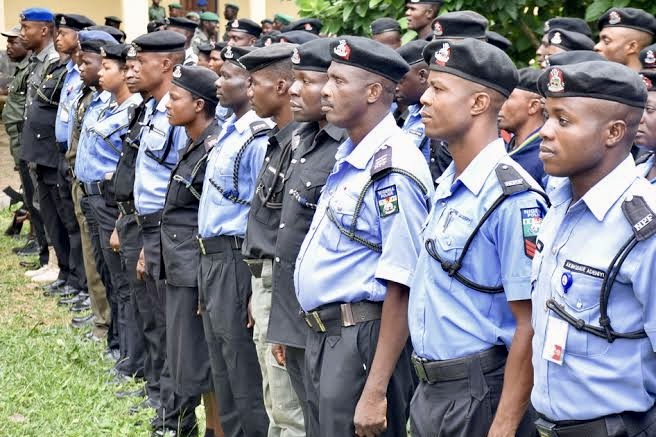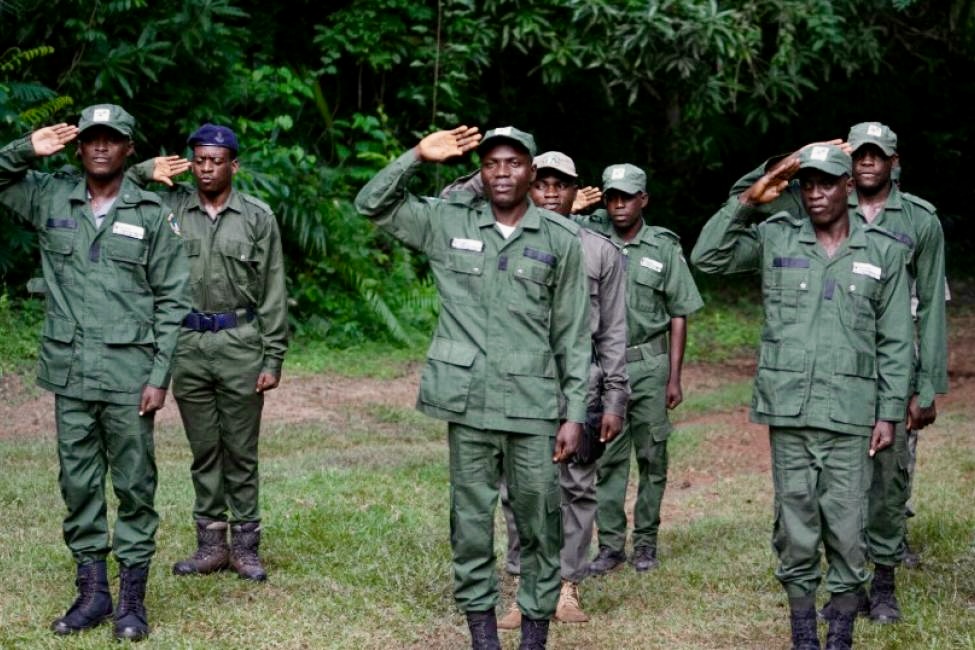
ILORIN/ENUGU — Nigeria’s rapidly expanding forest-guard strategy is facing a potentially damaging test from inside its own ranks, with guards deployed to some of the country’s security-challenged forests in Kwara and Enugu alleging that they have gone months without salaries or allowances, struggled to feed themselves and, in some locations, lacked the weapons and welfare support needed for operations against heavily armed criminal groups.
The allegations, contained in a report by SaharaReporters and reviewed by Atlantic Post, come at an uncomfortable moment for the Federal Government.
President Bola Ahmed Tinubu has elevated forest security from a largely state-level experiment into a national security initiative, with the Office of the National Security Adviser (ONSA), the Department of State Services (DSS), the Defence Headquarters, the Nigeria Police Force and other institutions now involved in a programme that had trained more than 9,000 personnel across 10 states by the end of July 2026.
Yet the most striking contradiction is already visible in the government’s own records.
When more than 7,000 forest guards graduated in late 2025, National Security Adviser Nuhu Ribadu said there would be no administrative gap between graduation and deployment and expressly stated that “Salaries and allowances will commence immediately” for certified guards.
The new allegations, if substantiated, suggest that for at least some personnel in Kwara and Enugu, that promise has not translated into reality.
And that raises a question bigger than unpaid wages: Can Nigeria sustainably fight banditry, terrorism and kidnapping with a security force that may itself be struggling to survive?
‘We Are Hungry, Barely Armed’
In Kwara, guards reportedly deployed to remote areas in Kaiama, Patigi and Edu local government areas said they had spent months in difficult locations without receiving the welfare support they were promised.
Some allegedly abandoned their posts or began making their way towards their bases.
One guard described a situation in which personnel who were expected to patrol dangerous terrain had become dependent on poor rural communities for food.
“We were told that when we were deployed to the communities, the government would take responsibility for our welfare. But for more than three months, there has been no food. We have been struggling to survive,” the guard said.
That statement goes to the heart of a frequently overlooked problem in counter-insurgency operations: logistics are not secondary to security. They are security.
A guard who cannot eat, communicate, travel or obtain emergency assistance is not simply an unhappy employee. In a hostile environment, such a guard becomes an operational liability — potentially endangering himself, his colleagues and the civilians he has been assigned to protect.
Another guard said residents had pushed back when operatives asked them for food.
“When we ask the communities for food, they tell us that they are also hungry and that the government deployed us, so the government should feed us. We cannot continue to beg people who are themselves struggling to survive.”
The complaint is especially revealing because the forest-guard model depends heavily on local legitimacy. The Federal Government says many recruits were deliberately selected from communities affected by kidnapping and banditry because they know the terrain, forest paths, rivers and remote settlements.
That local knowledge is supposed to be an advantage.
But if impoverished communities are expected to feed, shelter or support armed personnel deployed by government, the arrangement risks turning a formal security operation into an informal burden on the very communities the state is trying to protect.
Another operative put the issue more bluntly:
“We did not join this work to become beggars. We were deployed here to protect people, but nobody is protecting us.”
The guards also alleged that assurances concerning payment had not been fully honoured.
“We were given assurances that there would be a proper payment arrangement. We believed the government and accepted the deployment because we thought our welfare would be taken care of. But the promises have not been fulfilled as we expected,” one guard said.
A further operative alleged that deployment had advanced faster than the support structure behind it.
“You cannot send people into areas where terrorists are operating and expect them to survive without proper welfare, equipment and weapons. We are ready to work, but the government must also do its part.”
The Weapons Question
Perhaps the most serious allegation concerns arms.
The guards claimed some personnel were being expected to enter forests against criminals carrying substantially more sophisticated firearms.
“We are being asked to confront people who are heavily armed, but many of our men do not have weapons that can match what the terrorists are carrying. What do you expect them to do when they encounter these people?”
That complaint deserves careful scrutiny.
The Federal Government’s current forest-guard architecture is not merely environmental policing. The initiative has increasingly been integrated into Nigeria’s internal-security response.
On 26 November 2025, Tinubu declared a nationwide security emergency and gave the DSS authority to deploy trained forest guards to confront terrorists and bandits in forested areas.
“The DSS also has my authority to immediately deploy all the forest guards already trained to flush out the terrorists and bandits lurking in our forests.”
The President added:
“The agency also has my directive to recruit more men to man the forests. There will be no more hiding places for agents of evil.”
That is a striking escalation in mandate.
Once forest guards are expected to conduct security operations in areas occupied by armed groups, the distinction between an environmental ranger and an auxiliary security operative becomes increasingly blurred.
That means their training, weaponry, communications, medical support, mobility, extraction arrangements and rules of engagement become matters of national security — not merely state administrative policy.
The allegations therefore demand answers not only from state governments but from the Federal Government and the agencies coordinating the wider programme.
A Force Expected To Enter Places Others Avoid
Another guard raised the issue of rescue capacity.
“We are the people who are expected to enter these forests and gather intelligence or confront the criminals. If something happens to us there, who will come quickly to rescue us? That is the question we are asking.”
That question is more important than it may initially appear.
Nigeria’s forest-guard model is built around the proposition that personnel recruited from local communities can identify routes and hideouts that conventional forces may not know. ONSA has said recruits were chosen partly because of their familiarity with forests, footpaths, rivers, remote settlements and routes connecting communities and states.
But local knowledge creates a dangerous paradox.
The closer a recruit is to a criminal network’s operating terrain, the greater the possibility that he may also be the first security actor to encounter an armed group before military or police reinforcement arrives.
If communications fail, if vehicles are unavailable, or if personnel are inadequately armed, the very feature that makes forest guards strategically useful may place them at disproportionate risk.
Kwara’s Deadly Warning
Kwara provides one of the clearest warnings about what is at stake.
The state had already become an important theatre in the forest-guard experiment. In December 2025, about 1,000 forest guards completed training and were prepared for deployment against terrorists, kidnappers and illegal miners. Governor AbdulRahman AbdulRazaq described the initiative as a “game changer” and said the new force would strengthen collaboration between community-based personnel and conventional security agencies.
But months before that deployment, the risks had already been exposed.
In September 2025, at least 12 forest guards, vigilantes and residents were killed in attacks affecting Oke-Ode and Tsaragi in Kwara. Premium Times reported that newly recruited forest guards were among those targeted, while the Associated Press separately reported that at least 12 forest guards were killed in Oke-Ode after gunmen attacked the community.
The significance of those deaths is difficult to overstate.
The government was not sending office workers into a conventional policing environment. It was placing locally recruited personnel into a rural battlefield in which armed groups could attack from concealed positions, retreat into forests and exploit poor road access.
The danger has not disappeared.
Indeed, on 29 July 2026, Kwara Forest Guards, DSS operatives, local hunters and vigilantes reportedly rescued nine kidnap victims and killed three suspected bandits during an operation in Ekiti Local Government Area. The operation involved a forest corridor linking communities and neighbouring states.
That episode demonstrates two things simultaneously.
First, the forest guards are capable of making a tangible contribution to public safety.
Second, they are operating in environments where the margin for logistical failure can be extremely small.
One of the guards involved in that operation, Owolabi Adebayo, said the criminals were heavily armed.
“There is no type of firearm that is not in their hand,” he said.
That comment, made in connection with a successful operation, gives greater weight to the wider concern about whether personnel are consistently receiving weapons capable of protecting them in such encounters.
The Enugu Contradiction
The situation described in Enugu presents another layer of the problem.
Some forest guards there reportedly alleged that they had worked for months without receiving salaries or allowances, with personnel claiming that some had been on duty since November 2025.
One source was quoted as saying:
“As I speak with you, some of them have been working in various communities and local government areas in Enugu State since November 2025.”
Another alleged:
“For us who were selected and sent for national training, we are being owed allowances for more than four months now, and even the new salary scale the Federal Government approved, we have not been paid a dime.”
These allegations are particularly significant because Enugu had publicly advertised an attempt to professionalise its Forest Guard Corps.
In September 2025, Governor Peter Mbah approved a restructuring of the Enugu State Forest Guard and ordered that salaries be reviewed upwards to a minimum of N80,000, in line with the state’s new minimum wage. Commander Akinbayo Olasoji said the programme was intended to attract trusted young people with detailed knowledge of their local forests, rivers and caves.
The state also described the recruitment as a structured, community-based exercise involving traditional rulers, town unions, medical officials, the police, DSS and the Nigeria Security and Civil Defence Corps.
This makes the allegations about non-payment all the more important to investigate.
The question is not simply whether individuals are owed money.
It is where the payment chain broke.
Was the problem at the state level? At the federal level? Within the administration of the joint programme? Or are some personnel operating under separate employment arrangements that the public has not been clearly told about?
At the time of the report supplied to Atlantic Post, SaharaReporters said efforts to obtain a response from Enugu Forest Guard Commander Dr Akinbayo Olasoji were unsuccessful and that the Enugu State Government had not publicly responded to the allegations.
Atlantic Post has not independently verified the exact number of Enugu personnel allegedly affected, the aggregate amount purportedly owed, or the individual contractual arrangements of the guards.
Those distinctions matter.
The existence of an allegation is not proof of a systemic failure. But the allegation is sufficiently serious — and the programme sufficiently central to national security — that it warrants a formal, documented response.
The State Government Says It Is Providing Support
There is also evidence that the Enugu authorities have invested in the force.
In March 2026, a security-gadget donation to the Enugu Forest Guard was publicly welcomed by its leadership. The Chairman of the Forest Guard Board, retired Colonel Daniel Chukwu, described the intervention as timely, while Commander Olasoji called it a morale booster.
More significantly, Olasoji disclosed that the state government had procured more than 1,000 sophisticated rifles for the outfit.
That claim directly complicates the allegation that Enugu forest guards are generally operating without meaningful weapons support.
But it does not resolve the underlying issue.
A force can possess rifles and still suffer from poor welfare, delayed salaries, insufficient ammunition, inadequate transport, weak communications or uncertain personnel status.
Equipment and payroll are different components of operational readiness.
The Federal Government’s Expansion Raises The Stakes
The wider programme is no longer experimental in scale.
By July 2026, ONSA said the Presidential Forest Guards Initiative had expanded to 10 states, with more than 9,000 personnel trained. The latest phase involved Kaduna, Edo and Kogi, bringing more than 2,000 additional trained guards into the programme. The initiative is coordinated by ONSA and operationally led by the DSS, with participation from the National Intelligence Agency, Defence Headquarters, Nigeria Police Force and National Park Service.
The Federal Government has continued to deepen that strategy.
In May, Tinubu approved the recruitment of another 1,000 forest guards in Oyo following the abduction of pupils and teachers in Oriire Local Government Area.
In June, Tinubu approved another 1,000 recruits for Katsina, with Governor Dikko Radda saying the guards would be properly equipped to work alongside conventional security agencies and community-watch structures.
In Edo, 497 newly trained forest guards were inducted in July and told to support law enforcement and secure forest communities across all 18 local government areas.
And in Kaduna in August, the ONSA described the state’s armed forest-guard training as the best it had evaluated so far, underlining the increasing emphasis on professionalisation and firearms capability.
The message from Abuja is therefore unmistakable: forest guards are becoming a permanent layer in Nigeria’s security architecture.
Which makes the welfare allegations harder to dismiss as an isolated administrative complaint.
Promise Versus Reality
The critical issue confronting the Federal Government is now the credibility gap between national policy and field experience.
The state has publicly promised trained guards.
It has publicly promised immediate deployment.
It has publicly promised salaries and allowances.
It has publicly described the guards as first responders, community protectors and a critical layer of Nigeria’s security architecture.
Yet the allegations from Kwara and Enugu describe some personnel as hungry, unpaid or uncertain about their employment status.
One Kwara operative summarised the demand:
“We are not saying that we do not want to work. We are saying that the government must provide the things we need to work. Give us food, pay us properly and equip us with the weapons required to defend ourselves and the communities.”
Another said:
“If you deploy us without food and without proper weapons, you are not only putting our lives in danger, you are also putting the communities we are supposed to protect in danger.”
That is arguably the central issue.
This is not primarily a dispute about whether forest guards should work harder.
It is a question of whether government understands that security deployment creates a corresponding duty of care.
‘We Were Told This Was A Serious Government Programme’
One operative said the guards entered the programme because they believed they were joining a properly supported national effort.
“We were told that this was a serious government programme. We accepted the responsibility because we wanted to help protect our communities. But what we are seeing now is different from what we were promised.”
That sentence deserves the attention of Abuja.
Because if forest guards conclude that government promises cannot be trusted, recruitment itself could eventually become harder.
A young man in an insecurity-hit community may be willing to patrol a dangerous forest because he believes there will be a salary, food, equipment, insurance, medical support and a chain of command behind him.
Remove those assurances and the state is effectively asking patriotism to substitute for institutional capacity.
Patriotism is valuable.
It is not a logistics system.
‘We Cannot Continue To Beg’
The Kwara guards reportedly expressed the same frustration from another angle:
“We cannot continue to beg people who are themselves struggling to survive.”
That should be treated as more than a welfare complaint.
In counter-insurgency, local populations are an essential intelligence source. Their trust can determine whether a guard hears about a kidnapping before it happens, learns which path armed men used or receives early warning of an approaching attack.
A guard who arrives hungry and depends on the same population for food may inadvertently undermine the very relationship on which the intelligence model depends.
Conversely, a professionally supported guard who is paid on time, equipped properly and held to clear standards is more likely to become a trusted intermediary between the community and the formal security system.
That is the strategic opportunity being placed at risk.
What Government Must Explain
The allegations now create a straightforward accountability test.
The Federal Government and the affected state governments should publicly clarify the number of forest guards recruited in Kwara and Enugu; the agencies responsible for their salaries; the date payments became due; how many months are outstanding; what allowances were approved; what weapons and other operational equipment were allocated; and what procedures exist for casualty evacuation and emergency reinforcement.
They should also clarify the legal status of guards initially recruited as volunteers and later promised regularisation.
A security programme cannot operate indefinitely on verbal assurances.
Contracts, payroll records, deployment orders, equipment registers, casualty protocols and command structures should exist.
The public should be able to know who is responsible for what.
‘We Are Ready To Work’
Despite their complaints, the guards’ message is not one of surrender.
They say they want to continue working.
“We are not saying that we do not want to work.”
That distinction matters.
The emerging picture is not necessarily that Nigeria’s forest-guard concept has failed. In fact, recent operations in Kwara show that forest guards can contribute to kidnappers’ disruption, intelligence-led bush combing and victim rescue when working with the DSS, hunters and other security structures.
The real question is whether the country will build an institution capable of sustaining those successes.
The Accountability Question
Nigeria has spent years searching for new ways to secure the spaces in which conventional policing struggles to operate.
Forest guards may become part of the answer.
But a force deployed into the most dangerous terrain cannot be sustained on speeches, uniforms and recruitment numbers.
The Federal Government can point to 9,000 trained personnel.
It can point to 10 participating states.
It can point to weapons training, joint operations and successful rescues.
The guards, however, are asking a more basic question:
Who pays us, who feeds us, who equips us and who comes for us when the forest fights back?
Until those questions are answered with evidence rather than promises, the forest-guard initiative will carry an uncomfortable contradiction at its core: Nigeria may be expanding the number of people sent into its forests faster than it is building the system required to keep those people alive, paid and operational.
And in a country where one operational failure can mean another kidnapping, another ambush or another funeral, that is not an administrative inconvenience.
It is a national security risk.
Follow us on our broadcast channels today!
- WhatsApp: https://whatsapp.com/channel/0029VawZ8TbDDmFT1a1Syg46
- Telegram: https://t.me/atlanticpostchannel
- Facebook: https://www.messenger.com/channel/atlanticpostng