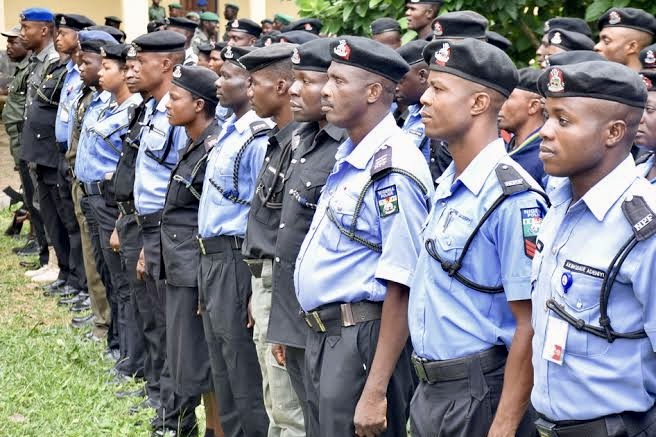
In May 2025, President Bola Tinubu unveiled what he hailed as a landmark security intervention: the recruitment of over 130,000 armed forest guards to safeguard Nigeria’s extensive network of 1,129 forest reserves from terrorists, bandits, and militias.
Yet, more than two months on, a significant number of states have yet to even commence the recruitment exercise, a delay that comes as deadly attacks surge within these once-unmonitored woodlands.
The National Forest Guard Initiative: Ambition Meets Bureaucracy
During an expanded Federal Executive Council (FEC) meeting on 15 May 2025, Tinubu directed each state to enlist between 2,000 and 5,000 heavily armed, well‑trained forest guards under the supervision of the Office of the National Security Adviser and the Ministry of Environment.
At an approximate average of 3,500 recruits per state—including the Federal Capital Territory—the scheme would field some 130,000 operatives equipped to flush out criminal gangs exploiting the dense cover of Nigeria’s forests.
The stated objectives are manifold:
Reclaiming Sovereign Territory: Ensuring no part of Nigeria’s domain is surrendered to terrorists or bandits.
Protecting Farmers and Rural Economies: Shielding agricultural communities from kidnappings and extortion.
Safeguarding Biodiversity: Preserving ecologically sensitive areas from illegal logging and encroachment.
However, the lofty rhetoric has yet to translate into action in key regions.
Forest Reserves: A Lucrative Haven for Criminals
Nigeria’s forest reserves span a variety of ecological zones—from the mist‑shrouded highlands of the Jos Plateau to the vast wetlands of the Niger Delta—and cover millions of hectares under state and federal control.
Historically managed for conservation and sustainable exploitation, many of these reserves have devolved into lawless zones:
Hideouts for Insurgents: Boko Haram cells have reportedly used forest thickets in Borno and Yobe as staging grounds.
Bandit Fortresses: Kidnap-for-ransom gangs in the North‑West exploit the cover of the Birnin‑Gwari hills.
Illegal Logging and Encroachment: Commercial timber mafias and shifting‑cultivation settlers carve roads and clear trees unchecked.
Between May and July 2025 alone, security agencies recorded no fewer than 700 fatalities in attacks attributed to Boko Haram, ISWAP, Fulani militias and bandit groups operating within forest zones—underscoring the urgency of the initiative.
States in Retardation Mode
A Sunday PUNCH investigation reveals that at least seven states—including Kaduna, Ondo, Benue, Kano, Jigawa, Akwa Ibom and Gombe—have not begun the recruitment process, citing various administrative and procedural roadblocks.
Security insiders and state officials offered varying excuses:
Kaduna: Sources indicate Governor Uba Sani is “committed” but awaiting finalisation of recruitment modalities, despite vast forests in Birnin‑Gwari known for bandit hideouts.
Ondo: The Senior Special Assistant on Security Matters lamented that no formal communication has been received from Abuja regarding implementation timelines.
Benue: The State Forest Security Service Commander insists further clarification from the NSA’s office is required before any advert can go public.
Kano: Internal rivalries between legacy “Nigeria Hunters” factions and newly created Forest Security Guards of Nigeria have sown confusion over command and budget lines.
These delays, security experts warn, are not mere teething problems but risk ceding tactical advantage back to criminal networks embedded deep within Nigeria’s woodlands.
Early Adopters: A Mixed Bag
Conversely, a handful of states have taken tentative steps:
Borno: Authorities confirm vetting, profiling and initial field training have begun under the supervision of Usman Tar, the Commissioner for Information and Internal Security.
Niger: Brig. Gen. Muhammed Bello (rtd.) asserts the state was “ahead of the federal curve,” having graduated an initial cohort of recruits even before the May directive.
Plateau, Kwara & Adamawa: Collectively, these states have mustered around 1,650 guards—well below their combined minimum quota of 6,000—citing funding constraints and the need for more trainers.
State‑level pre‑existing units—such as Plateau’s “Agro‑Rangers” and Anambra’s Forest Security Service—offer proof‑of‑concept but remain under‑equipped and under‑armed for full‑scale counter‑insurgency operations.
Sensible Caution or Self‑Sabotage?
Critics like Assistant Commander Peter Ajonye of the combined Benue‑Nasarawa‑Plateau Forest Security Service deride the fresh recruitment drive as “needless,” arguing that leveraging existing hunter networks—already adept at bush tracking—would be more cost‑effective and immediately deployable.
“Our men are in the forest now,” Ajonye asserts. “Why reinvent the wheel when you have seasoned trackers, foot‑soldiers of the bush, ready at hand?”
Yet, defenders of Tinubu’s plan insist that formalising, standardising and up‑scaling forest security under a unified command is indispensable to overcoming the patchwork of under‑resourced local outfits.
Logistical & Training Framework
Phased Roll‑Out Timeline
A strategic timeline published by the Nigeria Risk Index envisions a four‑phase implementation stretching from mid‑2025 through 2028:
Launch (Q3 2025, Months 0–6): Pilot detachments in six high‑risk states with the first 3,000 forest guards trained and deployed.
Consolidation (2026, Months 6–18): Establishment of a national Fusion Centre, mapping and patrolling 60 % of all reserves, and a 25 % reduction in kidnapping incidents.
Nation‑wide Roll‑Out (2027, Months 18–36): Deployment of 20,000 guards covering all 1,129 reserves under a publicly‑accessible KPI dashboard.
Stabilisation (2028+, Months 36–48): Dismantling of terrorist forest camps, integration into a permanent National Guard structure, and launch of eco‑livelihood projects in reclaimed areas.
Rigorous Recruitment & Training Standards
The Federal Ministry of Environment, in coordination with the Office of the National Security Adviser (ONSA), has outlined a multi‑stakeholder recruitment process:
Screening & Vetting: Security agencies, traditional rulers and community leaders will screen applicants for loyalty, physical fitness and local knowledge.
Foundational Training: A minimum 12‑week curriculum covering small arms handling, tracking, first aid, patrol tactics and intelligence gathering—mirroring standards in conventional paramilitary services.
Specialist Modules: Counter‑IED instruction, night‑vision operations and jungle warfare drills, delivered in partnership with the Nigerian Army and Civil Defence College.
Officials insist the entire process—from advert to deployment—will be tightly synchronised across the federal‑state axis to ensure a uniform, professional corps rather than ad‑hoc local militias.
State‑Level Funding & Budgetary Allocations
Disparate State Commitments
Despite the uniform federal directive, state governments’ financial capacities vary greatly:
Bauchi State: Governor Bala Mohammed allocated ₦150 million for arms and ammunition, enabling recruitment and immediate operational readiness for 2,000 guards. Commander‑General Joshua Osatimehin hailed Bauchi as a template for rapid implementation.
Ebonyi State: Governor Francis Nwifuru approved the enlistment of 2,600 youths into the Nigeria Hunters & Forest Security Service (NHFSS), though funding details remain undisclosed.
Plateau, Kwara & Adamawa: Combined recruitment of 1,650 guards to date—well below the minimum 6,000 quota—citing funding shortfalls and a lack of qualified trainers as primary bottlenecks (see Batch 1).
Implications for Uniform Coverage
Analysts warn that inconsistent state budgets risk creating security vacuums. Without clear matching grants or a dedicated federal forest‑security fund line in the 2025 Appropriation Act, poorer states may struggle to meet the minimum 2,000‑guard threshold.
The Federal Government has signalled potential budgetary relief, but concrete figures have yet to emerge.
Leveraging Existing “Hunter” Networks
A Call for Presidential Assent
The Nigeria Hunters & Forest Security Service (NHFSS), inaugurated under the Buhari administration and revived by NHFSS Commander‑General Joshua Osatimehin, has longstanding legal backing awaiting President Tinubu’s signature.
Osatimehin told TheCable that NHFSS personnel have already completed specialised training in intelligence, surveillance and provost duties, and are “battle‑ready” once the enabling bill is assented to.
“We appeal to Mr President for accelerated assent so we can take the battle to the forest,”
— Joshua Osatimehin, NHFSS Commander‑General.
Veteran Trackers vs. Green Recruits
Retired Army General Peter Aro sees immense value in institutionalising hunter networks. He lauds Tinubu’s policy as “critical,” but stresses that converting seasoned trackers into formal forest guards would be quicker and more cost‑effective:
“These hunter‑soldiers know the bush like the back of their hand. A little professional training turns them into formidable forest operatives,”
— Retd. Gen. Peter Aro .
Proponents argue that an integrated model—melding NHFSS veterans with new recruits—could resolve training shortfalls and ensure immediate forest coverage while the broader recruitment drive ramps up.
Command & Control Architecture
Centralised Forest Intelligence Command (CFIC)
To coordinate nationwide operations, experts advocate for a Centralised Forest Intelligence Command under the Office of the National Security Adviser.
CFIC would fuse data from the Police, DSS, Military Intelligence, Immigration Service, state Forest Guard Commanders and civilian conservation groups such as the Nigerian Conservation Foundation and UNEP, leveraging GEOINT, SIGINT and drone feeds to produce real‑time threat mapping and predictive alerts.
Stand‑Up Zonal Fusion & Command Centres
Complementing CFIC, zonal Fusion & Command Centres in six geo‑strategic regions would co‑locate analysts from DSS, NPF, military and state vigilance outfits.
Each centre would receive live drone telemetry and telecom triangulation, pushing movement alerts to guards’ tablets and aiming to intercept 80 % of forest‑based threats within 24 hours.
National Criminal Data Fusion Centre
Building on the police’s new Criminal Data Fusion Centre—which already aggregates classified and unclassified criminal records—the Forest Guard CFIC could integrate its output to “bolster internal security operations” and share intelligence with INTERPOL and neighbouring countries.
Public–Private Partnerships & Financing
Dedicated Forest Security Trust Fund
A ring‑fenced Forest Security Trust Fund, seeded by federal and state budget lines and boosted through CSR and climate‑finance streams, is essential to avoid erratic state‑by‑state allocations.
Quarterly public dashboards would track disbursements, aiming for 95 % on‑time releases and clean audit opinions
Engaging Logging, Agro‑Businesses & Eco‑Tourism
Partnerships with timber companies, plantation investors and eco‑tourism operators can provide both logistics (vehicles, communications gear) and community incentives.
Projects might include carbon‑credit patrols, non‑timber forest product hubs, and youth agro‑processing centres—linking security to livelihood creation and reducing incentives for encroachment.
NGO & Multilateral Support
Collaborations with NGOs (e.g. Nigerian Conservation Foundation), UN agencies and development banks (AfDB, World Bank) can underwrite specialist training, forensic labs for timber tracking and community‑reporting hotlines, bolstering both capacity and local buy‑in.
International Comparisons: Lessons & Warnings
| Country | Model | Key Takeaways |
|---|---|---|
| Indonesia | Polhut (Forest Rangers) | – Civil‑service rangers under the Environment Ministry; formalised in 1999. – Women‑led patrol teams in Aceh use GPS, drones and community‑engagement to slash deforestation. |
| Community Rangers (ASEAN) | IPLC patrols | – Indigenous and ex‑poacher trackers embedded in formal law‑enforcement teams. – SMART methodology for systematic patrols; success depends on respectful, participatory engagement. |
| India | Van Rakshak Project & SSF | – WTI’s Van Rakshak trained 18,000 frontline staff, supplied kits and accident insurance. – Madhya Pradesh’s Special Tiger Strike Force coordinates cross‑border anti‑trafficking ops—showing the value of specialised, mobile units. |
Best Practices
Unified Command: Central fusion centres ensure data‑driven deployment and minimise inter‑agency turf wars.
Community Integration: Embedding local trackers and women’s groups yields actionable intelligence and fosters trust.
Dedicated Funding: Ring‑fenced trust funds and PPPs prevent patchwork implementation and sustain operations.
Pitfalls to Avoid
Over‑Militarisation: Indonesia’s heavy‑handed anti‑poaching units have, at times, alienated Indigenous communities—eroding long‑term cooperation.
Fragmented Budgets: India’s chronic under‑funding and equipment shortages led to ranger casualties and gaps in coverage.
Lack of Oversight: Without transparent audit trails and KPI‑driven reviews, funds can be misallocated and effectiveness unverifiable.
Fast‑Track Legal & Organisational Clarity
Presidential Assent to NHFSS Bill
Immediate signing of the Nigeria Hunters & Forest Security Service enabling legislation will eliminate factional rivalries (e.g. Kano’s dual‑structure dispute) and provide a clear legal mandate for existing hunter networks to be absorbed into the national framework .
A Cabinet memo from the Attorney‑General’s office should be expedited within 14 days to send the bill to the President’s desk.
Gazette the Centralised Forest Intelligence Command (CFIC)
Issue a Federal Gazette Order under the NSA’s office to formally establish the CFIC and six regional Fusion Centres—detailing their mandate, staffing complement and data‑sharing protocols.
Publish the CFIC charter on a public portal, ensuring inter‑agency buy‑in from DSS, NPF, Military Intelligence and state Forest Guard Commands .
Secure Dedicated, Ring‑Fenced Financing
Establish the Forest Security Trust Fund
Amend the 2025 Appropriation Act (via supplementary budget) to include a line item for the Trust Fund, with an initial seed of ₦50 billion from the federal government and proportional contributions by states.
Mandate quarterly public dashboards tracking allocations and expenditures, audited by the Auditor‑General and subject to Fuel Subsidy‑style parliamentary oversight .
Leverage Climate & Conservation Finance
Engage the Green Climate Fund and Global Environment Facility to underwrite anti‑deforestation patrols through carbon‑credit mechanisms.
Invite Development Finance Institutions (e.g. AfDB, World Bank) to co‑finance community‑livelihood projects—tying guard deployments to youth agro‑processing, eco‑tourism and sustainable‑timber ventures.
Integrate & Upskill Local Expertise
Dual‑Cadre Recruitment Model
Veteran Hunters: Automatically enrol existing NHFSS and state‑level hunter‑trackers into the new Forest Guard Corps, subject to minimal refresher training—filling 30 % of positions immediately .
New Recruits: Recruit the remaining 70 % via nationwide adverts, with priority given to candidates from forest‑frontier communities—enhancing local intelligence flow.
Accelerated Training Partnerships
Fast‑track MOUs with the Nigerian Army Jungle Warfare School and Civil Defence College for intensive 6‑week crash courses in counter‑IED, drone‑ops and advanced tracking—allowing initial cohorts to deploy within three months .
Embed women’s ranger units in pilot states (e.g. Cross River, Ekiti) to leverage proven community‑engagement models from ACEH and India’s Tiger Force .
Strengthen Command, Control & Accountability
Real‑Time Intelligence Fusion
Roll out a secure telecommunications backbone linking guards’ encrypted tablets to CFIC, enabling location‑tracking, incident‑reporting and live drone feeds—aiming for 24‑hour response windows on all alerts.
Integrate forest‑security data with the National Criminal Data Fusion Centre to flag cross‑border and interstate terror‑bandit networks.
Robust Oversight Mechanisms
Constitute a Parliamentary Forest Security Oversight Committee drawing members from Defence, Environment and Finance committees to review quarterly performance reports, field inspections and forensic audit findings.
Publish an annual Forest Guard Effectiveness Index—measuring reductions in kidnapping incidents, illegal logging infractions and successful apprehensions—ensuring public transparency .
Forge Strategic Public–Private Synergies
Timber & Agro‑Business Alliances
Require licensed timber companies and large-scale agro‑investors to contribute a 0.5 % levy of annual turnover into the Trust Fund, in exchange for security‑escort services and intelligence‑sharing access.
Pilot a “Forest Safe Seal” certification for eco‑responsible farms and logging operators, audited by the Nigerian Conservation Foundation, to incentivise private‑sector co‑investment.
Civil Society & Community Ownership
Channel part of the Trust Fund to Community Forest Protection Committees—empowering local vigilantes, women’s groups and youth associations to participate in patrol planning, tip‑offs and community‑rehabilitation projects.
Deploy mobile apps (e.g. WAZI) for grassroots incident reporting, linked to local guard units and the CFIC dashboard.
Conclusion: Seize the Initiative or Watch It Slip Away
President Tinubu’s Forest Guard scheme holds the promise of transforming Nigeria’s vast—but long‑neglected—forest reserves from lawless enclaves into secure, economically productive zones.
Yet, without decisive legal action, ring‑fenced funding, integrated local expertise, and transparent oversight, the initiative risks becoming another stalled federal directive—handing a strategic advantage back to terrorists, bandits and criminal militias.
The roadmap outlined above offers a pragmatic, outcome‑oriented template: one that aligns with international best practices, leverages existing hunter networks, and binds both government and private actors into a shared security compact.
Time is of the essence—each week of delay invites further bloodshed in the bush.
It is now up to the Presidency, in concert with governors and Parliament, to act with alacrity and ensure that Nigeria’s forests no longer harbour menace, but rather embody the rule of law and national sovereignty.