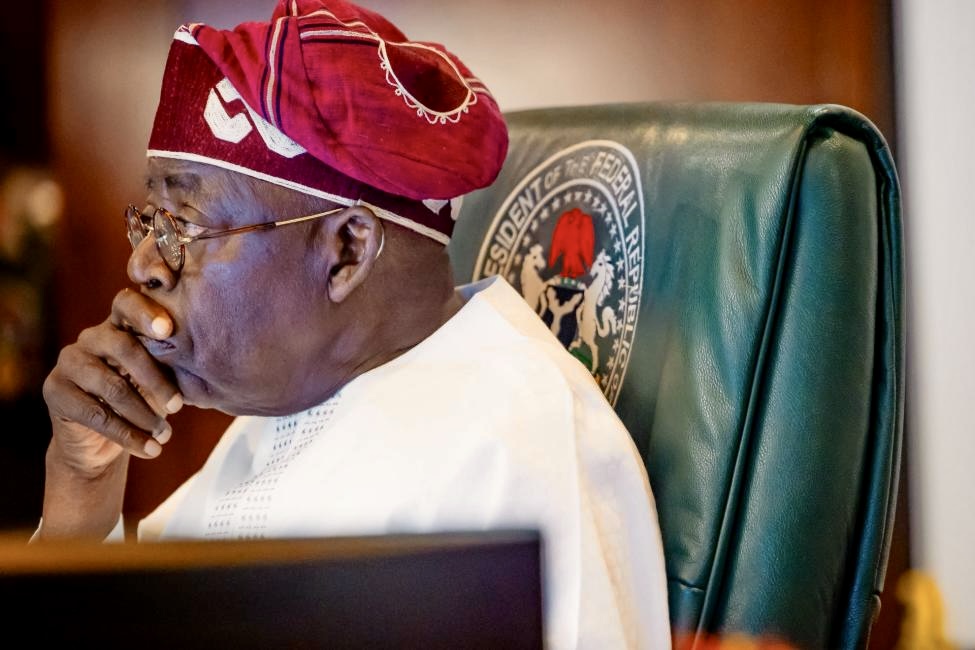
Tinubu’s Exchange-Rate Claim Misstates The Starting Point And Current Level — Parallel Markets Tell A Different Story
President Bola Tinubu said the naira was ₦1,900 to the dollar “when I took over” and that it is **₦1,450 now,” adding that “nobody is trading a piece of paper for an exchange rate anymore” and “you don’t have to know Cardoso before you get your foreign exchange.”
A check of official market data, contemporaneous reporting and market records shows the numeric claims are inaccurate and the broader assertions are overstated.
Key official series put the naira at roughly ₦463–₦465 on 29 May 2023, and at about ₦1,525–₦1,530 in early September 2025.
Episodes of extreme parallel-market weakness (above ₦1,600–₦1,800) occurred later and at times the official market itself saw sharp intraday moves in 2024.
The numeric timeline — what the data show
When Mr Tinubu was sworn in at the end of May 2023 the widely used official fixing (NAFEX/NAFEM series reported by market outlets) was roughly ₦460–₦465 to the dollar, not ₦1,900.
Market commentary and archives for the period record an official NAFEX/NAFEM closing in the mid-400s on 29 May 2023.
By 2–3 September 2025 the official windows and market data show the naira trading in the ₦1,525–₦1,530 region — far weaker than the ₦1,450 claimed by the President but also well below the extreme parallel prints of earlier crises periods.
The widely cited market feeds (exchange data providers and the Central Bank’s published NFEM series) confirm the early-September 2025 official closes near ₦1,525–₦1,530.
Parallel market and episodic volatility
The President’s reference to ₦1,900 corresponds more closely to later episodes of severe stress in parallel and even intraday official trading (not his inauguration day).
Reuters and other outlets recorded intraday official and parallel prints above ₦1,800 during the early 2024 turbulence; parallel-market peaks and sharp swings were a feature of 2024–2025 FX history and help explain why people quote different reference points.
In short, ₦1,900 did appear in the market at times — but not as the official starting point on Tinubu’s inauguration day.
“Nobody is trading a piece of paper” and access to FX
Reforms under CBN governor Olayemi Cardoso (rate unification, reopening of windows, market-based mechanisms) materially changed the structure of FX trading and narrowed official-parallel gaps.
That said, the insistence that “nobody” trades outside formal channels is an overstatement.
Parallel (street/BDC) activity and episodic arbitrage remained features of Nigeria’s FX ecosystem as late as 2025, even if the incidence and gap have narrowed.
Market participants continue to use multiple channels depending on liquidity, size of demand and paperwork.
In conclusion, President Tinubu’s statement contains two measurable errors and two overclaims.
He misstates the exchange rate on his inauguration day (official rates were in the mid-400s, not ₦1,900) and understates the official rate in early September 2025 (roughly ₦1,525–₦1,530, not ₦1,450).
The broader claims about the end of paper-for-rate trading and fully frictionless access to FX are overstated: structural reforms have improved transparency and access, but parallel-market trading and frictions persist.
Quick reference table (official windows / NFEM / NAFEX closings)
DateOfficial USD/NGN Close (₦ per USD)29 May 2023 (NAFEX/NAFEM close)₦465.09. (ProShare)2–3 Sept 2025 (official windows)₦1,529.79 (2 Sep 2025); ₦1,525.26 (3 Sep 2025) — broadly ₦1,525–₦1,530. (Yahoo Finance, Central Bank of Nigeria)
Follow us on our broadcast channels today!
- WhatsApp: https://whatsapp.com/channel/0029VawZ8TbDDmFT1a1Syg46
- Telegram: https://t.me/atlanticpostchannel
- Facebook: https://www.messenger.com/channel/atlanticpostng