Nigeria faces Niger junta’s explosive claims amidst border security flaws and geopolitical turmoil. Can Tinubu’s administration reclaim regional leadership?
A Brewing Storm at Nigeria’s Northern Borders: Unpacking the Nigeria-Niger Tensions
The escalating tensions between Nigeria and Niger Republic have once again thrust the fragile stability of West Africa into the global spotlight. With accusations flying and suspicions mounting, retired generals, former diplomats, and security experts in Nigeria are sounding the alarm over potential security threats along the northern borders. Their call to action has been amplified by an increasingly volatile diplomatic fallout that could redefine regional alliances and disrupt the tenuous peace in the sub-region.

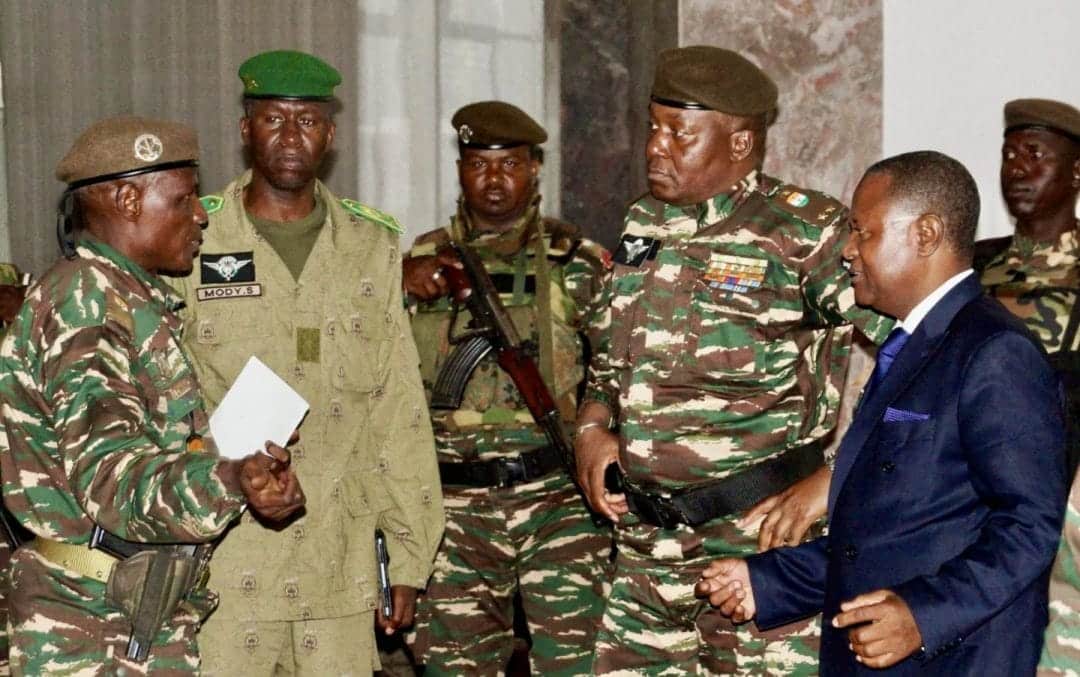
At the heart of the controversy are allegations from Niger’s military leader, Brigadier General Abdourahmane Tchiani, who has accused Nigeria of destabilising activities, including sponsoring terrorist attacks and allowing France to negotiate with insurgents to undermine his regime. While the allegations have been dismissed as baseless by Nigerian officials and ECOWAS, the implications for Nigeria’s security and regional diplomacy are profound.
Tchiani’s Allegations: A Calculated Diversion or Genuine Concern?
In a televised statement delivered in Hausa—a move perceived as a tactical ploy to resonate with Nigeria’s significant Hausa-speaking population—General Tchiani alleged that France made substantial payments to President Bola Ahmed Tinubu for the establishment of a military base in Nigeria. He further accused Nigeria of orchestrating terrorist activities along their shared borders and undermining Niger’s sovereignty.
These explosive claims have been met with swift denials. Nigeria’s National Security Adviser, Mallam Nuhu Ribadu, categorically refuted the existence of any foreign military base on Nigerian soil, emphasising the country’s commitment to maintaining balanced diplomatic relations with global powers, including France, Russia, and the United States. However, the damage to Nigeria’s diplomatic standing in the region may already be in motion.
The Border Dilemma: Porosity and Peril
Nigeria shares over 1,500 kilometres of border with Niger, much of it poorly secured and notoriously porous. This vulnerability has long been exploited by criminal elements, including terrorists, bandits, and smugglers. The recent crisis has rekindled calls for a comprehensive border fortification strategy. Security experts argue that the lack of robust border control mechanisms has left Nigeria exposed to external threats that could destabilise the northern region.
Retired General Bashir Adewinbi’s stark warning encapsulates the gravity of the situation: “Our borders are too porous, and that is a major danger for the country. We need a perimeter fence around Nigeria to secure our sovereignty.” While such measures may sound extreme, proponents argue that they are necessary for safeguarding Nigeria’s territorial integrity.
Brigadier General John Sura (retd.) echoed these sentiments, stressing the need for immediate action to prevent the infiltration of militants and weapons from Niger. He warned that Tchiani’s allegations could be part of a broader strategy to discredit Nigeria and justify aggressive actions, potentially with the backing of external powers like Russia.
An Ominous Echo of History
The unfolding drama between Nigeria and Niger is eerily reminiscent of past crises that have plagued West Africa. Military coups, insurgencies, and border disputes have often served as precursors to larger conflicts in the region. General Ishola Williams, a former army chief, dismissed Tchiani’s claims as propaganda aimed at deflecting attention from Niger’s internal turmoil. However, he acknowledged the potential for such rhetoric to inflame tensions and disrupt Nigeria’s focus on domestic security challenges.
The Geopolitical Chessboard: France, Russia, and the West African Equation
Underlying the Nigeria-Niger face-off is a complex web of geopolitical interests involving major global powers. France, which has historically wielded significant influence in Niger, finds itself at the centre of the controversy. Tchiani’s accusations of French involvement in destabilising Niger through Nigeria appear calculated to rally anti-French sentiment and bolster his regime’s legitimacy.
Nigeria, on the other hand, is treading a delicate line. Its burgeoning relationship with France, marked by Tinubu’s recent state visit to Paris, has raised eyebrows in the region. Critics argue that aligning too closely with France could alienate Nigeria from its neighbours and exacerbate perceptions of neo-colonial influence.
Voices from the Margins: Border Communities Speak Out
Amid the high-stakes political manoeuvring, residents of Nigeria’s northern border communities have largely dismissed the allegations of foreign military involvement. In Sokoto State, traditional rulers and local leaders have refuted claims of a French military presence, describing them as baseless fabrications.
“Our vigilantes work closely with the Nigerien military to maintain security,” said Garba Yusuf, the Seriki Arewa of Araba in Illela LGA. “These allegations are an attempt to disrupt the peaceful coexistence we share with our neighbours.”
However, the spectre of banditry and cross-border crime remains a grim reality for these communities. Reports of armed groups, such as the Lakurawa bandits, operating with impunity underscore the urgent need for a coordinated security strategy.
The Way Forward: Between Diplomacy and Deterrence
As Nigeria grapples with this latest diplomatic crisis, the path forward demands a delicate balance between assertive border security measures and nuanced diplomacy. Retired career diplomat Sola Abolurin emphasised the importance of preserving Nigeria’s credibility in the region. “Niger’s allegations are baseless, but we must handle this matter carefully to avoid further escalation,” he cautioned.
In-depth Analysis and Structural Critique of Policy and Security Frameworks
The escalating tension between Nigeria and Niger Republic has pulled back the veil on deeply ingrained structural and policy inadequacies that have plagued Nigeria’s national security framework for decades. While the allegations from Nigerien military leader Brigadier General Abdourahmane Tchiani may lack substantive evidence, they cast a spotlight on Nigeria’s porous borders, fragile diplomacy, and the complex interplay of regional geopolitics.

Porous Borders: A Persistent Achilles’ Heel
Nigeria’s northern borders, stretching over 1,600 kilometres across arid and sparsely monitored terrain, remain a critical security vulnerability. Despite repeated calls for reform, successive administrations have failed to implement robust border control mechanisms, leaving the nation exposed to transnational threats. These porous borders serve as conduits for the illicit flow of arms, militants, and contraband, exacerbating internal insecurity and undermining Nigeria’s territorial integrity.
The suggestion by General Bashir Adewinbi (retd.) for perimeter fencing around Nigeria’s borders, although ambitious, underscores the desperation of experts seeking tangible solutions. However, such proposals are met with skepticism due to logistical challenges, financial constraints, and the historical negligence of Nigeria’s border regions. The lack of effective border surveillance technology, coupled with weak inter-agency collaboration, has rendered Nigeria ill-prepared to counter external threats.
The Role of Regional Geopolitics
The crisis with Niger is not an isolated incident; it is deeply intertwined with the broader geopolitical dynamics of West Africa. Niger’s strategic alignment with Russia, as hinted at by Brigadier General John Sura (Rtd.), introduces an additional layer of complexity. The growing influence of non-traditional allies in the region, including Russia and China, challenges Nigeria’s historical dominance and its longstanding partnership with Western powers.
General Tchiani’s allegations of French interference, coupled with claims of collusion with Nigeria, reflect the geopolitical chessboard where global powers vie for influence in Africa. This rivalry often leaves nations like Nigeria caught in the crossfire, struggling to balance competing interests. The Tinubu administration’s refusal to sever ties with France, despite Niger’s provocations, highlights Nigeria’s cautious diplomatic stance. However, this approach risks alienating Niger’s new leadership and deepening mistrust.
Diplomatic Missteps and Perceptions of Weakness
Diplomacy has emerged as both a tool and a trap in Nigeria’s handling of the crisis. Critics argue that the Federal Government’s response has been reactive rather than proactive, allowing Niger to control the narrative. The failure to effectively counter Tchiani’s propaganda has emboldened Niger’s junta and tarnished Nigeria’s image on the international stage.
Former diplomat Sola Abolurin’s assertion that Niger’s allegations aim to destabilise the Tinubu administration in northern Nigeria resonates with historical patterns of political manipulation. The Nigerien junta’s use of Hausa, a language widely spoken in northern Nigeria, is a calculated move to exploit ethnic and cultural ties, stoking sentiments against the Federal Government. This underscores the need for Nigeria to adopt a more assertive communication strategy that resonates with both domestic and international audiences.
Policy Deficiencies and Strategic Oversight
The crisis has also exposed glaring deficiencies in Nigeria’s national security policy. The absence of a coherent strategy for managing transnational threats, coupled with a reliance on outdated tactics, has left the country vulnerable. While the National Security Adviser, Mallam Nuhu Ribadu, insists that Nigeria has no foreign military bases, his assurances do little to address the broader concerns of national security.
The Economic Community of West African States (ECOWAS) has dismissed Niger’s allegations as baseless, yet its overall credibility is under question. ECOWAS’s inability to decisively intervene in regional conflicts, coupled with its perceived bias towards certain member states, has undermined its role as a stabilising force. Nigeria, as a leading member of ECOWAS, bears the brunt of these failures, further straining its resources and reputation.
The Socioeconomic Fallout of Insecurity
Beyond the immediate geopolitical implications, the Niger-Nigeria crisis has far-reaching socioeconomic consequences. Border communities, already marginalised and impoverished, bear the brunt of the fallout. Reports from residents of Tangaza and Gudu Local Government Areas in Sokoto State highlight the precarious existence of these communities. While local leaders like Alhaji Aminu Aliyu and Malam Abdurahman Shehu dismiss claims of foreign military camps, their testimonies underscore the persistent threat of banditry and the inadequacy of state protection.
The economic activities of these border communities, primarily agriculture and trade, are severely disrupted by the insecurity. The presence of Lakurawa bandits, who traverse the porous borders with impunity, further compounds the plight of these residents. Nigeria’s failure to secure its borders not only endangers lives but also stifles economic growth in these critical regions.
A Call for Structural Overhaul
The current crisis demands more than a short-term response; it necessitates a comprehensive overhaul of Nigeria’s security architecture. This includes the integration of advanced surveillance technology, the strengthening of inter-agency coordination, and the establishment of a dedicated border security force. Additionally, Nigeria must invest in the socioeconomic development of border regions to address the root causes of insecurity.
Diplomatic engagement, while essential, must be accompanied by a clear demonstration of Nigeria’s resolve to protect its sovereignty. This includes holding regional partners accountable for their actions and fostering alliances that prioritise mutual security interests.
A Nation at a Crossroads
The Niger-Nigeria crisis is a stark reminder of the fragility of Nigeria’s security and diplomatic frameworks. While the allegations from Niger’s junta may lack credibility, they reflect deeper systemic issues that cannot be ignored. As the Tinubu administration navigates this turbulent period, it must rise to the challenge of safeguarding Nigeria’s sovereignty, restoring its regional leadership, and addressing the structural deficiencies that have long undermined its security.
Policy Recommendations, Scenarios, and Strategic Analysis
The Imperative for a Robust Border Security Strategy
To address the Niger-Nigeria crisis effectively, the Federal Government must implement a comprehensive border security policy anchored in modern surveillance technology, community collaboration, and inter-agency coordination. Deploying drones, satellite imagery, and biometric identification systems can significantly enhance monitoring along Nigeria’s expansive borders. Such measures must be coupled with dedicated border security personnel trained to combat transnational threats.
Equally critical is the integration of border communities into the security framework. By fostering local partnerships and offering socio-economic incentives, the government can mitigate the alienation often felt by these marginalised areas. This approach would not only strengthen border security but also rebuild trust between the government and affected communities.
Diplomatic Recalibration
Nigeria’s foreign policy must prioritise assertive diplomacy that counters misinformation and secures its regional leadership. The Tinubu administration should spearhead negotiations within the Economic Community of West African States (ECOWAS) to craft a unified stance against destabilising narratives, such as those propagated by Niger’s junta.
Furthermore, the Federal Government should leverage its strategic alliances with global powers to counteract external influences that threaten regional stability. Balancing relationships with France and other Western allies, while remaining vigilant against the encroachment of Russia and China into West Africa, is crucial.
Scenario Planning: Potential Outcomes
- Escalation of Hostilities: If Niger’s junta continues its antagonistic rhetoric, the likelihood of border skirmishes or increased militia activity grows. Nigeria must be prepared for such scenarios by enhancing military readiness along the northern frontier.
- Diplomatic Stalemate: Should the current diplomatic impasse persist, Nigeria risks losing its influence within ECOWAS and the broader West African region. This outcome necessitates a strategic realignment and proactive engagement in multilateral forums.
- Regional Cooperation: A best-case scenario involves fostering cooperation between Nigeria, Niger, and other Sahel nations to address common security threats. Nigeria must lead efforts to establish a regional security pact that prioritises intelligence sharing and joint military operations.
Strategic Analysis of Nigeria’s Regional Role
The Niger-Nigeria crisis underscores the need for a redefinition of Nigeria’s role as a regional power. While the country has historically positioned itself as a leader in West Africa, its internal challenges—ranging from economic instability to ethnic divisions—diminish its capacity to act decisively.
President Bola Ahmed Tinubu must prioritise internal cohesion as a foundation for external influence. Addressing systemic corruption, fostering inclusive governance, and revitalising the economy are prerequisites for restoring Nigeria’s standing in the region.
Long-Term Policy Recommendations
- Strengthen ECOWAS: Nigeria must lead reforms within ECOWAS to enhance its effectiveness in conflict resolution and crisis management. This includes establishing a rapid response mechanism for regional crises.
- Institutional Reforms: A comprehensive overhaul of Nigeria’s defense and intelligence agencies is essential. Modernising these institutions, coupled with merit-based appointments, will enhance their operational efficiency.
- Economic Diplomacy: Nigeria should leverage its economic potential to secure regional partnerships. Investment in cross-border infrastructure projects and trade agreements can foster interdependence and deter adversarial actions.
- Public Communication Strategy: The Federal Government must develop a robust public relations strategy to counter misinformation and project a positive image of Nigeria’s policies and achievements.
Conclusion: Beyond the Crisis
The Niger-Nigeria standoff is emblematic of deeper challenges within Nigeria’s governance, security, and diplomatic frameworks. While the allegations from Niger’s junta may lack substance, they serve as a wake-up call for the Tinubu administration to address longstanding structural deficiencies. By adopting a multi-faceted approach that combines security, diplomacy, and economic development, Nigeria can emerge stronger and reassert its leadership in West Africa.
Additional reports: Suleiman Adamu, Osaigbovo Okungbowa and Peter Jene, Atlantic Post Senior National Security/Defence, Political and National Affairs Correspondents, respectively.