By Editor
Delta State Boils as #EndBadGovernance Protesters Push for Change

Effurun Roundabout in Uvwie Local Government Area of Delta State became the epicentre of a dramatic and defiant stand against Nigeria’s worsening socio-political landscape on Saturday. The youths, brandishing placards with searing messages, marked the culmination of a 10-day protest under the #EndBadGovernanceInNigeria banner. Their demands: immediate government intervention to address the scourge of insecurity, hunger, and widespread dissatisfaction among Nigerians.
This was not just another protest. It was a powerful indictment of the government’s failures, a reminder that the simmering discontent in Nigeria is reaching a boiling point, and a clear signal that the youth, the future of the nation, are no longer willing to be passive observers in their country’s decline.
The Resurgence of Youth Activism
The protest at Effurun Roundabout wasn’t just about placards and chants; it was the embodiment of the frustration that has been building up for years. The placards bore inscriptions that highlighted the grievances of the protesters: “Release detained hunger protesters now, they are not criminals”; “FG, Delta Government, Save Nigerians from insecurity, banditry”; and “Hunger insecurity must be addressed at all costs.” These messages were not just cries for help—they were demands for justice, equity, and a functioning state that serves the people.
Sunny Omare, one of the protest leaders, articulated the sentiments of the youth succinctly. “We decided to make a statement that our 10-day protest was not a joke,” he declared to the press. “We are very serious about our demands from government, and we are not handling it with levity. It is now incumbent on the government to look seriously into our demands which are anchored on how to make Nigeria great again.”
This resurgence of youth activism is reminiscent of the #EndSARS movement of 2020, where Nigerian youths took to the streets to protest against police brutality. The energy, determination, and unity displayed during the #EndBadGovernance protest signal that the youth are not only aware of the issues but are also ready to take action to hold the government accountable.
The Government’s Response: A Glaring Disconnect
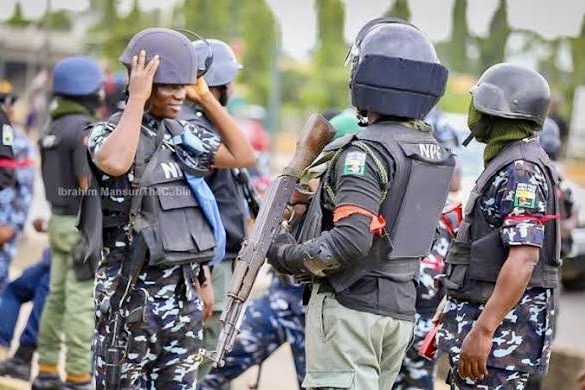
In the face of such passionate pleas, the government’s response—or lack thereof—has been nothing short of disheartening. Stern-looking security operatives, including policemen, officials of the Nigerian Security and Civil Defence Corps, and military personnel, were strategically positioned to monitor the protesters. This heavy-handed approach is emblematic of a government that sees its citizens as adversaries rather than allies in the quest for national development.
The deployment of security forces to monitor peaceful protests is a stark reminder of the government’s fear of its own people. Instead of engaging with the protesters and addressing their concerns, the government has chosen to respond with intimidation and the threat of force. This approach only serves to widen the gap between the government and the governed, exacerbating the very issues that the protesters are highlighting.
Moreover, the insistence on controlling the narrative by restricting the protest to designated areas under heavy surveillance shows a government more concerned with optics than with the substance of the issues being raised. The administration’s failure to engage with the protesters or provide meaningful solutions to the problems of insecurity, hunger, and governance failures speaks volumes about the disconnect between the leadership and the citizenry.
Insecurity: The Elephant in the Room
Insecurity has become one of Nigeria’s most pressing challenges, affecting every facet of life in the country. From the rampant kidnappings and banditry in the northern regions to the increasing cases of armed robbery and violent crimes in the south, Nigerians are living in constant fear.
The protesters in Delta State are acutely aware of this reality. Their demands for the government to “save Nigerians from insecurity, banditry” are not just about personal safety—they are about the right to live in a country where the rule of law prevails, where people can go about their daily lives without fear of being kidnapped, robbed, or killed.
The government’s response to the insecurity crisis has been largely reactive, with heavy reliance on military force rather than addressing the root causes of the problem. Corruption, poverty, unemployment, and lack of education have all contributed to the rise in criminal activities, and until these issues are addressed, the cycle of violence is likely to continue.
The Hunger Crisis: A National Shame
Hunger is another issue that has driven Nigerians to the streets. Despite being one of Africa’s largest economies, Nigeria is plagued by widespread poverty and hunger. The placards calling for the release of detained hunger protesters reflect the desperation of a population that is struggling to survive in a country where the rich get richer and the poor are left to fend for themselves.
Food insecurity in Nigeria is a direct result of poor governance, mismanagement of resources, and the failure to implement policies that would ensure equitable distribution of wealth. The agricultural sector, which should be the backbone of the Nigerian economy, has been neglected, leading to a situation where millions of Nigerians are unable to afford basic necessities.
The protesters’ demands for the government to address hunger and insecurity “at all costs” are a clear indication that the people are tired of empty promises and are demanding tangible results. The government’s continued failure to address these issues will only lead to more unrest and instability.
The Role of the Media: Shaping the Narrative
In the age of social media, the role of traditional media in shaping the narrative of protests and government response has never been more critical. The way the #EndBadGovernance protest in Delta State is reported will have a significant impact on public perception and the government’s response.
The media has a responsibility to report the facts accurately and without bias, but it also has a duty to amplify the voices of the voiceless and hold the government accountable. In a country where the media is often under threat, journalists must navigate a complex landscape where telling the truth can have serious consequences.
The #EndBadGovernance protest is not just a story about a group of youths in Delta State—it is a story about the future of Nigeria. It is about the struggle for a country that works for all its citizens, not just the privileged few. As the media continues to cover this story, it is essential that they do so with the understanding that their reporting can either help to bring about change or perpetuate the status quo.
What Next for Nigeria?
The #EndBadGovernance protest in Delta State is a microcosm of the larger issues facing Nigeria today. The demands of the protesters—an end to insecurity, hunger, and poor governance—are not unreasonable. They are the basic requirements for a functioning society, and the fact that Nigerians have to protest to have these demands met is a damning indictment of the state of the nation.
As the protest comes to an end, the question remains: what next for Nigeria? Will the government listen to the voices of its people and take meaningful action to address their concerns, or will it continue to respond with indifference and repression?
The answer to this question will determine the future of Nigeria. If the government fails to act, the protests will continue, and the discontent will only grow. But if the government listens and responds with empathy and action, there is still hope for a better Nigeria.
In the end, the #EndBadGovernance protest is not just about changing policies—it is about changing the relationship between the government and the people. It is about creating a Nigeria where the government serves the people, not the other way around. And until that change happens, the protests will not stop, because the Nigerian people will not stop fighting for their rights.
Conclusion: A Call to Action
The #EndBadGovernance protest in Delta State is a clarion call for all Nigerians to wake up and demand the government they deserve. It is a call for accountability, transparency, and good governance. It is a call for a Nigeria where insecurity, hunger, and poor governance are no longer the norm but the exception.
The time for change is now. The government must listen to the voices of its people and take action to address their concerns. The alternative is a future of continued unrest, instability, and decline.
As the #EndBadGovernance protest comes to an end, let it be the beginning of a new chapter in Nigeria’s history—a chapter where the government and the people work together to build a better future for all.
The youth have spoken. The question now is: will the government listen?