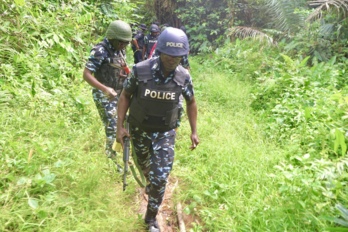
The Edo State Police Command has confirmed the rescue of all 13 passengers abducted in a brazen attack on a commercial bus along the Benin–Lagos Road, bringing an end to a tense and closely watched kidnapping ordeal that began on 9 May 2026 at Ogua Community.
The victims were travelling in a Young Shall Grow Motors bus from Akwa Ibom State to Lagos when armed men opened fire on the vehicle, injuring a female passenger before whisking several travellers into nearby bush paths.
According to the command, the rescue was achieved in phases. Five passengers, including two adults and three children, were freed first.
On 10 May, police operatives deployed drones, aerial surveillance and intelligence-led tactics, then engaged the kidnappers in a gun duel, rescuing two more passengers.
The remaining six abducted victims have now also been rescued unhurt, the command said, completing the recovery of all 13 passengers.
The police account, as published by The Guardian, described the incident in stark terms: “armed kidnappers attacked a commercial bus belonging to Young Shall Grow Motors conveying thirteen (13) passengers from Akwa Ibom State to Lagos, during which a female passenger was shot by the hoodlums.”
The same statement said the command immediately launched “coordinated rescue and bush combing operations” and remained on the trail of the abductors throughout the operation.
The scale of the response is significant because it shows how the Edo Command has increasingly relied on a mix of tactical teams, aerial surveillance and intelligence assets to break the hold of kidnappers on major transit routes.
Channels Television reported that the command said the latest rescue was completed after intensive bush-combing, while Commissioner of Police Monday Agbonika praised the officers’ “courage and resilience” and assured residents that the command was “not relenting” in its efforts to track down those responsible.
Yet the real story is not only the rescue. It is the route itself. The Benin–Lagos corridor has become one of the country’s most exposed highways, repeatedly attracting kidnappers who exploit its wooded stretches and adjoining forest areas as escape routes and hideouts.
That concern is not theoretical. Only weeks earlier, the Edo Police Command had launched another rescue operation after an April attack along the Lagos–Benin Expressway left one person dead and three others abducted.
In that case, police said the attackers shot the driver and took passengers into a nearby forest before security teams moved in.
The latest success therefore reads as both a victory and a warning. It proves that sustained pressure, technology-driven policing and coordinated patrols can force kidnappers to release victims. But it also underscores how persistent the threat remains on a highway that connects the South South, South West and beyond, carrying traders, workers, families and long-distance travellers every day.
The repeated attacks suggest that the criminal networks behind the kidnappings are still active, mobile and willing to strike vulnerable transport routes unless security is maintained continuously.
This is an inference drawn from the repeated incidents and the police’s own emphasis on ongoing bush-combing and route domination.
For the victims and their families, the outcome is a rare relief in an environment where many abduction stories end in uncertainty.
The police said the rescued passengers were not hurt, and the commissioner has now ordered the operation to continue until the abductors are apprehended.
The command’s next challenge is to turn this rescue into arrests, recover intelligence from the terrain and restore confidence along a road that has become a symbol of Nigeria’s wider highway insecurity.
In summary, the Edo Police Command has delivered an important rescue, but the Benin–Lagos Road remains under pressure from a kidnapping economy that thrives on speed, fear and difficult terrain.
The state’s response has been forceful; the next test is whether it can be sustained long enough to break the cycle.
Follow us on our broadcast channels today!
- WhatsApp: https://whatsapp.com/channel/0029VawZ8TbDDmFT1a1Syg46
- Telegram: https://t.me/atlanticpostchannel
- Facebook: https://www.messenger.com/channel/atlanticpostng