
Nigeria’s proposed security partnership with Italy and the United States promises specialised training for thousands of officers. But without clear implementation plans, accountability safeguards and measurable results, another international training initiative could struggle to change the security realities confronting ordinary Nigerians.
Nigeria’s worsening security crisis has created an increasingly urgent demand for a police force capable of confronting heavily armed criminal networks, protecting vulnerable communities and investigating sophisticated crimes.
Now, Inspector-General of Police Olatunji Rilwan Disu is seeking to address some of those weaknesses through an international security cooperation initiative involving Nigeria, Italy and the United States.
A major element of the proposed arrangement is an offer to provide specialised training for up to 5,000 Nigerian police personnel, with particular attention to counter-insurgency operations, intelligence-led policing and operations in difficult rural and forested environments.
The initiative, announced by the Nigeria Police Force on 30 October 2026, could represent a significant investment in professional capacity.
But the announcement also raises a more fundamental question: can foreign training transform the effectiveness of Nigerian policing when institutional weaknesses, operational shortcomings and public trust remain equally important challenges?
For communities living with kidnapping, terrorism and armed violence, the success of this initiative will not be measured by the number of officers who attend international courses. It will be measured by how effectively those officers protect lives when they return.
The 5,000-Officer Offer: What Nigeria Is Seeking
According to the Force Public Relations Officer, CSP Ani Iniedu, Disu’s working visit to Italy focused on strengthening cooperation with Italian law enforcement authorities.
A major outcome was an offer of specialised training for up to 5,000 personnel, particularly officers expected to operate against insurgents and armed criminal groups in remote and forested locations.
The proposed curriculum is extensive.
It includes tactical operations, intelligence-led patrols, protection of critical infrastructure, digital and scientific forensics, cybercrime investigations, explosives detection, financial investigations, asset tracing and anti-extortion techniques.
Importantly, the programme is not intended to benefit only the Police Mobile Force.
Other specialised formations, including explosive ordnance disposal personnel and forensic investigation teams, are also expected to benefit.
This broader approach is significant.
Nigeria’s security challenges are no longer confined to conventional armed confrontations. Criminal networks increasingly operate through interconnected systems involving weapons trafficking, financial transactions, communications technology, ransom collection and intelligence gathering.
An effective response requires more than armed personnel. It requires investigators who can identify criminal networks, trace their financial operations, preserve digital evidence and build cases capable of surviving judicial scrutiny.
The inclusion of financial investigations, digital forensics and asset tracing therefore represents an important aspect of the proposal.
Yet the Police Force has not publicly disclosed the proposed training timetable, funding structure, selection criteria, number of instructors or the precise arrangements for deploying the 5,000 personnel.
Until those details emerge, the figure remains an offer rather than evidence of an established training programme.
Why Italy Matters to Nigeria’s Security Strategy
The Italian partnership offers access to an established policing institution with experience in specialised law enforcement, public order management and international stability operations.
During the visit, Disu met the Commander General of the Italian Carabinieri, Lieutenant-General Salvatore Luongo, to explore technical assistance, specialised training and institutional cooperation.
The Nigerian delegation also visited the Carabinieri Centre of Excellence for Stability Police Units (CoESPU) in Vicenza.
Established in 2005, CoESPU serves as a training and doctrinal centre for stability policing. It works with international organisations, including the United Nations Department of Peace Operations, and receives support through the United States Department of State’s Global Peace Operations Initiative.
Its mandate includes developing professional police capabilities for operations in fragile and post-conflict environments.
This makes the institution particularly relevant to Nigeria, where police operations increasingly intersect with communities affected by insurgency, displacement and prolonged violence.
The proposed cooperation includes command courses for 40 senior police officers and leadership training for 100 junior commanders.
A mobile assistance team is also being considered to support Police Mobile Force training schools in Gwoza, Borno State, and Ila-Orangun, Osun State.
The proposal to develop a national stability policing doctrine and standard operating procedures is equally important.
Without common operational standards, different police formations can approach similar security situations with inconsistent procedures, potentially undermining professionalism, coordination and civilian protection.
Italy’s experience could help Nigeria develop a more coherent operational framework.
However, the transfer of expertise must be accompanied by local adaptation. Nigeria’s security environment, legal framework, communities and operational realities cannot simply be treated as extensions of European policing conditions.
The United States Dimension: A Partnership That Needs Clarity
Although the Nigeria Police Force describes the initiative as a trilateral framework involving Nigeria, Italy and the United States, the precise operational responsibilities of the three countries have not been fully explained in the announcement.
There are, nevertheless, established connections that provide context.
The Vicenza-based CoESPU operates with support from the United States through its Global Peace Operations Initiative, combining American institutional support with Italian Carabinieri expertise.
There is also a separate and expanding Nigeria-US security relationship.
On 12 August 2026, Disu participated in the second United States-Nigeria Country of Particular Concern Joint Working Group meeting in Washington, where the Nigerian delegation reviewed progress on security cooperation and the associated roadmap.
The US-Nigeria discussions included law enforcement capacity-building, counter-terrorism cooperation and strengthening judicial and security institutions.
These engagements provide a credible foundation for broader cooperation.
Nevertheless, an important distinction remains.
The existence of US-Nigeria security cooperation and American support for CoESPU does not automatically establish that Washington has committed personnel, funding or equipment to the proposed 5,000-officer programme.
The public announcement does not specify how American participation will be structured, what resources each partner will contribute or whether a joint implementation mechanism has been established.
Clarifying these responsibilities will be essential to turning diplomatic goodwill into a functioning security programme.
Nigeria’s Security Crisis Demands More Than Tactical Training
The urgency of the initiative becomes clearer when measured against the scale of Nigeria’s kidnapping crisis.
A report by SBM Intelligence, published in August 2026, estimated that 7,825 people were kidnapped across Nigeria between July 2025 and June 2026.
At least 1,142 people were killed during the period, while confirmed ransom payments reached approximately ₦7.78 billion.
The number of kidnapping victims increased by 66 per cent compared with the preceding year.
Reuters reported that the figures were compiled from media reports, interviews and publicly available information, with SBM warning that actual ransom payments could be higher because many transactions remain undisclosed.
These findings expose the increasingly sophisticated economic structure behind kidnapping.
Armed groups are not merely attacking communities and seizing individuals. They are generating revenue through organised criminal operations, ransom negotiations and financial networks.
This is precisely why the proposed inclusion of financial investigations, asset tracing, intelligence gathering and forensic capabilities deserves attention.
Identifying the individuals who finance, organise and profit from kidnapping could prove as important as confronting the armed men carrying out the abductions.
But specialist training must also improve coordination between police investigators, intelligence agencies, the military, prosecutors and financial intelligence institutions.
A police officer who can conduct a successful tactical operation but cannot secure admissible evidence, identify the wider criminal network or support a successful prosecution represents only a partial security solution.
Nigeria needs operations that produce lasting disruption of criminal networks, not simply impressive arrest figures.
The Personnel Problem Behind the Training Ambition
Another challenge is the question of manpower allocation.
The European Union Agency for Asylum’s January 2026 security assessment cited estimates placing the Nigeria Police Force at approximately 371,800 personnel.
Against Nigeria’s estimated 2024 population of more than 236 million, this represents a substantial policing challenge.
The report also cited an assessment indicating that more than 100,000 officers were assigned to protect politicians and other VIPs rather than serve the wider population.
These figures should be treated as estimates, not a newly verified personnel audit. Nevertheless, they highlight an important structural concern.
Nigeria’s security problem is not simply the absence of specialised skills. It is also about how available personnel are distributed, equipped and deployed.
Training 5,000 officers will have limited national impact if large numbers of trained personnel remain concentrated in formations or assignments that do not adequately address insecurity in vulnerable communities.
The Inspector-General therefore faces an additional institutional task: ensuring that newly trained officers are deployed according to demonstrable security needs.
Communities in kidnapping-prone rural areas, forest corridors and conflict-affected locations should benefit from improved police capacity rather than merely witnessing another round of training announcements.
The Human Rights Question: How Will the New Doctrine Protect Civilians?
Perhaps the most important aspect of the proposed partnership is the intention to develop a national stability policing doctrine and standard operating procedures.
This could help establish clearer operational boundaries and professional standards.
Counter-insurgency operations and policing challenging rural terrain can expose officers and civilians to serious risks, particularly where criminal groups operate from locations with limited government presence.
The distinction between civilian populations and suspected combatants must remain central to police operations.
Tactical competence without discipline can create further security problems.
The European Union Agency for Asylum’s January 2026 assessment documented allegations involving arbitrary arrests, extortion and excessive use of force within the Nigerian policing environment.
It also identified concerns about inadequate investigative resources and weaknesses in effective accountability.
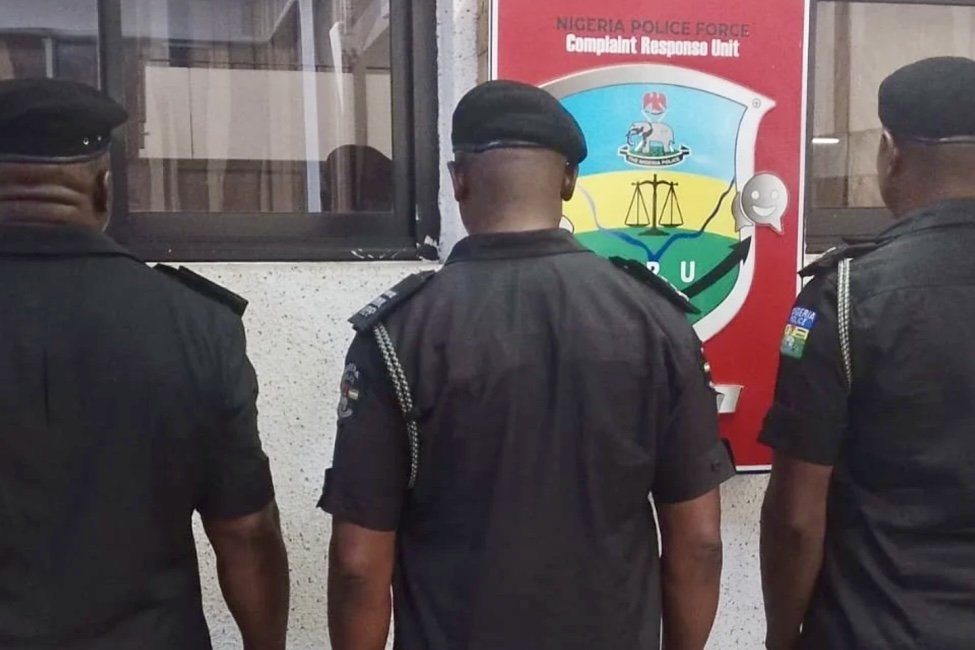
Nigeria already has institutional mechanisms intended to address police misconduct, including the Police Public Complaints Committee and the Police Complaint Response Unit.
The challenge is ensuring that these mechanisms operate effectively and that misconduct allegations result in credible investigations and appropriate consequences.
The Police Act 2020 establishes accountability, transparency and protection of human rights and fundamental freedoms among the principles governing the Force.
Those obligations should be incorporated into every aspect of the proposed international training.
Officers must understand not only how to identify threats and conduct tactical operations, but also how to protect civilians, handle suspects lawfully, preserve evidence and respect constitutional rights.
An international partnership that improves operational capacity without strengthening accountability would leave a critical part of Nigeria’s policing problem unresolved.
A Wider Partnership, but Will Nigeria Retain the Expertise?
Other areas discussed during the visit include canine operations, forensic science and mounted policing.
The proposed cooperation on horse breeding and mounted policing may appear less urgent than counter-terrorism training, but specialised public order capabilities can contribute to crowd management and other appropriate policing responsibilities.
More importantly, the initiative presents an opportunity to develop sustainable Nigerian training institutions.
The proposal for a mobile assistance team to support training schools in Gwoza and Ila-Orangun could help transfer specialist knowledge beyond the initial international engagement.
The courses for 40 senior officers and 100 junior commanders could also provide the leadership structure required to institutionalise new methods.
The long-term objective should be to build Nigerian instructors, investigators and operational commanders capable of sustaining the programme without permanent dependence on foreign trainers.
Technology transfer must follow the same principle.
The announcement mentions forensic science, digital investigations and technology cooperation, but it does not identify specific equipment, software, maintenance arrangements or data-protection safeguards.
Those details will matter, particularly when digital evidence, personal information and sensitive intelligence are involved.
The proposed Memorandum of Understanding should therefore establish clear responsibilities for training, equipment maintenance, technical assistance, knowledge transfer and institutional ownership.
What the Disu Initiative Must Deliver
Disu has proposed an MoU covering specialised training, technology transfer and operational doctrine. He has also invited an Italian Carabinieri assessment team to Abuja to identify priority needs and develop implementation arrangements.
That is a constructive next step.
However, the initiative now needs a transparent implementation framework.
Before the programme is considered a success, Nigerians should expect answers to several essential questions.
How many of the 5,000 officers will actually be trained, and over what period?
Who will determine which personnel qualify for specialist courses?
How will the government measure improvements in kidnapping investigations, intelligence-led operations and successful prosecutions?
What safeguards will ensure that tactical training does not encourage excessive force or undermine civilian protection?
Will the programme include independent evaluation and publicly accessible progress reports?
These questions are not intended to diminish the value of international cooperation. They are necessary to ensure that the investment produces lasting public benefits.
Italy’s Defence Ministry has separately confirmed that an Italy-Nigeria defence cooperation agreement was in advanced negotiations as of 27 October 2026, while discussions had also addressed the possibility of Carabinieri-led training cycles for Nigerian police officers.
Italian Chief of Defence Staff General Luciano Portolano expressed the principle that should guide the partnership:
“Africa’s security must have African leadership: African solutions to African problems.”
He also stressed that Italy was ready to contribute as a partner.
That principle should remain central to the programme. Foreign expertise should strengthen Nigerian institutions, not replace domestic responsibility for security and accountability.
The Real Measure of Success
The proposed Nigeria-Italy-US security partnership offers an opportunity to modernise important aspects of Nigerian policing.
Its emphasis on counter-insurgency, intelligence-led operations, forensic investigations, financial crime detection and stability policing addresses several genuine institutional needs.
The proposed training of up to 5,000 personnel could become an important contribution to national security if it is properly funded, implemented and evaluated.
But Nigeria has experienced numerous security interventions, international partnerships and institutional reform announcements.
The difficult part has often been converting commitments into sustained improvements on the ground.
For Disu, the most important achievement will not be securing an offer to train 5,000 officers. It will be ensuring that those officers return with capabilities that can dismantle criminal networks, rescue kidnapped victims, protect vulnerable communities and conduct investigations that lead to successful prosecutions.
For Nigerians living in communities threatened by armed groups, the test is straightforward.
They do not need another impressive international security announcement. They need a police force that can reach them, protect them and earn their trust.
That is the real measure of whether the 5,000-officer initiative becomes a turning point in Nigeria’s security architecture or another ambitious promise awaiting implementation.
Follow us on our broadcast channels today!
- WhatsApp: https://whatsapp.com/channel/0029VawZ8TbDDmFT1a1Syg46
- Telegram: https://t.me/atlanticpostchannel
- Facebook: https://www.messenger.com/channel/atlanticpostng

Join the debate; let’s know your opinion.