Thirty‑two years after the annulment of Nigeria’s freest and fairest election, the nation remains locked in a battle over the legacy of 12 June 1993.
What began as a triumphant assertion of popular will has morphed into a bitter anniversary of dashed hopes—one that President Bola Ahmed Tinubu sought to recast as a celebration of “democracy in leaps and bounds,” but which many Nigerians experienced as little more than an empty public holiday.
Historical Reminiscence: From Abiola’s Mandate to Babangida’s Proclamation
On 12 June 1993, Chief M.K.O. Abiola of the Social Democratic Party (SDP) secured an emphatic victory—8.34 million votes (58.36 per cent), winning in 19 of Nigeria’s 36 states—only for General Ibrahim Badamasi Babangida to annul the result on grounds of “security threats” and alleged irregularities.
The annulment plunged Nigeria into protests, political turmoil and, ultimately, another spell of military rule—culminating in General Sani Abacha’s coup in November 1993.
It was not until 2018 that the federal government formally designated 12 June as Democracy Day—moving the holiday from 29 May in recognition of Abiola’s mandate and the popular yearning for civilian rule.
Yet, for many citizens, the annual commemoration has become a ritual devoid of substance: rhetoric in the National Assembly, token gestures of honour, and a public holiday that fails to alleviate everyday hardship.
Democracy in “Leaps and Bounds”? A Freedom House Assessment
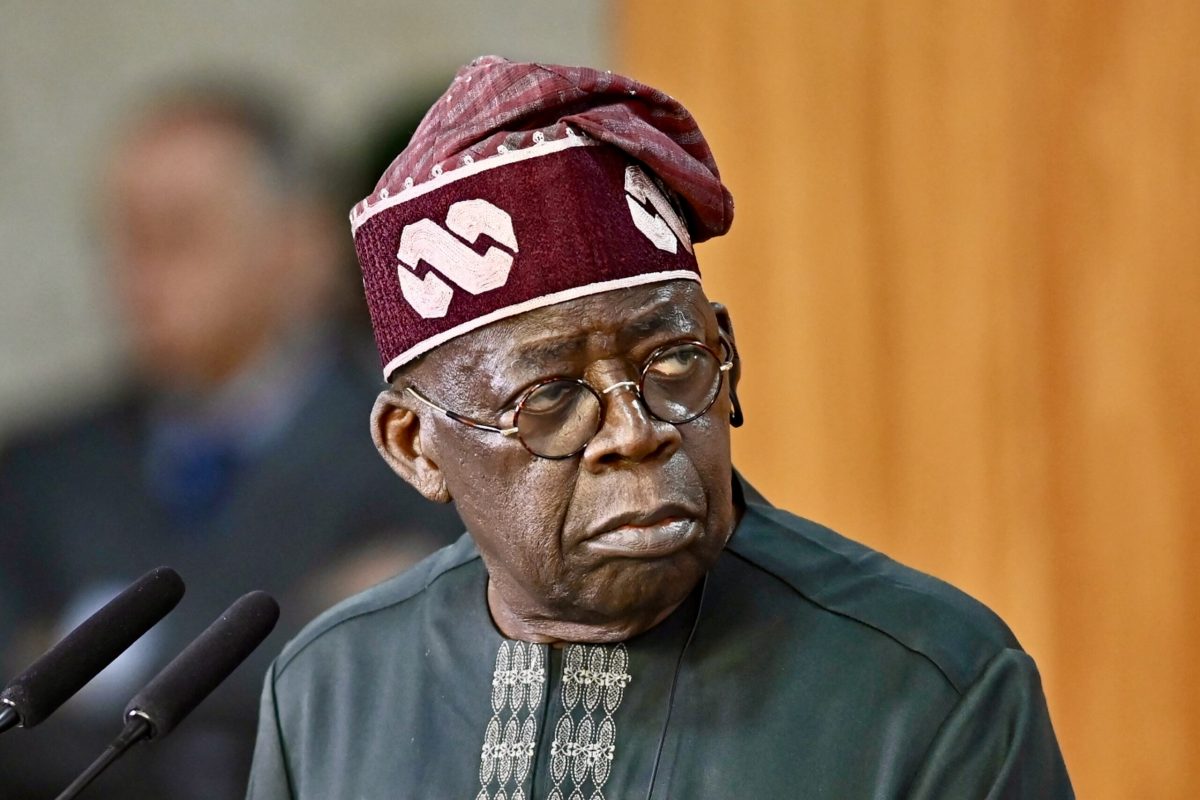
President Tinubu addressed a joint session of the National Assembly on 12 June 2025, asserting that “year by year, election after election…we preserve the institutions of democracy” and pledging to resist any drift towards one‑party rule.
Yet freedom monitors paint a more sobering picture: the Freedom in the World 2024 report classifies Nigeria as “Partly Free” with a political rights score of 20/40 and civil liberties at 24/60, noting “significant irregularities” in the February 2023 elections under Tinubu’s watch.
Moreover, while Nigeria has experienced uninterrupted civilian governance since 1999, key institutions remain chronically weakened by corruption, executive overreach and politicisation of the judiciary—undermining the rule of law that ought to safeguard democratic gains.
Economic Hardship: Poverty and Hunger Amid Celebration
Amid lofty claims of democratic progress, millions of Nigerians endure grinding poverty and acute food insecurity.
According to the World Food Programme, 37 per cent of Nigerians—over 84 million people—live below the national poverty line, with 26.5 million projected to face high levels of food insecurity during the 2024 lean season.
Inflation has surged to a 28‑year high of 34.6 per cent, driving staple‑food prices up by over 200 per cent and compelling desperate crowds to risk their lives at charity hand‑outs.
These figures expose a glaring disconnect: how can Nigeria claim to “weave the culture of democracy into the very fabric of our nation” when half the population struggles for basic sustenance?
What value has democracy if the electorate is too hungry to engage in political discourse?
Public Cynicism and Political Protest
In Lagos, Abuja and beyond, the “Take It Back” movement mobilised plans for a nationwide protest against hardship and “bad governance”—a direct rebuke to Tinubu’s rescheduled Democracy Day festivities.
Yet, the day passed largely without mass demonstrations; many citizens, disillusioned by years of broken promises, simply ignored the public holiday and resumed their daily grind.
The anti‑climax across states revealed a populace wearied by performative politics. No solidarity marches, no roaring crowds—only the usual bustle of commerce and survival.
This silent protest spoke volumes: democracy’s champions have grown sceptical that formal ceremonies translate into real change.
Tinubu’s One‑Party Promise and PDP’s Warning
In his address, President Tinubu emphatically denied any intention to engineer a one‑party state, offering a “personal promise” that he would “never view the notion of a one‑party state as good for Nigeria”.
He invoked his own history—“nobody should blame anybody seeking to bail out of a sinking ship without a life jacket”—to argue against alarmism.
Yet the Peoples Democratic Party (PDP) seized on growing discontent to issue its own warning, urging Nigerians to “resist one‑party state plots” and to remain vigilant against “state capture” by the ruling All Progressives Congress (APC).
“An Empty Show”: Adewole’s Hunger‑Poverty Rebuttal
Adebayo Adewole, SDP’s 2023 presidential candidate on the ticket that gave Chief M.K.O. Abiola his mandate in 1993, was scathing in his verdict:
“As far as it is not yet bye‑bye to poverty and hunger, celebrating June 12 as a Democracy Day amounts to an empty show.”
He reminded Nigerians how he and other young activists painstakingly pasted posters and handed out leaflets in support of Abiola’s promise to restore hope through good governance—only to see subsequent administrations neglect the very people they sought to empower.
Adewole’s critique strikes at the core of democratic legitimacy: elections and anniversaries ring hollow when the electorate remains mired in deprivation.
“Not Governance, but Conquest”: Atiku’s Dictatorial Warning
Former Vice‑President Atiku Abubakar, also a member of the SDP in 1993, invoked the spirit of that hopeful summer when “Nigeria stood on the cusp of greatness” only to warn that today’s trajectory echoes neither liberty nor justice but “conquest.”
His address recalled the sacrifices made by ordinary citizens and politicians alike in deference to Abiola’s victory—compromises that yielded the Fourth Republic in 1999.
Yet, Atiku lamented:
“the democratic promise that blossomed in 1999 is being steadily dismantled before our very eyes. A creeping one‑party dictatorship is replacing the democratic order we bled for.”
With opposition voices reportedly “systematically erased” and multi‑billion‑naira contracts “funnelled to cronies,” Atiku argued that what the APC‑led administration calls governance is, in fact, an exercise in subjugation and control.
“Where is the Rule of Law?”: Obi’s Accountability Challenge
Peter Obi, Labour Party’s standard‑bearer in the 2023 contest, pressed the Tinubu administration on the very definition of democracy—government “by the people, for the people, and of the people.”
He pointed to flagrantly flouted electoral regulations, disqualifications ignored, and burgeoning corruption as evidence that “in just two years, we have moved from rigged elections to collapsing social services; from soaring poverty to rising corruption; from a seemingly stable economy to a parlous one.”
Obi accused the federal government of celebrating “failure, lies, and propaganda” rather than measurable progress, and warned that governance-by-gaslighting sows distrust in democratic processes at a time when robust civic engagement is most needed.
“State Capture at Work”: PDP’s Constitutional Alarm
The Peoples Democratic Party (PDP) joined the chorus, alleging systematic “state capture” by the All Progressives Congress (APC).
In a statement, PDP National Publicity Secretary Debo Ologunagba contended that the APC‑controlled executive is colluding with a “rubber‑stamp” National Assembly and politicised judiciary to concentrate power among an elite few—“endangering the sovereignty of the Nigerian people.”
With 18 registered political parties on the books of the Independent National Electoral Commission, Nigeria ostensibly enjoys a vibrant multi‑party system—but the PDP argues that genuine competition has been hollowed out in favour of transactional politics.
Rivers State Revolt: Dickson’s Democracy Day Asides
Senator Seriake Dickson of Bayelsa West delivered a pointed critique on Rivers State’s imposition of emergency rule.
Recalling President Tinubu’s 18 March 2025 suspension of Governor Siminalayi Fubara and his deputy (for six months) and the appointment of a federal administrator, Dickson lamented that:
“on Democracy Day of all days, we expected the restoration of our elected government—not reinforcement of military‑style takeovers.”
His media chat underscored the irony of celebrating democratic anniversaries while subnational democracy is suspended by fiat.
Civic Sentinels Sound the Alarm: CISLAC’s Dire Diagnosis
The Civil Society Legislative Advocacy Centre (CISLAC), under Executive Director Auwal Musa Rafsanjani, issued one of the most comprehensive civil‑society appraisals.
In a June 12 press statement, CISLAC decried a “frightening collapse of accountable governance,” warning that Nigeria’s democratic institutions “are at their weakest points and consistently failing the people, while authoritarian tendencies continue to rise”.
CISLAC cited rampant vote‑buying, voter suppression, judicial interference and the shrinking of civic space—including arrests of peaceful protesters and harassment of NGOs—as evidence of deliberate democratic backsliding.
The group called for urgent electoral and party‑system reforms, an empowered judiciary, and decentralised anti‑corruption measures to salvage the promise of June 12 and arrest the drift towards despotism.
Institutional Decay: Corruption and Impunity
Despite the EFCC’s headline recovery of nearly US\$500 million in the 2024 fiscal year—its most successful haul in over two decades—the spectre of grand corruption continues to overshadow Nigeria’s democratic script.
Transparency International’s 2024 Corruption Perceptions Index places Nigeria 140th out of 180 countries, with a score of just 26/100, underscoring endemic graft and weakened public‑sector integrity.
Such rankings are not mere numbers: they translate directly into hollowed state institutions, skewed procurements, and eroded public trust—the very foundations democracy must rest upon.
Judicial Capture and Legislative Rubber‑Stamping
The judiciary and legislature—constitutional bulwarks against executive excess—are not spared. Reports abound of politically appointed judges issuing controversial rulings, while the National Assembly’s 2025 budget review process saw key amendments sidelined without substantive debate, fuelling accusations of a “rubber‑stamp” parliament that caters to party bosses rather than constituents.
When lawmakers abdicate their oversight duties, democracy atrophies, leaving citizens at the mercy of unchallenged executive decrees.
The Media’s Narrowing Space
Freedom of expression is under siege. Journalists covering protests against economic hardship have faced intimidation, arbitrary arrests, and cyber‑surveillance.
Social‑media blackouts during critical votes in the National Assembly and restrictions on foreign press accreditation reflect a government increasingly wary of independent scrutiny.
In this environment, sensational headlines may draw clicks, but they also mask the deeper crisis: a shrinking civic space that undercuts the informed electorate democracy demands.
Reform Imperatives: From Election to Accountability
To reclaim the promise of June 12, Nigeria must pursue a multi‑pronged reform agenda:
1. Electoral Overhaul
Technological Integrity: Fully deploy and audit the Bimodal Voter Accreditation System (BVAS) hardware and result‑upload platforms to prevent manipulation.
Inclusive Representation: Lower candidate‑deposit fees and introduce proportional representation for marginalised constituencies, ensuring every vote matters.
2. Anti‑Corruption Reinforcement
Autonomy for EFCC & ICPC: Enshrine independence for anti‑graft agencies, shielded from ministerial directives and political interference.
Asset‑Recovery Transparency: Mandate real‑time public dashboards on recovered‑asset auctions, closing the loop between seizures and public‑benefit projects.
3. Judicial and Legislative Empowerment
Meritocratic Appointments: Establish a non‑partisan judicial council for transparent judge‑selection processes.
Parliamentary Oversight: Reinstate robust committee hearings, open to live broadcast, to enhance legislative scrutiny of executive actions.
4. Civic Re‑Engagement
Media Liberties: Repeal restrictive cyber‑laws and ensure whistle‑blower protections to fortify investigative journalism.
Youth Mobilisation: Expand civic‑education curricula and fund grassroots “Democracy Clubs” in universities, teaching non‑violent advocacy and policy‑analysis skills.
A Sensational Wake‑Up Call
On Democracy Day 2025, the rituals of pomp and pro‑forma speeches obscured a critical truth: Nigeria stands at a historic crossroads.
Will it choose the path of meaningful reform—where elections are credible, institutions are resilient and citizens are empowered—or will it drift deeper into the “dark alley of despotism” that Atiku warned of, the “alarming” one‑party tendencies Tinubu professes to reject, and the pervasive hunger‑poverty cycle Adewole decries?
The time for complacency has passed. If June 12 is to transcend symbolism, Nigerians must turn outrage into organised pressure.
Civil society, opposition parties and conscientious civil servants must unite behind concrete reforms, demanding legislative action and judicial independence.
Only through sustained, unified activism can the democratic gains of yesteryear be resurrected and fortified against the twin scourges of corruption and authoritarianism.
Democracy Day need not be an empty ritual. It can—and must—become the catalyst for transformative change.
With 84 million citizens still in poverty and state institutions still under siege, every Nigerian voter, activist and public servant must embrace the mantle of guardian.
Let the anniversary of June 12 ignite a new chapter: one where the people reclaim their sovereignty, restore the rule of law, and secure a future befitting the sacrifices of 1993’s brave pioneers.
The hour has come to convert rhetoric into results—before the promise of democracy slips beyond redemption.
Atlantic Post writers Osaigbovo Okungbowa, Taiwo Adebowale, Peter Jene, Suleiman Adamu & Kalada Jumbo contributed to this report.