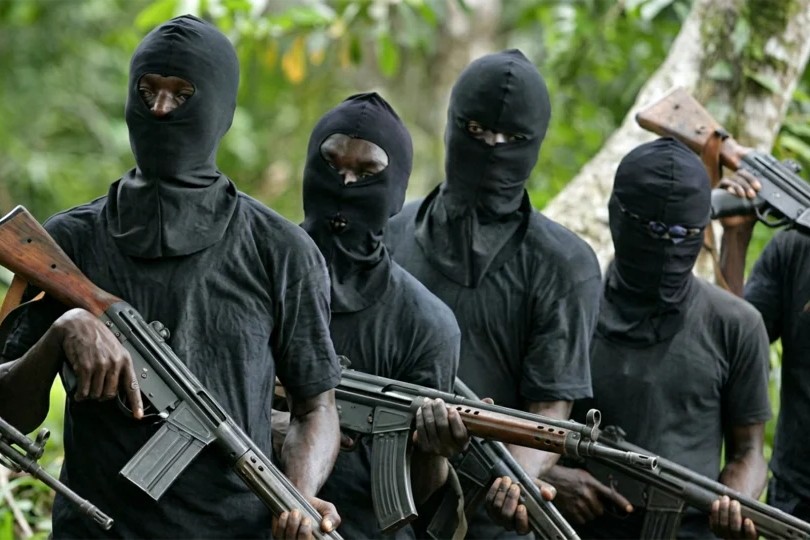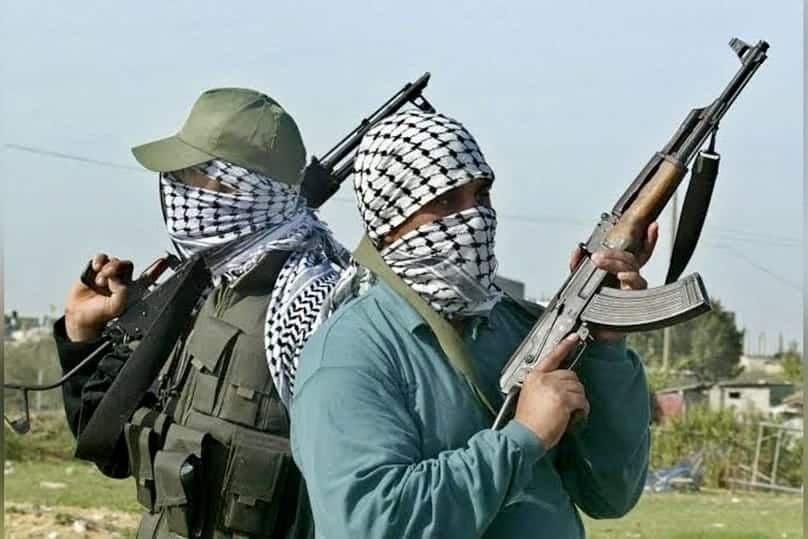
Heavily armed bandits kill 11 vigilantes, torch MTN mast and vanish into Lakurawa forest enclave in Sokoto’s worst rural security breakdown.
SOKOTO, Nigeria – A deadly ambush in Tangaza Local Government Area, Sokoto State, has left 11 local vigilante members confirmed dead and several more missing after a fierce gun battle with heavily armed bandits linked to the shadowy Lakurawa group.
The attackers, riding some 20 motorcycles, were first repelled by swift vigilante action but later returned to torch an MTN communications mast and unleash sporadic gunfire before disappearing into the dense Lakurawa forest enclave.
The incident has reignited alarm over the state’s porous borders, crumbling rural security architecture, and the dangerous evolution of community-based defence outfits into targets—and sometimes unwitting collaborators—of Islamist terror networks.
The Tangaza Massacre: A Detailed Account
No fewer than 11 local vigilante members have been confirmed dead following a fierce gun battle with heavily armed bandits in the Magonho community of Tangaza LGA on Friday, May 2, 2025.
Eyewitnesses report that about 40 assailants, armed with high-calibre weapons, rode into the village on approximately 20 motorcycles, triggering an immediate interception by the community-based vigilante unit.
“Initially, two vigilantes were killed in the early exchange of gunfire,” a local source disclosed, before security operatives later recovered nine more bodies from the surrounding forest enclave by Saturday, raising the toll to 11.
After their initial retreat, troops from the Forward Operating Base in Masallaci launched a pursuit, recovering some of the rustled livestock — a rare success in a region plagued by repeated raids.
Undeterred, the bandits returned under cover of dusk, setting ablaze the community’s MTN communications mast and firing indiscriminately before fleeing once again into the dense woodlands.
Security forces from the Nigerian Army and agencies stationed in Binji and Racca have since mounted search-and-rescue operations in the treacherous Lakurawa forest, though fears persist that additional victims remain unaccounted for.
The Rise of the Lakurawa: From Herders to Terrorists
The Lakurawa began life as a loosely organised self‑defence militia among herder communities in Sokoto’s borderlands but has since morphed into an Islamist‑influenced terror group.
Initially welcomed by local authorities in Tangaza and neighbouring LGAs to protect against criminal “Zamfarawa” bandits, the group gradually imposed unorthodox religious laws and levies on villagers, abusing its mandate for control and extortion.
By late 2024, HumAngle reported that Lakurawa’s numbers had swelled to over 200 fighters, equipped with small arms, explosives and even drones — a far cry from the farmer‑herders of 2018.
In November 2024, Nigerian authorities officially designated Lakurawa a terrorist organisation, linking it to the Islamic State Sahel Province and warning of its cross‑border logistics hubs in Mali and Niger.
This metamorphosis underscores a broader failure of state security: rural communities, feeling abandoned, invited an auxiliary force that ultimately became as menacing as the very bandits it was meant to fight.
Security Response and Political Fallout
The latest massacre has prompted renewed scrutiny of Sokoto’s security architecture, particularly the reliance on civilian vigilante outfits as a stopgap against organised crime.
ReliefWeb observed that violent criminal gangs have continued to displace and disrupt north‑west Nigeria, exploiting porous borders and weak rural governance to entrench their power.
In December 2024, an airstrike targeting Lakurawa camps in Gidan Sama and Rumtuwa tragically killed at least ten civilians, highlighting the perils of heavy‑handed military interventions without precise intelligence.
Sokoto’s Police Command spokesman, Ahmed Rufai, confirmed the Tangaza attack and the burning of the MTN mast, but declined to verify the exact casualty figure pending further inquiries.
Governor Ahmad Aliyu, under pressure to restore order, has pledged to bolster joint military‑police patrols and improve intelligence sharing, though critics argue that without addressing socio‑economic grievances, military measures will remain palliative.
Implications for Sokoto and Beyond
The Magonho ambush, according to some Sokoto scholars, represents an evolving security threat: hybrid Islamist‑bandit networks that blur the lines between criminality and terror.
For communities in Sokoto and neighbouring states, the dual spectre of Lakurawa’s tyranny and the predations of Zamfarawa bandits has created a prolonged state of siege that undermines agriculture, trade and education.
International agencies warn that unchecked, this nexus of jihadist and criminal elements could metastasise into a regional safe haven, echoing Sahel‑style insurgencies if swift, multi‑layered countermeasures are not implemented.
The incident will test the federal government’s commitment to community‑centric security reforms, including proper training, vetting and oversight of vigilante groups, as well as sustained investment in rural infrastructure and social services.
Conclusion
Friday’s carnage in Tangaza LGA marks one of Sokoto’s deadliest rural security breaches in recent memory, laying bare the limitations of ad‑hoc defence militias and the perils of a securitised vacuum.
As the search‑and‑rescue operation continues in the forest enclave, Abuja faces urgent choices: deepen military reliance, or pivot to integrated, intelligence‑led regional partnerships and community engagement that address the root causes of banditry and radicalisation.
The lives of 11 slain vigilantes and the safety of countless villagers hang in the balance.