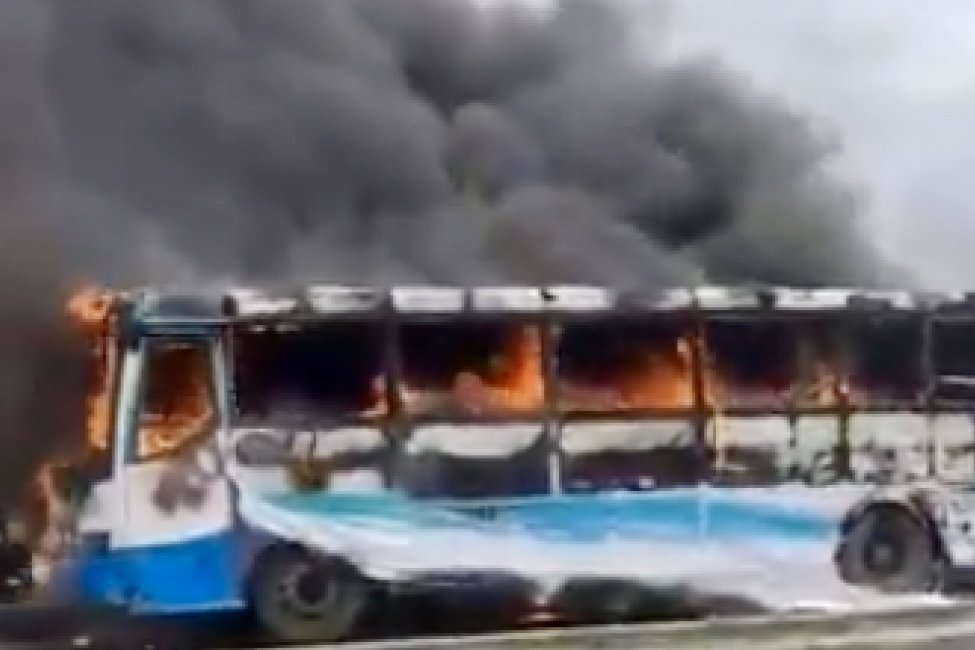
President Tinubu’s “swift directive” belies a decade of neglect as Benue bleeds once more under the weight of festering herder terror and faltering security architecture.
In the early hours of Saturday, gunmen descended on Yelewata community in Guma Local Government Area, slaughtering at least 100 villagers – men, women and children locked and burned in their bedrooms – according to Amnesty International Nigeria.
This latest atrocity epitomises what the Secretary to the Government of the Federation (SGF) and former Benue State Governor, George Akume, described as “mindless and disheartening” killings that have become all too routine across Benue, Plateau and Zamfara states.
The Federal Government’s belated deployment of additional troops – a nod to President Bola Tinubu’s order for a “full-scale military operation” – arrives only after hundreds of innocents have perished.
Between 2019 and 2025, terrorist attacks in Benue have claimed more than 500 lives and displaced some 2.2 million people, as herder militiamen (mostly foreigners) invade and occupy communities, displacing indigenous farmers from arable land in the process.
Yet, successive administrations have oscillated between ad hoc firefighting and perfunctory peace committees, failing to address the structural drivers of violence: porous national borders, weak community policing and unbridled proliferation of small arms.
Akume’s statement called on traditional and political leaders to “set aside all differences and urgently unite to chart a sustainable path to peace,” while insisting these attacks are “economically deterministic, not religiously driven.”
Yet, the endemic corruption in security services, has allowed marauding gangs to operate with near impunity.
The Government’s reliance on brute force risks further militarising the Middle Belt, alienating communities that have long clamoured for justice and equitable resource management.
For Nigerians weary of soundbites, what is required is not another round of troop deployments, but systemic reform.
A credible early‑warning system akin to successful models in South Africa’s Mpumalanga province, integrated mediation by local chiefs, and transparent land‑registry reforms must accompany military operations.
In the absence of these, tomorrow’s headlines will merely summarise today’s carnage.

The wounds inflicted in Yelewata are more than local tragedies: they are a gash in the soul of the nation.
Until the Federal Government transcends reactive gestures and commits to a multi‑layered strategy—combining security, socio‑economic investment and genuine dialogue—Benue will remain hostage to violence. And each life lost will echo as a damning indictment of those in power.
Report by Atlantic Post writer Suleiman Adamu.