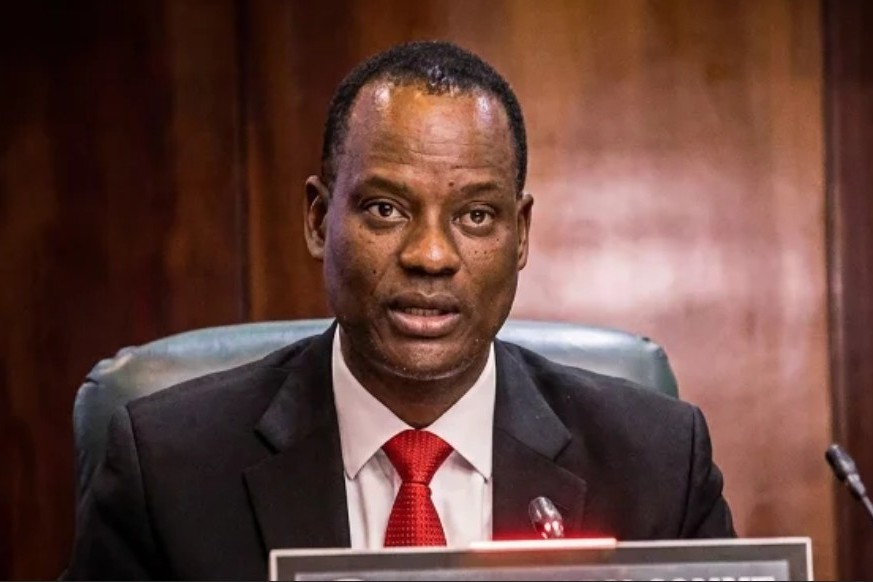
The death of 22-year-old University of Port Harcourt graduate Anthony Obodo in Port Harcourt has escalated from a community protest into a police accountability crisis, after the Rivers State Police Command confirmed that a police corporal linked to the shooting is being held for investigation.
Obodo was reportedly shot during an encounter with police personnel around the Agip-Ada George axis of Port Harcourt on Thursday, 27 August 2026, an incident that witnesses say ended with the young motorist fatally wounded and several other people injured after his vehicle lost control.
The police version, however, differs in important respects from accounts attributed to eyewitnesses and residents.
The command says there was an altercation and scuffle between Obodo and Corporal Alfred Louis, during which a gun was fired. It says Obodo died and two passers-by were injured, while Louis was subsequently attacked by an angry mob and sustained multiple injuries. The officer and members of his team have since been taken into custody at the State Criminal Investigation Department (SCID).
But accounts from residents and eyewitnesses paint a different picture — one involving a police pursuit, gunfire directed at a moving vehicle and a fatal bullet striking Obodo from behind.
That contradiction is now at the heart of the case.
What happened at Agip Junction?
According to eyewitness accounts cited by PUNCH, police officers allegedly attempted to stop the vehicle Obodo was driving around the Agip-Ada George Junction. When he failed to stop, the officers reportedly pursued him before one policeman opened fire.
One eyewitness told PUNCH:
“It was around 5pm. The police officers close to Agip/Ada George Junction stopped a young man who was driving, but he didn’t stop. So, they started running after him. Next thing, one of the policemen started shooting.”
The witness further alleged:
“He (the trigger-happy cop) shot three times. The bullet hit the driver from behind and pierced his chest. The vehicle lost control and hit people, about three of them.”
The witness said Obodo was pulled from the vehicle and rushed to a nearby hospital, where he died. He also alleged that the officer fired into the air while attempting to escape before youths confronted and restrained him.
PUNCH reported the incident as occurring at about 5pm, while other accounts supplied to Daily Trust placed the police encounter in the same Agip/Ada George corridor.
The precise sequence of events — whether officers were conducting a legitimate stop, whether Obodo knowingly failed to stop, whether a pursuit occurred, who first used physical force, and under what circumstances the firearm was discharged — remains a matter for investigation.
Police now acknowledge the shooting
The most significant development since the original reports is that the Rivers State Police Command has now publicly acknowledged the incident.
In a statement issued on Friday, 28 August, the command said preliminary information indicated that “there was an altercation between the occupant, one Anthony Obodo (m) and there was a scuffle between the duo which led to gunshot and subsequently led to the death of the victim, in which two other passersby were injured.”
The command identified the officer allegedly involved as Corporal Alfred Louis.
It also said Louis was assaulted by an angry mob after the shooting and sustained multiple injuries, adding that he and members of his team were in SCID custody and would face disciplinary action subject to the outcome of the investigation.
Most significantly, the police command said:
“The Command wishes to state unequivocally that the action is totally condemnable and does not reflect professionalism in policing.”
It added:
“The Rivers State Police Command is not a shield for anybody engaging in unethical conduct putting the Nigeria Police Force into disrepute.”
That statement marks a notable departure from treating the matter simply as an allegation. The command is acknowledging that an incident occurred, identifying an officer and confirming that disciplinary and investigative processes are underway.
But it does not amount to a finding of criminal guilt.
Why the conflicting accounts matter
There are already major discrepancies that an independent investigation must resolve.
The first concerns how the encounter began.
Residents cited by Daily Trust said police officers allegedly double-crossed the vehicle and demanded money, while Obodo reportedly said he did not know he was being pursued by police. Other residents said he simply failed to stop after being flagged down.
The second concerns the firing of the weapon.
The police command describes an altercation and scuffle that resulted in a gunshot. Eyewitness accounts cited by PUNCH instead describe a pursuit followed by several shots, with one bullet allegedly striking Obodo from behind.
The third concerns the number of injured people.
The Rivers command says two passers-by were injured. PUNCH and Daily Trust-linked accounts reported three injured people.
That is not a trivial inconsistency. In a potentially criminal investigation, investigators should be able to establish the identities, medical condition and locations of every injured person.
The fourth issue concerns the whereabouts and handling of Obodo’s body and vehicle.
Sources close to the family alleged that officers took away the vehicle and body after the incident. The family also alleged that Obodo’s necklace disappeared.
Those claims remain unverified allegations and should not be treated as established fact. But because they concern possible evidence preservation and chain of custody, they should be specifically addressed by investigators.
Who was Anthony Obodo?
The available accounts portray Obodo as a young man who had recently graduated from the University of Port Harcourt and was awaiting his NYSC call-up.
Daily Trust reported that he had been using his vehicle for transport work to raise money for his planned National Youth Service.
His father, Princewill Obodo, expressed anger over reports allegedly portraying his son as a fraudster or “Yahoo Boy”. He insisted that the young man was engaged in legitimate work to support himself.
“As a struggling young man, my late son was only doing a legitimate business to fend for himself before he was untimely murdered.”
He called for justice.
The human significance of the case therefore extends beyond another fatal encounter between citizens and law enforcement. It concerns the death of a young graduate who, according to his family, was trying to earn a living while preparing for national service.
The question of police use of force
At the centre of the investigation is a fundamental legal question: was the force used necessary and lawful in the circumstances?
Section 33 of Nigeria’s Constitution guarantees the right to life. It permits a death resulting from force only in narrowly defined circumstances and where the force used is reasonably necessary, including for defence against unlawful violence or in effecting a lawful arrest.
The Police Act 2020 also places protection of citizens’ rights and freedoms, public safety, and the protection of lives and property among the core functions of the Nigeria Police Force.
International standards go further. The UN Basic Principles on the Use of Force and Firearms require law enforcement officials, as far as possible, to use non-violent means before resorting to force and firearms. Where force is unavoidable, officers are expected to exercise restraint, minimise injury and preserve human life. Intentional lethal use of firearms is permitted only when strictly unavoidable to protect life.
That framework makes the investigation especially important.
If the evidence ultimately establishes that a firearm was discharged merely because a driver failed to stop immediately, that would raise serious questions about necessity and proportionality.
If, on the other hand, investigators establish that officers faced an imminent threat of death or serious injury, the legal analysis would be substantially different.
The evidence must determine which version is true.
The most important evidence may already exist
A credible investigation should not depend exclusively on competing witness statements.
There are likely multiple sources of physical and digital evidence that could reconstruct the incident.
These include CCTV recordings from businesses and roads around Agip Junction, mobile-phone footage recorded by residents, dashcam or vehicle-camera material, ballistic evidence, the firearm and ammunition issued to the officer, spent cartridges, the condition of the vehicle, forensic examination of the vehicle and hospital records.
Investigators should establish the trajectory of the projectile, the point of impact on Obodo’s body and vehicle, the number of rounds fired, the officers present and the exact positions of the vehicle and police team at the time of the shooting.
Medical evidence should also establish the cause of death and distinguish the consequences of the alleged gunshot wound from injuries sustained in the crash.
The three — or two, depending on the account — injured persons are equally important witnesses and victims.
The deeper accountability problem
The case arrives against a wider backdrop of concern over police accountability in Nigeria.
Amnesty International has documented allegations of excessive force by Nigerian security forces and criticised the lack of prosecutions in cases involving deaths during the 2024 #EndBadGovernance protests. It reported that at least 24 protesters were killed by police between 1 and 10 August 2024 and said that, a year later, no member of the security forces had been prosecuted in connection with those deaths.
In February 2026, Amnesty also published an investigation into the Nigeria Police anti-kidnapping unit known as Tiger Base in Imo State, alleging arbitrary detention, torture, extortion, enforced disappearances and unlawful killings.
These findings do not establish that officers in Rivers State routinely commit unlawful killings, nor do they determine what happened to Anthony Obodo.
They do, however, explain why a fresh allegation involving a fatal police shooting can rapidly become a crisis of public confidence.
A police force cannot expect communities to accept an internal investigation simply because a statement has been issued. Trust depends on whether the investigation is transparent, evidence-based and capable of producing consequences irrespective of rank.
The fuel question is becoming a symbol of the anger
One especially provocative issue raised by residents concerns police operational resources.
A resident reportedly recalled that officers at the station had told a complainant the previous month that they did not have fuel to respond to a reported theft in Agip Estate.
The resident then asked:
“How is it that the same station has fuel to chase an unarmed young man for 30 minutes?”
That allegation has not been independently verified by Atlantic Post.
Yet it captures the broader anger in the community: whether police resources are being deployed consistently and whether citizens receive equal urgency when seeking protection from crime.
That question should be answered through records, not rhetoric.
Police detention is a start, not the end
The Rivers State Police Command’s decision to place Corporal Louis and members of his team in SCID custody is important.
The Nigeria Police Force itself maintains a Complaint Response Unit (CRU) for complaints involving police misconduct. The Police Service Commission is also mandated to promote transparency, accountability and discipline within the police service.
But detention for investigation is not the same thing as prosecution.
Nor is a disciplinary process a substitute for an independent determination of whether a criminal offence occurred.
The next stage therefore matters more than the initial announcement.
Investigators must preserve evidence, obtain witness statements, establish the ballistic facts, clarify the number and condition of injured victims, determine exactly what preceded the shooting and make their findings available to the public to the greatest extent permitted by law.
The family also deserves a proper explanation of what happened to Obodo’s body and property after the shooting.
What an independent investigation should answer
For Obodo’s family, the essential questions are straightforward.
Why did police pursue the vehicle?
Was Obodo lawfully stopped or ordered to stop?
Did he knowingly evade police or fail to recognise them?
Who fired the first shot?
How many shots were fired?
Where was Corporal Louis positioned?
Was Obodo armed?
What threat, if any, did the officer reasonably believe he was facing?
Why was a firearm discharged in a built-up civilian environment?
Who handled the vehicle after the shooting?
Where was Obodo’s body taken and by whom?
How many people were injured?
Were all the injured victims properly treated?
And, most importantly, was the force used reasonably necessary under Nigerian law?
Until those questions are answered with evidence, neither the family’s version nor the police account should be treated as the final truth.
The credibility test for Rivers Police
There is one potentially encouraging element in this rapidly developing case: the police command has not simply dismissed the allegations.
It has identified the officer, acknowledged the seriousness of the conduct and confirmed that the officer and his colleagues are being investigated.
That creates an opportunity for the command to demonstrate what accountability actually looks like.
The test now is whether that investigation produces facts capable of surviving public scrutiny.
For the Obodo family, justice is no longer an abstract demand. It is a demand for a coherent account of how a 22-year-old university graduate went from driving through Port Harcourt to lying dead in a hospital.
For the police, the case is bigger than one corporal.
It is a test of whether the state can wield a firearm in the name of public safety and still convince the public that the law governs the weapon — not the other way around.
Atlantic Post fact-check note
What is confirmed: Rivers State Police Command has acknowledged the incident, identified Corporal Alfred Louis, said he and members of his team are in SCID custody, and announced an investigation and possible disciplinary action.
What remains disputed or under investigation: whether there was a prolonged police pursuit; whether Obodo refused or failed to stop; whether money was demanded; the exact sequence of the alleged scuffle and shooting; the number of injured victims; and the allegations concerning the handling of Obodo’s body, vehicle and necklace.
Important update: Earlier reports said the Rivers police spokesperson had not responded to calls. The command subsequently issued a statement on 28 August 2026 acknowledging the incident.
Follow us on our broadcast channels today!
- WhatsApp: https://whatsapp.com/channel/0029VawZ8TbDDmFT1a1Syg46
- Telegram: https://t.me/atlanticpostchannel
- Facebook: https://www.messenger.com/channel/atlanticpostng