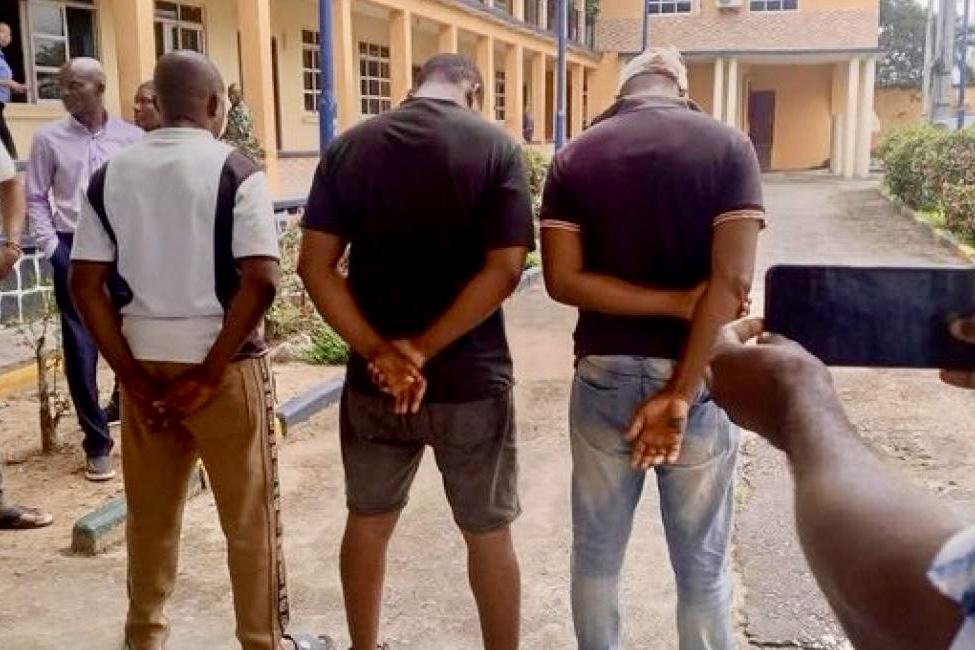
PORT HARCOURT — The Rivers State Police Command has dismissed three officers found culpable in the police shooting that claimed the life of 22-year-old University of Port Harcourt graduate Anthony A. Obodo, while an inspector who allegedly fled the scene after the incident has been declared a deserter.
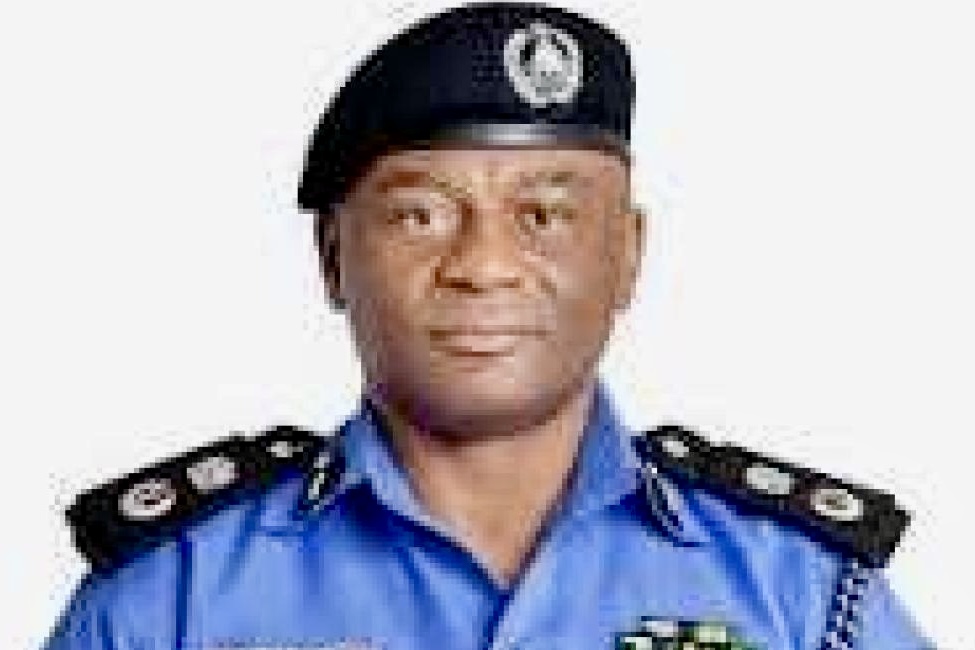
The decision, announced by Rivers State Commissioner of Police, CP Olugbenga Adepoju, on Wednesday, September 2, 2026, marks the most significant official action since Obodo was shot at the Agip-Ada George axis of Port Harcourt on August 27.
But it does not end the case.
The Police Command says the three dismissed personnel will be charged before a court to face criminal proceedings. The Nigerian Bar Association, which has become involved in the matter, has likewise stressed that the dismissal concludes the internal disciplinary process but not the criminal justice process.
That distinction is critical.
A police officer can lose his job through an internal disciplinary process while the separate criminal process still has to determine whether an offence was committed, what offence was committed, who bears criminal responsibility and what punishment, if any, follows.
For a grieving family and a public already sceptical of police accountability, the next stage may therefore prove more consequential than the dismissal itself.
What happened at Ada George?
The fatal incident occurred on Thursday, August 27, at about 5:30pm along the Agip-Ada George route in Port Harcourt.
The Rivers Police Command’s account is that a patrol team from Agip Division, led by Assistant Superintendent of Police Fabian Kpeanabari, was returning from special duty at the Yakubu Gowon Stadium when the officers sighted a black, fully tinted Lexus with registration number ABU-376-TM.
According to CP Adepoju’s account, the officers attempted to stop the vehicle, but the driver allegedly failed to stop and accelerated away. The patrol team then gave chase.
During the pursuit, Corporal Alfred Louis allegedly opened fire and a bullet struck the driver, Anthony Obodo.
Adepoju said Obodo was taken to Palmer’s Hospital in Port Harcourt, where he was attended to and later confirmed dead.
The Commissioner stated:
“During the pursuit, Corporal Alfred Louis … opened fire at the vehicle.”
He said the bullet hit Obodo, who sustained a gunshot injury before being taken to hospital.
The Command initially gave a somewhat different description of the circumstances. In its August 28 statement, police spokesperson ASP Blessing Agabe said preliminary information indicated that an altercation between Obodo and an officer had developed into a scuffle, after which a gun was discharged.
The Command described the conduct as condemnable and said it did not reflect professional policing. It also said Louis and members of his team had been taken into custody pending investigation.
That evolution in the official account is one of the issues that any eventual prosecution should clarify.
Three officers dismissed — names emerge
Following the investigation and an orderly room trial, the Command said three officers were found culpable and dismissed.
They are:
ASP Fabian Kpeanabari
Corporal Alfred Louis
Police Constable Michael Ejokwu — also rendered as Ejokwu/Ejiekwu in some reports.
Adepoju said the internal proceedings established the officers’ culpability and that they would subsequently face criminal charges.
“No police officer is above the law,”
the Commissioner said, stressing that the Force would not shield personnel who abused their powers or acted contrary to professional standards.
A contemporaneous update from the Nigerian Bar Association confirmed that its representatives met the Commissioner after the orderly room trial and that the three officers had been dismissed.
The NBA’s account is significant because it places the disciplinary action within a broader accountability process involving the deceased’s family and other stakeholders. It also makes clear that the internal punishment is not the end of the matter.
The missing inspector
The case has another unresolved dimension.
Inspector Solomon Nwrogu/Nworgu, described as a member of the team, allegedly absconded after the shooting. Police said efforts were intensified to locate and arrest him.
The Command has reportedly declared him a deserter.
This point needs careful distinction because some reports published after the Commissioner’s briefing inaccurately described the development as the dismissal of four officers.
The more consistent account from the Rivers Command’s briefing, Vanguard, TheWILL and the Nigerian Bar Association is that three officers were dismissed, while the fleeing inspector remained outside custody and was being pursued.
Until the inspector is located and brought before the appropriate authorities, questions about his precise role in the operation remain open.
Why the family rejected the initial narrative
From the beginning, Obodo’s family disputed the idea that the shooting could be explained simply as an altercation.
His father, Princewill Obodo, said his son had been wrongly targeted and maintained that he was innocent.
He also alleged that the officers involved had been deployed to provide security at the Nigerian Bar Association’s Annual General Conference at the Yakubu Gowon Stadium, Elekahia, and were expected to return to their assigned duty post later in the evening.
“I want justice for my son because my son is innocent,”
the grieving father told journalists.
He further alleged that police authorities who visited the family had indicated that Anthony was innocent.
His description of the family’s grief was stark:
“I feel broken. My heart bleeds.”
The father’s separate allegation that the officers were allegedly “paid to kill” his son is an extremely serious claim, but publicly available reports have not provided evidence establishing it. It should therefore be treated strictly as an allegation requiring independent investigation, not as an established fact.
That distinction matters in a case already surrounded by anger, misinformation and competing narratives.
Protests turned the shooting into a public-security crisis
The killing did not remain a local police matter.
Within days, youths, family members and sympathisers took to the streets around Agip Junction and Ada George, demanding justice and calling for the accused officers to be publicly identified and prosecuted.
Protests continued into a third day, with demonstrators blocking parts of the surrounding roads and causing major disruption to movement in Port Harcourt.
Protest leader Charles Chukwu said:
“We demand justice now.”
He urged the Rivers State Government, the Inspector-General of Police and civil society organisations to intervene. Protesters also demanded that the officer alleged to have fired the fatal shot be publicly paraded.
The demonstrations illustrate a widening problem for Nigerian law enforcement: whenever allegations of police killing are followed by incomplete information, public suspicion can rapidly become a security problem in its own right.
A death initially confined to one road junction can become a catalyst for street protests, traffic disruption, confrontation with authorities and a broader crisis of confidence.
The first police response was itself significant
On August 28, immediately after the shooting became public, the Rivers Command announced that the alleged shooter and members of his team had been placed in custody.
It also said Louis had been attacked by an angry mob after the incident, sustaining multiple injuries before fellow officers rescued him and recovered his weapon.
The Command’s initial statement said:
“The action is totally condemnable and does not reflect professionalism in policing.”
It promised strict disciplinary action against erring officers.
Five days later, that promise translated into dismissal.
The speed of the internal investigation may help reassure a public demanding accountability, but the decisive test will be whether the subsequent criminal case is transparent, properly evidenced and allowed to proceed without institutional interference.
The unanswered evidence questions
The police announcement settles one question — whether the Command believes the officers breached professional standards — but leaves several evidential questions requiring public answers.
First, why was the Lexus stopped?
Second, what exactly happened during the pursuit?
Third, how many shots were fired, from which firearm and from what position?
Fourth, what did the ballistic examination establish?
Fifth, was there CCTV, mobile-phone footage, dashcam footage or other independent video evidence covering the junction or the chase?
Sixth, what do the medical and post-mortem records show about the trajectory and fatal injuries?
Seventh, what instructions had the patrol team received before leaving its previous assignment?
And eighth, what was Inspector Nwrogu/Nworgu’s precise role before, during and after the shooting?
These are not technicalities. They go to the heart of criminal accountability.
The Police Act 2020 establishes the Nigeria Police Force’s responsibility for law enforcement and safeguarding lives and property, while Nigeria’s legal framework also requires disciplinary and criminal processes to operate within due-process safeguards.
Dismissal is not the same as conviction
This distinction is likely to become central in the weeks ahead.
A police orderly room trial is an internal disciplinary mechanism. A criminal prosecution is a judicial process.
The National Industrial Court has repeatedly dealt with disputes arising from police disciplinary proceedings, including cases in which the legality and fairness of orderly room trials were challenged. The Court’s decisions underline the importance of procedural fairness even when the allegations involve serious misconduct.
That means the three dismissed officers are not, by virtue of dismissal alone, criminally convicted of killing Obodo.
Their eventual fate must be determined through the appropriate criminal proceedings.
Equally, the dismissal does not erase the need to examine the conduct of the operation itself or the institutional decisions that preceded it.
The broader policing question
The Anthony Obodo case has become larger than the fate of three officers.
It is now a test of whether Nigeria’s law-enforcement institutions can move from internal discipline to credible public accountability.
In recent months, Nigerian police commands have continued to announce orderly-room trials and sanctions for alleged misconduct, demonstrating that disciplinary mechanisms are active. But repeated cases of alleged extortion, brutality and unlawful use of force continue to raise questions about whether punishment after an incident is enough, or whether stronger preventive controls are required.
For Rivers State, the credibility of the next stage will depend on more than a press conference.
The public will want to know when the officers will be arraigned, what charges will be filed, what evidence will be presented and whether the proceedings will be conducted openly enough to reassure a traumatised family and a sceptical public.
The family, meanwhile, has already paid the irreversible price.
Anthony Obodo, a young graduate reportedly awaiting his NYSC call-up letter, will not return.
For the Rivers Police Command, the challenge now is to ensure that his death does not become another case in which a dramatic announcement of disciplinary action is followed by years of uncertainty.
The Command has said it will not shield erring personnel.
The criminal justice system must now demonstrate that accountability does not end at the police gate.
Follow us on our broadcast channels today!
- WhatsApp: https://whatsapp.com/channel/0029VawZ8TbDDmFT1a1Syg46
- Telegram: https://t.me/atlanticpostchannel
- Facebook: https://www.messenger.com/channel/atlanticpostng