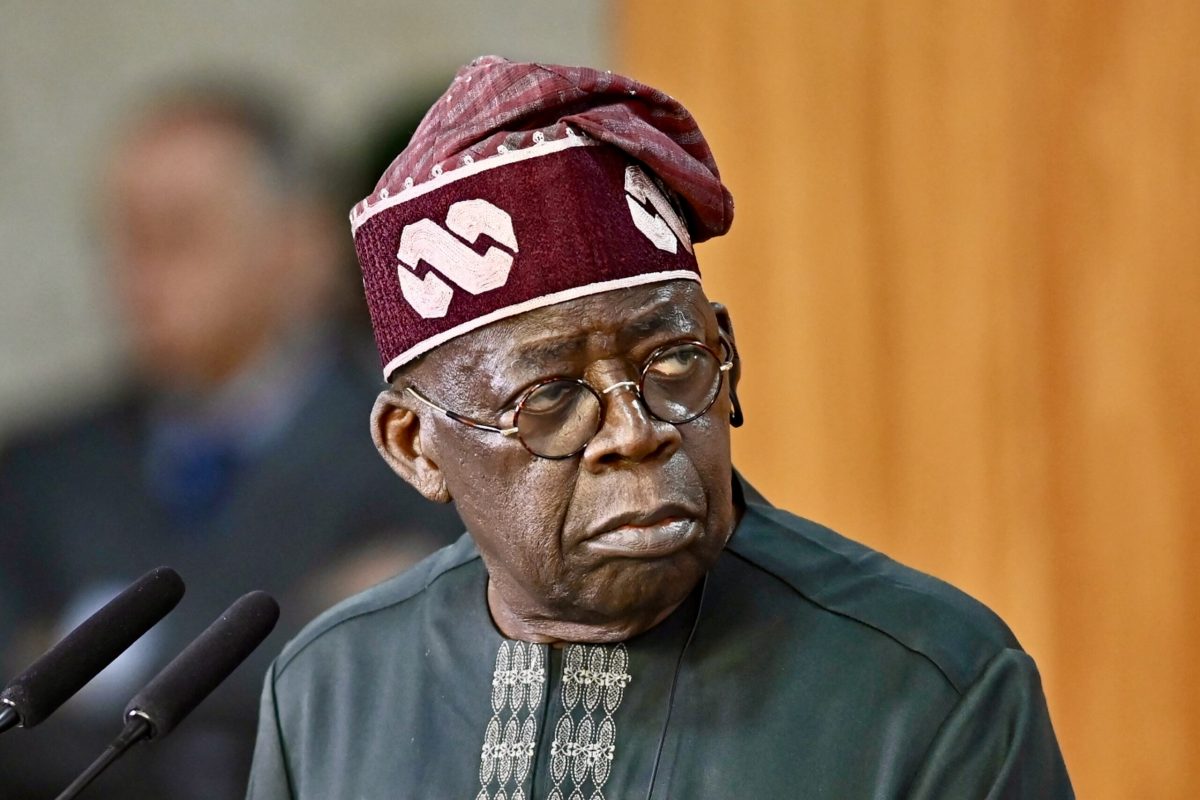
ABUJA, Nigeria — On 19 December 2025 the President of the Senate, Godswill Akpabio, stood in the joint chamber of the National Assembly and delivered a defence of a fragile but deliberate marriage between executive ambition and legislative consent. He framed that relationship as a necessity for national renewal, not a surrender of parliamentary independence.
His words followed the formal presentation of the 2026 Appropriation Bill by President Bola Ahmed Tinubu. This sprawling fiscal plan attempts to reset Nigeria’s calendar year budgets. It promises fiscal consolidation, renewed resilience, and shared prosperity.
The spectacle was as much political theatre as budgetary business. Behind the pleasantries and the metaphors of baobab trees, there are sharper questions. These questions concern accountability, credibility, and the widening trust gap between citizens and their lawmakers.
This investigative brief unpacks what was said, what is claimed, and what the numbers and records actually show. It examines three lines of inquiry. First the substance of the 2026 Appropriation Bill and the macroeconomic assumptions that underpin it. Second the Senate President’s claims about legislative performance, revenue progress and the necessity of collaboration.
Third, the political and civic consequences of the perceived executive-legislative compact are significant. This includes why Nigerians see some lawmakers as sell-outs. It also involves what that means for democratic resilience. Where necessary the brief offers factchecks and documentary evidence.
The Bill In Plain Sight
President Tinubu presented a ₦58.18 trillion 2026 Appropriation Bill. The fiscal framework outlined total expenditure of ₦58.18 trillion against expected revenue of ₦34.33 trillion. Capital spending is set at ₦26.08 trillion, recurrent non-debt expenditure at ₦15.25 trillion and debt service at ₦15.52 trillion.
The projected budget deficit is ₦23.85 trillion or about 4.28 per cent of GDP. The document assumes an average crude oil price of roughly $64.85 per barrel and an oil production target of about 1.84 million barrels per day.
An exchange rate assumption of around ₦1,400 to the dollar was embedded in the arithmetic. These are the headline figures that will dominate parliamentary scrutiny and public debate.
Put conversationally the plan promises big capital spending while accepting a large deficit financed by continued borrowing. Tinubu presented the budget as consolidating the reforms started in 2023 and 2024. It serves as a bridge to better growth and stability. The tone of the speech was earnest. The scale of the figures will, however, be judged not in rhetoric but in delivery.
What Is New About This Budget
Three technical initiatives distinguish the 2026 plan from recent predecessors.
- A move to end rolled over budgets and align fiscal years to the calendar year. The administration argues this will improve project planning and closure. The policy follows a prior proposal from the presidency. The aim is to reset overlapping fiscal years. It also seeks to consolidate capital spending under a single framework.
- A high allocation to capital spending. At ₦26.08 trillion the capital envelope is intended to signal a push on infrastructure, security, health and education. Whether the figure translates to completed projects will depend on procurement discipline and cash flow management.
- Continued reliance on crude oil revenues and borrowings. The assumptions on oil price and production are plausible but exposed to volatility. Debt service remains a large share of the budget and constrains discretionary spending.
The Claims of Recovery And The Evidence
In his address Senator Akpabio echoed the presidency claiming measurable gains. He said government revenues are improving. Public finance is managed with greater discipline. Nigeria is regaining confidence both at home and abroad. Those are consequential claims and need testing.
Independent and multilateral data suggest there are signs of macro stabilisation since 2023. Inflation, for example, peaked in earlier years due to currency and subsidy shocks. It eased notably in 2025 according to government and market reports. Foreign reserves rose materially during 2025 and by late 2025 had reached levels not seen in several years.
The IMF and the World Bank have recorded improved growth metrics. They have publicly recognised progress linked to structural reforms. These reforms include subsidy removal and exchange rate liberalisation. These facts support a cautious case that macro indicators have moved in the right direction.
But the recovery narrative is partial. Revenue collection remains well short of benchmark requirements. Analysts reported a persistent revenue shortfall in 2025 that necessitated additional borrowing and creative fiscal fixes.
The slickness of headline improvements masks deep structural fragilities. Fiscal buffers have improved but are not yet robust. Poverty and unemployment remain high and inflation, though lower than earlier peaks, still bites into household incomes.
The verdict is mixed. Measurable gains exist. However, they coexist with a yawning fiscal gap. The 2026 Bill will not close this gap on current policy settings. Stronger revenue mobilisation or painful fiscal adjustments are needed.
Akpabio’s Defence Of Collaboration And The Public Perception Problem
Akpabio’s central thesis was straightforward. Democracies function best not when rival branches fight constantly but when they cooperate within constitutional bounds.
He warned that prolonged executive-legislative rivalry has historically undermined governance. He urged his colleagues to view the budget as a moral document as well as a ledger. Those appeals are familiar. They are also politically freighted.
The public reaction to collaboration between the National Assembly and the Executive is polarised. Many citizens, activists and civil society groups view close ties between some lawmakers and the presidency as evidence. They see it as evidence of capture.
The phrase Akpabio used — that collaboration is sometimes seen as a sell-out — reflects a real political cost. That cost matters. Democratic legitimacy depends on the perception that representatives remain independent checkers of the Executive. They should not be its rubber stamp.
This tension is not new in Nigeria. Rolled over budgets and delayed capital releases have in prior years fuelled accusations of patronage and opacity.
Parliament’s legitimacy depends on transparent scrutiny. It relies on public hearings and committee reports. Visible amendments that alter budgets are also crucial to better reflect public priorities. When those processes are perfunctory or opaque, the charge of sell-out sticks with force.
Legislative Output Versus Legislative Quality
Akpabio celebrated the 10th Senate’s legislative output. His office and aides have publicised figures. They show the Senate passed over 90 bills. More than 50 of these were assented to into law in a relatively short period.
Those numbers are technically accurate as counts. They are also an incomplete measure of legislative health. Lawmaking speed is laudable if the laws are well crafted, debated, and accompanied by stakeholder engagement. Quantity does not guarantee quality.
An investigative review of a sample of those bills shows a mix. Some are important housekeeping reforms and sectoral corrections. Others are executive bills expedited through the process.
A pattern emerges where high throughput coincides with limited time for public hearings and for civil society scrutiny. That is a structural weakness.
Fast tracking can be justified occasionally for emergency lawmaking. But as a sustained posture it can erode the deliberative function of parliament and fuel suspicions of complicity.
The Benin Episode And Regional Security
Akpabio commended President Tinubu for Nigeria’s swift response to threats against democracy in the Republic of Benin. The intervention was framed as a demonstration of regional leadership and a defence of democratic norms.
Official releases from the presidency confirm Nigeria’s support for Beninese authorities during an attempted coup. Contemporaneous reporting also supports this. The intervention involved coordination with regional partners.
ECOWAS and other actors characterised West Africa as at heightened risk from coups and instability in late 2025. The Senate’s endorsement of the action is factual.
The fact that Nigeria acted swiftly is not in itself a political error. The question is whether swift security decisions received adequate legislative oversight. Were the intervention logic, rules of engagement, and implications for foreign policy debated publicly?
The National Assembly has a constitutional role in authorising military deployments abroad and in scrutinising related expenditures.
The speed of events, legitimate security imperatives and the need for confidentiality sometimes limit public debate. That trade off should not become an excuse for permanent opacity.
Factcheck Section
Below is a compact factcheck. It covers the key assertions in Akpabio’s address. It also includes the presidency’s framing of the 2026 Bill.
Claim: The 2026 Appropriation Bill totals ₦58.18 trillion with a deficit of 4.28 per cent of GDP.
Fact: Confirmed in the presidency budget speech and corroborated by independent reporting.
Claim: Government revenues are improving and public finance is being managed with greater discipline.
Fact: Partial. Macro indicators such as inflation and foreign reserves improved in 2025 according to independent and multilateral sources. However revenue mobilization remains short of target and a large fiscal gap persisted in 2025 necessitating borrowing. The headline improvements do not yet equate to structural fiscal security.
Claim: The 10th Senate recorded one of the highest legislative outputs in recent history.
Fact: The Senate has indeed passed a high number of bills and many have been assented to. But legislative quantity is not a substitute for deliberative quality. Independent reviews show rapid passage and limited public hearings on several executive bills.
Claim: Nigeria’s response to a coup attempt in the Republic of Benin was swift and decisive.
Fact: Confirmed. Nigeria actively supported Benin’s government during an attempt at a coup and regional actors publicly acknowledged the intervention. The move drew praise from some quarters and debate from others about rules, oversight and regional strategy.
Claim: Reforms are yielding measurable gains.
Fact: Measurable gains exist in specific indicators. Growth forecasts and reserve buffers improved and multilateral institutions gave conditional praise. But gains remain fragile, and socio economic pain is still widespread among households.
How The Budget Will Be Tested In Committee
The National Assembly’s appropriations process will allow several points of leverage. Committees on Finance, Appropriations and Petroleum must examine revenue assumptions and spending allocations. Key tests will include:
• Whether the oil production and price assumptions are stress tested under conservative scenarios.
• Whether the capital budget has ring-fenced funds that are actually released and tracked to completion.
• Whether debt servicing forecasts are realistic and whether new borrowing is limited to productive investments rather than recurrent adjustments.
• Whether statutory transfers and subnational allocations are transparent and matched with compliance mechanisms.
The difference between a budget as brochure and a budget as implementable plan will be visible in committee hearings. It will also be noticeable in line item reviews and the budget execution calendar. Robust questioning could vindicate Akpabio’s plea for collaboration. A perfunctory rubber stamp will confirm the public’s worst fears.
The Politics Of Perception And The Risk Of Erosion
There is a governance calculus at work. For the ruling coalition cooperation may produce quicker passage of priority bills and a smoother policy agenda. For opponents and a sceptical public the same cooperation reads as capture.
The erosion of public trust is not a cosmetic problem. It constrains state capacity because citizens withhold cooperation, investors demand higher risk premia, and social consent frays.
A durable remedy requires three things. First procedural transparency. Public hearings streamed live, timely publication of committee reports and accessible explanations of amendments.
Second, institutional safeguards. Strengthening the autonomy of parliamentary research services and empowering oversight agencies will help. Third, civic engagement. Civil society and state media must make legislative scrutiny an everyday expectation, not an occasional ritual.
Recommendations For A Credible Appropriations Cycle
From the evidence examined the following steps would improve public confidence and budget credibility.
Publish a reconciled, machine readable version of the bill and the supporting revenue assumptions immediately. That will allow independent audit and civil society scrutiny.
Commit to a timetable for capital project delivery with quarterly public performance reports. Cash release should be conditional on measurable milestones.
Insist that committees hold substantive public hearings on major votes and on any foreign military deployments. Make committee transcripts available.
Strengthen internal parliamentary oversight institutions. Adequate research support will reduce dependence on executive briefings.
Use medium term expenditure frameworks to link budget promises to measurable outputs and to limit once off spending.
If lawmakers wish to restore public faith they must allow process to be as visible as the performance they promise.
Conclusion
Akpabio’s speech in the joint chamber was an appeal to an idea as old as representative government. Institutions working together can deliver more than those locked in combat. The argument has merit in theory. In practice, the quality of collaboration will be judged by outcomes and by transparency.
The 2026 Appropriation Bill is an ambitious instrument. Its successful implementation would be good for Nigeria. The danger is not partnership per se. It is opaque partnership that accelerates policy but corrodes trust.
The senators who follow Akpabio have to bridge two tasks. They must work productively with the Executive to fix broken processes and deliver public goods. They must also show the electorate that cooperation does not mean surrender.
When those two tasks conflict, Nigerian voters will likely provide a sovereign answer. This answer is likely to be indifferent to constitutional nuance. Political survival will depend on visible accountability not rhetorical affiliation.
Additional reporting by Osaigbovo Okungbowa, Atlantic Post Senior Political Correspondent.
Follow us on our broadcast channels today!
- WhatsApp: https://whatsapp.com/channel/0029VawZ8TbDDmFT1a1Syg46
- Telegram: https://t.me/atlanticpostchannel
- Facebook: https://www.messenger.com/channel/atlanticpostng