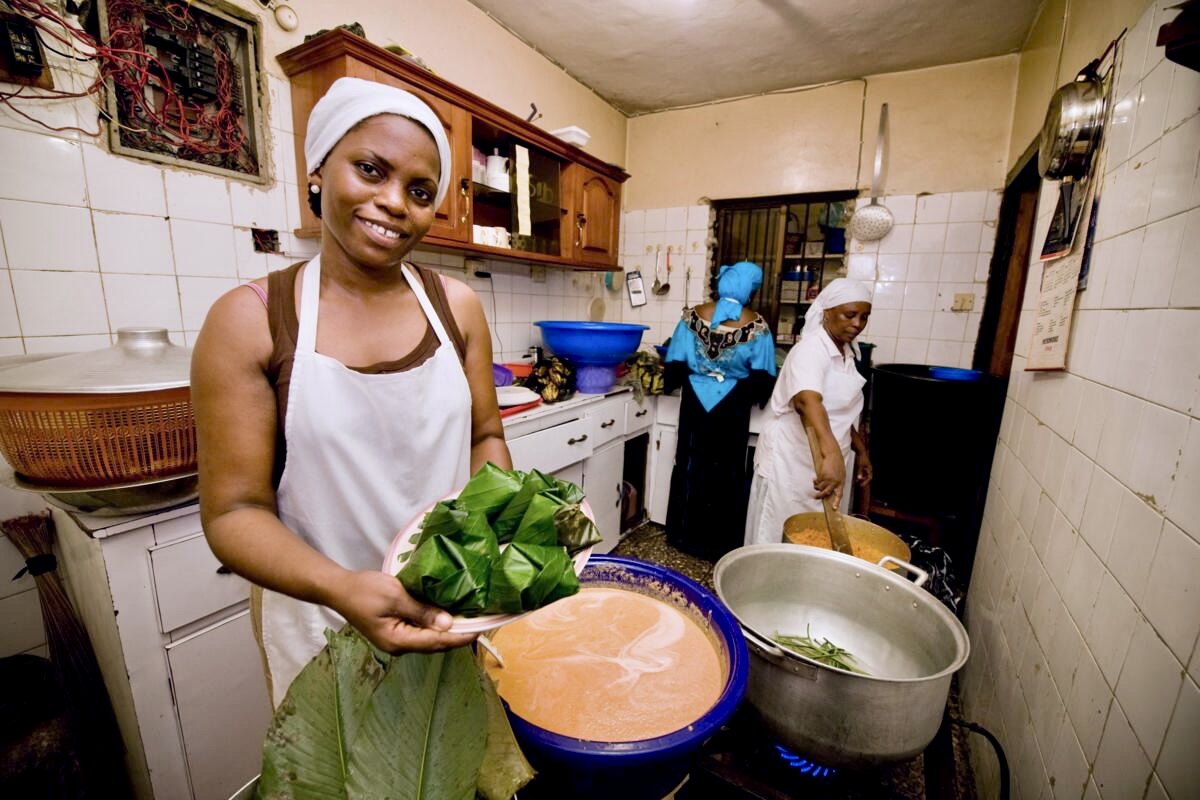
Nigeria’s economic reality is pushing more people towards entrepreneurship, but there is a dangerous misconception about what it takes to start a business.
Many aspiring entrepreneurs believe they need a shop, office, expensive equipment, a large workforce or millions of naira before they can begin. In reality, some of the most practical businesses to launch in 2026 are those that can start from a bedroom, kitchen, living room, garage or small compound space — provided the entrepreneur chooses the right market and controls costs.
That distinction is important.
Nigeria’s headline inflation rate is now considerably lower than the exceptionally high levels recorded during the earlier phase of the inflation crisis, but prices remain a major consideration for households and businesses. The National Bureau of Statistics’ current data show all-items inflation at 15.43 per cent, while food inflation stands at 20.31 per cent under the rebased CPI framework.
In other words, Nigerians may be seeing slower price increases than before, but customers are still extremely price-conscious.
For a home business, that creates both a challenge and an opportunity.
The challenge is that consumers have less room for overpriced products and poorly delivered services. The opportunity is that entrepreneurs who can offer convenience, affordability, reliability and a clear value proposition can build businesses without taking on the heavy fixed costs associated with conventional shops.
Small businesses are already central to Nigeria’s economic survival. The Small and Medium Enterprises Development Agency of Nigeria, SMEDAN, continues to focus on helping MSMEs gain access to finance, markets, skills, technology and formalisation. In the first quarter of 2025 alone, SMEDAN reported supporting more than 116,000 entrepreneurs, creating over 90,000 jobs and distributing more than 123,000 work tools nationwide.
The question, therefore, is not whether Nigerians can start businesses from home.
It is which businesses make the most sense in today’s market?
Based on current consumer behaviour, digital payments, internet adoption, household demand, regulatory considerations and the need to keep overheads low, these are seven of the strongest possibilities.
1. Home-Based Food and Meal Delivery Business
Food remains one of the most obvious home-business opportunities in Nigeria because it solves a problem people face every day: they have to eat.
The opportunity is not necessarily in opening another large restaurant.
A much leaner model is to specialise.
An entrepreneur could prepare office lunches, Nigerian soups, small chops, breakfast packs, pastries, party trays, healthy meals, frozen foods or weekend family meals from a properly organised home kitchen, then sell through WhatsApp, Instagram, Facebook and referrals.
The strongest operators are unlikely to be those attempting to sell everything.
Instead, the winning strategy is usually to identify a narrow customer group.
For example:
“Affordable lunch for office workers within a 5km radius.”
That proposition is much easier to market than:
“We sell all kinds of food.”
The economics can also be attractive because customers pay for convenience. However, entrepreneurs must calculate ingredients, cooking gas, electricity, packaging, delivery, wastage, labour and payment charges before declaring a profit.
SMEDAN itself stresses the importance of distinguishing between sales and actual profit, noting that net profit only becomes clear after all relevant expenses have been deducted.
There is also a critical regulatory issue.
Anyone moving from casual home cooking into commercially produced and pre-packaged food must take food-safety and regulatory requirements seriously. NAFDAC states that regulated food products cannot simply be manufactured, advertised or sold without the appropriate registration, and its guidelines prescribe hygiene, manufacturing and inspection requirements for relevant small-scale food enterprises. Certain high-risk products receive particular regulatory treatment.
The smartest beginner may therefore start with freshly prepared meals sold directly to known customers rather than immediately attempting mass production of packaged food.
What you need
A clean kitchen, basic cooking equipment, reliable packaging, a smartphone, social media presence and a dependable delivery arrangement.
The real opportunity
Build repeat customers rather than chasing one-off orders.
A customer who orders lunch three times every week is more valuable than 10 customers who buy once and disappear.
2. Baking, Cakes and Small Chops
Nigeria’s celebration culture creates a permanent market for cakes, pastries and finger foods.
Birthdays, weddings, naming ceremonies, office events, church programmes, graduation parties and family gatherings all generate demand.
But competition is intense.
That means a new baker cannot simply say: “I bake cakes.”
The business needs a distinctive proposition.
It could be:
- affordable birthday cakes;
- premium wedding cakes;
- minimalist cakes for young professionals;
- cupcakes for corporate events;
- small chops for meetings;
- dessert boxes;
- customised gift boxes; or
- weekend pastry boxes delivered to homes.
This is especially suitable for a home business because production can begin on a relatively small scale and capacity can increase as orders grow.
The major danger is underpricing.
Many new entrepreneurs calculate flour, sugar and eggs but forget electricity, gas, packaging, transport, equipment depreciation, failed batches, their own labour and marketing.
A ₦20,000 order is not automatically a ₦20,000 business success.
The entrepreneur must ask:
How much did it actually cost me to produce and deliver it?
That is the difference between revenue and profit.
3. Online Reselling and Social-Commerce Business
One of the most accessible home businesses in 2026 requires surprisingly little physical infrastructure.
You can sell products without maintaining a conventional shop.
A home-based reseller can source products from wholesalers or manufacturers and sell through WhatsApp, Facebook, Instagram, TikTok and online marketplaces.
Potential niches include:
fashion accessories, children’s items, beauty products, household products, phone accessories, modest fashion, office accessories, home organisers and selected locally made products.
The important word is niche.
The internet has made it possible for a small seller to reach customers beyond their immediate neighbourhood. The NCC’s latest industry statistics show Nigeria’s broadband subscriptions had climbed above 121 million by May 2026, highlighting the enormous digital audience available to businesses.
Nigeria’s payment infrastructure also makes online selling increasingly practical.
The Central Bank of Nigeria reports that internet transfers were already the most-used non-cash retail payment channel in its published payment data, while internet transaction volumes reached more than 11.6 billion transactions in the first half of 2024.
That does not mean every online seller will become rich.
Quite the opposite.
The barrier to entry is low, which means competition is high.
The businesses that survive will be those that become trusted.
Customers want accurate photographs, transparent prices, fast responses, reliable delivery and a straightforward refund or replacement policy when problems occur.
The biggest mistake
Buying ₦500,000 worth of stock before proving that customers actually want the product.
A better approach is to test demand with a small inventory or even a pre-order model before tying up significant capital.
4. Social Media Management and Content Creation
This is perhaps the most overlooked home business on the list because there may be virtually no inventory.
A smartphone and a competent understanding of social media can become the foundation of a service business.
Thousands of Nigerian businesses need help producing:
Instagram posts, TikTok videos, Facebook content, product photographs, captions, promotional graphics, WhatsApp broadcasts and short-form videos.
Many small businesses understand that they need an online presence but do not have the time or expertise to manage it.
That creates an opportunity for a home-based social media manager.
Someone with stronger skills can move beyond basic posting into:
content strategy, copywriting, video editing, paid advertising, search optimisation and digital marketing.
This model is especially attractive because the entrepreneur sells skills rather than physical goods.
There is no warehouse.
There is no spoilage.
There is no unsold inventory.
And the potential customer base is not restricted to one’s immediate neighbourhood.
Payment can also be digital. The CBN has continued to strengthen Nigeria’s electronic payment ecosystem, while its Payments System Vision 2028 is explicitly centred on security, interoperability, innovation, inclusion and broader digital payment adoption.
The real barrier here is competence.
Watching three YouTube videos about Canva does not make someone a professional social media manager.
A serious operator must learn copywriting, design, analytics, customer psychology, video production and the business side of client management.
5. Tutoring and Online Lessons
Nigeria’s education system creates another home-based opportunity: teaching.
A person with strong knowledge of mathematics, English, science, accounting, economics, coding, foreign languages or examination preparation can build a tutoring business without renting a classroom.
The model can begin locally.
For example, an entrepreneur could offer after-school lessons to children within a neighbourhood.
The next step could be group classes through Zoom, Google Meet or other online tools.
The most commercially attractive approach is often specialisation.
Instead of saying:
“I teach students.”
A stronger offer might be:
“I help SS3 students prepare for WAEC mathematics.”
Or:
“I provide primary-school mathematics support for children who need additional help.”
Parents do not necessarily buy lessons.
They buy better educational outcomes, confidence and convenience.
That distinction should shape the marketing.
A tutor can also create digital study materials, revision classes and paid learning communities, creating additional revenue streams without increasing the number of physical teaching hours.
6. Laundry, Ironing and Garment-Care Services
Many Nigerians live increasingly busy lives.
Professionals, young families, students and short-let operators may have clothes but lack time to wash, dry and iron them properly.
A home-based laundry service can start small, particularly in densely populated urban and suburban areas.
The entrepreneur does not necessarily need to begin with an expensive industrial laundry setup.
A small operation can initially specialise in:
washing, ironing, folding, pickup and delivery.
The business can then expand into bedding, curtains, uniforms, corporate laundry contracts and short-let linen management.
The critical factor is logistics.
Laundry can become extremely inefficient if the business accepts orders from distant locations.
A customer five kilometres away may appear profitable until transport, waiting time and delivery costs are included.
The answer is to establish a service radius.
Serve a concentrated neighbourhood first.
This is one of the recurring lessons behind successful low-capital businesses: convenience is profitable only when the delivery cost remains under control.
7. Phone Accessories and Small Electronics Reselling
Nigeria’s dependence on mobile phones creates a large recurring market for accessories.
Customers routinely replace chargers, cables, earphones, cases, screen protectors, power banks, stands and other everyday accessories.
A home-based entrepreneur can operate as an online retailer, neighbourhood supplier or hybrid reseller.
The attraction is that many accessories occupy little storage space and can be sold individually or in bundles.
But this market contains a serious trap: counterfeit and poor-quality products.
A seller chasing the lowest wholesale price can quickly damage the entire business with products that fail after a few days.
Trust therefore becomes a commercial asset.
Customers will pay more to a seller who consistently supplies reliable products and replaces genuinely defective items.
Another advantage is cross-selling.
Someone buying a phone case may also need a screen protector.
Someone buying a power bank may need a charging cable.
A ₦5,000 customer can potentially become a ₦10,000 customer when the seller understands the customer’s wider need.
The Businesses That Look Cheap But Can Become Expensive
Starting from home does not mean starting for free.
This is where many Nigerian business guides fail their readers.
They tell people to start businesses with tiny sums without explaining the hidden expenses.
A home business may still have to pay for:
electricity, internet data, transport, packaging, raw materials, equipment maintenance, advertising, payment charges, delivery, product losses and regulatory compliance.
The cost of power is particularly important for businesses that depend on refrigeration, baking, ironing, food production or other energy-intensive activities.
Nigeria’s electricity regulatory framework continues to classify customers into Bands A to E according to minimum expected supply hours, illustrating why electricity availability and tariff exposure remain material business considerations.
The entrepreneur therefore needs to calculate contribution margin, not simply sales.
For example, suppose a business sells a product for ₦10,000.
If production costs ₦5,500, packaging ₦500, delivery ₦1,000, marketing ₦500 and payment/other operating costs ₦500, the entrepreneur does not have a ₦4,500 “profit”.
The actual contribution is closer to ₦2,000 before broader overheads and tax.
This is why good bookkeeping matters from day one.
Should You Register the Business?
For someone testing a tiny idea, immediately spending heavily on formal structures may not always be necessary.
But as the business becomes commercially serious, registration can improve credibility and open doors to partnerships, formal customers, funding and other opportunities.
The CAC provides an online process for business-name registration, including name availability checks, application submission and electronic registration documents. Its published service timeline states that business-name applications have a target timeline of 48 working hours, subject to receiving the required information and resolving any queries.
SMEDAN has also highlighted formalisation as part of its efforts to help entrepreneurs access funding, supply chains and markets.
However, registration is not the same thing as compliance.
A food business may have additional requirements.
A cosmetics business can face regulatory obligations.
A business selling regulated products may need approvals beyond CAC registration.
The lesson is simple:
Know the regulatory requirements of your particular industry before investing heavily.
The ₦100,000 Question: Which One Should You Choose?
There is no universally “best” business.
The better question is:
What business fits your skills, location, available capital and access to customers?
A person with cooking skills may have a significant advantage in food.
A teacher may have almost no reason to start an inventory-heavy retail business when tutoring could generate income with far less capital.
Someone with strong digital skills could potentially earn from social media management without purchasing physical stock.
Someone living in a dense residential community may find laundry or meal delivery more commercially viable than someone in a sparsely populated area.
The entrepreneur should therefore score each idea against five questions:
Do people around me already buy it?
Can I deliver it consistently?
Can I start without borrowing heavily?
Can customers buy repeatedly?
Can the business eventually operate without depending entirely on me?
That last question is crucial.
A business where the owner must personally perform every task can generate income, but it may remain self-employment rather than becoming a scalable enterprise.
The Most Important Rule: Start Small, But Start Professionally
The romantic version of entrepreneurship says: follow your passion.
The commercial version is more demanding.
Find a problem people already pay to solve, solve it better or more conveniently, and keep enough of the revenue after costs to make the effort worthwhile.
Nigeria’s MSME ecosystem is clearly being pushed towards greater digitalisation, formalisation, productivity and market access. SMEDAN’s current programmes include initiatives covering digital enterprise, agribusiness, fashion and other sectors, while its MSME support framework emphasises guidance, resources, opportunities and workforce development.
For a new entrepreneur, that means the opportunity is not simply to “make money from home”.
The bigger opportunity is to build a small operation capable of becoming a recognised business.
Start with five customers.
Then 10.
Then 25.
Find out what they actually want.
Record every naira entering and leaving the business.
Reinvest only after understanding what is working.
Do not confuse turnover with profit.
Do not borrow large sums to prove an untested idea.
And do not assume that because thousands of people are doing something on social media, there is automatically money in it.
The next Nigerian small-business success story may not begin in an office, a shopping complex or a factory.
It may begin in a kitchen.
A spare bedroom.
A phone.
A laptop.
A washing machine.
Or a small table in the corner of someone’s home.
But the difference between a side hustle and a real business will ultimately be determined by the same things that have always mattered in commerce: demand, discipline, margins, trust and execution.
Follow us on our broadcast channels today!
- WhatsApp: https://whatsapp.com/channel/0029VawZ8TbDDmFT1a1Syg46
- Telegram: https://t.me/atlanticpostchannel
- Facebook: https://www.messenger.com/channel/atlanticpostng