Lagos Command has now commenced disciplinary action against Inspector Osumah Frank, turning a viral political outburst into a test of police neutrality ahead of Nigeria’s 2027 election.
The Nigeria Police Force has moved from identifying the officer at the centre of a viral political video to opening disciplinary action against him, adding a significant new layer to a controversy that began with a blunt declaration that an Igbo person could never become President of Nigeria.
The officer has been identified as Inspector Osumah Frank by the Lagos State Police Command, which said on Friday that disciplinary proceedings had commenced over what it described as “careless, inappropriate and uncultured remarks”. The Command also stressed that his comments were made in his personal capacity and did not represent the position of the Nigeria Police Force.
The development came only hours after the Force Public Relations Officer, CSP Ani Iniedu, responded to a social-media post asking when police would arrest the officer by saying: “Officer has been identified. You will be updated shortly, please.”
The promised update has now arrived.
But the more consequential question may no longer be who the officer is.
It is what a democratic police institution does when a serving officer appears in uniform and speaks as though ethnicity, political loyalty and access to state power can determine who is entitled to seek the Nigerian presidency.
The video that forced the police to respond
The video circulated widely from around September 23 and showed an officer in police uniform, apparently travelling in a public vehicle, discussing Peter Obi and the 2027 presidential election.
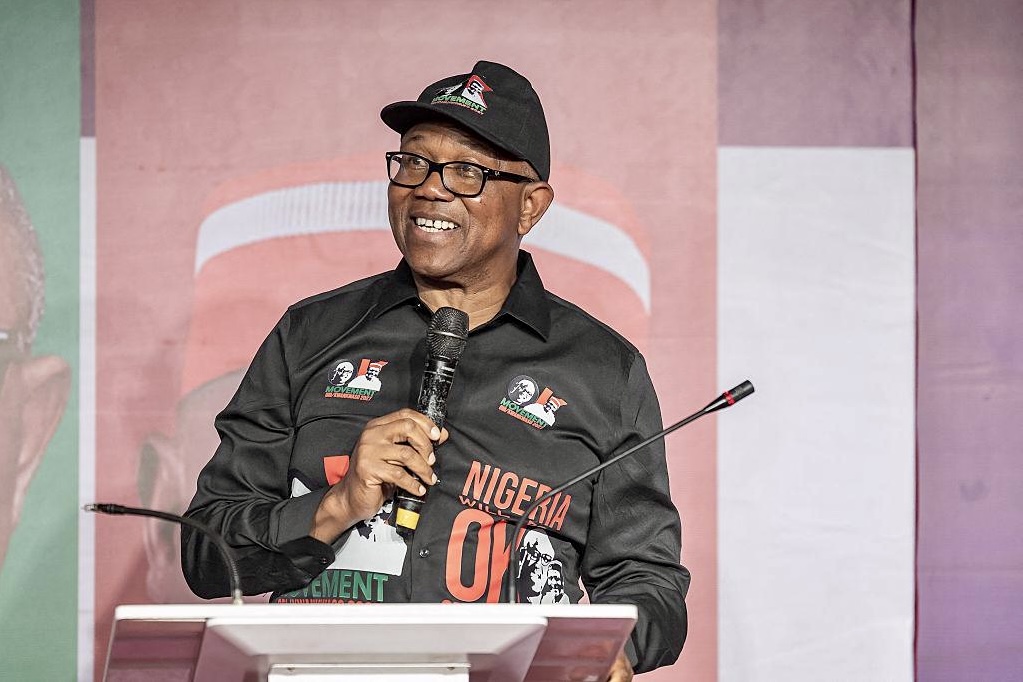
The officer repeatedly attacked Obi, who is the presidential candidate of the Nigeria Democratic Congress (NDC), and made broad statements about the political prospects of the Igbo.
At one point, he said:
“Igbo can never become president. No way. He will turn that Abuja to become Yahoo office. They will take you to do rituals.”
He also alleged that Obi, while governor of Anambra State, had engaged in conduct involving fraud and ritual activity.
“When I was the governor in Anambra, I left so-so-so amount of money, you are doing rituals. A small child who is doing Yahoo and all the rubbish he is doing.”
Those allegations have not been established by the video and should not be treated as findings of fact. There is a fundamental difference between an officer making an accusation on camera and a competent investigative or judicial authority establishing criminal wrongdoing.
The officer then moved from attacking Obi personally to discussing how power might be used against a political candidate.
“Go and sell your okrika. Even if he wins, let oga [President Bola Tinubu] use money and deal with him. He will not enter that place.”
He continued:
“We will waste all his money and all his strength. All the votes they will cast for him in Igboland are useless.”
That is the part of the recording that broadens the issue beyond campaign rhetoric.
A police officer openly discussing political exclusion is one matter. A police officer appearing to suggest that money or state influence could be deployed to frustrate an electoral contender raises a separate question about the perceived relationship between political power and law enforcement.
The video itself does not establish that such a scheme exists, that the officer had authority to carry it out, or that any other police personnel participated in such conduct.
But the words are significant because they were spoken by someone wearing the uniform of an institution that is expected to police the electoral process.
‘Who will ever give Igbo man or Igbo woman a chance?’
The officer also dismissed Obi’s political stature and repeatedly framed the presidency as a contest that should be left to older politicians.
“Who is Obi? A small child. It is not yet his turn, until he gets old up to 80 or 90 years, then… ya la ya!! Atiku versus Tinubu. Kick Obi out of this matter!”
He added:
“Go to Wazobia FM, go everywhere. Yeye people. Who will ever give Igbo man or Igbo woman a chance to become the president of this country?”
The remarks continued:
“Obi is too small to stand where Atiku and Tinubu are speaking. This time around, he will be in fifth position.”
And then came the most sweeping statement:
“Igbo will be expecting to become the president? Igbo man or Igbo woman can never become a president of this nation! It has been a tradition!”
The speaker also invoked former President Olusegun Obasanjo.
“Obasanjo has said, ‘For me to make Igbo man my vice, it is not done’, he chose a Hausa.”
The video provides no supporting evidence for that attribution.
The officer later returned to his accusations against Obi.
“Obi cannot go anywhere! Hoodlums! Do you know what they call hoodlums? Obi is a criminal! Igbo smoker [Indian hemp smoker], Yahoo. He will turn Aso Rock to become Yahoo, fraudster, small boy.”
Again, these are allegations made by the speaker, not established facts.
The police response has now changed the story
When the video first drew public attention, the immediate issue was identification.
By Friday afternoon, Force headquarters acknowledged that the officer had been identified.
By Friday evening, the Lagos State Command disclosed that his name is Inspector Osumah Frank and said disciplinary action had begun. The Command said the officer made the remarks while travelling in a public vehicle and described the comments as “careless, inappropriate and uncultured”.
The Command added:
“The Command has commenced appropriate disciplinary action against the officer in line with established regulations of the Nigeria Police Force.”
It also stated:
“The statements made by the officer were made in his personal capacity and do not represent the position, views or official disposition of the Lagos State Police Command or the Nigeria Police Force.”
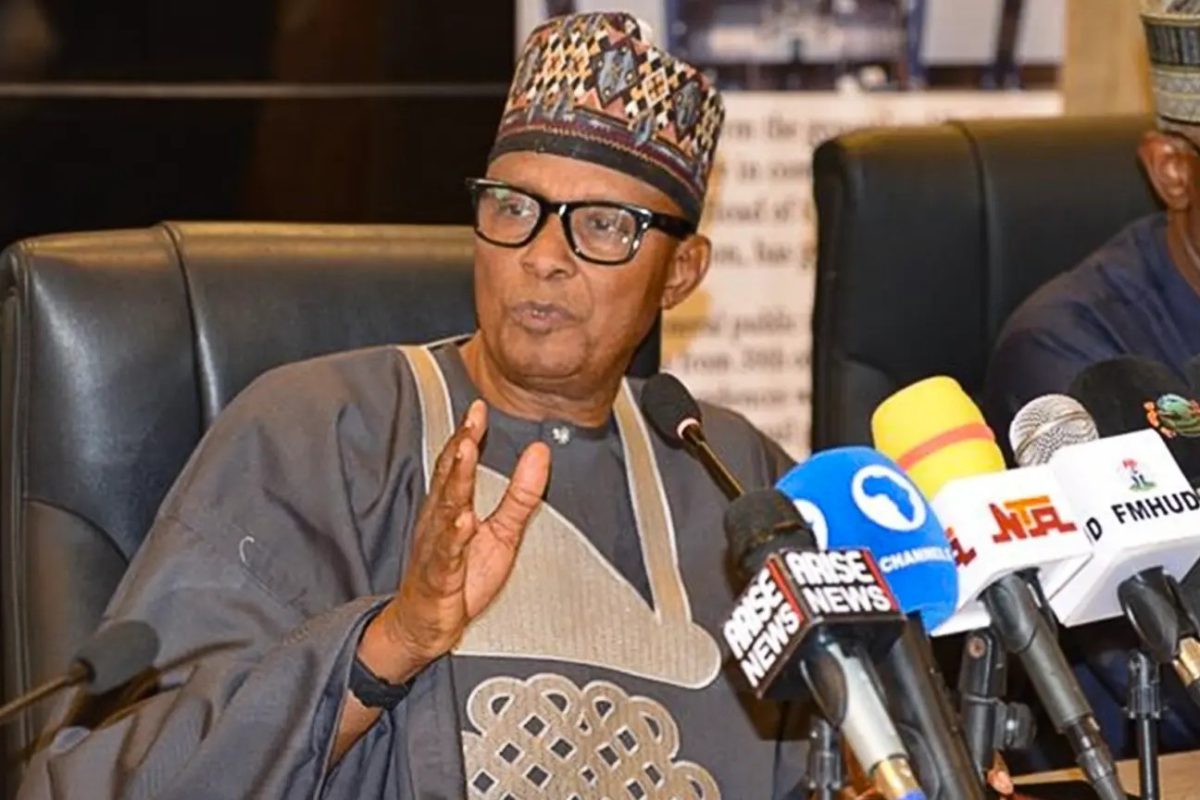
The Commissioner of Police in Lagos, CP Tijani Fatai, said:
“All personnel are expected to maintain professionalism, civility, discipline and respect for members of the public at all times.”
He added that wearing the police uniform carried a responsibility to uphold the dignity and integrity of the Force.
The Command did not disclose what specific sanction Inspector Frank faces or whether he has been suspended, detained or placed on any other restriction pending the outcome of the disciplinary process.
What the Police Act says
The controversy has a clear institutional dimension under Nigeria’s policing framework.
The Nigeria Police Act 2020 says the objective of policing is based on accountability and transparency, protection of human rights and fundamental freedoms, fairness, justice and equity. It also directs the Force to uphold and protect fundamental rights and to be fair to Nigerians regardless of their ethnic or political beliefs and affiliations.
More directly, Section 96 of the Act provides that a police officer shall not, in discharging his duty, discriminate against a person on the basis of, among other grounds, ethnic or political affiliation, or use language or act in a manner suggesting bias towards a particular group.
That wording matters.
The law expressly addresses conduct in the discharge of duty. Since the circumstances surrounding the recording, including the officer’s exact duty status at the time, have not been fully disclosed, it would be premature to declare from the video alone which specific provision will ultimately be used against him.
But the incident plainly raises questions that the disciplinary process can examine: whether he was on duty, whether he was acting in a manner connected to his official role, whether his uniform was relevant to the conduct, and whether any Force regulations or professional standards were breached.
Nigeria’s Constitution also protects citizens against discrimination on grounds including ethnic group, place of origin and political opinion, although the constitutional application of those provisions depends on the specific facts and legal issues involved.
Police neutrality is not a slogan
The police have repeatedly said political neutrality is part of their electoral responsibility.
In an official 2026 statement ahead of the Osun governorship election, the Nigeria Police Force said it remained committed to “professionalism, neutrality, respect for human rights, and the protection of the electoral process.”
The Force has also previously directed police personnel involved in elections to maintain political neutrality and comply with the Code of Conduct and Rules of Engagement for Security Personnel on Electoral Duty.
Those election rules require security personnel to maintain impartiality and fairness in dealing with political parties and the public.
That makes the timing of the Osumah Frank case important.
Nigeria is now less than four months from the January 16, 2027 presidential and National Assembly elections, according to the Independent National Electoral Commission.
And Peter Obi is not merely an aspiring politician whose candidacy remains hypothetical.
INEC’s final list of presidential candidates includes Obi Peter Gregory for the Nigeria Democratic Congress, alongside candidates including President Bola Ahmed Tinubu of the APC and former Vice-President Atiku Abubakar of the ADC.
The video therefore concerns an actual candidate in an officially scheduled presidential election.
There is a precedent
The current investigation is not the first time the police have had to respond to political speech by someone wearing a police uniform.
In September 2024, the Nigeria Police Force announced the arrest of a Supernumerary Police Officer after he was filmed making political comments while wearing a police uniform during the Edo governorship election period.
The Force said the man was not a regular police officer and therefore had different legal circumstances regarding political affiliation and expression. Even so, police authorities said they frowned on the use of the official SPY uniform for political activities and confirmed that he had been arrested for investigation.
The comparison is useful because it shows that the uniform itself has previously been treated as an important part of the disciplinary question.
The unanswered questions now
The Lagos Command has taken the first visible step by announcing disciplinary action.
Several questions remain.
Will Inspector Frank be suspended while the investigation continues?
What precise offence or disciplinary breach has been entered against him?
Was he on duty when the recording was made?
Was he travelling for official reasons or privately?
Did he have access to any operational information or resources that could give meaning to his statements about using money to frustrate a candidate?
Were any other officers or officials involved?
And will the Police Service Commission become involved in the final disciplinary outcome?
The Police Service Commission describes itself as responsible for police discipline and says its disciplinary mechanisms include pending disciplinary matters, appeals, petitions and public complaints. The Commission has also repeatedly sanctioned officers for misconduct, including dismissal, reduction in rank and other penalties.
Those questions are more important than the viral spectacle itself.
A social-media video can spread in hours.
Institutional credibility is harder to rebuild.
A test that goes beyond Peter Obi
The central issue is not whether Peter Obi should be president.
That decision belongs to Nigerian voters.
It is not whether an officer is personally entitled to political opinions.
The more serious institutional question is whether Nigerians can reasonably expect the person in uniform to provide the same protection, courtesy and impartial treatment to a supporter of Obi as to a supporter of Tinubu, Atiku or any other candidate.
The police are not a political party.
They are one of the institutions responsible for creating the security conditions in which political competition can take place.
The Constitution gives Nigerians the right to participate in political life. INEC has fixed the election date. Candidates have been published. Campaigns will continue.
The state cannot ask citizens to trust an electoral process while allowing the symbols of state authority to appear entangled with the political fortunes of individual candidates.
That does not mean one officer’s words establish the position of the entire Force.
The Lagos Command has expressly said they do not.
What happens next will show whether the distinction between one officer’s words and the institution’s standards exists only in official statements, or whether it can also be demonstrated through a transparent disciplinary process.
For now, the police have identified Inspector Osumah Frank and confirmed that action has begun.
The public is left waiting for the more difficult answer:
What exactly does accountability mean when the person under scrutiny is the one wearing the uniform?
Follow us on our broadcast channels today!
- WhatsApp: https://whatsapp.com/channel/0029VawZ8TbDDmFT1a1Syg46
- Telegram: https://t.me/atlanticpostchannel
- Facebook: https://www.messenger.com/channel/atlanticpostng