NNPCL reopens Warri Refinery at 60% capacity, sparking debates on Tinubu’s energy reforms, corruption, and Nigeria’s path to energy security.
WARRI, Nigeria — The long-dormant Warri Refinery and Petrochemical Company (WRPC) in Delta State has finally been revived, marking another milestone in Nigeria’s tumultuous journey toward energy self-sufficiency. The announcement, made by the Nigerian National Petroleum Company Limited (NNPCL) Group Chief Executive Officer, Mele Kyari, is a significant development barely a month after the Port Harcourt Refinery commenced operations. However, the path to this achievement is mired in questions about delays, mismanagement, and the broader implications for Nigeria’s oil-dependent economy.
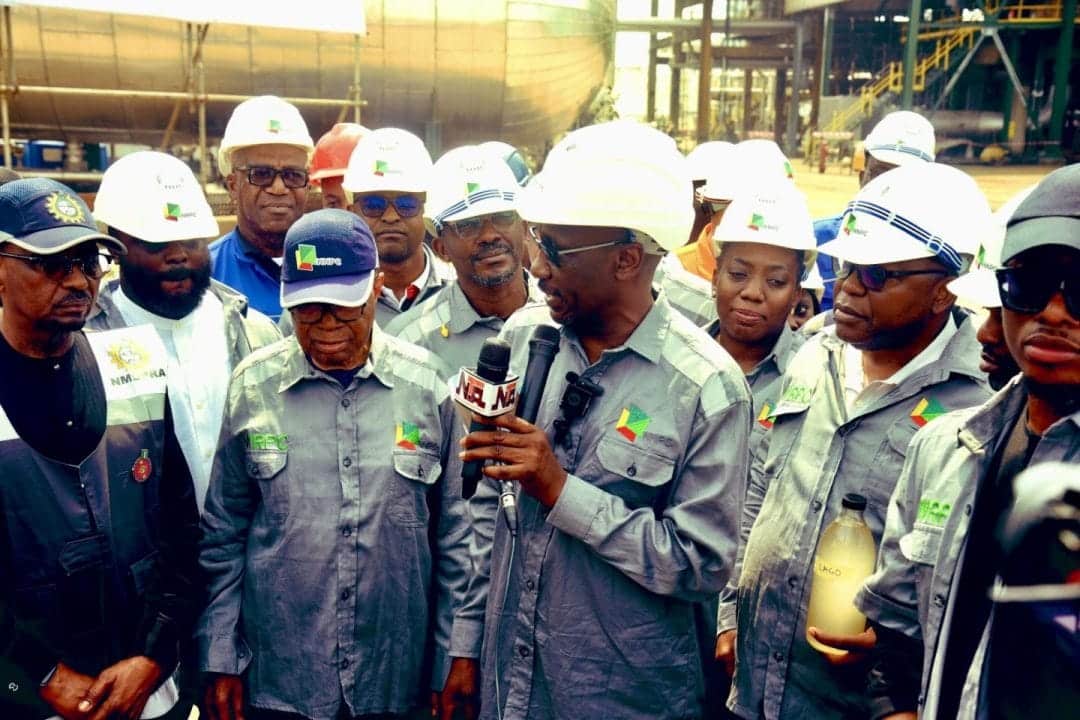
During a guided tour of the Warri refinery on Monday, Kyari declared the facility operational, albeit not yet at full capacity. He emphasised the importance of transparency in showcasing the progress to Nigerians, many of whom harbour skepticism about the government’s ability to deliver on its promises. “This plant is running. Although it is not 100 per cent complete, we are still in the process. Many people think these things are not real,” he stated, seeking to dispel widespread doubts.
The refinery, originally commissioned in 1978, has a production capacity of 125,000 barrels per day and is designed to serve the southern and southwestern regions of Nigeria. It also houses petrochemical facilities capable of producing 13,000 metric tonnes of polypropylene and 18,000 metric tonnes of carbon black annually. These industrial outputs are crucial for domestic industries, yet the refinery has suffered years of neglect, leading to operational shutdowns and costly rehabilitation efforts.
The Tinubu Administration’s Role
President Bola Ahmed Tinubu wasted no time in celebrating the refinery’s restart, framing it as a testament to his administration’s commitment to revitalising Nigeria’s decaying energy infrastructure. In a glowing statement issued by his Special Adviser on Information and Strategy, Bayo Onanuga, Tinubu described the development as a “remarkable way to end the year.” He hailed the efforts of the Mele Kyari-led NNPCL and reaffirmed his administration’s resolve to restore Nigeria’s four state-owned refineries to full operational capacity.
“The restart of the Warri Refinery today brings joy and hope to Nigerians. This milestone will further strengthen the confidence of Nigerians in the brighter future we promised,” Tinubu stated. Yet, his words do little to erase the shadow of skepticism surrounding the refinery’s operations. With just 60% capacity currently achieved, Nigerians are left questioning whether this milestone will translate into tangible benefits for the populace or if it is merely a political manoeuvre to bolster public confidence.
Legacy of Neglect and Broken Promises
The Warri Refinery’s rehabilitation, like those of its counterparts in Port Harcourt and Kaduna, has been a long and tortuous process. Successive governments have made lofty promises about reviving Nigeria’s refineries, yet they have consistently fallen short. The current rehabilitation project was initiated under former President Muhammadu Buhari’s administration, but delays and inefficiencies plagued its execution. Mele Kyari’s acknowledgment that the mechanical completion of the facility was initially scheduled for the first quarter of 2024 underscores the systemic challenges in Nigeria’s oil sector.
The delays raise critical questions about governance, transparency, and financial accountability. With billions of dollars allocated to refinery rehabilitation over the years, Nigerians have little to show for these expenditures. The Tinubu administration’s claims of success must be measured against this backdrop of persistent failure, fuelling concerns about whether the current momentum can be sustained.
As the Warri Refinery begins operations, the spotlight falls on its ability to deliver on its promises. Will the refinery’s output alleviate Nigeria’s perennial fuel scarcity, reduce reliance on imports, and stabilise the economy? Or will it follow the pattern of previous efforts that failed to address the root causes of the nation’s energy crisis?
The Warri Refinery’s restart is undoubtedly a significant event, but it is far from a definitive solution to Nigeria’s energy woes. For a country grappling with soaring inflation, fuel scarcity, and dwindling oil revenues, the stakes are higher than ever. Let us delve deeper into the structural challenges facing Nigeria’s refinery operations, the implications of the Warri Refinery’s limited capacity, and the broader economic and political ramifications of this development.
The resumption of operations at the Warri Refinery is a momentous occasion, yet it underscores the deep-seated structural challenges that continue to plague Nigeria’s energy sector. For decades, the country has grappled with a paradox: despite being Africa’s largest crude oil producer, Nigeria has remained heavily dependent on imported refined petroleum products. This dependency has drained the national treasury, destabilised the economy, and subjected the populace to recurrent fuel scarcity. The Warri Refinery, though operational, exemplifies the broader systemic issues that need urgent attention.


A History of Neglect and Underperformance
The Warri Refinery, commissioned in 1978, was built to meet the petroleum needs of Nigeria’s southern and southwestern regions. However, like the country’s other state-owned refineries in Port Harcourt and Kaduna, it became a symbol of mismanagement, inefficiency, and corruption. Years of neglect left the refinery in a state of disrepair, operating far below its installed capacity before eventually shutting down. The facility’s stagnation mirrored the fate of Nigeria’s broader oil and gas infrastructure, which has suffered from inadequate investment and a lack of political will to implement meaningful reforms.
The Nigerian National Petroleum Company Limited (NNPCL), under the leadership of Mele Kyari, has sought to reverse this decline, but the road to recovery has been anything but smooth. The long-awaited rehabilitation of the Warri Refinery, initially scheduled for completion in the first quarter of 2024, is emblematic of the delays and inefficiencies that have plagued Nigeria’s oil sector. The admission that the facility is currently operating at only 60% capacity raises questions about the true extent of the progress made and whether the refinery can achieve its full potential in the near future.
The Energy Crisis: A Persistent Threat
Nigeria’s reliance on imported refined petroleum products has been a persistent Achilles’ heel for its economy. Despite producing over 1.3 million barrels of crude oil per day, the country spends billions of dollars annually on fuel imports. This reliance not only strains foreign reserves but also exposes the economy to fluctuations in global oil prices and exchange rate volatility. The Warri Refinery, if fully operational, could significantly reduce Nigeria’s import dependency, but its current limited capacity underscores the challenges ahead.
President Bola Ahmed Tinubu’s administration has made bold promises to overhaul Nigeria’s energy sector, but the task is daunting. The Tinubu government inherited a legacy of failed policies, opaque contracts, and a culture of corruption that has stymied progress in the oil and gas industry. While the restart of the Warri Refinery is a welcome development, it is merely a first step in a long journey toward energy self-sufficiency.
Can Local Refining Solve the Problem?
The Tinubu administration has touted the revival of the Warri Refinery as a cornerstone of its plan to boost local refining capacity and establish Nigeria as a hub for downstream industrial activities in Africa. However, experts argue that the focus on state-owned refineries may not be enough to address the underlying issues. Private sector involvement, as evidenced by the Dangote Refinery, could play a critical role in transforming Nigeria’s energy landscape.
The Dangote Refinery, with its capacity to refine 650,000 barrels of crude oil per day, is expected to dwarf the output of the Warri Refinery and its counterparts. Yet, the success of private refineries does not absolve the government of its responsibility to ensure that state-owned facilities like the Warri Refinery operate efficiently and transparently. The challenge lies in creating a regulatory environment that fosters competition, minimises corruption, and maximises the benefits of Nigeria’s vast oil resources for its citizens.
Economic and Political Ramifications
The resumption of operations at the Warri Refinery has significant economic and political implications. On the economic front, increased local refining capacity could reduce the country’s import bill, stabilise fuel prices, and create much-needed jobs in the downstream sector. However, achieving these outcomes will require more than just operational refineries. It will necessitate a comprehensive overhaul of Nigeria’s energy policies, including the deregulation of the downstream sector and the removal of fuel subsidies.
Politically, the refinery’s restart is a much-needed win for President Tinubu, who has faced criticism over his handling of the economy and his controversial decision to remove fuel subsidies earlier this year. By showcasing progress in the energy sector, the Tinubu administration seeks to bolster public confidence and demonstrate its commitment to fulfilling campaign promises. However, public trust remains fragile, and the administration’s ability to sustain momentum will be critical in the months ahead.
Broader Implications for Nigeria’s Oil Sector
The Warri Refinery’s resumption comes at a pivotal time for Nigeria’s oil sector, which is grappling with declining production, theft, and a rapidly changing global energy landscape. As the world shifts toward renewable energy, Nigeria must navigate the complex challenge of maximising the benefits of its oil resources while preparing for a future beyond fossil fuels.
The rehabilitation of the Warri Refinery, if successful, could serve as a blueprint for revitalising Nigeria’s energy infrastructure. However, without addressing the systemic issues that have plagued the sector for decades, the country risks repeating the mistakes of the past.
The Warri Refinery’s resumption of operations, while undoubtedly a significant milestone, raises critical questions about the sustainability and efficiency of Nigeria’s broader oil and gas sector. The symbolic victory it represents for President Tinubu and the Nigerian National Petroleum Company Limited (NNPCL) must be weighed against the stark realities of systemic inefficiencies, policy gaps, and an increasingly competitive global energy market.
Structural Challenges: A Cycle of Dysfunction
At the heart of Nigeria’s energy woes is a cycle of dysfunction rooted in weak governance, inadequate infrastructure, and a lack of accountability. The Warri Refinery, like the other three state-owned facilities, has suffered from years of neglect and corruption, resulting in frequent breakdowns, suboptimal output, and an overreliance on costly fuel imports.
The current administration’s efforts to revive these refineries are commendable but face significant hurdles. The ongoing rehabilitation projects, while promising, are heavily reliant on public funds and have been marred by delays and cost overruns. Moreover, the decision to prioritise state-owned refineries over fostering private sector-led solutions has drawn criticism from industry experts who argue that such an approach may not yield long-term benefits.
Policy Reforms: A Critical Imperative
To ensure the sustainability of local refining, Nigeria must implement bold policy reforms aimed at deregulating the downstream sector, creating a level playing field for private and public operators, and eliminating fuel subsidies. These subsidies, which have long been a drain on public finances, were partially removed by the Tinubu administration but remain a contentious issue due to their impact on fuel prices and public welfare.
Additionally, the government must address the issue of crude oil theft, which has significantly eroded production levels and revenue. Strengthening regulatory oversight, investing in technology to monitor pipelines, and fostering collaboration with local communities are critical steps toward curbing this menace.
The Role of Technology and Innovation
In an era defined by technological advancements and the global push for cleaner energy, Nigeria must embrace innovation to remain competitive. The Warri Refinery, while operational, must adopt modern technologies to enhance efficiency, reduce waste, and minimise environmental impact. Furthermore, investments in renewable energy and the development of a robust energy transition framework are essential to positioning Nigeria as a leader in the African energy market.
Public Trust and Perception
The resumption of operations at the Warri Refinery has been hailed as a testament to the Tinubu administration’s commitment to restoring Nigeria’s energy sector. However, public trust remains fragile. For years, Nigerians have endured fuel scarcity, exorbitant prices, and a lack of transparency in the management of the country’s oil resources.
To rebuild trust, the government must prioritise transparency, accountability, and stakeholder engagement. Regular updates on the progress of refinery rehabilitation projects, detailed financial disclosures, and an inclusive approach to policymaking are essential to fostering public confidence.
A Future Beyond Oil
The global shift toward renewable energy presents both a challenge and an opportunity for Nigeria. While crude oil remains a critical revenue source, the country must diversify its energy portfolio and invest in sectors that can drive sustainable growth. The Warri Refinery’s resumption, though a short-term win, must be part of a broader strategy to reduce dependence on fossil fuels and transition to a greener, more resilient economy.
The restart of the Warri Refinery marks a significant achievement, but it is not the panacea for Nigeria’s energy crisis. The challenges of inefficiency, corruption, and policy inertia remain formidable. As President Tinubu’s administration celebrates this milestone, it must also confront the deeper issues that have hindered the sector’s growth and sustainability.
The path forward requires a bold vision, decisive leadership, and a commitment to long-term reforms. Only then can Nigeria truly harness its vast oil resources to achieve energy security, economic stability, and a brighter future for its citizens.
Additional reports: Osaigbovo Okungbowa and Taiwo Adebowale, Atlantic Post Senior Political and Business Correspondent, respectively.