
The attack on Uratta divisional headquarters exposes urgent questions about police facility protection, the attackers’ objectives and whether promises of arrests will lead to answers.
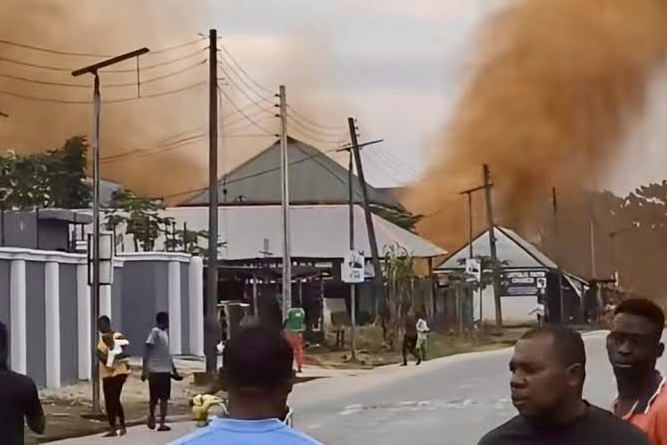
ABA, Abia State — Two police officers are dead and three others have been injured after armed men attacked the Uratta divisional police headquarters in Aba in the early hours of Saturday, 17 October 2026, setting parts of the facility and a police patrol vehicle ablaze.
The assault, which the Abia State Police Command said involved explosives, occurred at approximately 2.26am. The attackers damaged part of the station building and a patrol van, while other reports identified a Toyota vehicle, a power generator and additional property among the items destroyed.
The immediate tragedy is the death of two officers serving at a facility expected to help protect the surrounding community.
The wider concern is what the attack reveals about the vulnerability of police infrastructure, the protection available to officers on duty at night and the intelligence needed to prevent armed groups from striking security installations.
As of Saturday, the police had announced no arrests.
What happened at 2.26am?
The assault took place during the early hours of Saturday, when the attackers reportedly stormed the station and launched their attack with explosives.
Abia State Commissioner of Police Wilfred Afolabi confirmed the deaths and injuries while inspecting the damaged facility alongside Governor Alex Otti.
Describing the damage, Afolabi said: “The hoodlums came. Some of the shelters above were set ablaze.”
The commissioner said he arrived at the scene at about 4am, shortly after the attack.
“I was there by 4 am and the most important thing is to get the culprit, and that is what we are doing,” he said.
He acknowledged that investigators had yet to make an arrest.
“For now, we have not made any arrests, but we are working on that,” Afolabi said.
The injured victims were taken to the Abia State University Teaching Hospital in Aba. Governor Otti subsequently visited the hospital, according to reports of the incident.
The police have said tactical teams combed the surrounding area and restored calm, with further security operations under way to identify and apprehend the perpetrators.
Those measures may help stabilise the immediate area. They do not, on their own, explain how the attackers were able to carry out the assault or whether warning signs were missed.
The armoury question: what is confirmed and what is not?
One of the most consequential questions concerns the attackers’ possible objective.
A source familiar with the incident, who spoke anonymously because the source was not authorised to discuss the matter publicly, told Punch that the assailants appeared to have targeted the police armoury but found it empty. The source also alleged that the attackers took away some police uniforms and that a gunman was shot dead before his colleagues carried him away.
These claims raise important questions about what the attackers intended to achieve. They should not, though, be treated as established findings.
In its official account, the Abia Police Command said the assailants did not take away any firearms or ammunition. Police spokesperson Maureen Chinaka stated that the attackers used explosives, damaged the building and a divisional patrol van, and killed two senior officers while injuring three inspectors.
The official account does not establish whether the attackers attempted to enter the armoury, whether they encountered resistance there or whether police uniforms were taken.
Nor has the available public information independently established the alleged death of one of the attackers.
Those are material distinctions. An unsuccessful attempt to steal weapons, a deliberate attack intended to destroy a police facility and an assault designed to kill officers are different operational scenarios. Investigators need to establish which explanation, if any, the evidence supports.
That requires a clear account of the sequence of events, an inventory of weapons and ammunition before and after the incident, a review of available forensic evidence and an explanation of any items reported missing.
The police should also clarify the circumstances surrounding the reported removal of uniforms, if that allegation is substantiated.
A disturbing history of attacks on police facilities
The assault comes against the backdrop of previous attacks on police stations in Abia and elsewhere in south-eastern Nigeria.
One historical detail requires care. Some reports of the latest attack describe Uratta Police Station as having been attacked on 23 February 2021, when officers were killed and a patrol vehicle was burnt. Contemporary reports, though, identify the station attacked on that date as Abayi Police Station in World Bank Housing Estate, Aba. The available records do not establish that it was the same facility as the Uratta divisional headquarters attacked on 17 October 2026.
That distinction matters. A claim that the same station has been attacked repeatedly would imply a facility-specific security failure that the available evidence does not conclusively demonstrate.
What is established is that attacks on police installations have occurred repeatedly across the region.
In May 2021, for example, gunmen attacked the Ubakala divisional police station in Abia’s Umuahia South area, killing two officers and setting the facility ablaze, according to contemporary reporting. Other police facilities in the state were also attacked during that period.
The pattern makes prevention, intelligence-sharing and the protection of officers on duty legitimate subjects of scrutiny.
A police station is more than an administrative building. It is a place where residents report crimes, seek protection, obtain assistance and expect the state to respond to threats.
When armed attackers can strike such a facility, kill personnel and cause significant damage, the consequences extend beyond the police officers directly affected. Residents may question whether the institutions they depend on can withstand similar violence.
That concern deserves evidence-led investigation rather than speculation about the identity or motives of the assailants.
The unanswered security questions
The response to the Uratta attack must move beyond condemnation and promises to pursue the perpetrators.
First, investigators need to reconstruct the attack. What happened between the first sign of danger and the attackers’ departure? How many assailants were involved? What weapons or explosives were used? Did officers return fire, and what evidence supports the account of an alleged casualty among the attackers?
Second, the command should establish whether intelligence about a possible assault had been received before the incident. If warnings existed, investigators need to determine whether they reached the appropriate officers and what action followed. If no warning existed, the episode raises separate questions about intelligence gathering and the detection of threats to police installations.
Third, authorities should explain how the station was secured at the time of the attack. That means examining the availability of personnel, communications, lighting, physical barriers, emergency procedures and arrangements for requesting reinforcements.
These questions should not be mistaken for allegations that any officer neglected a duty. The available public information does not establish that. They are lines of inquiry necessary to understand what happened and identify measures that might prevent another assault.
Finally, the police should provide a transparent account of the investigation’s progress, including any arrests, forensic findings and verified intelligence about the attacker’s objectives, without compromising legitimate operational requirements.
Accountability must include the officers left behind
Afolabi has pledged that the perpetrators will be brought to justice.
“The assurance I can give is that wherever they are, whenever they enter the hole, we will bring them out,” he said.
The statement conveys the commander’s determination. The public will ultimately judge the response by measurable results: credible identification of the suspects, lawful arrests, evidence capable of supporting prosecution and a clearer explanation of how the attack unfolded.
The welfare of the injured officers and the families of the dead must also remain a priority. The victims should not disappear from public view once the immediate headlines fade.
For Governor Otti and the Abia Police Command, the challenge is twofold: support those affected and establish whether changes are needed to protect police personnel and facilities across the state.
The attack also demands a careful distinction between restoring calm and restoring confidence. The first concerns the immediate security situation. The second depends on whether residents can see that authorities have investigated the incident thoroughly, acted on the findings and addressed any identified weaknesses.
The test now facing Abia’s security authorities
The deaths of two officers and the destruction at Uratta divisional headquarters should not become another episode that ends with a promise of arrests and no publicly demonstrated resolution.
The central questions remain open: who planned and executed the attack, what were they seeking to achieve, how did they breach the station’s defences, and what can be done to prevent another assault?
Police say no firearms or ammunition were taken. Other allegations about the armoury, uniforms and a reported gunman casualty remain unverified in the available public record.
Resolving those differences is part of the investigation, not a distraction from it.
For residents of Aba, the immediate priority is safety. For the police, it is to identify and prosecute those responsible while protecting officers still working in vulnerable locations. For the state’s leadership, it is to ensure that the investigation produces answers and that any lessons are translated into practical improvements.
Two officers have lost their lives. The response that follows must establish not only who killed them, but what can be done to make a repeat attack less likely.
Follow us on our broadcast channels today!
- WhatsApp: https://whatsapp.com/channel/0029VawZ8TbDDmFT1a1Syg46
- Telegram: https://t.me/atlanticpostchannel
- Facebook: https://www.messenger.com/channel/atlanticpostng


Join the debate; let’s know your opinion.