By Atlantic Post Investigative Desk
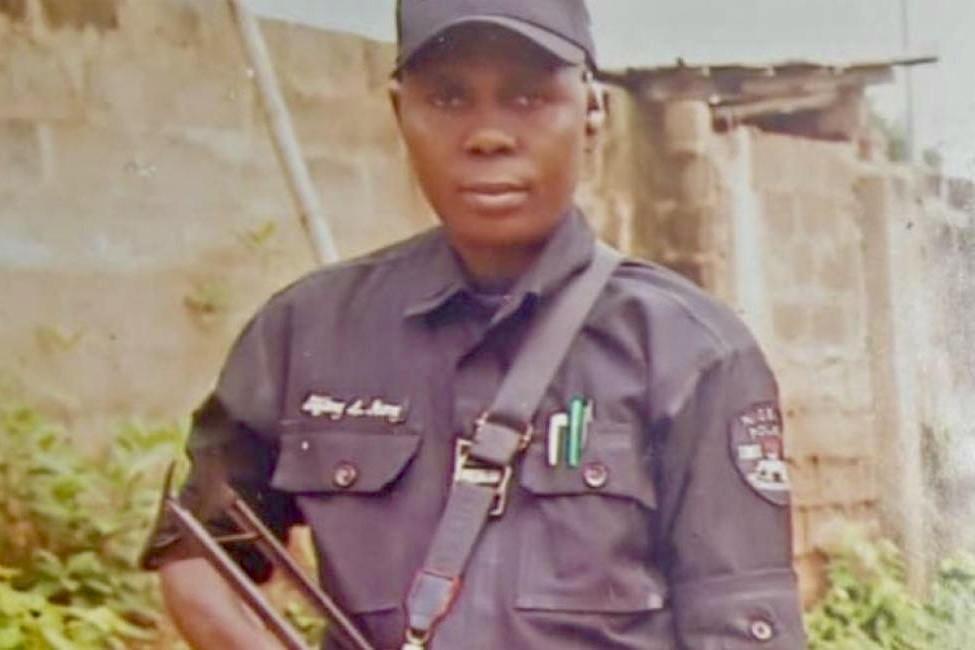
The arrest of two suspects over the killing of Police Inspector Henry Effiong has shifted the investigation into a new phase, but it has also left several critical questions unanswered about how the attackers gained access to a closely guarded government residence, what role each suspect allegedly played and where the officer’s stolen service rifle is.
The Imo State Police Command said on Wednesday that it arrested Olivia Patrick, 31, and ThankGod Mourice, 25, shortly after the September 14 killing of Effiong at the residence of Commissioner for Trade, Commerce and Investment, Rex Anunobi, in New Owerri. The command said both suspects were arrested at the scene after the incident was reported.
The development comes barely 48 hours after reports first emerged that Effiong had been killed while performing guard duty at No. 1 Sokom Villa, Area E, New Owerri, with his service rifle and mobile phone reportedly taken from the premises.
Yet the latest police statement does not publicly explain the precise allegations against Patrick and Mourice, whether either suspect knew Effiong, or whether investigators have recovered the officer’s missing firearm.
Those gaps matter because the first account of the incident pointed investigators towards a security guard identified as Genesis, who was reportedly attached to the residence and allegedly disappeared after the killing.
What happened at the commissioner’s residence?
The first reports were based on a police situation report obtained by SaharaReporters and independently echoed by several Nigerian news outlets.
According to that account, Effiong was deployed to the commissioner’s residence for guard duty. A housekeeper, Solomon Uzobu, reportedly discovered that the officer had been killed and alerted Anunobi at about 7am on September 14.
The commissioner was then said to have contacted the police at about 8am. Officers from the New Owerri Police Division subsequently went to the residence and began preliminary investigations.
Investigators reportedly found Effiong dead inside his room, with his legs tied and his body positioned towards the bathing area. A sharp object suspected to have been a machete was reportedly involved in the attack. An empty magazine and a walkie-talkie were also reportedly recovered.
The inspector’s service rifle and mobile phone were reported missing. His remains were later taken to the Federal Teaching Hospital, Owerri, for preservation.
The initial account created a particularly important line of inquiry.
Investigators reportedly focused on Genesis, the security guard attached to the residence. The police situation report cited by multiple outlets said investigators suspected that he could have facilitated access to the premises.
That allegation has not been established in court.
Genesis was reportedly said to have packed his belongings, switched off his telephone and fled after the incident. His disappearance became an early focus of the investigation.
Two arrests change the investigation
The arrival of two new suspects raises a central question: what evidence led investigators from the initial suspicion surrounding the missing security guard to the arrest of Patrick and Mourice?
The Imo command has not publicly answered that question in its latest statement.
Police spokesman DSP Okoye Henry said the Commissioner of Police, Audu Garba Bosso, ordered a thorough investigation.
The command said the Deputy Commissioner of Police overseeing the State Criminal Investigations Department, together with the Divisional Police Officer of the New Owerri Division, visited the scene.
“Necessary examinations were conducted and relevant exhibits recovered and secured,” the police said.
“The remains of the deceased Inspector were subsequently deposited at the mortuary.”
The case has now been transferred to the SCID for further investigation. Police also said efforts were continuing to apprehend other suspects who remain at large.
That transfer is significant because the SCID is now expected to reconstruct the incident beyond the initial scene examination.
The task will include establishing the chronology of events, identifying everybody who had legitimate or unauthorised access to the residence, determining the circumstances of Effiong’s death and tracing the missing service firearm.
The missing rifle is one of the biggest questions
The disappearance of Effiong’s service rifle potentially makes the case more than a homicide investigation.
Previous reports stated that the attackers left with the firearm after killing the inspector. The same reports said his mobile phone was also stolen, while an empty magazine and walkie-talkie were recovered.
The latest police statement confirming the arrests did not publicly state that the rifle had been recovered.
That leaves an important security issue unresolved.
A missing police firearm is potentially capable of being used in another criminal operation. Establishing who took it, where it went and whether it has been recovered should therefore form a major strand of the investigation.
Forensic examination of the recovered exhibits could also help investigators determine whether the items were handled by the suspects or other persons at the scene.
Who are the two arrested suspects?
The police have identified the suspects as Olivia Patrick, 31, and ThankGod Mourice, 25.
But their exact alleged roles have not been disclosed publicly.
The command has not, in the statement announcing the arrests, said whether the pair are accused of directly attacking Effiong, helping attackers gain access, possessing stolen property, assisting after the killing or providing information connected to the crime.
Nor has the police publicly stated whether they were residents, workers, visitors or persons who had another connection to the commissioner’s compound.
That distinction is crucial.
An arrest establishes that investigators consider a person relevant to the case. It does not by itself establish guilt.
The next stage of the inquiry should therefore determine whether investigators have physical evidence, witness testimony, digital evidence, forensic findings or statements connecting each suspect to the killing.
The Genesis question remains open
Another unanswered issue is the status of Genesis.
The first reports identified the security guard as a person of interest because of his reported disappearance after the killing.
The new police statement says other suspects remain at large, but it does not publicly confirm whether Genesis has been arrested, whether investigators have established his whereabouts or whether police now regard him as a suspect, witness or no longer relevant to the case.
That distinction should be clarified as the investigation develops.
It is also important to separate suspicion from evidence.
The earlier allegation that Genesis may have facilitated access to the compound came from preliminary investigative reporting. It remains an allegation until investigators establish what happened and prosecutors, where appropriate, place evidence before a court.
How did the attackers enter?
The residence of a serving state commissioner would ordinarily be expected to have some level of security.
That makes the question of access one of the most important unanswered elements of the case.
Investigators will need to establish who was on duty, who was present at the residence, when Effiong was last seen alive, who had access to the officer’s room and how the attackers were able to enter and leave without immediate detection.
The investigation may also need to reconstruct movements around the property before and after the killing.
That could involve examining telephone records, available surveillance footage, access points, eyewitness accounts, vehicle movements and other digital or physical evidence.
No public account has yet established how long the attack lasted or precisely when Effiong was killed.
The gap between the estimated time he died and the discovery of his body may become important to investigators.
What the police have confirmed — and what they have not
The latest account establishes several points.
Effiong was killed on September 14 while serving on guard duty at the residence.
Two people have been arrested.
The investigation has been transferred to the SCID.
Police say further suspects may still be at large.
The Commissioner of Police has ordered a thorough investigation and directed the team to prosecute anyone found culpable in accordance with the law.
But several important points remain unresolved publicly.
The police have not disclosed the alleged roles of Patrick and Mourice.
They have not announced recovery of the stolen service rifle.
They have not publicly explained whether the missing security guard has been located.
They have not disclosed the preliminary forensic findings.
And they have not identified a motive for the killing.
Those unanswered questions should be treated as part of the investigation rather than filled with speculation.
A test of forensic and investigative follow-through
The killing has placed attention not only on the death of one police inspector but also on the ability of investigators to turn early clues into evidence that can stand up in court.
The command described the incident as “a painful reminder of the risks and sacrifices police officers face in the discharge of their duties”.
Bosso also expressed condolences to Effiong’s family and said the command was committed to ensuring justice.
For that commitment to translate into a prosecutable case, investigators will have to establish a clear chain of evidence from the crime scene to the suspects.
That means identifying who did what, determining how the residence was accessed, explaining the disappearance of the firearm and establishing what happened in the period between Effiong’s last known movements and the discovery of his body.
The arrest of two suspects is therefore an important development in the case, but it is not the end of the investigation.
The next substantive breakthrough will depend on what the SCID can establish from the evidence.
For the family of Henry Effiong, the central issue is straightforward: who killed the inspector, why was he targeted and where is the police rifle taken from the scene?
Until those questions are answered with evidence, the case remains open.
Investigative note
Atlantic Post’s review of available reports found a clear distinction between confirmed police statements and allegations contained in the earlier situation report. The allegations concerning the security guard’s possible involvement have not been established publicly. The police statement announcing the two arrests also does not yet disclose the specific evidence or allegations against either arrested suspect.
Follow us on our broadcast channels today!
- WhatsApp: https://whatsapp.com/channel/0029VawZ8TbDDmFT1a1Syg46
- Telegram: https://t.me/atlanticpostchannel
- Facebook: https://www.messenger.com/channel/atlanticpostng