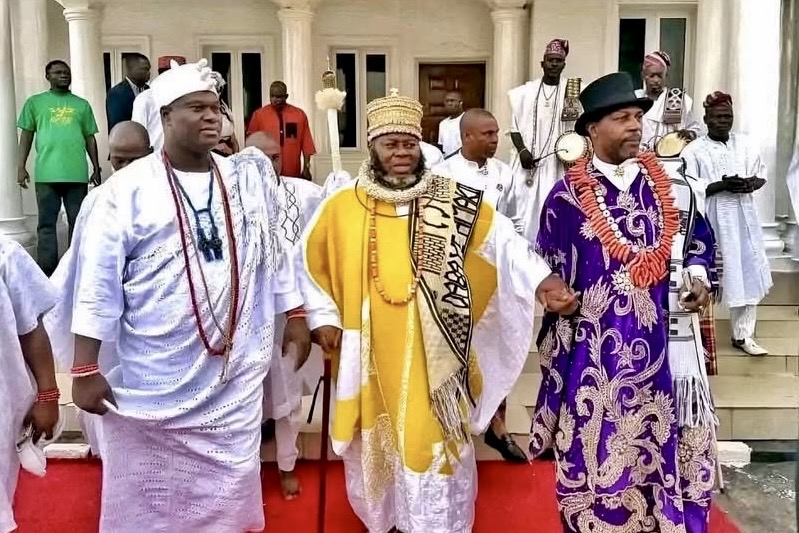
The Elem Kalabari monarch seeks stronger economic and cultural relations with Ile-Ife, inviting the Ooni to his December coronation as royal diplomacy opens new possibilities for trade, tourism and investment.
The meeting of two of Nigeria’s historic royal institutions has placed a fresh question on the table: can traditional diplomacy build stronger economic connections between communities separated by geography but linked by their histories?
The Amanyanabo of Elem Kalabari, Da Amakiri Tubo, Alhaji Mujahid Abubakr Dokubo-Asari, has visited the Ooni of Ife, Oba Adeyeye Enitan Ogunwusi, Ojaja II, at his palace in Ile-Ife, Osun State, seeking to strengthen cultural, historical and economic relations between the Kalabari Kingdom in Rivers State and the Yoruba traditional institution.
The visit also provided an opportunity for the Kalabari monarch to invite the Ooni and his traditional council to Se Diye, the final rites of his coronation, scheduled for Saturday, 19 December 2026, in Buguma, Rivers State.
Speaking before the Ooni and palace chiefs, Dokubo-Asari attributed the invitation to the relationship already established between the two royal institutions.
“It is based on the cordial relationship that we have built that I am here today to invite His Imperial Majesty and his council to my Se Diye, the final rites of coronation on December 19, 2026, in Buguma,” he said.
Ooni Praises Kalabari Monarch
The Ooni received Dokubo-Asari and his delegation warmly, describing the Kalabari monarch as fearless.
In a memorable remark, Oba Ogunwusi declared that “the fear of Asari Dokubo is the beginning of wisdom”.
He also commended the wisdom with which Dokubo-Asari had handled his affairs since ascending the throne of Elem Kalabari. The Ooni thanked him for his relationship with President Bola Ahmed Tinubu and welcomed his guest with words that underscored the historical significance of the encounter.
The Ooni thanked Dokubo-Asari for “finally coming home to Ile-Ife”.
At the end of the visit, Oba Ogunwusi presented the Kalabari monarch with a bronze painting. According to the account of the visit, the gift carried a message about the importance of people, with the Ooni emphasising that they remain a ruler’s greatest strength.
The gesture also drew on Ile-Ife’s distinguished artistic heritage. The ancient Yoruba city is internationally recognised for its naturalistic bronze and terracotta sculptures, including works dating from the 12th to the 15th centuries.
From Royal Friendship to Economic Opportunity
Beyond the ceremonial exchanges, the visit places potential economic cooperation between the South-West and the Niger Delta on the agenda.
The relationship could create opportunities for cultural tourism, heritage promotion, traditional arts, hospitality businesses, craft production and exchanges between entrepreneurs in both regions.
Joint cultural events and exhibitions could also provide platforms for artists, artisans, tour operators and small businesses to reach new audiences. Stronger institutional relationships may help create connections between cultural organisations, investors and communities seeking to preserve their heritage while generating economic value.
These remain potential areas for collaboration rather than announced projects. The statement on the visit did not identify specific investment commitments, commercial agreements, funding arrangements or an implementation timetable.
That distinction matters. Royal goodwill can open doors, but durable economic partnerships require practical initiatives, clear responsibilities and sustained engagement beyond ceremonial meetings.
The historical foundations for such cooperation are substantial. Ile-Ife occupies a central place in Yoruba origin traditions and has a long record of sophisticated artistic production. The Kalabari people of the eastern Niger Delta also have a history shaped by fishing, commerce and interactions with African and European trading networks.
The two communities therefore bring different but complementary cultural experiences to any future partnership. Developing these connections could help promote Nigerian heritage while creating opportunities for the creative economy and tourism-related enterprises.
Se Diye Becomes a Wider National Engagement
The Ile-Ife visit is the third royal engagement in a tour undertaken by Dokubo-Asari ahead of his final coronation rites. The monarch had earlier visited the Sultan of Sokoto, Alhaji Muhammad Sa’ad Abubakar III, and the Etsu Nupe in Bida.
Considered collectively, the engagements connect Elem Kalabari with prominent traditional institutions in the North-West, North-Central and South-West.
They also give the forthcoming Se Diye ceremony a wider national dimension, presenting it as an opportunity to strengthen relationships between traditional rulers, communities and other stakeholders across Nigeria.
According to the organisers, Se Diye is the highest and final stage of installation in Kalabari tradition. At this stage, the new Amanyanabo is presented before chiefs and people from across the kingdom for final affirmation.
The ceremony for Dokubo-Asari, also identified as Dabaye Amakiri I, is scheduled for 19 December 2026 in Buguma. Royal fathers, government leaders, members of the diplomatic community, investors and friends of Kalabari from Nigeria and abroad are expected.
The monarch’s delegation to Ile-Ife included Prince Tonye T.J.T. Princewill, Paramount Head of the Queen Elebabene Da Ogo Group of Houses and Satellite Communities of the Kalabari Kingdom; Hajia Ramat Dokubo-Asari; Hajia Halima Dokubo-Asari; Mallam Mustapha Wakama; Flora Ezeoko; Al Humphrey Onyanabo, The Storyteller; Prince Melford Princewill; Engr Bashir Lawal; and Alhaji Sanni Kazeem Adebayo.
For Elem Kalabari, the immediate milestone is the December coronation. The broader opportunity lies in using the relationships built around it to promote cultural understanding, encourage enterprise and establish economic connections that deliver lasting value to the people of both regions.


Join the debate; let’s know your opinion.