Security forces on Thursday repelled a suspected Boko Haram/Islamic State West Africa Province (ISWAP) attack on the convoy of the All Progressives Congress (APC) governorship candidate in Borno State, Mustapha Gubio, in an incident that once again exposed the continuing security risks along the state’s northern transport corridors.
The attack occurred at about 2:30pm along the Kareto-Damasak Road as Gubio and members of his entourage travelled towards Damasak, headquarters of Mobbar Local Government Area, during an appreciation tour following his emergence as the APC’s consensus candidate for the 2027 governorship election.
According to the Borno State Police Command, the attackers were suspected Boko Haram/ISWAP terrorists and no member of the convoy was killed. Police said the attackers were engaged and forced to withdraw into the surrounding bush.
ASP Nahum Daso, spokesman for the Borno State Police Command, confirmed the incident on Friday.
“Yesterday (Thursday) around 2:30pm, the convoy of the APC gubernatorial candidate was attacked along Kareto by suspected Boko Haram/ISWAP terrorists. No lives were lost.”
Daso added:
“But we believe that the terrorists may have escaped with a gunshot injury.”
The police spokesman also said the attack did not prevent the convoy from continuing its journey.
“After the incident, the convoy proceeded,” he said.
IED and rocket-propelled grenades used
The encounter appears to have been more serious than a conventional roadside exchange of gunfire.
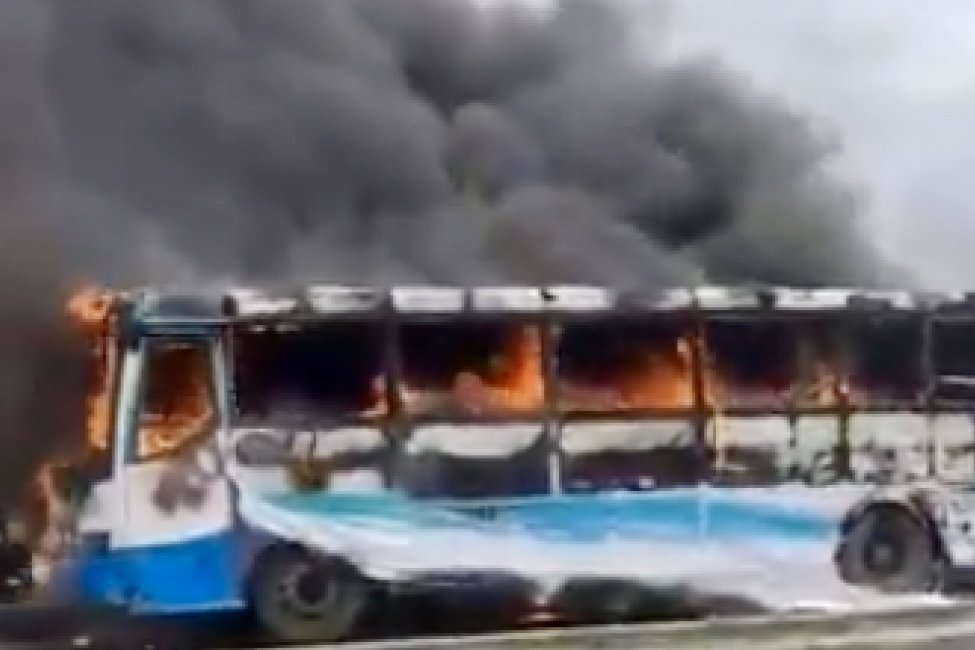
The Nigeria Police Force said the attackers used an improvised explosive device (IED) and rocket-propelled grenades (RPGs), prompting police tactical operatives attached to the convoy to launch a counter-engagement. The attackers were subsequently pushed back into the surrounding bush.
The police said the tactical team then conducted a route clearance operation to check for secondary explosives before moving the convoy to a secure location.
“The tactical team forced the terrorists to retreat into the surrounding bush and subsequently scanned and cleared the immediate axis to neutralise secondary explosive threats,” the police statement said.
It added that the entourage was safely evacuated.
“The convoy, conveying a gubernatorial aspirant, government officials and political stakeholders, was safely evacuated to a secure location with no casualties recorded among members of the entourage.”
Reports from the scene said the security contingent included police, soldiers and other security personnel. Vanguard reported that the wider security team included personnel associated with the police, military, NSCDC, DSS, CJTF and vigilante structures.
Eyewitness account: “It was a terrifying moment”
A member of the entourage described the incident as brief but frightening, saying the convoy would have been exposed to potentially severe casualties without the immediate intervention of the security personnel.
“The attack happened very briefly. The atmosphere later became calm and we proceeded to our destination.”
The source added:
“The insurgents were overpowered by the security team. After the attack, police scanned and cleared the area before we proceeded.”
Another account published by Vanguard said the convoy came under what was described as a heavy assault involving RPG fire and sporadic gunshots, although the source said there were no casualties among those travelling with the candidate.
There are also reports that a police armoured vehicle was damaged during the encounter. Guardian reported that a police armoured vehicle leading the convoy triggered an IED, while other reports said an operational armoured vehicle was severely damaged or destroyed in the explosion. Those details have not been independently reconciled in a single official account, and the precise extent of the vehicle damage remains unclear.
A politically significant convoy on a dangerous road
The incident is significant not only because a major political figure was targeted, but because of what it says about the security environment in northern Borno ahead of the 2027 elections.
Gubio was travelling to Damasak as part of a political appreciation tour after being adopted as the APC consensus governorship candidate. The APC’s official profile describes him as an engineer and public administrator who previously served as Borno Commissioner for Reconstruction, Rehabilitation and Resettlement and later as Commissioner for Works and Housing.
His emergence followed consultations among APC stakeholders in Borno, with Governor Babagana Umara Zulum publicly presenting him as the consensus candidate in Abuja in May 2026.
That political development gives Thursday’s attack an added security dimension. A candidate travelling through an insurgency-affected part of the state was not simply passing through an ordinary highway. He was undertaking political mobilisation in an area where insurgent groups have repeatedly demonstrated an ability to disrupt roads, attack convoys and exploit predictable movements.
Why the Kareto-Damasak corridor matters
Northern Borno remains one of the most challenging theatres of Nigeria’s counter-insurgency campaign. The Damasak axis has endured years of Boko Haram and ISWAP activity, and roads linking communities in the area remain vulnerable to ambushes, IED attacks and armed disruption.
The geography of such routes creates a particular operational problem. Long stretches of isolated road provide attackers with opportunities to plant explosives, observe vehicle movements and withdraw into difficult terrain after an engagement.
Thursday’s incident appears to have followed that familiar pattern: an explosive threat was reportedly deployed against a moving convoy, followed by an armed assault designed to exploit the disruption. Police said the subsequent route clearance was necessary because of the danger of secondary explosives.
That detail matters. In counter-insurgency operations, an initial explosion does not necessarily end the threat. Secondary devices can be placed to target rescuers, reinforcement teams or vehicles attempting to move away from the attack site. The police decision to scan and clear the route before the convoy proceeded therefore suggests that security operatives treated the scene as an active explosive-risk zone rather than merely a gun battle.
The Zulum precedent
The attack also brings back memories of earlier attempts by insurgents to strike senior political figures in Borno.
In September 2020, Governor Babagana Zulum survived repeated attacks on his convoy, including an ambush in which militants used a donkey reportedly laden with explosives. The attacks demonstrated the extent to which insurgents had adapted their tactics to target government movements in the state.
The comparison should not be overstated: Thursday’s incident is a separate event, and the precise identity of the attackers has not been independently established beyond police descriptions of suspected Boko Haram/ISWAP terrorists.
But the strategic message is difficult to miss. The ability of suspected insurgents to mount a coordinated attack involving explosives and RPGs against a prominent political convoy indicates that the northern Borno security environment remains sufficiently permissive for armed groups to test high-value targets.
The warning for the 2027 election
The incident comes at a sensitive moment.
The Nigeria Police Force has already begun preparations for election security ahead of the 2027 general elections. In August, the Force said its strategic preparations would include measures to protect candidates, voters, electoral personnel and election materials, while stressing intelligence-led policing and inter-agency coordination.
The attack on Gubio’s convoy therefore raises questions that go beyond the safety of one candidate.
Can candidates safely travel through remote parts of Borno during the campaign period?
Can political parties conduct grassroots mobilisation in areas where insurgent groups retain the capacity to stage roadside attacks?
And perhaps most importantly, can security agencies provide continuous protection without creating huge logistical demands on already stretched counter-insurgency formations?
Those questions are particularly important because political activity itself can create predictable movement patterns. Once insurgents identify a schedule, route or mobilisation pattern, the campaign convoy can become a valuable target.
For security planners, the lesson may be that election protection in insurgency-affected communities cannot begin and end at rally venues. It has to cover the roads, routes and connecting communities through which politicians and supporters travel.
No casualties — but no room for complacency
The most immediate outcome of Thursday’s attack was positive: there were no reported deaths among the candidate’s entourage, and security forces successfully prevented the attackers from overrunning the convoy.
But the absence of casualties should not obscure the seriousness of the incident.
An attack involving an IED and RPGs against a political convoy is not a minor security scare. It is evidence that armed groups remain capable of selecting high-profile targets and bringing significant firepower to bear on vulnerable stretches of road.
The fact that the convoy proceeded after the engagement demonstrates confidence in the security response. It also illustrates the difficult reality facing officials and politicians operating in conflict-affected areas: public duties cannot simply stop every time an armed group threatens movement.
Gubio’s convoy survived Thursday’s attack. The larger question for Borno, however, is whether the security architecture can prevent similar attacks as political campaigning intensifies.
For now, security forces have claimed a tactical success. The terrorists were repelled, the convoy escaped without casualties and the route was cleared.
But the incident is another stark reminder that, more than 15 years after Boko Haram’s insurgency began, northern Borno remains a battlefield where politics, mobility and national security continue to intersect.
And with the 2027 election season approaching, the security of political convoys may become an increasingly important test of whether the state can reclaim not only territory, but the freedom to travel through it without fear.
Follow us on our broadcast channels today!
- WhatsApp: https://whatsapp.com/channel/0029VawZ8TbDDmFT1a1Syg46
- Telegram: https://t.me/atlanticpostchannel
- Facebook: https://www.messenger.com/channel/atlanticpostng