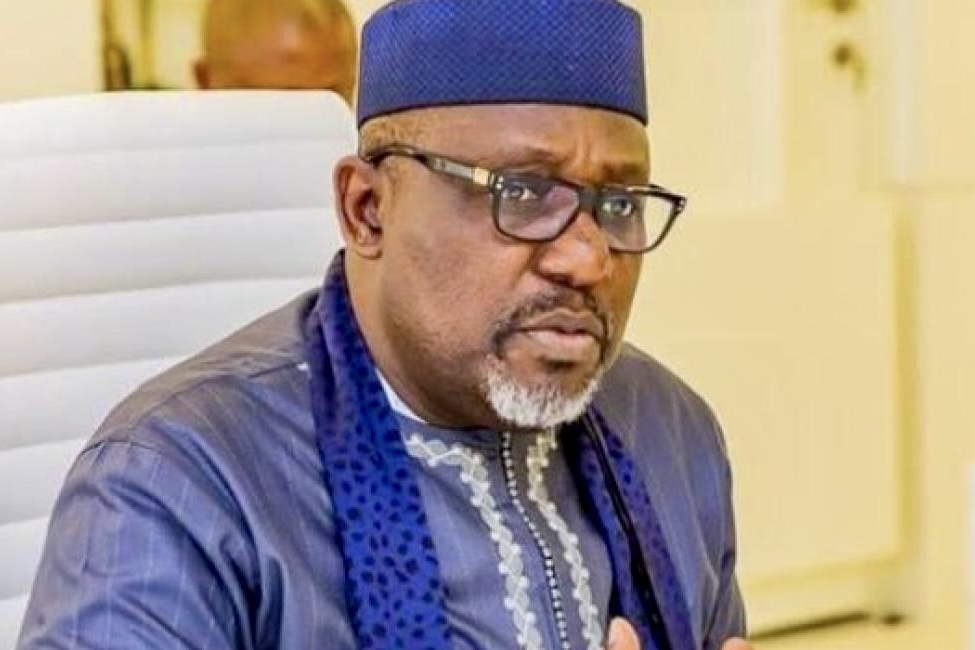
Retired Vice Admiral Ibok-Ete Ibas, the Sole Administrator of Rivers State, has suspended all political appointees and office holders, igniting debate within political circles. This move, perceived as a purge to eliminate mismanagement or an authoritarian power grab, has raised concerns about governance disruptions and the future political landscape in Rivers State.
PORT HARCOURT, Nigeria — In a stunning development that has rocked the political establishment of Rivers State, the Sole Administrator, Retired Vice Admiral Ibok-Ete Ibas, has taken an unprecedented step by suspending all political appointees and office holders with immediate effect.
The sweeping move, disclosed on Wednesday by the Chief of Staff, was executed under powers granted to Ibas by President Bola Tinubu—a decision that is sparking fierce debate across political circles.
The suspension affects a broad spectrum of officials: from the Secretary to the State Government and the Chief of Staff to all commissioners, chairpersons, and members of boards, agencies, commissions, and parastatals.
In addition, all Special Advisers, Special Assistants, and Senior Special Assistants have been ordered to stand down.
Political insiders contend that this dramatic reshuffle is designed to purge the state’s administration of entrenched interests and mismanagement, paving the way for a more disciplined governance structure.
However, critics argue that the move smacks of an authoritarian power grab, aimed at consolidating control ahead of forthcoming political challenges.
According to the directive, suspended officials are required to hand over their duties to the Permanent Secretaries in their respective ministries, departments, and agencies. Where a Permanent Secretary is not in place, the most senior Director or Head of Administration is to assume the role.
This restructuring of leadership has not only heightened tensions within the state bureaucracy but also ignited concerns over potential disruptions to governance and public service delivery.
As Rivers State now enters a period of radical transformation, the long-term implications of this administrative purge remain uncertain. The controversy underscores the deep-seated challenges in Nigeria’s political landscape, as calls for enhanced transparency and accountability grow louder.
Observers and stakeholders alike await further details on the emerging power dynamics, which may well reshape the future of Rivers State politics.