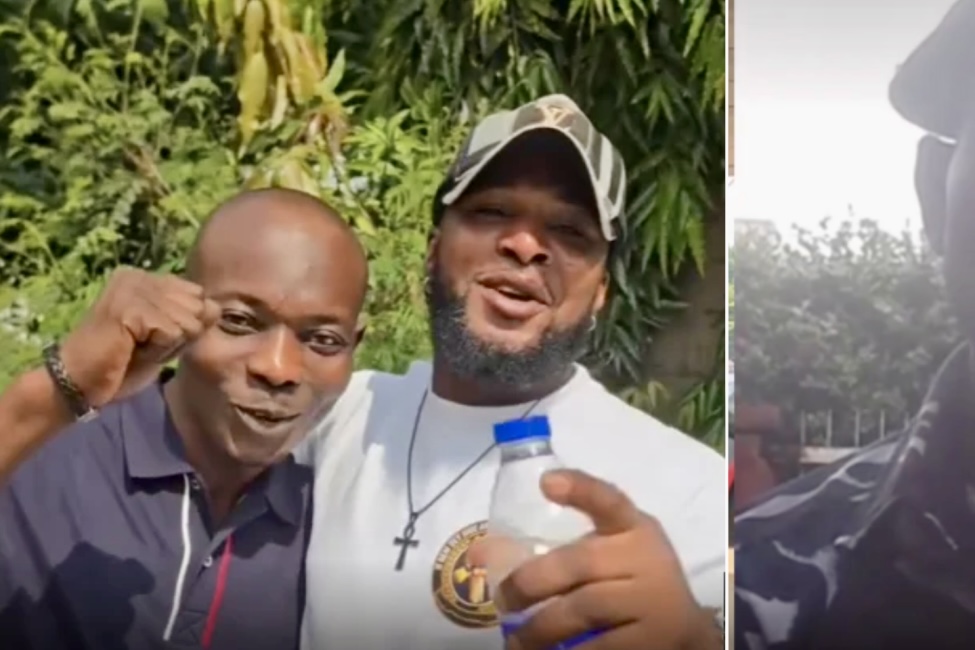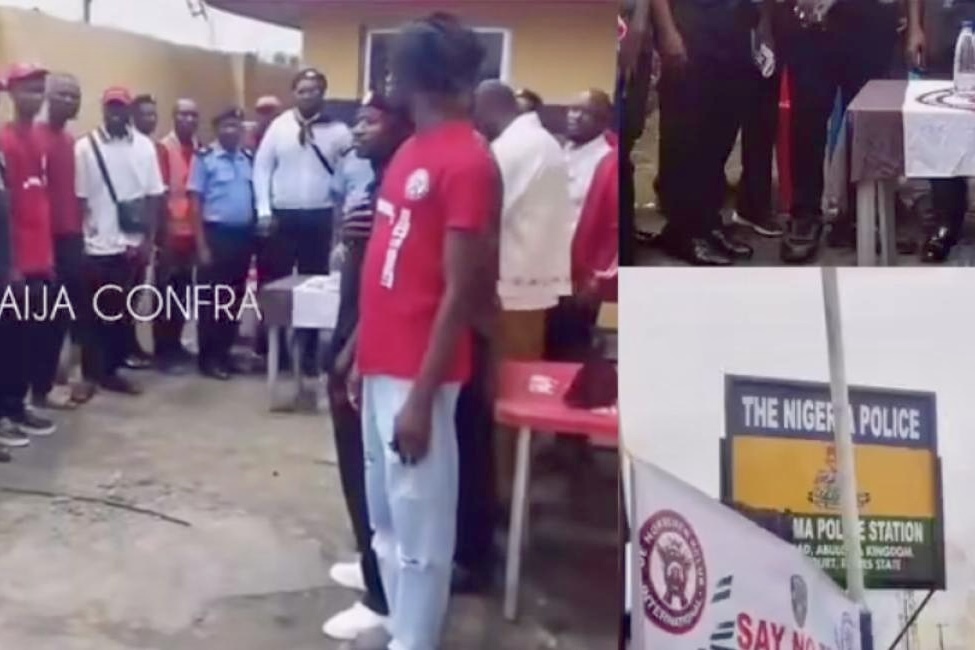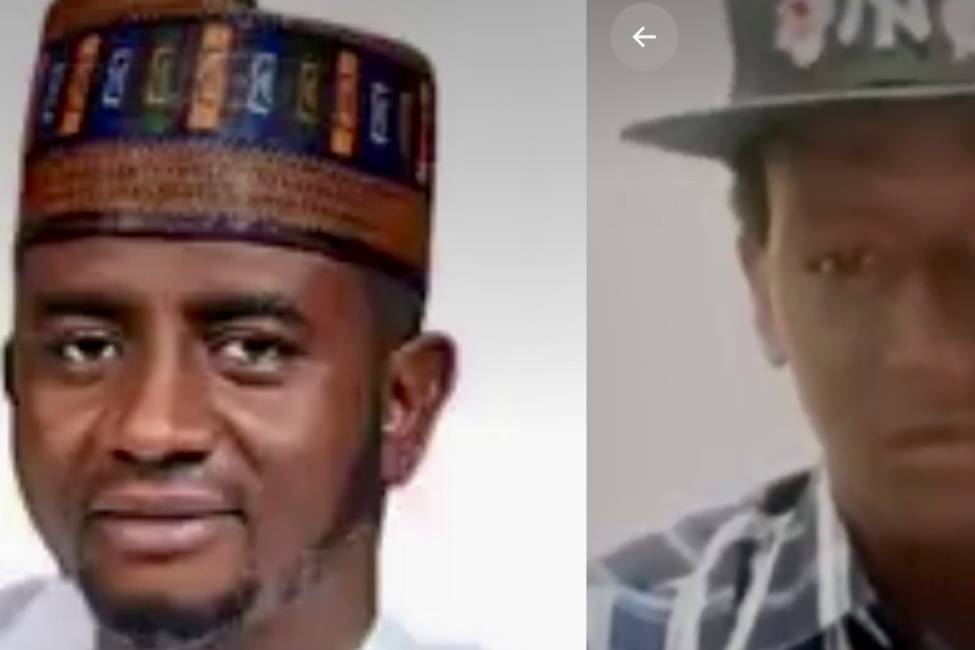
ABUJA/BAUCHI — A fresh allegation linking Senator Shehu Buba Umar to Nigeria’s banditry crisis has ignited another national security controversy, after a man identified as Hassan named the Bauchi South senator during an online interview with social-media influencer D English Alhaji.
Hassan had previously alleged that a serving senator was connected to the training and support of criminal elements without initially identifying the politician. In the latest video circulated on social media, he identified the senator as Shehu Buba Umar and made a series of claims involving alleged contacts with people he described as associates of notorious bandit commander Dogo Gide.
The allegations are serious. They involve claims of access to Abuja, alleged training in drone operations and professional sniping, military-style night-vision equipment, an alleged former legislative aide and alleged contact with members of a bandit network.
But Atlantic Post’s review of available evidence shows an equally important fact: the latest allegations have not been independently verified, and no publicly available court judgment or official finding has established that Senator Shehu Buba sponsored banditry or terrorism. A recent independent fact-check by Yaro Insider likewise found that the long-running accusations remain allegations rather than established facts.
That distinction is critical, particularly because an earlier viral video associated with the same controversy was investigated by PRNigeria and found to be false and misleading after investigators determined that two unrelated video clips had been combined to create a misleading narrative around Senator Buba.
Hassan finally names the senator
In the latest interview, D English Alhaji reminded Hassan that he had repeatedly alleged the involvement of a senator without giving the politician’s name.
“Today, I think it is high time you tell us the name of the senator that you are accusing of sponsoring banditry and everything you have said to us. Please, start with the name of the senator,” the influencer said.
Hassan then identified the politician as Senator Shehu Buba Umar, who represents Bauchi South Senatorial District.
“My name is Hassan. Remember, I told you I am the citizen of Nigeria. I was born in Nigeria. So, today, we are going to talk about the allegation I am claiming against Senator Shehu Buba Umar, who is representing Bauchi South,” he said.
Hassan nevertheless cautioned that his claims should not simply be accepted on his word.
“I’m not saying whatever I believe. No. You have to judge by yourself. And they don’t want to hear from me alone. We want to hear from them,” he said.
That caveat is important. At present, the video constitutes an allegation by a named source, not proof of criminal conduct.
The Dogo Gide connection claimed by Hassan
The most explosive part of Hassan’s account concerns individuals he says are connected to Dogo Gide.
Dogo Gide, whose real name is widely reported as Abubakar Abdullahi, is a notorious armed-group commander associated with criminal violence and kidnapping in north-west Nigeria. Nigeria’s national sanctions information also lists Abubakar Abdallah, alias Dogo Gide, among major criminal commanders operating in the region.
More recent security reporting indicates that Dogo Gide has remained active in the north-west, with military operations in 2026 specifically targeting his network in Zamfara.
Against that background, Hassan alleged that a man he identified as Baba Ngida, elsewhere in reports about the latest video rendered as Babangida, was a younger brother of Dogo Gide.
He further alleged that Baba Ngida and another man identified as Adam were brought to Abuja, where they allegedly received training in drone operations and professional sniping.
Hassan added that Adam was, at the time, allegedly attached to Senator Buba at the National Assembly.
“Adam, he’s the PA of Senator Shehu Buba. He’s the PA in National Assembly at that time. I don’t know now,” he alleged.
The claim creates a potentially testable investigative trail, such as employment records, visitor logs, communications data, travel records, training locations, financial transactions and the identities of the people alleged to have been involved could, in principle, establish or disprove elements of the story.
But none of those materials has been independently authenticated in the public domain examined by Atlantic Post.
Claims about voice notes, photographs and night-vision equipment
Hassan said he had communicated directly with people he associated with the alleged network and claimed to have obtained voice recordings involving Baba Ngida and Adam.
The interviewer also stated that Hassan had previously sent more than 10 voice notes in different languages.
Hassan additionally claimed that Baba Ngida showed him photographs of military night-vision equipment.
“He told me there is some military night vision… I thought I sent you that pictures,” Hassan said.
Those assertions raise obvious evidentiary questions.
Who recorded the voice notes? When were they recorded? Whose voices are on them? Were the recordings edited? Can the metadata be independently established? Who owns the equipment shown in the photographs? Was the equipment actually military-issued? And, most importantly, is there evidence connecting any of it to Senator Buba?
No publicly available forensic authentication answering those questions has been established in the reporting reviewed for this article.
The DSS allegation
Hassan also claimed he alerted officials of the Department of State Services about the alleged activities but that political influence prevented decisive action.
“I told him everything… There are some DSS… You know about this matter, but I don’t want to bring him into this matter because when I bring him into this matter, I take care of his life,” he alleged.
Hassan further claimed an official told him:
“He said to me, Hassan, we can’t do anything in this matter because this person is powerful. We know him. We know his work.”
There is presently no independently verified public record establishing that a DSS officer made the quoted statement.
The distinction matters because the allegation invokes a security agency whose credibility and operational secrecy make anonymous or second-hand claims particularly difficult to verify.
A crucial complication: the earlier viral video was debunked
The latest controversy cannot be understood without examining what happened in late August.
On August 29, PRNigeria investigated a viral video posted by D English Alhaji that purported to show high-profile bandits taking a “break” in the residence of an unnamed senator. At that stage, the politician had not been named.
PRNigeria examined the footage and found that it contained apparently unrelated scenes. One segment showed men speaking in Fulfulde inside a furnished residence, while another showed different individuals displaying Nigerian passports. Investigators concluded that there was no evidence that the groups were filmed in the same circumstances.
The investigation went further.
PRNigeria identified the men in the first segment as Alhaji Isa Usman and Alhaji Abubakar Bula, Kaduna-based businessmen and pilgrims who had visited Senator Buba in 2023 after returning from pilgrimage. The organisation found no evidence linking the two men to banditry or terrorism.
It ultimately rated the viral claim “False and Misleading”, saying the footage had combined two unrelated videos.
This does not automatically disprove every allegation subsequently made by Hassan. It does, however, establish that at least one major piece of visual material circulating in the broader controversy was misleading.
That distinction is indispensable in responsible reporting.
The 2024 Hajj controversy
The latest allegations also revive an older controversy involving Senator Buba.
In September 2024, Bauchi State Governor Bala Mohammed petitioned President Bola Ahmed Tinubu over allegations concerning two individuals registered for the 2024 Hajj.
According to reporting on the petition, one of them, Abubakar Idris, was suspected by security authorities of involvement in banditry and kidnapping in Zamfara State. A report citing a security source said Idris was arrested by the DSS. It further alleged that the pilgrims had been registered through a person identified as Yahaya Ibrahim, described as a senior legislative aide to Senator Buba.
The allegation was politically explosive because the governor’s letter was reported to have suggested that the development raised concerns about the senator’s possible role in “supporting, enabling and empowering” bandits.
But the senator strongly denied the accusation.
His media team said he did not have a senior legislative aide named Yahaya Ibrahim and argued that people sponsored for pilgrimage were nominated through community elders, religious leaders and other stakeholders.
An aide identified in the reporting also denied knowing Abubakar Idris and rejected any link to the alleged registration process.
No publicly available court judgment has convicted Senator Buba of terrorism financing, banditry sponsorship or a related offence. A 2026 review of the publicly available record by Yaro Insider similarly found no court judgment or official determination establishing such culpability.
The Turji controversy
Another strand of the controversy emerged in 2025 around alleged contacts with notorious bandit kingpin Bello Turji.
SaharaReporters reported in August 2025 that Senator Buba faced criticism over an alleged peace arrangement involving Turji, as well as other accusations concerning security and religious tensions.
But the reported context is more complicated than a simple allegation of collaboration with terrorists.
Other reporting showed that clerics had engaged Turji in dialogue as part of an attempt to secure the release of hostages and reduce violence. The process was publicly presented as a non-kinetic approach to insecurity, with Senator Buba among those praised by supporters of the dialogue effort.
Indeed, a coalition supporting Buba said the senator’s approach had consistently favoured a combination of military action and dialogue, arguing that negotiation and socio-economic interventions could complement kinetic operations.
The existence of contact or dialogue with a criminal actor, therefore, cannot by itself establish sponsorship of that actor. The critical question is whether there was unlawful support, financing, operational assistance or protection.
That is precisely the question the latest allegations have not yet answered with independently authenticated evidence.
Political timing cannot be ignored
There is also a significant political dimension.
Senator Buba is no longer merely a senator seeking re-election. In May 2026, he defected from the APC to the Peoples Redemption Party and emerged as the PRP’s candidate for the 2027 Bauchi governorship election.
On August 30, INEC was reported to have published and confirmed his candidacy for the Bauchi governorship election.
That means allegations involving him are now unfolding in an increasingly intense pre-election environment.
The political timing does not make the allegations false. Neither does it make them true.
It does, however, create a powerful incentive for both allegations and counter-allegations to be amplified.
Another correction: Buba remains security committee chairman
A significant factual point in the circulating narrative also requires correction.
Some reports have suggested that Buba was removed from the chairmanship of the Senate Committee on National Security and Intelligence and transferred to an agriculture-related committee.
The latest available Senate reporting does not support that characterisation.
On September 1, 2026, reporting on the Senate’s committee arrangements listed Shehu Buba Umar as chairman of the National Security and Intelligence Committee, with Senator Asuquo Ekpenyong as deputy chairman.
That makes the allegations particularly sensitive: the senator continues to occupy a position directly connected to the country’s national-security architecture.
Why the allegations deserve investigation — and why they must not become a conviction by social media
There are two equally dangerous failures Nigeria must avoid.
The first is dismissing credible whistleblowing simply because the person making the allegation is politically inconvenient. Serious national-security allegations deserve investigation wherever they originate.
The second is treating an accusation, viral video, voice note or social-media interview as equivalent to a criminal conviction.
Nigeria has seen repeatedly how manipulated footage, politically motivated narratives and unverified claims can spread faster than facts.
The PRNigeria investigation is a warning. Visual material can look compelling while still being misleading.
There is another warning from the legal history surrounding the senator. Five people, including a lawyer and social-media influencers, were prosecuted in Abuja in connection with alleged cyberbullying and defamation of Senator Buba; the AGF later took over the prosecution. The case illustrates how allegations surrounding the senator have increasingly moved between social media, politics and the courts.
In other words, the battle over information itself has become part of the controversy.
What investigators should establish
If the authorities choose to investigate the latest claims, the investigation need not depend on Hassan’s credibility alone.
Investigators could establish the identity and background of the individuals Hassan named; examine immigration and travel records; determine whether Adam worked for Senator Buba and in what capacity; audit relevant communications and financial trails where legally authorised; authenticate the alleged voice recordings; establish the provenance and location of the alleged training; and determine whether any security personnel participated in such training.
The DSS, police, military intelligence and other competent agencies would also be in a position to establish whether the alleged individuals have intelligence or criminal files and whether Hassan’s allegations correspond with previously known operational information.
The senator, in turn, should be afforded the opportunity to answer the specific claims.
The evidence gap remains the biggest story
At this stage, the most responsible conclusion is neither exoneration nor conviction.
Hassan has made serious allegations. Senator Buba has faced similar allegations before and has repeatedly denied them. A previous viral video linked to the senator was independently found to be false and misleading. Publicly available records reviewed so far do not show a conviction or official determination that Buba sponsored banditry or terrorism.
The latest allegations therefore remain exactly what they are: allegations requiring verification.
That does not mean they should be ignored.
It means they should be investigated properly.
For communities facing kidnappings, killings, displacement and economic destruction across Nigeria’s north-west, the stakes are too high for either political protection or social-media trial.
And for a senator who remains chairman of the Senate’s National Security and Intelligence Committee while seeking to govern Bauchi State in 2027, the public interest demands something more valuable than another viral clip.
It demands evidence.
Follow us on our broadcast channels today!
- WhatsApp: https://whatsapp.com/channel/0029VawZ8TbDDmFT1a1Syg46
- Telegram: https://t.me/atlanticpostchannel
- Facebook: https://www.messenger.com/channel/atlanticpostng