The arrest of four suspected robbery and kidnapping gang members in Rivers State could help investigators solve a murder and the shooting of a police inspector. But the real test lies ahead: tracing the recovered weapons, verifying the suspects’ alleged confessions and identifying the remaining members of the network.
The recovery of six firearms in Rivers State may prove to be an important police breakthrough. Yet the weapons are only the beginning of the investigation. Police must establish who possessed them, whether they were used in specific crimes and what evidence connects each suspect to the attacks under investigation.
The Rivers State Police Command says four suspected members of an armed robbery and kidnapping syndicate have been arrested following an intelligence-led operation at Rumuekpe in Emohua Local Government Area on 4 October 2026. The suspects are allegedly linked to criminal incidents across Choba, Elele Alimini, Emohua and Rumuekpe, including the murder of Joseph Onyeka and the shooting of a police inspector.
The announcement, made public on Wednesday, 21 October, raises questions that go beyond the arrests. They concern the origins of the weapons, the evidence linking them to the alleged offences, the whereabouts of the remaining suspects and the ability of investigators to turn operational intelligence into a case that can withstand scrutiny in court.
What the police say happened
According to the command’s spokesperson, ASP Blessing Agabe, operatives attached to the Violent Crime Response Unit (VCRU) acted on what police described as credible intelligence.
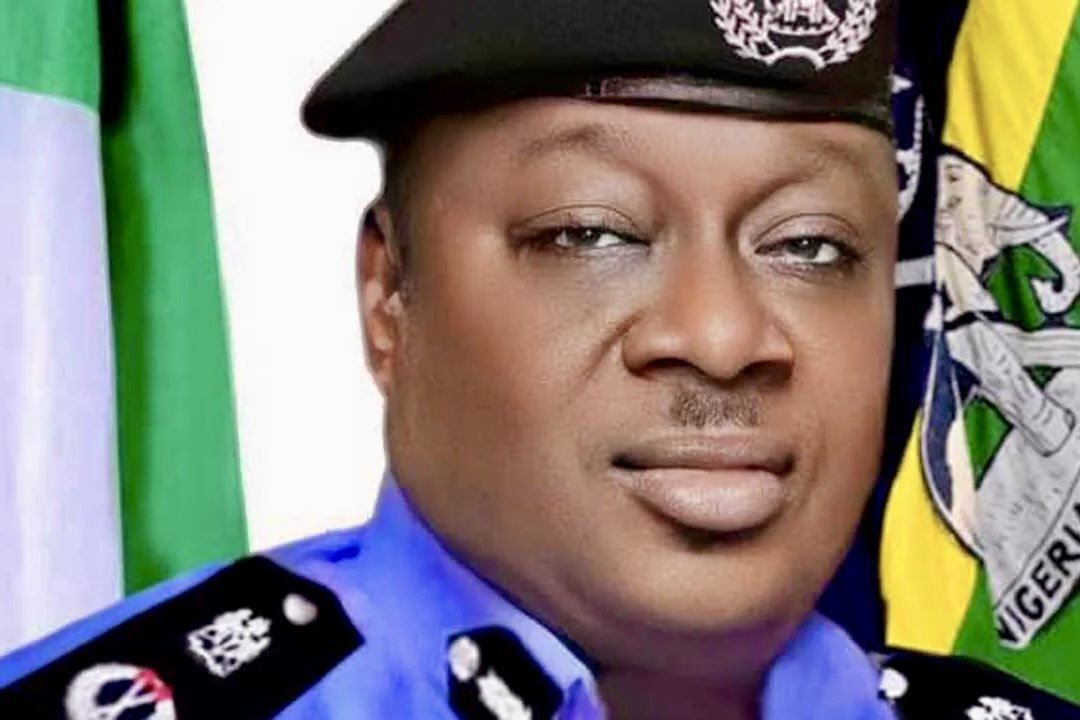
The operation followed directives from Rivers State Commissioner of Police, CP Olugbenga Adepoju, to intensify raids and targeted operations against suspected criminal networks.
The four suspects were identified as Chinemerem Uchewo, a native of Rumuekpe in Emohua LGA; Michael Ishaka, from Adabor Community in Eket LGA, Akwa Ibom State; Abdulahi George, from Oduoha Community in Emohua; and Gideon Okah, from Elele Alimini in Emohua, who was arrested in Owerri, Imo State.
The command says preliminary investigations have linked the suspects to several armed robbery and kidnapping incidents. Those allegations remain subject to investigation and proof in court.
Six firearms, not five: Why the inventory matters
There is an important counting discrepancy in coverage of the operation.
One report described the recovery as five firearms, but its own inventory lists two AK-47 rifles, two pump-action rifles, one English-made double-barrel rifle and one locally made revolver pistol. That is six firearms, not five. TVC News and a reported Nigeria Police Force operational summary published on 5 October also give the total as six.
The distinction is not merely editorial. Accurate records of recovered weapons are essential to investigations involving firearms, particularly where multiple violent offences are suspected.
Investigators should document each weapon separately, including its identifying marks, serial number where available, condition, ammunition compatibility and the precise circumstances in which it was recovered.
The police should also establish whether any weapon was previously reported stolen, whether it can be linked to a specific crime scene and whether its possession can be traced to an identifiable individual.
The command’s announcement does not publicly provide that level of forensic detail.
The recovered ammunition is equally important. Investigators need to establish whether it is compatible with the seized weapons and whether ballistic examination can connect any recovered firearm to cartridges or bullets collected during previous attacks.
A recovery operation removes weapons from circulation. A properly documented forensic investigation can help establish where those weapons have been used and who may have been responsible.
The murder of Joseph Onyeka: From confession to evidence
One of the most serious allegations concerns the death of Joseph Onyeka in Rumuji Community on 23 July 2026.
According to Agabe, the suspects confessed during interrogation to involvement in the robbery and murder.
The police spokesperson also said preliminary investigations had linked them to several armed robbery and kidnapping incidents across the affected communities.
These are significant claims. But an alleged confession is not the same as an independently established account of a crime.
Investigators need to reconstruct what happened to Onyeka, establish the circumstances of his death and determine the individual role, if any, of each suspect.
That requires evidence beyond a general assertion that the suspects admitted involvement. Relevant investigative steps include examining the original incident reports, taking statements from witnesses, checking available forensic evidence and comparing any recovered weapons with material from the crime scene.
Investigators must also distinguish between evidence implicating an individual in a particular offence and evidence suggesting that the person knew other suspects or associated with them.
Those distinctions could prove decisive if the case proceeds to trial.
Nigeria’s Evidence Act 2011 provides safeguards governing the use of confessions. Under Section 29, a confession obtained through oppression or circumstances likely to make it unreliable may be excluded; where its voluntariness is challenged on the grounds specified in the section, the prosecution must establish that it was not obtained improperly.
The central question is therefore not simply whether the police say the suspects confessed. It is whether investigators can substantiate the alleged admissions with admissible, reliable evidence.
The shooting of Inspector Womoma raises another question
The second major allegation concerns an attack on Inspector Womoma, a police officer attached to the Rivers State Police Command.
Agabe said the suspects confessed to attacking and shooting the inspector while he was on duty at a checkpoint along the East-West Road, near Elele Alimini Junction, on 4 August 2026.
That allegation gives the recovery of the AK-47 rifles particular significance.
A Nigeria Police Force operational summary published on 5 October stated that one of the recovered AK-47 rifles was allegedly the weapon taken from the injured officer during the attack. The newer reporting confirms the recovery of two AK-47 rifles but does not provide publicly available forensic details establishing the identity of either weapon.
If the recovered rifle can be verified as the officer’s missing weapon, investigators may be able to establish a crucial link between the suspects and the attack.
That verification should rest on the rifle’s serial number or other identifying marks, police armoury records and evidence concerning the weapon’s loss and subsequent recovery.
Ballistic examination could also help determine whether either AK-47 was used in the shooting or other reported incidents, provided investigators have suitable evidence from those scenes.
The two alleged crimes occurred weeks apart. Establishing whether they involved the same individuals, weapons or wider network could help investigators determine whether the suspects are connected to a series of offences or separate incidents.
The command has not publicly supplied the forensic findings needed to answer those questions.
The arrest timeline needs clarification
The chronology of the arrests also deserves attention.
An operational summary published by the Nigeria Police Force on 5 October identified three suspects: Chinemerem Uchewo, Michael Ishaka and Gideon Okah. Reports published on 21 October named four, adding Abdulahi George. The later account says Okah was arrested in Owerri, Imo State.
The available announcements do not fully explain the sequence by which the four arrests were made or clarify the precise date on which each suspect was taken into custody.
This does not, by itself, establish any misconduct or weakness in the investigation. Police investigations can develop as suspects are traced and additional evidence emerges.
But a clear chronology would improve public understanding of the operation and help distinguish the initial arrests from any subsequent development.
It would also be useful for the command to clarify the status of the outstanding suspects. Its statement says efforts have been intensified to arrest fleeing members of the alleged syndicate, suggesting that investigators believe the network extends beyond the four people now in custody.
The public announcement does not establish how many individuals remain at large or which specific incidents they are suspected of participating in.
Four arrests do not necessarily dismantle a criminal network
The police have a legitimate reason to highlight successful operations. Removing firearms from circulation and apprehending people suspected of violent crimes can help prevent further attacks.
But the dismantling of a criminal network requires more than arrests and recovered exhibits.
Investigators need to establish how the weapons were acquired, whether they were stolen or transferred between individuals, whether other people supplied them and whether the suspects were connected to wider criminal activity.
The fact that one suspect was arrested in Owerri also makes it important to investigate the geographical reach of the alleged network. It does not, on its own, demonstrate that the group operated nationally or had an organised supply chain across state boundaries.
A rigorous investigation would establish those connections from evidence rather than assumption.
The police must also follow up on each reported robbery and kidnapping attributed to the suspects. Victim and witness statements, incident records, financial transactions where relevant and any available forensic evidence could help determine which allegations are supported and which require further investigation.
That work matters to residents who may have experienced crimes but whose cases have not yet been resolved.
What the police should establish next
The command says it is intensifying efforts to arrest fleeing members of the syndicate and bring everyone connected to the alleged crimes to justice.
For the investigation to produce durable results, several questions require answers.
First, have the recovered firearms been subjected to forensic examination, and have any been matched to evidence from the murder of Joseph Onyeka or the shooting of Inspector Womoma?
Second, has the alleged stolen police rifle been positively identified through official records?
Third, what evidence independently corroborates the suspects’ alleged confessions, and what is the individual evidence against each of them?
Fourth, have investigators established the origins of the weapons and identified anyone suspected of supplying, transferring or concealing them?
Finally, how many suspects remain at large, and what is the status of the reported robbery and kidnapping cases under investigation?
The police announcement does not answer these questions. Their absence from a public statement does not necessarily mean investigators have failed to pursue them; it means the public cannot yet assess the strength or scope of the case.
Adepoju promises a sustained crackdown
Commissioner of Police Adepoju commended the officers involved in the operation for their “courage, professionalism and commitment to combating violent crime in the State”.
He said the command would continue to pursue intelligence-led raids, targeted operations and sustained investigations aimed at dismantling criminal networks and recovering illegal firearms.
He also urged residents to report suspicious activities, assuring them that credible information would be treated with the utmost confidentiality.
The challenge now is to turn that operational success into measurable public-safety gains.
For residents of Choba, Elele Alimini, Emohua and Rumuekpe, the ultimate test will not be the number of suspects announced or weapons displayed. It will be whether violent attacks decline, outstanding offenders are brought before the courts and investigations establish accountability for the crimes alleged.
The arrests offer investigators an opportunity to pursue those outcomes. Whether that opportunity leads to lasting disruption of the alleged network will depend on the evidence they assemble, the suspects they still need to locate and the quality of the case ultimately presented in court.
Follow us on our broadcast channels today!
- WhatsApp: https://whatsapp.com/channel/0029VawZ8TbDDmFT1a1Syg46
- Telegram: https://t.me/atlanticpostchannel
- Facebook: https://www.messenger.com/channel/atlanticpostng


Join the debate; let’s know your opinion.