Nigeria has gone back to Washington with a familiar promise and a far more dangerous question hanging over it. The promise is stronger counterterrorism cooperation, deeper intelligence sharing and renewed strategic partnership with the United States. The question is whether Nigeria can credibly call itself a stable democracy while blasphemy laws, Sharia-based criminal justice, religious persecution and militant violence continue to tear at its foundations.
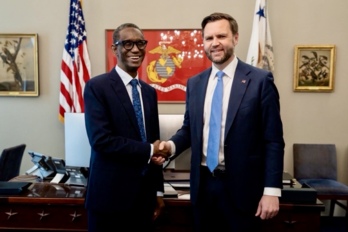
The State House says National Security Adviser Nuhu Ribadu spent three days in the United States from May 4 to May 6 meeting top officials including Vice President J. D. Vance and Secretary of State Marco Rubio. It describes the mission as a push to deepen security ties, regional stability and strategic cooperation.
That language sounds routine. The reality is anything but. Ribadu’s visit came at a moment when Nigeria is under sharper Western scrutiny over religious freedom, civilian protection and the state of law in the north.
Reuters reported in late 2025 that the United States was weighing sanctions and broader pressure measures after Donald Trump restored Nigeria to the “Country of Particular Concern” list over alleged abuses against Christians. Nigeria pushed back, insisting the claims were based on faulty data.
That dispute goes to the heart of the country’s credibility problem. Abuja wants Washington to see a frontline counterterrorism partner. Washington increasingly sees a state where violent extremists, mob justice, weak prosecutions and discriminatory legal structures are still embedded in the wider security crisis.
Ribadu’s meetings with U.S. officials were therefore not just about weapons, intelligence or border security. They were also about reputation, accountability and whether Nigeria can persuade the world that it is confronting the roots of insecurity rather than merely managing the fallout.
The uncomfortable truth is that Nigeria’s religious freedom crisis is not a fringe issue. It is built into law and reinforced by violence. The U.S. State Department’s 2023 International Religious Freedom report states that blasphemy is prohibited across Nigeria in both secular and Sharia legal systems.
The report also notes that Sharia courts operate in the north alongside secular courts. USCIRF says 12 northern states, plus the Federal Capital Territory, can implement Sharia legal systems, while federal and state laws still criminalise insults to religion.
That legal structure matters because it gives religious offence the shape of a criminal case. It also creates the space for abuse. USCIRF’s 2025 annual report says Nigeria continued to enforce blasphemy laws carrying prison terms, while state authorities prosecuted and jailed people accused of insulting religion.
The report lists several high-profile cases, including Mubarak Bala, Yahaya Sharif-Aminu, Isma’ila Sani Isah, Sheikh Abduljabar Nasiru Kabara and Abdulazeez Inyass. Even when convictions are reduced or challenged, the message is chillingly clear. Speech can become a crime. Faith can become a weapon.
The violence around those laws is even more alarming. USCIRF says assailants linked to the Lakurawa group killed 15 people in Kebbi State while trying to impose their version of Sharia.
It also documents deadly attacks in Zamfara, Niger and Benue states, with Christians, Muslims and traditional worshippers among the victims.
The report concludes that the Nigerian government has failed to stop many deadly attacks against religious communities, especially in the Middle Belt and the north.
This is why Washington is pressing harder. The argument in the United States is no longer just about insurgency in the abstract. It is about whether Nigeria’s institutions can protect all citizens equally.
Reuters reported that Trump’s administration linked the CPC designation to the killing of Christians and even floated military options if the violence continued.
Nigeria responded that it welcomed assistance against terrorism but rejected the idea that the state was sponsoring persecution. The immediate past Foreign Minister Yusuf Tuggar said state-backed religious persecution was impossible under Nigeria’s constitution.
That defence may be legally tidy, but it does not settle the issue on the ground. USCIRF’s country analysis says religious freedom conditions in Nigeria are particularly severe because the government continues to tolerate, fail to adequately respond to, or neglect to hold violators accountable.
It also says Christians, Muslims and traditionalists alike face killings, kidnappings and attacks from both state and nonstate actors, especially across the north and Middle Belt.
Ribadu’s message in Washington was that Nigeria is responding with a “whole-of-government approach”, mixing military action with community engagement, economic development and deradicalisation.
That is the language of modern counterinsurgency. But it only works if the state can prove that law enforcement is fair, prosecutions are impartial and no community is left to fend for itself. Without that, the strategy becomes a slogan.
The State House statement also says both sides reviewed progress under the Nigeria–U.S. Joint Working Group and discussed practical steps on intelligence sharing, border security, military cooperation, strategic communications and capacity building. That matters because the partnership is real and necessary.
Nigeria faces terrorism, banditry, transnational crime and cyber threats across a fragile Sahel corridor. But the deeper test is not whether the two countries can talk. It is whether Nigeria can fix the legal and political contradictions that feed the crisis.
For now, the world sees a country that wants the benefits of democratic partnership while still carrying the burden of blasphemy prosecutions, Sharia expansion in parts of the federation and persistent religious bloodshed.
That is the contradiction Ribadu carried to Washington. It is also the contradiction Nigeria must resolve at home if it wants to be treated abroad as a serious security partner rather than a permanent warning sign.
Follow us on our broadcast channels today!
- WhatsApp: https://whatsapp.com/channel/0029VawZ8TbDDmFT1a1Syg46
- Telegram: https://t.me/atlanticpostchannel
- Facebook: https://www.messenger.com/channel/atlanticpostng