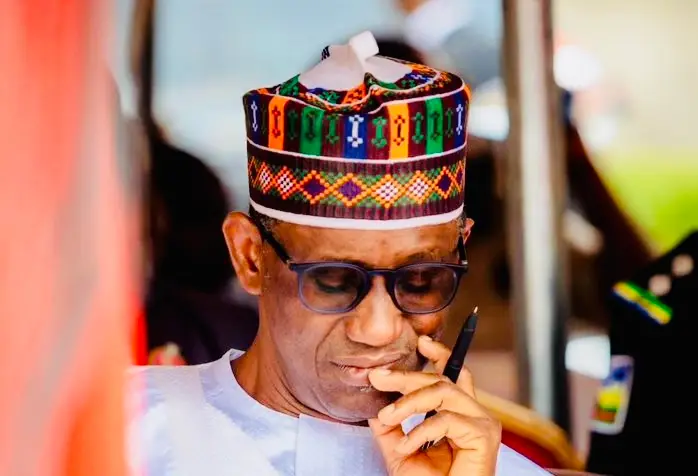
ABUJA, Nigeria — In a resolute and measured response that has set the political arena abuzz, National Security Adviser Nuhu Ribadu has categorically dismissed the incendiary allegations levelled against him by former Kaduna Governor Nasir El-Rufai, who spoke as a guest on AriseTV’s Prime Time on February 24, 2025.
Ribadu’s message was unambiguous: “I Won’t Join Issues With Nasir El-Rufai.” His refusal to engage in what he termed a “media fight” with El-Rufai underscores not only his current focus on national security matters but also a broader desire to sidestep the toxic political infighting that has increasingly come to characterise Nigeria’s political landscape.
Ribadu’s statement was meticulously crafted, reflecting decades of experience in Nigeria’s turbulent political sphere.
“My attention has been drawn to the interview granted by Mallam Nasir El-Rufai, the immediate past governor of Kaduna State Monday evening,” he began.
He swiftly added that if his silence did not imply consent, he would have simply ignored the provocation. Instead, Ribadu’s measured response signals that while he acknowledges the barrage of criticism, he is resolute in not diverting his focus from his pressing national responsibilities.
The National Security Adviser made it clear that despite the “incessant baiting and attacks,” he has maintained a respectful silence regarding El-Rufai on record—an attitude grounded in respect for their shared past and mutual familial ties.
This choice of words is not mere politeness; it is a calculated political move to differentiate his professional dedication from the petty rivalries that often plague Nigerian politics.
By urging the public to disregard El-Rufai’s statements, Ribadu not only seeks to silence the controversy but also reasserts his commitment to the advancement of Nigeria, distancing himself from any insinuations of personal ambition.
A central point in Ribadu’s rebuke is his emphatic denial of any discussions or intentions of a presidential bid in 2031.
“For the avoidance of doubt, I want to put it on record that I have never discussed running for president in 2031 with anybody,” he declared.
In a political climate where every public pronouncement is dissected and weaponised, Ribadu’s outright dismissal of such speculation is a powerful reaffirmation of his dedication to his current assignment—the security and stability of Nigeria under President Tinubu’s administration.
This clarification not only quells rumours of an imminent political coup but also serves as a strategic move to reframe the narrative around his personal ambitions.
Ribadu’s focus, as he repeatedly stressed, remains solely on his “onerous national assignment” and the advancement of the nation. This unwavering concentration is particularly significant given Nigeria’s pressing security challenges and the ongoing battle against corruption.
For many observers, Ribadu’s role as National Security Adviser has been synonymous with rigorous anti-corruption measures and a staunch defence of national interests. His current comments, therefore, are seen as a deliberate pivot back to his core mandate, reinforcing that his energies are entirely dedicated to safeguarding Nigeria’s future.
The backdrop to this exchange is a longstanding tension between two heavyweight figures in Nigerian politics. Nasir El-Rufai, known for his bold and often provocative statements, has not shied away from challenging the established order.
His recent comments on AriseTV appeared designed to cast Ribadu in a negative light, linking him to controversial political manoeuvres ahead of a speculated 2031 presidential race.
However, Ribadu’s refusal to engage in this public spat is indicative of a broader strategy: to rise above the fray of personal vendettas and focus instead on the pressing issues of national security and governance.
Political analysts have observed that Ribadu’s steadfast stance is a reflection of his vast experience and deep understanding of the consequences of engaging in partisan bickering.
In an environment where political alliances are often fleeting and personal ambitions can derail public service, his decision to remain aloof from El-Rufai’s provocations could serve as a model for others.
It also raises important questions about the ethical boundaries in political discourse—questions that have become ever more urgent in the wake of Nigeria’s recurring political crises.
Critics argue that such public disputes only serve to distract from the real challenges facing the nation. In this light, Ribadu’s call for the public to “disregard El-Rufai’s statements” is not merely a personal appeal but a broader plea for a return to substantive policy debates.
With Nigeria at a crossroads, where issues of security, economic stability, and corruption dominate public discourse, there is little room for the kind of media skirmishes that can erode trust in political leadership.
Moreover, Ribadu’s reference to his respect for their “past association” and familial ties suggests a deeper, more personal dimension to this political conflict. It hints at a history of collaboration that has now given way to a bitter divergence in political priorities.
By invoking this shared history, Ribadu subtly reminds the public of the values that should underpin public service—integrity, respect, and an unwavering commitment to the nation’s welfare—values that he contends have been sidelined by the current political bickering.
In summing up his statement, Ribadu’s final remarks—“I therefore ask Nasir El-Rufai to allow me face my onerous national assignment just as I do not bother myself with his own affairs”—encapsulate his position succinctly.
It is a plea for political decorum and a reminder that the stakes are far too high for personal rivalries to detract from the task of nation-building. For Ribadu, and indeed for many Nigerians, the focus must remain on addressing the country’s deep-seated challenges rather than engaging in fruitless personal attacks.
As the political fallout from this latest exchange continues to unfold, one thing remains clear: the ideological chasm between Ribadu and El-Rufai is widening. With both men holding significant sway in the corridors of power, their public posturing is likely to have lasting implications for the APC and for Nigerian politics at large.
Atlantic Post will remain vigilant, providing comprehensive coverage as events continue to develop, and as the nation watches whether these entrenched political figures can rise above personal differences for the greater good of Nigeria.
- Additional report by Suleiman Adamu, Atlantic Post Senior National Security Correspondent