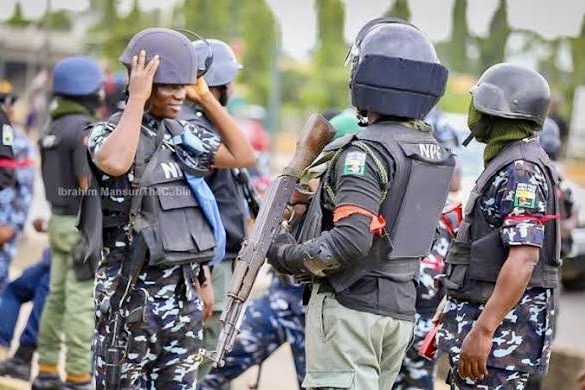
A new mid-year investigative report has raised fresh alarm over Nigeria’s worsening insecurity, alleging that thousands of people were killed or abducted in the first six months of 2026 despite repeated security operations announced by the President Bola Tinubu-led administration.
Released on Thursday by the International Society for Civil Liberties and Rule of Law, known as Intersociety, the report said the country remained gripped by a deepening humanitarian and security crisis affecting several states in the North, Middle Belt and parts of southern Nigeria.
According to the organisation, armed attacks intensified during the review period, with repeated killings, kidnappings, attacks on places of worship and the displacement of entire communities. It said the violence spread across Plateau, Benue, Taraba, Borno, Kaduna, Niger, Kogi, Kwara, Adamawa, Nasarawa and parts of the Federal Capital Territory, while similar incidents were also recorded in southern states.
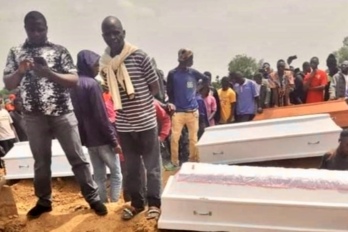
Intersociety said more than 3,600 civilians were killed in incidents it described as jihadist violence and related attacks during the six-month period. It said the dead included 2,550 Christians and 1,050 Muslims.
The group said the figures were compiled from primary field investigations involving eyewitnesses, survivors and community leaders, alongside secondary sources such as media reports, religious organisations, research institutions and international human rights documentation.
The report also alleged that at least 720 attacks were recorded within the period, averaging about 120 attacks a month.
It identified Boko Haram, the Islamic State West Africa Province, Lakurawa and armed Fulani groups as being responsible for many of the attacks. The organisation also alleged that some of the incidents occurred amid varying degrees of state failure or inadequate intervention, a claim the Federal Government has consistently rejected in previous responses to similar allegations.
In one of its strongest passages, the report said:
“Fulani ethnic militants (bandits and herdsmen) are found to have been responsible for most of abductions and killings, likewise wanton destruction of worship centres, dwelling houses and livelihoods in Southern Kaduna, Wukari zone of Taraba State and other Christian dominant areas. Bandits and Herdsmen under ‘Fulani Ethnic Militants’ are also found to have sometimes collaborated with Boko Haram and ISWAP in perpetrating such heinous religious atrocities including handover or transfer of their captives to jihadist forest/enclave facilities manned by Boko Haram and ISWAP for hostage ransoms, Islamic indoctrinations and conversions, sexual slavery, among others.
“Combined forces of bandits, Boko Haram and Lakaruwa and sometimes joined by Herdsmen are also found to be dominant Islamic terror groups wreaking havoc in places like Niger, Kwara, Kogi, Nasarawa, Southern Kebbi, Zamfara, Kastina and FCT (Abuja) hinterlands, among others. In Southern Borno, Southern Kebbi and Northern Adamawa with large Christian communities, Islamic Boko Haram terrorist group and allied other regionally and internationally affiliated terror groups are found to be most dominant and atrocious.”
The report said attacks on religious buildings continued during the period under review. It alleged that at least 10 Christian pastors were killed while another 10 were abducted. The organisation listed Kaduna, Plateau, Borno, Adamawa, Kwara and Ekiti among the locations where clergy were reportedly targeted.
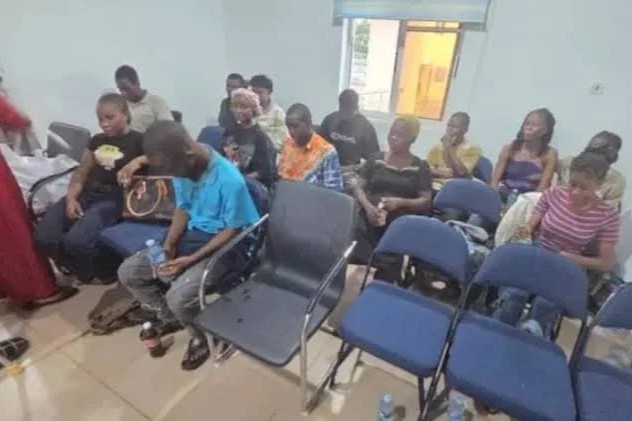
Intersociety also claimed that 175 schoolchildren were abducted in the first half of the year, with many of the incidents recorded in Borno and Oyo states. It said schools remained highly vulnerable in communities already affected by insurgency, banditry and rural insecurity.
Another major section of the report focused on the alleged abuse of women and girls during attacks. The organisation said victims were exposed to sexual violence, forced marriage and prolonged captivity after abduction. It also said some of the attacks involved forced religious conversion.
The report linked its findings to a recent warning by a panel of United Nations special rapporteurs, who in June said Christian women and girls in parts of northern Nigeria and the Middle Belt face heightened risks of killings, abductions, sexual violence, forced conversion and child marriage.
Intersociety, however, criticised the United Nations Special Rapporteur on Freedom of Religion or Belief, Nazila Ghanea, over remarks made after her visit to Nigeria. It said her assessment contradicted the findings of other UN experts who warned about the plight of vulnerable women and girls in conflict-affected communities.
The organisation said:
“The woeful failure of the Nigerian government to frontally address these using its domestic body of criminal and procedural laws, or alternatively surrender the country’s jurisdiction to the International Criminal Court by inviting its Chief Prosecutor under International Criminal Law Principle of Complementarity; is a clear case of self-indictment and culpability beyond defense, as well as unambiguous demonstration of ‘unwillingness and inability’ to act.”
It further said Nigeria’s status as a state party to the Rome Statute placed an additional obligation on the authorities to investigate and prosecute alleged atrocities more effectively.
The group also quoted the UN panel of five rapporteurs, including the Special Rapporteurs on Violence Against Women, Torture, Extrajudicial Killings, Minority Rights and Enforced Disappearances, who on June 8, 2026 reportedly warned that Christian women and girls in northern Nigeria and the Middle Belt were being systematically killed, abducted, sexually assaulted, forcibly converted to Islam and handed into child marriages.
The panel said:
“We are particularly alarmed at the very specific and heightened risks of discrimination, violence and exploitation that Christian women and girls are exposed to, as we continue to document grave cases of sexual violence, abductions, acts tantamount to enforced disappearances, forced conversion and child marriage amongst them. And in many cases, those who resist are reportedly threatened, punished, disappeared or killed.”
Intersociety argued that Nigeria’s response to insecurity has fallen short of domestic and international obligations. It said the failure to effectively investigate or prosecute perpetrators of mass atrocities had deepened impunity and left communities more exposed to repeated attacks.
The report said insecurity has spread beyond the traditional insurgency zones into farming settlements, highways, forests and rural communities across several geopolitical zones. It added that the violence has continued to disrupt livelihoods, education, worship and local trade.
Intersociety said its conclusions were supported by a separate 66-page compilation of incident data and case documentation designed to provide detailed evidence for the findings in the report.
The Federal Government had not issued an immediate response at the time of filing this report.
Follow us on our broadcast channels today!
- WhatsApp: https://whatsapp.com/channel/0029VawZ8TbDDmFT1a1Syg46
- Telegram: https://t.me/atlanticpostchannel
- Facebook: https://www.messenger.com/channel/atlanticpostng