ABAKILIKI, Ebonyi — A fresh payroll document reported by SaharaReporters has intensified the controversy surrounding the death of Mary Habila, the woman whose body was found at the residence of Nigeria’s Minister of Works, David Umahi, in Uburu, Ebonyi State.
According to the report, the document lists both Habila and her colleague, Anita Baaki, as staff of the David Umahi Federal University of Health Sciences, Uburu (DUFUHS), and shows that they were paid through the Federal Government’s Integrated Personnel and Payroll Information System (IPPIS).
The report further says Habila appears as number 508 on the payroll with IPPIS number DU2500148, while Baaki is listed as Baaki Anita Mlumun at number 474 with IPPIS number DU250044.
The significance of that document is not simply administrative. It cuts directly across the official story line that Habila was a physiotherapist on secondment to the Ministry of Works.
SaharaReporters quoted sources alleging that “Umahi made sure they were both paid through the University and placed on the payroll”, while earlier university sources had told the outlet that Habila was a Community Health Extension Worker, not a physiotherapist.
If accurate, the payroll record raises sharper questions about how her role was classified, who approved the arrangement, and why that classification was presented differently in public.
That dispute was complicated further by the Nigeria Society of Physiotherapy, which said Habila’s name does not appear on the database of registered physiotherapists.
In a statement quoted by SaharaReporters, the society said: “Following verification through the appropriate regulatory channels, the name ‘Mary Habila,’ as stated, does not appear on the database of registered physiotherapists.”
The NSP added that public officials should exercise due diligence before presenting or associating individuals with regulated professions.
That position directly contradicted the earlier assertion by Umahi’s media aide, Francis Nwaze, that Habila and Baaki were physiotherapists employed by DUFUHS and seconded to the Ministry of Works.
Umahi has rejected suggestions of wrongdoing and insisted that the matter should be handled through forensic process rather than political speculation.
In comments reported by The Punch, he said he suspected no foul play and described the attempts to tie him to the case as “politics taken too far”.
He also said Habila was “like a daughter” to him, that she had worked closely with him for years, and that she had been receiving treatment before her death.
Umahi further maintained that she was a nurse, not a physiotherapist, and appealed for an autopsy to establish the exact cause of death.
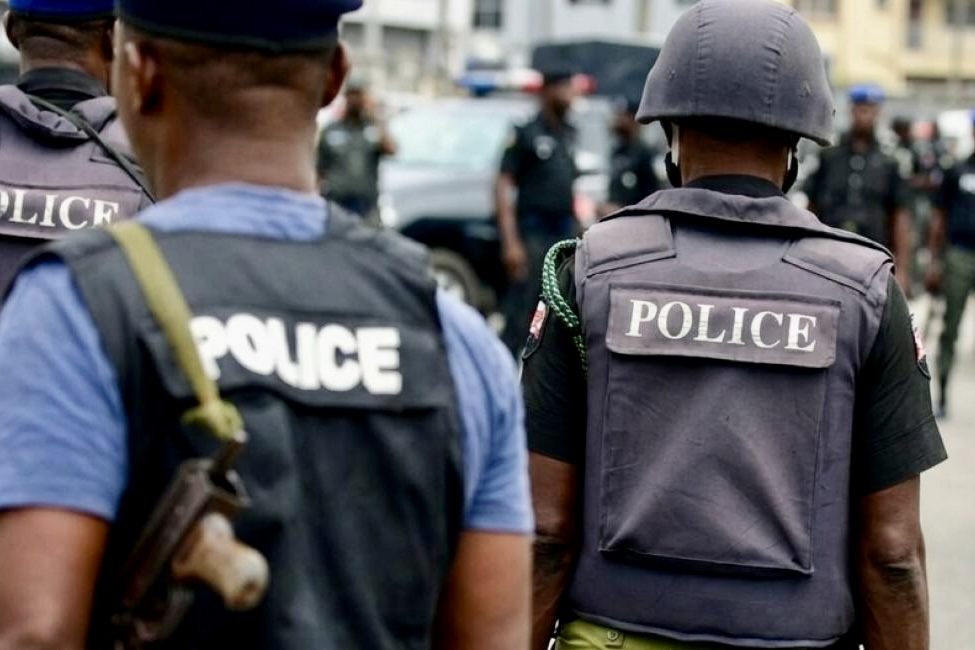
The police and the Ebonyi State Director of Public Prosecutions have taken a similarly firm line on the need for a post-mortem examination.
SaharaReporters reported that the Ebonyi State Police Command insisted that a forensic autopsy must be conducted before the body can be released, adding that detectives had visited the scene, obtained statements and were preparing to engage a pathologist.
The outlet also reported that the DPP, J.U. Chukwu, advised that only a post-mortem could determine the cause of what he described as Habila’s sudden and unexplained death, noting that available evidence showed she was alone when she was found dead in her apartment.
Yet the family has pushed back hard. The Guardian reported that Habila’s father, Tanko Habila, filed an affidavit of withdrawal before the Ebonyi State High Court, rejecting the autopsy and asking for the body to be released for burial.
In that affidavit, the family said, “my family and I will not accept any autopsy on my daughter’s body”, and added, “I also wish not to proceed further with the investigation and further request that my daughter’s body be released to me for burial.”
He also said the family did not suspect foul play. The collision between that position and the police’s insistence on a forensic examination has stalled burial plans and turned the case into both a criminal inquiry and a legal contest over the body itself.
The wider investigative significance lies in the paper trail. If Habila and Baaki were indeed on DUFUHS payroll, then the case is no longer only about where Habila died; it is also about how she was employed, who benefited from the arrangement, and why the public narrative around her professional identity shifted so sharply.
SaharaReporters also said the payroll included 549 staff listed without NHF account numbers, a detail that may seem bureaucratic but points to a broader question of how appointments, documentation and payment structures are managed inside the institution.
Those are the kinds of administrative inconsistencies that often become important when a death probe moves from grief into scrutiny.
For now, the case remains unresolved. The police say the investigation is ongoing; Umahi wants an autopsy; the family wants the body released without one; and professional and payroll records have introduced fresh contradictions that will be difficult to ignore.
Until the post-mortem question is settled, the story will remain suspended between allegation, documentation and unanswered forensic questions.
That is why this case has moved well beyond a private tragedy. It is now a test of institutional transparency, record-keeping and the credibility of the official explanations offered so far.
Follow us on our broadcast channels today!
- WhatsApp: https://whatsapp.com/channel/0029VawZ8TbDDmFT1a1Syg46
- Telegram: https://t.me/atlanticpostchannel
- Facebook: https://www.messenger.com/channel/atlanticpostng