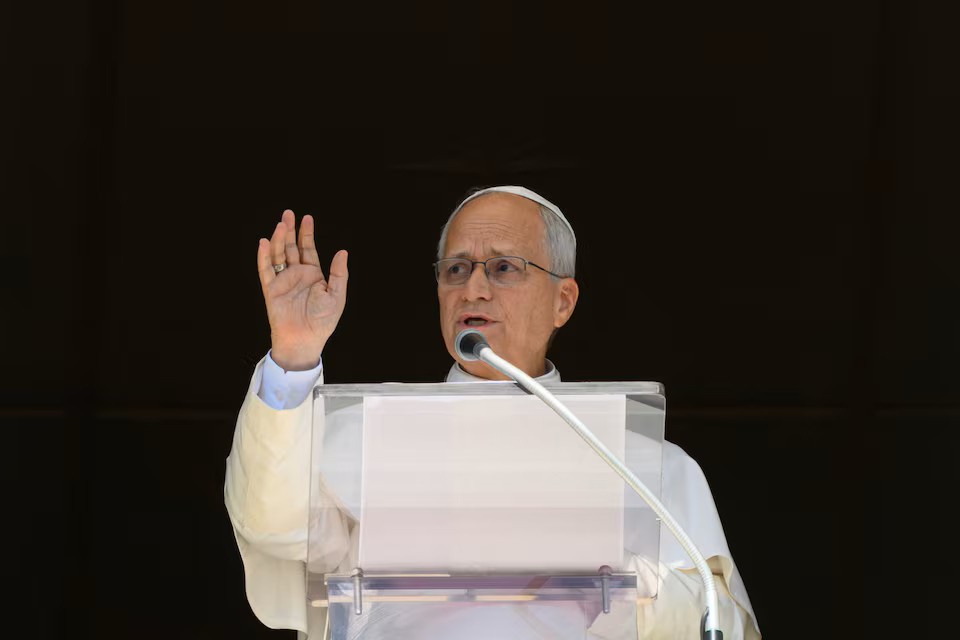
Cardinal Prevost’s election as Pope Leo XIV marks the first American pontiff, promising reform and continuity in a Church seeking global relevance.
Cardinal Robert Francis Prevost’s election as Pope Leo XIV on 8 May 2025 represents a historic first for the Catholic Church: the elevation of an American-born pontiff, reflecting a clear shift away from centuries of Italian dominance.
A Chicago native and naturalised Peruvian citizen, Leo XIV brings a blend of missionary zeal, academic rigour, and Franciscan-style progressivism tempered by conservative social views, promising both reform and continuity in an institution facing global challenges.
His papacy is poised to recalibrate relationships between Rome and regions such as Latin America, Europe and Africa, making his appointment especially resonant for Nigerian Catholics who navigate issues of social justice, security and ecclesiastical authority.
Pope Leo XIV: Early Life and Priestly Formation
Chicago Roots and Augustinian Vows
Robert Francis Prevost was born on 14 September 1955 in Chicago to parents of French, Italian and Spanish descent.
After serving as an altar boy at St Mary of the Assumption, he entered the minor seminary of the Order of Saint Augustine in 1973, making solemn vows in 1981.
Educated at Villanova University (BSc Mathematics), Catholic Theological Union (MDiv) and the Pontifical University of St Thomas Aquinas (LCL, DCL), Prevost combined intellectual depth with pastoral outreach from the outset.
Missionary Service in Peru
From 1985 until 1998, Prevost ministered in Peru, serving as chancellor of Chulucanas, seminary head in Trujillo and diocesan official, where his work among marginalised communities—particularly Venezuelan migrants—earned him a reputation for humility and compassion.
His dual US–Peruvian citizenship symbolises his international orientation and capacity to bridge cultural divides.
Ecclesiastical Rise and Ideological Bearings
Leadership in the Augustinian Order
Elected Prior General of the Augustinians from 2001 to 2013, Prevost shepherded an order grappling with modernisation and vocations decline, demonstrating administrative acumen and a readiness to innovate.
Prefect of the Dicastery for Bishops
Appointed by Pope Francis in January 2023 as Prefect of the Dicastery for Bishops, Prevost wielded decisive influence over episcopal appointments worldwide, endorsing reforms such as women’s participation in selection processes—an unprecedented move that underscores his reformist yet pragmatic outlook.
Philosophical and Theological Leanings
Leo XIV aligns broadly with Francis’s emphasis on peripheries and social justice, advocating mercy over dogma, yet adopts a more cautious approach on issues like LGBTQ+ inclusion and liturgical norms.
His doctoral thesis on the role of the local prior evidences a belief in subsidiarity, favouring local agency within the universal Church.
Historic Context: Non-Italian Popes
Of the 266 pontiffs, 81% were Italian, but since 1978 none have hailed from Italy, marking a profound geographic decentralisation.
Adrian VI (1523) was the last non-Italian before John Paul II broke Italy’s 455-year monopoly in 1978; he was succeeded by Benedict XVI (Germany) and Francis (Argentina), culminating now in an American from Chicago.
Controversies and Criticisms
Prevost’s tenure has not been devoid of dispute. He faced allegations of mishandling sexual abuse cases in Chicago and Peru in the early 2000s, criticisms he and supporters maintain were politically motivated.
His measured stance on moral issues such as same-sex civil unions has drawn ire from progressive theologians, while traditionalists sceptical of Francis’s reforms question his loyalty to orthodoxism.
Implications for Nigeria
Theological and Pastoral Repercussions
Nigerian Catholics, contending with security crises, clerical shortages and interreligious tensions, will look to Leo XIV’s emphasis on pastoral closeness and synodality for guidance.
His model of outreach to the peripheries could inform strategies against Boko Haram and communal violence.
Political and Diplomatic Resonance
As the first American pope, Leo XIV may recalibrate US–Vatican dynamics, potentially influencing Washington’s approach to Nigeria’s democracy and human rights record.
His Peruvian experiences could also strengthen Latin American solidarity within the Church, indirectly emboldening Nigerian diasporic advocacy.
Conclusion
Pope Leo XIV’s ascent signals a transformative chapter: geographic diversity, a blend of Franciscan progressivism and Augustinian discipline, and a potentially decisive role in the Church’s response to global inequities.
For Nigerian faithful and leaders alike, his papacy presents both opportunity and challenge—a mandate to renew hope while safeguarding doctrinal integrity.