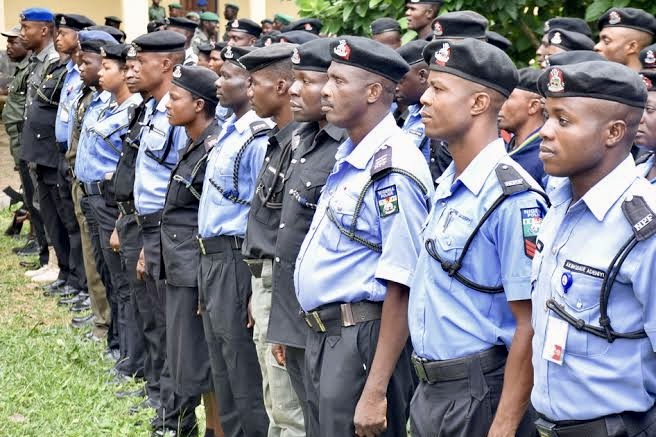
The Nigeria Police Force has quietly ordered every officer who retired between 1 July 2007 and December 2022 to report to the Pension Office in Borikiri, Port Harcourt for urgent pension documentation,
The eight-day window begins 19 August and closes 26 August 2025.
The order, issued in a wireless message dated 18 August and marked “Confidential”, was signed by the Rivers State Commissioner of Police and carried the reference CH: 8475/RVS/VOL.4/125; Area Commanders and DPOs were instructed to notify affected retirees immediately.
This is a dramatic and potentially chaotic intervention. For thousands of former officers, many of whom have been publicly protesting poor treatment and paltry pension disbursements in recent weeks, the Port Harcourt summons will look less like administrative catch-up and more like last-minute damage control.
Retirees staged nationwide demonstrations in July, led in part by human-rights activist Omoyele Sowore, and have complained publicly that decades of contributions have not translated into dignified retirement.
One protester told reporters they’d received only a fraction of the monies deducted during 35 years of service.
Context matters. Since the Pension Reform Act of 2004 created the Contributory Pension Scheme (CPS), public-sector pensions have been processed through Retirement Savings Accounts managed by PFAs and monitored by the National Pension Commission (PenCom).
The scheme requires regular contributions from employer and employee and was intended to end erratic gratuity payments.
Yet implementation problems persist: multiple PFA enrollments, poor record reconciliation and opaque transfers remain leading causes of delay and dispute.
That structural background helps explain why a one-week documentation blitz in a single location risks creating more confusion than solutions unless it is tightly co-ordinated with PenCom and PFAs.
Complicating the optics is President Bola Tinubu’s recent public directive to expedite a free-healthcare rollout for low-income retirees under the CPS and to implement long-overdue pension increases.
The State House press release and multiple national outlets confirm the President has ordered an immediate push for healthcare access and a minimum pension guarantee.
These are measures that should reassure pensioners but which, if not followed by transparent logistics and payments, risk being perceived as political theatre.
What should worry retirees and the public is the mismatch between promise and delivery. A hurried documentation drive in one city, Port Harcourt, will be a logistical nightmare for elderly former officers scattered across 36 states, many with mobility or health issues.
It also raises questions: why the limited timeframe? Are records being reconciled because of an audit, an impending payment cycle, or pressure from the Presidency to show progress after recent protests?
And crucially: will the Pension Fund Administrators and PenCom be present to verify account reconciliations on the spot, or will retirees be told to “come back” — a refrain that has fed protests before?
For investigative editors and policymakers, this episode demands three immediate actions:
(1) transparent publication of the wireless signal and a full list of documents retirees must bring;
(2) the presence of PenCom and representatives of PFAs at Borikiri to perform realtime account reconciliation; and
(3) an accessible, staggered schedule (including mobile teams) so infirm or remote retirees are not excluded.
Anything less risks turning a remedial exercise into another angry round of demonstrations, and deepening a scandal that began long before this week’s signal.
Follow us on our broadcast channels today!
- WhatsApp: https://whatsapp.com/channel/0029VawZ8TbDDmFT1a1Syg46
- Telegram: https://t.me/atlanticpostchannel
- Facebook: https://www.messenger.com/channel/atlanticpostng