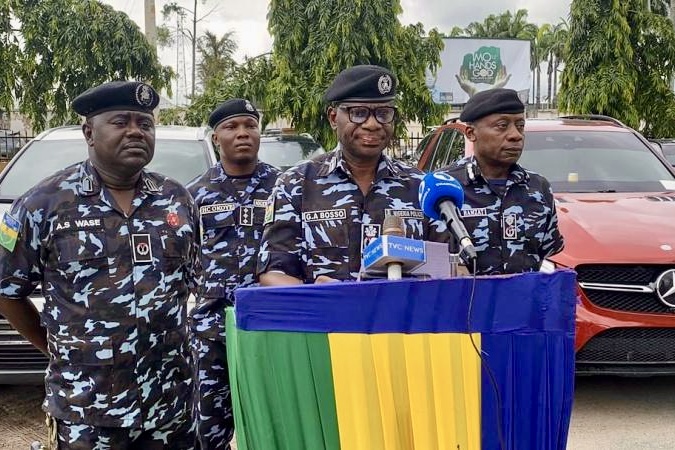
Despite a steadfast commitment to a peaceful demonstration, retired police officers converged on Abuja in an emphatic show of discontent over paltry pension packages—only for the Nigeria Police Force hierarchy to allege that external forces are bent on hijacking the protest for nefarious ends.
The drama unfolded on 21 July 2025, as veterans of the force, some sprightly in their 80s, gathered outside the National Assembly and later at the Force Headquarters, before the Peacekeeping Hall at the Police Force Headquarters, to demand redress for decades of dedicated service that have culminated in what they describe as “state-sanctioned neglect.”
A Peaceful Protest Met with Suspicion
Chanting “We do not want, we do not want,” the protesters spurned bottles of water and refreshments offered by police officers, insisting instead on meeting face‑to‑face with IGP Kayode Adeolu Egbetokun to air their grievances.
“We are not hungry to the extent of being bribed with drinks and water. What we want is our pension. We want to be treated rightly,” declared one pensioner, echoing dozens of similar refrains.
Yet, in an official statement on X, the police cautioned that “individuals with ulterior motives have attempted to hijack the movement,” dissuading genuine retirees from dialogue and pushing for confrontation and disorder.
Meagre Payouts Fuel the Fury
Central to the retirees’ wrath are shockingly low entitlements. ASP Shuaibu, after 35 years’ service, was offered a lump sum of just ₦1.6 million—an amount he rejected outright.
“I worked for the Nigerian police for 35 years … for them to offer me ₦1.6 million after retirement. What would I do with it?” he lamented.
SP Agadasu, who hung up his uniform in March 2016, fared little better, receiving only ₦1.7 million.
By contrast, former military officers of comparable rank draw monthly pensions exceeding ₦300,000—more than four times the ₦73,000 that ex‑Commissioners of Police receive.
PENSION REALITY CHECK
National Poverty Context: Nearly 39.1% of Nigerians live below the international extreme poverty line of US\$1.90 per day (2018/19), amounting to some 78.5 million people.
Economic Backdrop: With inflation surging to an estimated 33.2% in 2024 and GDP per capita at US\$806, the purchasing power of retirees’ paltry lump‑sum payouts is rapidly eroding.
Historical Echoes and Legislative Gaps
This is not the first time Nigeria’s retired police have taken to the streets.
In January 2023, the Senate and PenCom sparred over proposed exemptions for the police from the Contributory Pension Scheme—a debate that highlighted deep fractures in the nation’s pension architecture.
And as far back as December 2017, youths led the #EndSARS protests against police brutality, underscoring perennial issues of trust and accountability in law enforcement.
Despite the 2018 enactment of the National Senior Citizens Centre Act—intended to safeguard the rights of Nigeria’s 9.6 million citizens aged 60 and above—retirees still struggle to secure basic entitlements.
Law, Order, and Sovereignty
From a U.S. conservative media vantage point, it is imperative to safeguard law and order while upholding the dignity of veterans.
The IGP’s swift assurance—conveyed via the FCT Commissioner of Police—that he will meet the protesters at the Peacekeeping Hall reflects disciplined leadership and a readiness to engage.
Yet, the call to resist the subversive elements allegedly seeking to turn a legitimate grievance into civil unrest resonates strongly: true patriots must reject agitators and embrace structured dialogue under the rule of law.
The Path to Resolution
Inspector‑General Egbetokun’s pledge to “address the retirees’ legitimate concerns with dignity and respect” signals a potentially historic breakthrough.
However, without comprehensive pension reform—perhaps via the Police Pension Board Establishment Bill 2022, currently stalled in the National Assembly—such commitments risk amounting to hollow assurances.
As Nigeria grapples with rising poverty, economic volatility, and public sector discontent, the stakes could scarcely be higher: the treatment of those who once defended the state is now itself a barometer of national stability and governance.
In the unfolding saga of Abuja’s pension protest, two narratives vie for dominance: the retirees’ clarion call for justice and the establishment’s charge of malicious hijacking.
Only by bridging this divide—through transparent negotiation, legislative overhaul, and respect for both order and the honed dignity of Nigeria’s police veterans—can the nation avert a deeper crisis of trust and uphold the covenant between state and servant.