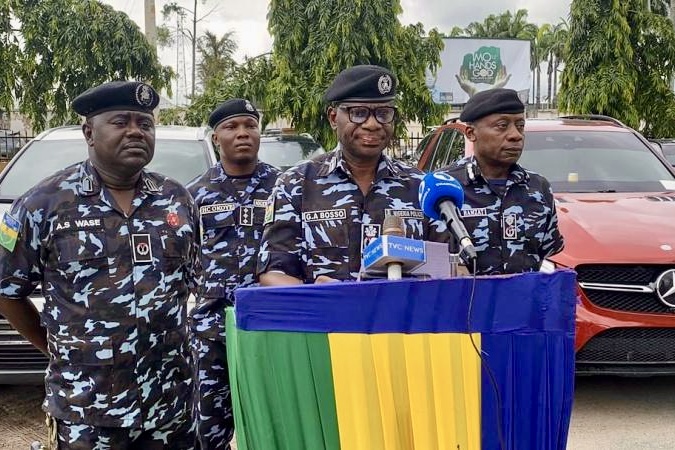
Nigeria Police Force orders immediate identification, verification and profiling of conventional officers serving in government houses, as the IGP’s latest move reshapes protection duties and police manpower deployment
The Nigeria Police Force has ordered the immediate conversion of conventional police officers attached to government houses across Nigeria into personnel of the Special Protection Unit, a move that could significantly alter how security is organised around governors, state executives and government facilities.
The directive was contained in a police wireless message dated September 14, 2026, reportedly obtained by SaharaReporters. The document, referenced DTO: 141028/09/2026, was issued by the Nigeria Police Department of Operations in Abuja and marked “M/IMMEDIATE” and “VERY IMPORTANT.”
The message was addressed to AIGs overseeing the police zones and protection operations, as well as Commissioners of Police across the states.
It orders the immediate identification, verification and profiling of conventional police personnel attached or deployed to government houses nationwide. The affected officers are to be converted to SPU personnel and documented at SPU bases in their respective states.
The directive carries the heading: “X ORDER AND DIRECTIVES X CONVERSION AND DOCUMENTATION OF ALL CONVENTIONAL POLICE PERSONNEL ATTACHED TO GOVERNMENT HOUSES UNDER SPECIAL PROTECTION UNIT.”
The command has also warned that irregularities, non-compliance or unauthorised deployment would attract sanctions.
For an institution already under pressure to free more officers for frontline policing, the order is potentially more than an administrative exercise. It touches on who controls protection personnel, where those officers are formally assigned, how their deployments are recorded and how much conventional police manpower remains tied to politically sensitive locations.
What the New Police Order Says
According to the wireless message, every conventional police officer currently attached or deployed to a government house is to be identified and transferred administratively into the Special Protection Unit structure.
State Commissioners of Police and SPU base commanders have been ordered to oversee the exercise.
They are expected to verify the affected personnel, profile them and maintain accurate records of those brought under the new arrangement.
Compliance reports are to be submitted through the Assistant Inspector-General of Police responsible for protection operations to the Department of Operations.
The order also directs strict compliance and makes command officers responsible for preventing irregular or unauthorised deployments.
But not every officer serving around government houses is affected.
The directive specifically exempts personnel belonging to the Mobile Police Force, Counter-Terrorism Force, State Intelligence Service, Bomb Disposal Unit and K9 formations. Those officers are to retain their present unit status.
That distinction is important.
It means the order is not a blanket withdrawal of specialist police capabilities from government houses. Instead, it appears designed to bring conventional officers performing protection roles into a single specialist protection framework while leaving tactical and specialist formations under their existing command identities.
Why SPU Matters
The Special Protection Unit is not simply another name for conventional policing.
The NPF has described SPU as a specialist police formation dedicated to security and escort duties for high-risk individuals and organisations facing security threats. The force says SPU personnel are part of its specialised operational structure alongside formations such as the Police Mobile Force and Counter-Terrorism Unit.
That distinction gives the September 14 directive a broader significance.
When a conventional officer is performing security duties inside a government house, that officer remains connected to ordinary command structures even though the actual assignment is protective.
By moving such personnel into SPU administration, the police leadership can create a clearer institutional chain for officers whose principal function is protection rather than conventional patrol, investigation, crime prevention or response.
That could make deployment records easier to audit.
It could also make it more difficult for individual commands to treat conventional officers as flexible manpower for executive security without formal documentation.
The order therefore appears to be about classification, accountability and control as much as it is about protection.
The Timing Is Significant
The directive comes less than a year after President Bola Tinubu ordered a major reduction in police deployment to VIP protection.
In November 2025, the Presidency said police officers assigned to VIPs should be withdrawn and redeployed to core policing duties because many communities had too few officers to provide adequate protection. The administration also announced plans to recruit additional police personnel.
Days later, the NPF said 11,566 personnel had been recalled from VIP duties and that redeployment to underserved communities had begun.
President Tinubu subsequently said the VIP withdrawal policy was not negotiable, directing ministers requiring exceptional police protection to seek clearance from the IGP and emphasising that police officers should primarily protect citizens and communities.
The September 2026 SPU directive sits within that wider policy debate.
Rather than simply removing officers from executive protection, the latest move appears to formalise the status of officers who remain engaged in government-house protection.
That distinction matters.
A government house is both a sensitive state facility and a location associated with political power. The question is therefore not merely how many officers are there, but under whose structure they serve, who can deploy them and how their presence is recorded.
A Long-Running Problem Inside Nigerian Policing
Nigeria has struggled for years with the use of regular police personnel for protective assignments involving politicians, officials, businessmen and other influential individuals.
In October 2020, former IGP Mohammed Adamu ordered the withdrawal of police personnel attached to VIPs but specifically exempted officers serving government houses, the Senate President and the Speaker of the House of Representatives.
The episode exposed the difficult balance between protecting public office holders and maintaining enough officers for ordinary policing.
The issue resurfaced dramatically in 2023 when then Acting IGP Kayode Egbetokun announced plans to remove Police Mobile Force personnel from VIP escort and guard duties.
He said officers withdrawn from such assignments could be replaced by SPU personnel where necessary, arguing that the change would free regular tactical manpower for frontline security operations.
Egbetokun stated that the Police Act 2020 also provided a framework for supernumerary officers to perform personal protection duties for people who required such services.
The policy direction was clear: specialist protective responsibilities should be separated from the broader pool of officers required for core policing.
The new directive appears to push that principle further into government houses.
The Manpower Question
One of the strongest arguments for the move is manpower management.
The federal government itself has acknowledged that large numbers of police officers have historically been tied up in protection roles while communities struggle with insufficient police presence.
In November 2025, the Presidency said many remote parts of Nigeria had too few officers at police stations and linked the withdrawal of VIP protection personnel to a plan to strengthen policing in communities. It also announced approval for an additional 30,000 recruits.
The reform challenge is therefore not simply about uniforms.
A conventional officer stationed permanently at a government house is not available in the same way as a patrol officer assigned to a station, divisional headquarters or rapid-response operation.
Moving the officer into SPU could provide better specialist management, but it does not automatically create additional manpower.
That is the central test for the policy.
If officers are merely redesignated while continuing to perform exactly the same duties at the same locations, the immediate gain may be administrative rather than operational.
The real security dividend would come only if the new structure produces tighter deployment controls, prevents unnecessary duplication and allows conventional manpower to be redirected where crime and insecurity are greatest.
The Governor Question
The order could also affect the longstanding relationship between state governors and police deployments around government houses.
Government houses are politically sensitive sites. They are the principal administrative headquarters of state executives and may contain the governor’s office, residence, visiting officials and other high-value targets.
Protection around such facilities therefore has legitimate security considerations.
But police protection of political executives has repeatedly generated concerns over the concentration of public security resources around people who already have access to multiple layers of state security.
That is why the distinction between institutional security and personal protection is so important.
If officers are protecting a government facility, the justification is fundamentally different from using police personnel as personal escorts.
The September 14 order does not indicate that government-house protection is being abolished. Instead, it appears to impose greater institutional control over the officers carrying it out.
The question now is whether state commands will actually surrender informal control over conventional officers who have become embedded in government-house security arrangements.
A New Layer of Accountability
One potentially important feature of the directive is its emphasis on verification and profiling.
The police leadership is not merely ordering a change of unit name. It is demanding identification, verification, documentation and compliance reports.
That creates the possibility of a clearer national database showing how many conventional officers are attached to government houses, where they are stationed and under which unit they officially serve.
This could matter during future manpower audits.
It could also expose discrepancies between official postings and actual deployments.
The directive’s warning about unauthorised deployment is particularly notable because it places responsibility directly on Commissioners of Police and SPU commanders.
In practical terms, that means command responsibility becomes easier to establish if personnel are moved without authorisation.
The stated sanctions for non-compliance could also discourage local arrangements that allow officers to remain attached to powerful individuals outside formally approved structures.
SPU Is Also Being Strengthened
The police leadership has been investing in SPU infrastructure.
In July 2026, the NPF announced the commissioning of an armourer office, provost office, sick bay and pharmacy at SPU Base 7 in Abuja. The force said the projects were part of the IGP’s efforts to improve operational efficiency and personnel welfare.
That investment provides useful context for the latest directive.
If conventional officers serving in government houses are being transferred into SPU structures, then SPU bases become increasingly important as administrative and operational centres for officers performing protection functions.
The move could therefore be part of a longer institutional effort to professionalise protective policing rather than leave such personnel scattered across conventional commands.
The State Police Debate Adds Another Pressure Point
The order is also arriving as Nigeria moves towards another potentially transformative policing reform: state police.
The Federal Government said in March 2026 that establishing state police had become a critical part of addressing the country’s security challenges and improving grassroots policing.
By June, the Presidency said significant progress had been made towards a constitutional framework for state police following consultations involving the Executive, National Assembly and security authorities.
That means the boundary between federal police command and state-level political authority is already under intense national scrutiny.
The government-house conversion order could become part of that larger debate.
For now, the affected officers remain within the Nigeria Police Force. But clearer separation between conventional policing, specialist protection and executive security could make future policing reforms easier to administer.
It may also become politically significant as Nigeria approaches the 2027 election cycle.
The 2027 Security Implications
Government houses are likely to become increasingly important operational locations as political activity intensifies ahead of the next general election.
The police will face competing demands.
It will need to protect political office holders and strategic government installations while also providing security for ordinary communities, opposition politicians, rallies, electoral materials and election personnel.
The NPF has previously deployed SPU, Counter-Terrorism Unit, conventional police and other specialist formations together during major election operations.
The danger is that election-period demands could once again blur the boundary between official security and political protection.
That is why accurate personnel records will matter.
A properly documented SPU officer has a defined operational identity. A conventional officer informally attached to a government house can create uncertainty about who authorised the deployment and what wider policing opportunity cost is being incurred.
What Remains Unanswered
Several questions now require answers from the police authorities.
How many conventional police officers nationwide are currently attached to government houses?
How many will be converted into SPU personnel?
Will the officers continue performing the same duties at the same locations after their documentation?
Will any of the personnel be released for frontline policing?
Will the NPF publish the number of officers identified in each state?
And will compliance reports eventually provide the public with a national picture of how much police manpower remains committed to government-house protection?
Those questions are important because the effectiveness of the policy cannot be measured by the number of officers whose unit designation changes.
The test will be whether the reform produces a more accountable protection structure while returning usable conventional manpower to policing duties where citizens need it most.
The September 14 directive could therefore prove to be either a significant reform of police protection management or another bureaucratic redistribution of personnel.
The difference will be visible in the deployment figures.
For now, the Nigeria Police Force has ordered the conversion, verification and profiling of affected conventional officers and has warned commanders to comply.
What happens after the paperwork is completed will determine whether the policy changes policing on the ground or simply changes the label on the uniform.
Source note: The September 14, 2026 wireless directive cited in this report was reported as obtained by SaharaReporters. Atlantic Post was unable to locate a publicly accessible copy of the original signal on the Nigeria Police Force website at the time of publication. The wider analysis is supported by official NPF, State House and Ministry of Police Affairs records.
Follow us on our broadcast channels today!
- WhatsApp: https://whatsapp.com/channel/0029VawZ8TbDDmFT1a1Syg46
- Telegram: https://t.me/atlanticpostchannel
- Facebook: https://www.messenger.com/channel/atlanticpostng