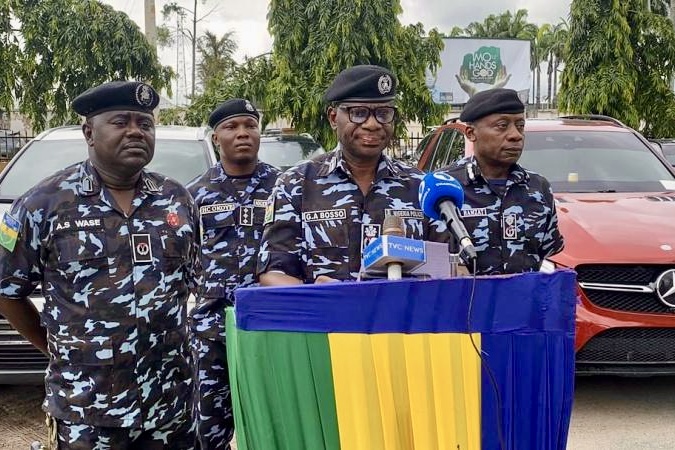
Nearly a year after Bolaji Oluwatosin, Esq. said he and the Take It Back Movement recovered ₦5.1 million for a young Nigerian allegedly extorted by officers attached to the Force Criminal Investigation Department (FCID) Annex, Alagbon, the central question remains brutally simple: what happened to the officers?
The complaint, as set out in Oluwatosin’s statement, names Superintendent of Police Olamilekan, Inspector Kalu and others, and alleges that the victim’s savings were taken under duress and routed through private accounts before lawyers and activists forced a refund.
What gives the allegation added weight is that public reporting from August 2025 showed the Alagbon annex itself had already acknowledged a similar complaint involving Inspector Kalu.
In that reporting, FCID Alagbon said the matter had been reported through a social media petition, that the officers and a POS operator had been identified, and that the funds had been recovered and returned while Inspector Kalu underwent an orderly room trial. The annex also said it maintained “zero tolerance for corruption and unprofessional conduct.”
That is what makes the present silence so damaging. If the force could publicly confirm, in 2025, that an officer was under orderly room trial and that funds had been recovered, why is there still no clear public closure that explains whether any officer was suspended, dismissed, arraigned, or otherwise sanctioned? The Police Service Commission’s own homepage says it sits on pending disciplinary matters and appeals, and describes its mission as promoting transparency, accountability and discipline in the police. Yet on this particular saga, the visible end point remains frustratingly opaque.
The FCID itself occupies a sensitive place in the policing architecture. The Nigeria Police Force describes FCID as the highest investigating arm of the force, which means its conduct is supposed to meet the highest standard of professionalism and public confidence. When allegations of extortion emerge from within such a unit, the issue is not merely the alleged theft of money. It is the collapse of trust in the very institution Nigerians are told to approach for justice.
The wider picture is even more troubling because the Nigeria Police Force has, in other recent cases, shown that it can move decisively against officers accused of extortion and related crimes. In July 2026, four officers were detained in Abuja after being accused of extorting the Chairman of the ICPC, with the commissioner describing them as “thieves” and saying they had no business wearing the uniform. In April 2026, five officers in Edo State were dismissed over complaints of harassment, abduction and extortion, with the command saying they would be arraigned after internal processes. In May 2026, the Rivers State Command said officers implicated in kidnapping, armed robbery and extortion were dismissed after what the force described as an internal cleansing exercise and a “gross betrayal of the ethics, standards, and professional values” of the Nigeria Police Force.
That matters because it demolishes any easy excuse that police discipline is impossible. The force has shown, in public, that it can detain officers, recover money, dismiss staff and forward cases for prosecution when the will exists. So the Alagbon matter is no longer just about what happened on the day the money was allegedly taken. It is about whether internal accountability is being applied even-handedly, or whether some cases are quietly treated as reputational problems to be managed rather than criminal allegations to be pursued.
Oluwatosin’s own language captures the frustration felt by many Nigerians who have lived through similar encounters. He described the police response as “studied silence” and argued that a force which recovers stolen funds while protecting those who stole them “under the colour of official authority” is managing appearances, not reform. He also insisted that “the system continues to protect the thieves in uniform” and warned that until those involved are properly investigated, suspended and prosecuted if found culpable, official claims of zero tolerance will remain “empty rhetoric”. Those are harsh words, but the facts on the ground keep giving them force.
The public also has a right to ask a harder question: why do extortion cases often become visible only when victims push them into the open? In the Alagbon episode, the matter appears to have moved because lawyers, activists and the victim refused to let it die in silence. That is not how a modern police institution should be forced to function. Accountability should be automatic, not activist-driven; disciplinary action should be visible, not whispered; and prosecution should follow credible allegations where evidence supports them.
At a time when the force is trying to persuade Nigerians that it is reforming itself, each unresolved extortion scandal chips away at the little confidence left in the system. A recovered refund is welcome. It is not justice. Justice is when victims are restored, officers are sanctioned, criminal conduct is publicly named, and the institution proves that its uniform is not a shield for abuse.
Until that happens in the Alagbon case, the bigger scandal will remain unchanged: the money may have come back, but accountability still has not.
Follow us on our broadcast channels today!
- WhatsApp: https://whatsapp.com/channel/0029VawZ8TbDDmFT1a1Syg46
- Telegram: https://t.me/atlanticpostchannel
- Facebook: https://www.messenger.com/channel/atlanticpostng