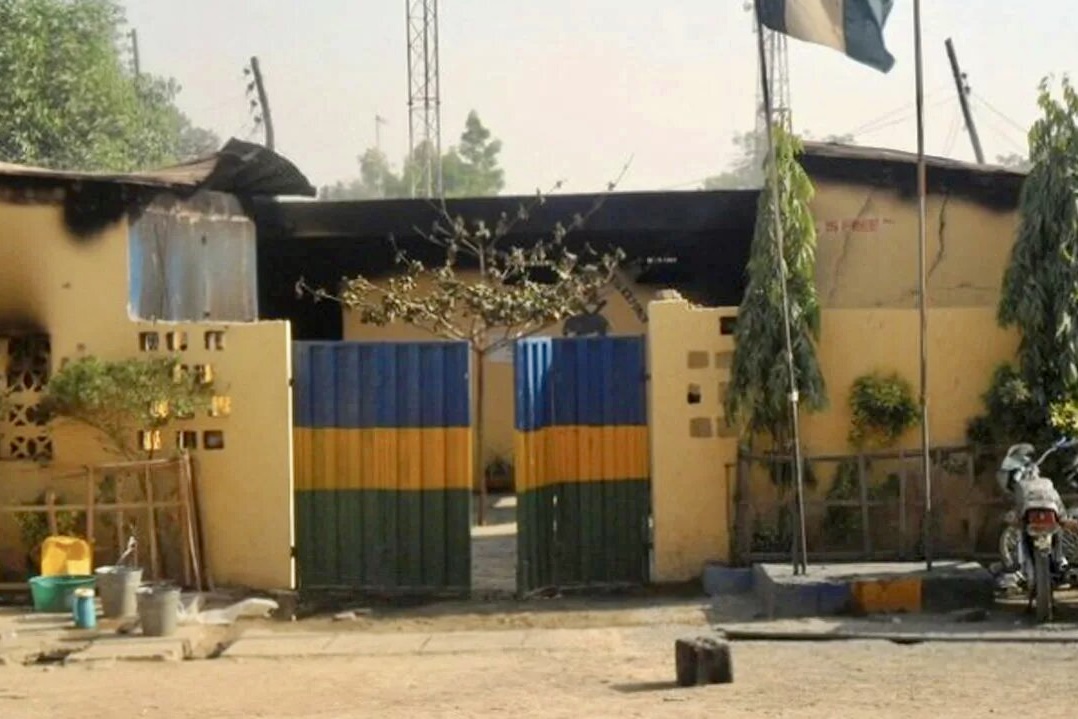
An Assistant Superintendent of Police, ASP Norbert Odale, has been found dead with a gunshot wound to the chest while on static guard duty at a private engineering company in Durumi, Abuja, in an incident the police are treating as a suspected suicide.
The incident reportedly occurred at about 7:30 a.m. on Monday, September 7, 2026, at the approved security post of Eunell Engineering & Construction Ltd.
According to an incident report from the Mpape Police Division obtained by SaharaReporters and cited in the report provided to Atlantic Post, Odale, identified by police as AP/No. 203734, was discovered lifeless inside the security room after a colleague, Police Constable Shuaibu Danjuma, raised the alarm.
Danjuma, who was deployed to the same guard post, reportedly knocked on the door but received no response. The discovery was subsequently reported to the police.
The incident report said: “The deceased was met in the pool of his blood with a bullet shot to his chest. His riffle with breach No. 07006497, 29 rounds of ammunition, one expended ammunition were all recovered at the scene.”
Police investigators reportedly recovered Odale’s service rifle and ammunition from the scene. The report also said the rifle chamber was open and the weapon remained cocked.
Before the remains were removed, investigators documented the scene with photographs. Odale’s body was subsequently deposited at Wuse General Hospital for certification and preservation.
Police have not established a definitive motive.
Instead, the preliminary investigation described the death as a suspected suicide, stressing that the circumstances remain under investigation.
“Preliminary investigation reveals X deceased is suspected to have committed suicide X while on duty at the said beat,” the report stated.
The wording is significant. It means the police have not publicly declared the case conclusively resolved as suicide, and the investigation remains open.
What the Abuja death raises beyond the crime scene
The death of a serving police officer while armed and on an official security assignment raises questions extending beyond the immediate circumstances of the incident.
A 2026 study published in BMC Psychology, involving 328 police officers in Ibadan, found a significant relationship between occupational stress and psychological distress among officers. The researchers said occupational stress and several personality factors were predictors of psychological distress, while cautioning that the study did not establish causation.
Another national study involving 528 Nigerian police personnel, published in the International Journal of Offender Therapy and Comparative Criminology, reported that officers often work long hours, face sustained pressure and operate with inadequate logistics, conditions associated with frustration, exhaustion and emotional burnout. The researchers recommended stronger strategies for police wellbeing.
Those findings do not establish that work stress caused Odale’s death. They do, however, make the welfare dimension impossible to ignore.
The Nigeria Police Force itself has previously recognised the relationship between psychological fitness and firearm handling. In an official statement, the Force said officers carrying firearms should undergo psychological evaluation and noted that untreated psychological conditions could negatively affect police performance.
The Force has also repeatedly linked police effectiveness to personnel welfare. In March 2026, Inspector-General of Police Kayode Adeolu Egbetokun’s administration described accessible healthcare, housing and prompt payment of insurance and welfare benefits as essential to morale, discipline and operational effectiveness, while specifically calling for targeted welfare programmes for junior-ranked officers.
In July, the Force further said police welfare was inseparable from the wellbeing of officers’ families, while the Police Officers’ Wives Association highlighted healthcare, mental wellness and economic empowerment as areas requiring sustained attention.
The unanswered questions
The central questions in the Abuja case are therefore not limited to how the fatal shooting occurred.
Investigators will need to establish whether the evidence at the scene is consistent with a self-inflicted shooting, whether any forensic examination corroborates that conclusion, whether there were witnesses or other persons who had access to the security room, and whether there were known personal, professional or financial pressures affecting the deceased.
The condition of the firearm and ammunition must also be reconciled with the ballistic and forensic evidence.
Equally important is determining whether any warning signs were previously observed and, if so, whether the officer had access to meaningful psychological or medical support.
These are matters for investigators, not assumptions to be made from the preliminary report.
For now, the police say efforts are underway to contact Odale’s family and that further developments will be communicated.
His death, however, has already reopened a difficult question for Nigeria’s security system: while officers are expected to carry weapons to protect the public, how effectively is the system protecting the officers who carry them?
Until the investigation is completed, the death of ASP Norbert Odale should remain classified as a suspected suicide under investigation, rather than a conclusively established suicide.
Follow us on our broadcast channels today!
- WhatsApp: https://whatsapp.com/channel/0029VawZ8TbDDmFT1a1Syg46
- Telegram: https://t.me/atlanticpostchannel
- Facebook: https://www.messenger.com/channel/atlanticpostng