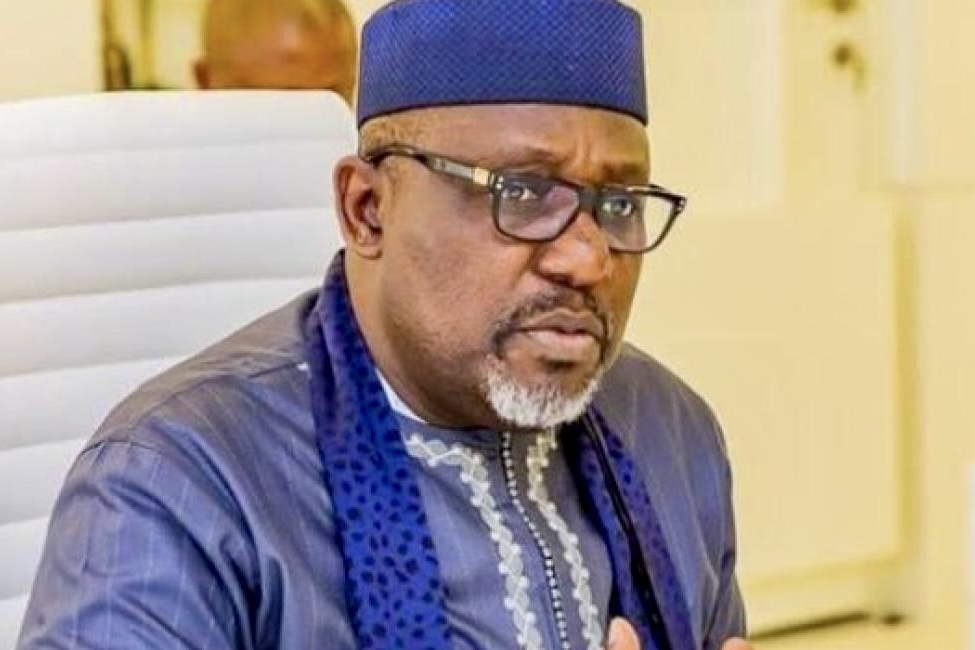
Peter Obi, the Labour Party’s 2023 presidential standard-bearer, yesterday cast a harsh spotlight on what he described as “coordinated lawlessness” in Lagos State after his younger brother’s long‐standing property was razed without proper legal backing.
In a terse post on his verified X handle on Tuesday, Obi claimed that unidentified operatives, armed only with an opaque court judgment, had demolished a structure in Ikeja that had stood firm for more than 15 years.
Obi’s account reads like a cautionary tale for investors: his brother, returning from Port Harcourt, was barred entry by security personnel as excavators swept through the site.
When Obi himself flew in from Abuja, he was refused access, told—without documentary proof—that the demolition was pursuant to a court order.
Yet the “judgment” addressed unnamed squatters, named no parties, and contained no demolition directive.
“How do you sue an unknown person?” he fumed. “No one was served. No name was written. Yet they showed up with excavators.”
This incident is hardly isolated in Nigeria’s commercial hub. Lagos State has routinely defended its urban‐renewal drive—raiding informal settlements and sealing off unapproved structures—in the name of planning and environmental health.
Official statistics from the Lagos State Physical Planning Permit Authority indicate that over 10,000 structures were sanctioned for demolition between 2019 and 2024.
Yet critics argue that the opacity of court orders and the ease with which property can be levelled, often at dawn, chills investor confidence and undermines the rule of law.
Obi’s reaction was not merely personal indignation but a wider critique of systemic impunity.
He spent four hours—between 10 am and 2 pm—on the scene, seeking clarity. Neither Lagos officials nor private contractors could produce a shred of authorisation.
“The contractor didn’t even know who sent him,” he said, branding the episode “coordinated lawlessness” that epitomises Nigeria’s descent into arbitrariness.
It is a powerful anecdote for any foreign capital considering Nigeria’s fast-growing market.
Earlier this year, the Central Bank of Nigeria reported a 15 per cent drop in foreign direct investment proposals—many investors cite regulatory unpredictability and security concerns.
Obi himself recounted a conversation with a prospective investor who withdrew interest after hearing tales of “summary demolitions” and “kangaroo court judgments.”
For a country striving to diversify beyond oil, such narratives are poison.
Yet for ordinary Nigerians, the stakes are existential. If a high-profile politician’s family can be bulldozed without due process, countless citizens with far fewer resources arguably fare worse.
Obi invoked this moral dimension: “This is not about me or my brother—it’s about what ordinary Nigerians go through every day.”
His message, delivered against the concrete backdrop of rubble, was clear: property rights and civil protections are under siege.
In closing, Peter Obi reaffirmed his commitment to a new Nigeria—one where life, property and civil liberties are sacrosanct.
“We must build a nation where lawlessness is a ghost of the past,” he declared.
As of press time, neither Lagos State authorities nor law enforcement had offered a public explanation. But Obi’s emphatic intervention ensures the story will not be buried alongside the demolished walls of his brother’s company.
Atlantic Post writer Taiwo Adebowale contributed to this report.