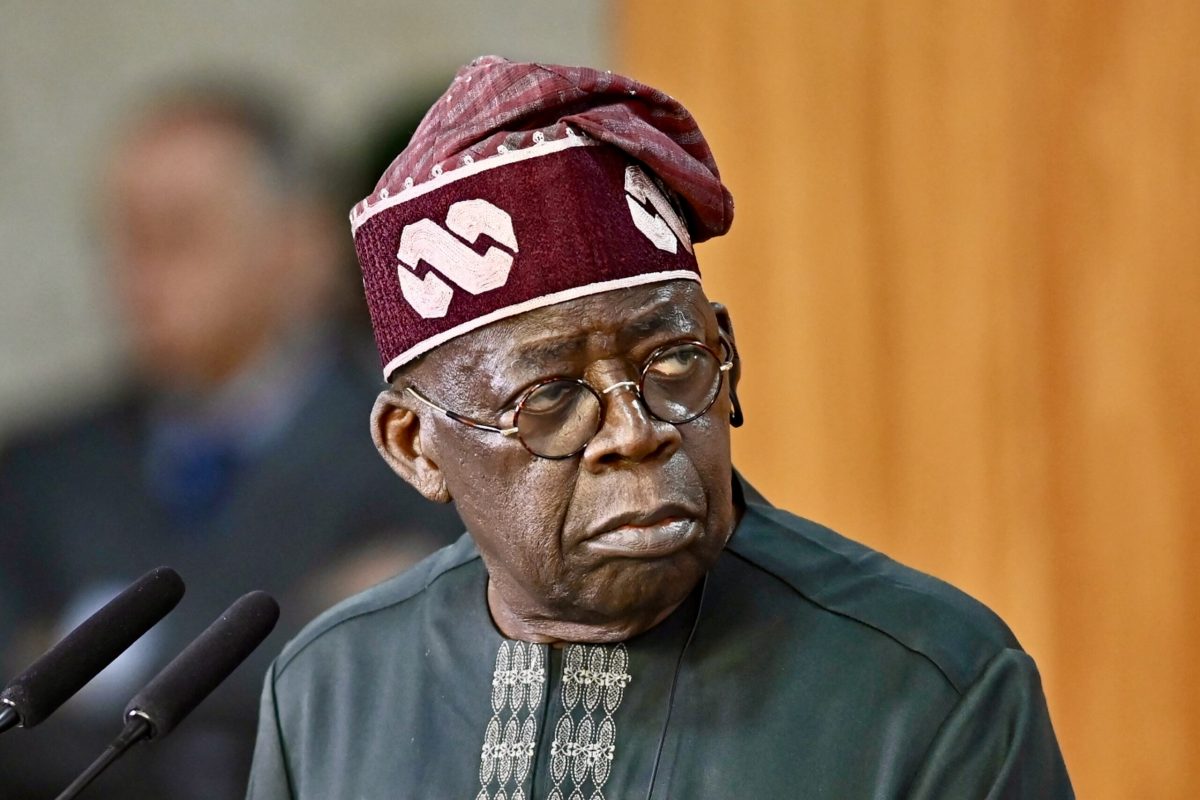
Bayo Onanuga’s latest broadside against Rauf Aregbesola has turned a routine political quarrel into a full scale assault on memory, credibility and power in Nigeria’s ever combustible opposition space.
The President’s communications director struck back after Aregbesola used the ADC’s convention in Abuja to attack the Tinubu administration and urge his former boss to resign, saying the opposition was peddling “warped narratives” on the economy and insecurity.
Onanuga answered by branding the ADC a gathering of “desperados and power mongers” and insisting that the “real scammers” are the politicians inside the party.
That exchange matters because it is not just about two men who once worked under the same political roof. It is a fight over who gets to define Nigeria’s current hardship narrative, who owns the reform story, and who carries the burden of past failures.
At the convention, Aregbesola reportedly declared that the ruling party “never had a vision” and called Renewed Hope “a scam”, while also presenting the ADC as a rescue platform.
Onanuga’s counterattack was designed to strip that criticism of moral force before it could harden into opposition propaganda.
The broader political context is equally ugly for the ADC. Premium Times reports that the party is already locked in a leadership crisis, with tensions worsening between the ADC and INEC over who legitimately controls the party structure.
That means Onanuga’s description of the party as a house of political opportunists is being hurled at a platform already struggling to convince the public that it is more than a coalition of grievances.
In practical terms, the ADC is trying to sell a rescue mission while fighting a legitimacy war inside its own walls.
Onanuga’s sharpest weapon was to reach back into Aregbesola’s record in Osun State. He accused the former governor of presiding over a period of hardship, salary distress and financial recklessness.
That part of the argument is politically explosive because the Osun story has long been disputed, but never forgotten.
In 2017, the Osun State Government itself said Aregbesola had cleared N14.2bn in salary arrears. Later, in 2023, Channels Television reported that the Adeleke administration said it inherited about N26bn in half salary arrears and about N50bn in pension related debts from the previous government.
The result is a messy public record that both sides continue to weaponise.
That history explains why Aregbesola’s critics believe his attack on Tinubu carries a whiff of political amnesia. His Osun legacy remains one of the most contested in South West politics, not least because of the long standing fight over workers’ pay, pension obligations and fiscal discipline.
Yet it is also true that Aregbesola has repeatedly defended himself against the salary arrears narrative, claiming that the state’s financial crisis was driven by collapsing federal allocations.
The point here is not to settle the Osun argument in one paragraph, but to show why Onanuga chose it as his chosen battlefield.
The Interior Ministry chapter is the second and perhaps more damaging pillar of Onanuga’s attack. He accused Aregbesola of leaving a trail of jailbreaks and administrative dysfunction between 2019 and 2023.
That charge lands because Nigeria’s correctional system has suffered repeated breaches in recent years.
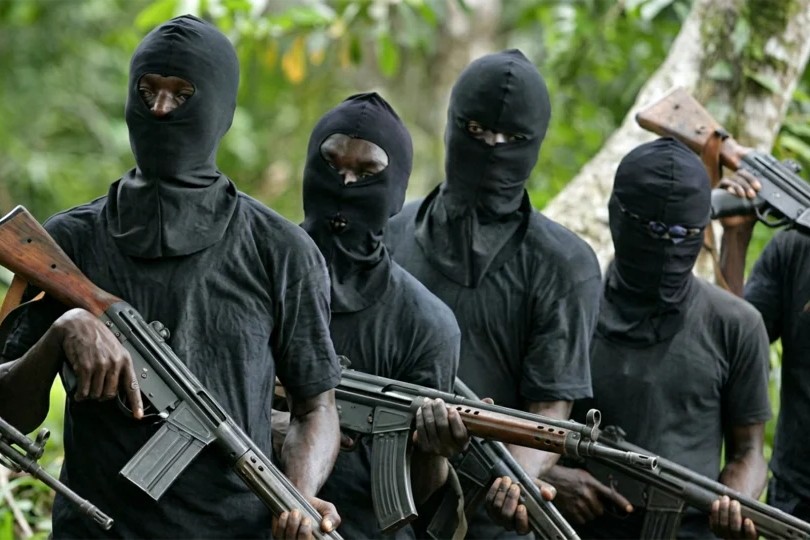
The Kuje attack in July 2022 was the biggest symbol of this failure, with the Nigerian Correctional Service confirming that 879 inmates escaped after terrorists struck the facility.
In August 2025, another 16 inmates fled the Keffi custodial centre in Nasarawa State. So when Onanuga says Aregbesola should not lecture anyone on insecurity, he is betting that Nigerians remember these scars.
There is also a political subtext to the security argument. Onanuga is not merely listing prison breaks. He is tying Aregbesola’s ministerial record to the wider charge that opposition figures are exploiting insecurity for convenience.
That is why his language is so hard edged. By framing Aregbesola’s criticism as hypocrisy, the Presidency is trying to turn the conversation away from present day insecurity and back to the record of a man now attacking from the opposition bench.
It is an old Nigerian tactic, but still an effective one when the audience is already angry and suspicious.
Still, the Tinubu administration cannot dismiss the economic backlash with rhetoric alone.
Nigeria’s latest official statistics show headline inflation at 15.06 per cent, core inflation at 15.88 per cent and food inflation at 12.12 per cent, while the National Bureau of Statistics also says GDP grew by 4.07 per cent year on year in the fourth quarter of 2025.
The CBN’s monetary policy page shows the benchmark rate was cut to 26.5 per cent in February 2026, and its exchange rate page put the naira at about ₦1,343.77 to the dollar on 14 April 2026.
Those numbers suggest a country still under strain, but no longer in the same inflationary panic that defined parts of 2024.
The most important political fact is that both sides are speaking to the same frightened public. Tinubu’s camp wants voters to remember reform gains, the minimum wage increase to N70,000, and the fact that the government says it has expanded relief measures for households and small businesses.
Opposition figures want Nigerians to remember petrol pains, high food costs and the insecurity that still flashes across headlines.
Reuters reported that the minimum wage was raised to N70,000 in 2024 after agreement between government and labour, and the administration now points to that as proof that it has not abandoned workers.
The political battle is therefore not about whether hardship exists. It is about who gets blamed for it.
What Onanuga has done, in blunt language, is convert a defence of Tinubu into an indictment of Aregbesola’s credibility.
What Aregbesola has done is attempt to reposition himself as part of a rescue coalition against a ruling party under pressure.
Between those two moves lies the real story: Nigeria’s opposition politics is being rebuilt on anger, while the government is trying to survive by insisting that reform pain will eventually produce reform gain.
For now, neither side is offering the country a clean escape from hardship, only a louder argument over who mismanaged the past and who deserves to inherit the future.
Follow us on our broadcast channels today!
- WhatsApp: https://whatsapp.com/channel/0029VawZ8TbDDmFT1a1Syg46
- Telegram: https://t.me/atlanticpostchannel
- Facebook: https://www.messenger.com/channel/atlanticpostng