The Okuama crisis escalates as two leaders die in military custody, sparking protests. Calls for justice and Tinubu’s intervention dominate the headlines.
The Okuama Crisis Deepens—A Tale of Tragedy, Tension, and Resistance
The Okuama community in Delta State, Nigeria, has become the epicenter of a tragic and increasingly volatile national crisis, marked by allegations of human rights violations, military overreach, and a burgeoning sense of despair among the populace. The sudden deaths of two key community leaders, under the custody of the Nigerian military, have not only shaken the foundations of the once-peaceful community but also reignited calls for justice, accountability, and an end to state-sponsored violence.
On Tuesday, December 10, the Okuama community was plunged into deeper mourning with the announcement of the death of its 81-year-old treasurer, Dennis Okugbaye, in military detention. His passing, confirmed tearfully by his son, Pastor Akpos Okugbaye, came merely six days after the death of Pa James Oghoroko, the community’s President-General, who also died under suspicious circumstances while in the hands of the military.
This twin tragedy has not only cast a shadow of fear over Okuama but has also triggered outrage and protests among its displaced residents, currently sheltered in an internally displaced persons (IDP) camp in the Ewu Kingdom. The deaths have become a symbol of what many see as the unchecked impunity of Nigeria’s military forces, turning Okuama into a microcosm of the broader challenges facing governance, human rights, and justice in the country.
A Community Under Siege
The genesis of this crisis can be traced to March 14, 2024, when an altercation between the Okuama and neighbouring Okoloba communities culminated in the tragic deaths of 17 Nigerian soldiers. The soldiers, deployed ostensibly to mediate a boundary dispute, were ambushed and killed in what military sources have described as a coordinated attack. This incident, however, set the stage for a catastrophic military response.
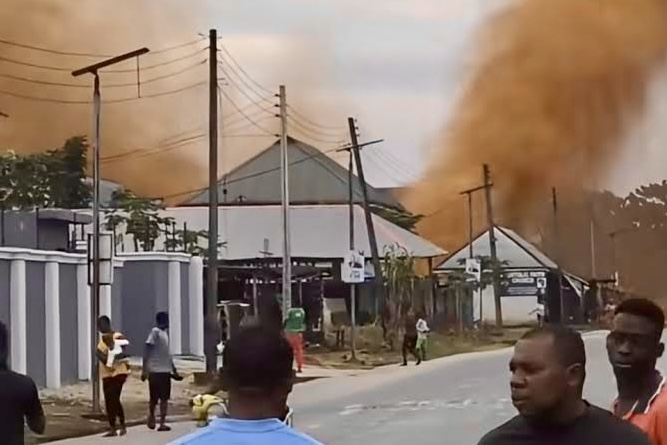
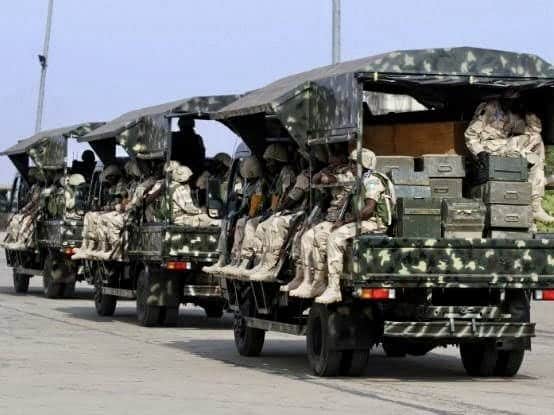
Barely days after the killings, the military launched what local residents have called an indiscriminate and punitive raid on Okuama. Entire sections of the community were razed, homes destroyed, and livelihoods obliterated. Reports from survivors indicate that the raid was marked by indiscriminate shootings, sexual violence, and the forced displacement of nearly the entire population.
In the aftermath of this destruction, key community leaders—including Pa James Oghoroko, Pa Dennis Okugbaye, Prof. Arthur Ekpekpo, Chief Belvis Adogbo, Mrs. Mabel Owhemu, and Mr. Dennis Malaka—were arrested by military forces. Initially taken under the pretext of investigation, these individuals have since languished in detention without charge or trial.
Deaths in Detention: Unanswered Questions
The deaths of Oghoroko and Okugbaye in custody have deepened the wounds of the Okuama people, raising critical questions about the conditions of their detention and the accountability of military authorities. Family members and community leaders have alleged torture and inhumane treatment, pointing to these as the likely causes of death. Despite these accusations, the military has remained tight-lipped, refusing to provide any official account or justification for the detainees’ deaths.
Elder Ohwotake Otiero, speaking on behalf of the protesters, minced no words in condemning the military’s actions. “Why should our P-G [President-General] be killed through torture? Why is an 81-year-old treasurer dead in detention? These are not accidental deaths; they are state-sanctioned murders,” he said during a protest at the IDP camp.
Protests and Ultimatums
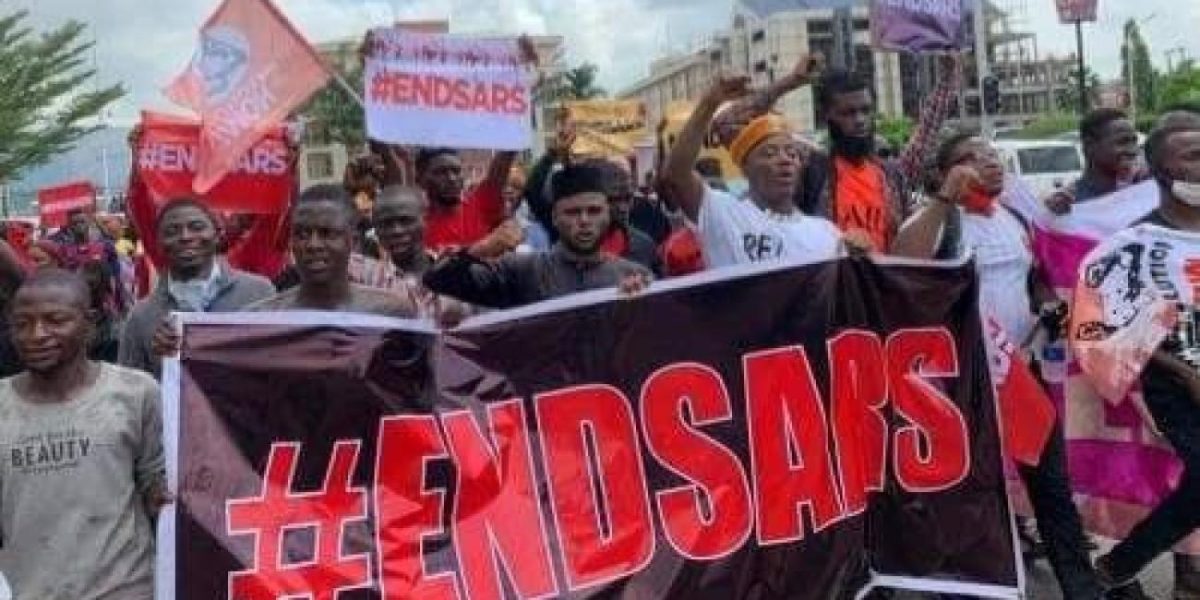
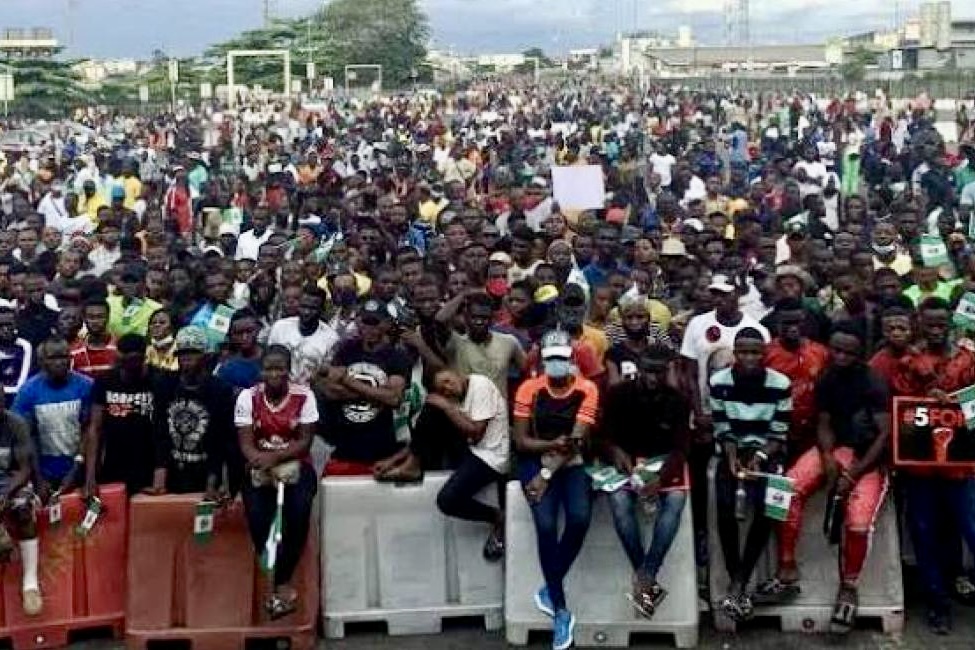
The anger of the Okuama community has found expression in daily protests by displaced residents, who have issued a seven-day ultimatum to the Federal Government and military authorities. Among their demands are the immediate release of all detained leaders, the return of the body of Pa Oghoroko, and a comprehensive investigation into the events that have devastated their community.
The protests have grown increasingly defiant, with demonstrators threatening drastic measures if their demands remain unmet. One protester declared, “After seven days, this river will be blocked. Let the soldiers and Tinubu come and kill us so that we know Okuama is wiped out entirely.”
Civil Society Joins the Call for Justice
The crisis in Okuama has attracted the attention of human rights organizations and civil society groups, who have condemned the military’s actions and called for urgent intervention. Speaking at a joint press conference in Warri to mark International Human Rights Day, Pastor Edewor Egedegbe of Value Rebirth & Empower Initiative and Sir John Ebireri of the Ewu Clan Development Forum decried the prolonged detention of Okuama leaders as a gross violation of their constitutional rights.
“These individuals have been in detention for over 113 days without any charge brought against them,” Egedegbe said. “This is a clear violation of their fundamental human rights as guaranteed by the 1999 Constitution. It is a breach of the principles of democracy and the rule of law.”
Their statements were echoed by the Urhobo Media Practitioners and Advocacy Group, which described the military’s actions as “a gross violation of human rights and an affront to the dignity of the Okuama people.”
A Test for Tinubu’s Government
As the ultimatum nears its expiration, all eyes are now on President Bola Ahmed Tinubu, whose administration faces growing criticism over its handling of security crises and human rights abuses. The Okuama incident has emerged as a litmus test for the government’s commitment to justice and accountability, as well as its capacity to manage the delicate balance between national security and citizens’ rights.
This unfolding saga continues to stoke tensions across Delta State and beyond, with fears that a lack of resolution could lead to further violence and instability. The Federal Government’s silence has been deafening, fuelling speculation about the extent of its complicity or inability to rein in the military.
Okuama’s Tragedy and the Broader Implications for National Security
The crisis in Okuama is no longer just a local tragedy confined to the Ughelli South Local Government Area of Delta State. It is a disturbing reflection of deeper systemic issues within Nigeria’s national security framework, a glaring example of the country’s fragile approach to managing intercommunal conflicts, and an indictment of unchecked military excesses. As the seven-day ultimatum issued by the aggrieved community nears its expiration, the crisis threatens to spiral into a full-blown regional catastrophe, with implications for national stability, governance, and human rights.

The Militarisation of Conflict: A Dangerous Precedent
The Nigerian military’s heavy-handed response to the March 14 killing of 17 soldiers has once again brought to the fore the dangers of militarizing internal disputes. While the deaths of the soldiers were undoubtedly tragic, the military’s subsequent actions raise critical questions about proportionality, accountability, and the rule of law.
The raid on Okuama was not an isolated incident but part of a troubling pattern of collective punishment meted out to communities accused of harboring criminals or insurgents. From the destruction of Zaki Biam in Benue State in 2001 to the military’s controversial operations in the Niger Delta and the northeast, Nigeria’s armed forces have often resorted to punitive tactics that target entire populations rather than isolating and apprehending offenders.
This approach has proven not only inhumane but also counterproductive. By alienating communities and exacerbating grievances, such tactics often fuel cycles of violence and radicalisation, undermining the very security they aim to achieve. In Okuama’s case, the military’s actions have transformed a local boundary dispute into a national crisis, with displaced residents, human rights groups, and media Organisations now framing the conflict as a symbol of state oppression.
Prolonged Detention Without Trial: A Constitutional Breach
The prolonged detention of Okuama leaders without trial is another dark stain on Nigeria’s democratic credentials. Under the 1999 Constitution, every Nigerian citizen is guaranteed the right to a fair hearing, protection from arbitrary detention, and access to justice. By detaining Pa James Oghoroko, Pa Dennis Okugbaye, and others for over 113 days without charges, the military has flouted these constitutional guarantees, raising concerns about the erosion of the rule of law under President Bola Ahmed Tinubu’s administration.
Legal experts argue that the military’s actions contravene Section 35 of the Constitution, which stipulates that any person arrested or detained must be brought before a court of law within a reasonable time. The deaths of Oghoroko and Okugbaye in custody compound these violations, suggesting gross negligence at best and deliberate torture at worst.
Human rights Organisations have been unequivocal in their condemnation. “The prolonged detention of these individuals without trial is not only illegal but also a grave affront to their dignity and humanity,” said Sir John Ebireri of the Ewu Clan Development Forum. “This is state terrorism masquerading as national security.”
Tinubu’s Political Tightrope
For President Tinubu, the Okuama crisis represents a political quagmire with no easy solutions. On one hand, the government must uphold the rule of law and address legitimate grievances raised by the Okuama community and human rights groups. On the other, it must avoid creating the impression of weakness or capitulation to acts of violence, particularly given the military’s vested interest in maintaining its authority and credibility.
Thus far, the Federal Government’s silence on the matter has been deafening. Critics argue that Tinubu’s administration is either complicit in the military’s actions or too paralysed by internal divisions to respond decisively. Both scenarios are politically damaging for a president who came to power promising to restore order, promote economic growth, and uphold democratic values.
The Okuama crisis also exposes the broader challenges of governance in a country plagued by ethno-religious tensions, endemic corruption, and weak institutions. Tinubu’s government has inherited a deeply fractured state, where local conflicts often escalate into national crises due to the absence of effective dispute resolution mechanisms and the over-reliance on military force.
Human Rights as a Global Concern
The Okuama crisis has not gone unnoticed by the international community. Advocacy groups and media organisations have begun drawing attention to the situation, framing it as part of a broader pattern of human rights abuses in Nigeria. At the joint press conference in Warri, speakers called on international organisations such as Amnesty International and Human Rights Watch to intervene and demand accountability from the Nigerian government.
“The international community cannot continue to turn a blind eye to the atrocities being committed in Nigeria,” said Pastor Edewor Egedegbe of Value Rebirth & Empower Initiative. “We urge the United Nations, the African Union, and other global bodies to pressure the Tinubu administration to respect human rights and the rule of law.”
The crisis has also raised concerns about Nigeria’s reputation on the global stage. As Africa’s largest economy and a key player in regional and international diplomacy, Nigeria cannot afford to be seen as a state that disregards the rights and dignity of its citizens. The government’s handling of the Okuama crisis will undoubtedly factor into future discussions about its eligibility for foreign aid, investment, and international partnerships.
A Community on the Brink
Meanwhile, tensions in Okuama continue to escalate as the seven-day ultimatum draws to a close. Community leaders and protesters have vowed to take drastic measures if their demands are not met, including blocking rivers and other key transportation routes. Such actions would not only disrupt local economies but also exacerbate the already dire humanitarian situation facing displaced residents.
“We have nothing left to lose,” declared one protester at the IDP camp. “They have destroyed our homes, killed our leaders, and left us with no justice. If this government will not hear us, then we will make them see us.”
The threat of further unrest looms large, with fears that the crisis could spread to other parts of Delta State and beyond. Local politicians, traditional rulers, and civil society organisations have called for restraint, urging the Federal Government to intervene before the situation spirals out of control.
Pathways to Resolution and Lessons for Nigeria’s Future
The Okuama crisis has laid bare critical failures in Nigeria’s approach to conflict resolution, governance, and human rights protection. As the ultimatum issued by the embattled community nears its expiration, the situation demands urgent intervention. To prevent further escalation, the government, military, civil society, and international community must come together to address the root causes of the crisis and chart a path toward lasting peace.
A Call for Justice: The Role of Accountability
Central to resolving the Okuama crisis is ensuring accountability for the deaths of Pa James Oghoroko and Pa Dennis Okugbaye. Investigations must be launched into their deaths in military custody, with findings made public and perpetrators held to account. The lack of transparency and consequences for previous incidents of military misconduct has emboldened impunity, creating an environment where violations are normalised.
The proposed commission of inquiry, as demanded by advocacy groups, is a crucial first step. This body should be independent, comprising legal experts, human rights advocates, and representatives of the affected communities. Its mandate should include investigating the March 14 killings, the military’s response, and the broader issues of detention without trial.
Justice must also extend to the community’s detained leaders. Their immediate release or formal arraignment in court is non-negotiable. Continued detention without charge violates Nigeria’s Constitution and international human rights norms, undermining public trust in the rule of law.
Humanitarian Response and Community Rebuilding
The destruction of Okuama has left thousands displaced, traumatised, and stripped of their livelihoods. The Federal Government and Delta State authorities must prioritise a robust humanitarian response, providing relief materials, medical care, and psychological support to affected families.
Rebuilding Okuama should go beyond reconstructing physical structures; it must also include addressing the community’s social fabric, which has been torn apart by the crisis. This involves creating platforms for dialogue, reconciliation, and healing, facilitated by trusted mediators. Traditional rulers, religious leaders, and community elders have an essential role to play in this process, fostering trust and collaboration between the parties involved.
Addressing the Military’s Role
The Nigerian military must undergo a paradigm shift in its approach to internal conflicts. The doctrine of collective punishment, where entire communities are targeted for the actions of a few individuals, has proven disastrous. Instead, the military should adopt strategies that prioritise intelligence-driven operations, community engagement, and respect for human rights.
To achieve this, the Federal Government must invest in training programmes for military personnel, emphasising the principles of proportionality, accountability, and the protection of civilians. Strengthening oversight mechanisms is equally important to ensure that military operations are conducted within the bounds of the law.
The military’s image has suffered greatly from allegations of misconduct, and restoring its credibility will require more than just reforms. Transparent investigations and public apologies for past excesses are necessary to rebuild trust with communities like Okuama.
The Federal Government’s Role
President Bola Ahmed Tinubu must seize the opportunity to demonstrate decisive leadership in resolving the Okuama crisis. This includes addressing the immediate concerns of the community, such as releasing detained leaders and investigating deaths in custody, while also tackling the broader issues of governance and justice.
Tinubu’s silence on the crisis has been widely criticised, with many perceiving it as a lack of empathy or political will. By engaging directly with the Okuama community and their representatives, the President can signal his administration’s commitment to fairness and the rule of law.
Furthermore, the Federal Government must strengthen its conflict resolution mechanisms to prevent similar crises in the future. This involves establishing early warning systems, promoting dialogue between disputing communities, and creating legal frameworks for resolving land disputes and other communal tensions.
Lessons for Nigeria’s National Security
The Okuama tragedy underscores the need for a holistic approach to national security, one that goes beyond militarisation. Security is not merely the absence of violence; it is the presence of justice, equity, and opportunity.
To this end, the government must address the underlying factors that contribute to conflict in Nigeria, including poverty, unemployment, and corruption. Investments in education, healthcare, and infrastructure can help reduce the grievances that often lead to violence.
Equally important is promoting inclusivity and representation at all levels of government. Communities that feel marginalised or ignored are more likely to resort to violence as a means of asserting their rights. By fostering a sense of belonging and participation, the government can create a more harmonious and stable society.
International Engagement and the Path Forward
The Okuama crisis is not just a Nigerian problem; it has implications for regional stability and human rights. International organisations and foreign governments must engage constructively, offering technical assistance, funding for humanitarian efforts, and advocacy for accountability.
The African Union, in particular, has a responsibility to uphold its principles of good governance and human rights. By working with Nigeria to address the Okuama crisis, the AU can set a precedent for how member states handle internal conflicts.
As tensions remain high in Okuama, the next few days will be critical. Whether Nigeria emerges from this crisis stronger or more divided will depend on the choices made by its leaders, communities, and institutions. The Okuama tragedy is a painful reminder of the cost of neglecting justice, but it is also an opportunity to learn, reform, and build a more equitable future.
Additional reports: Osaigbovo Okungbowa and Peter Jene, Atlantic Post Senior Political and National Correspondents, respectively.