By Editor
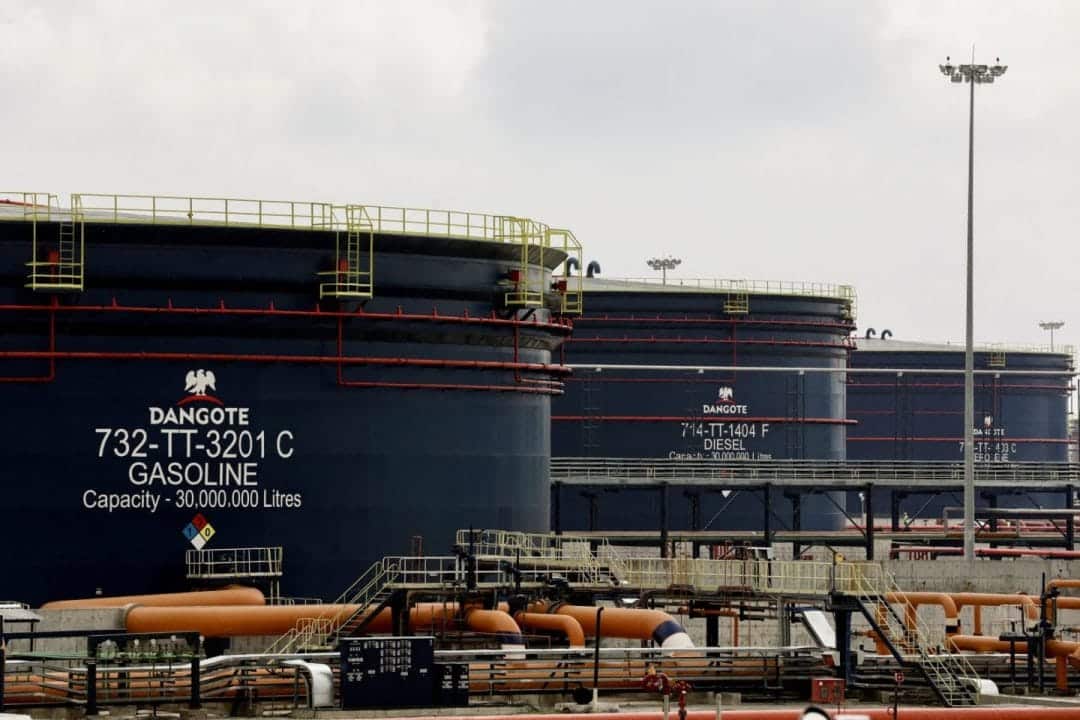
LAGOS, Nigeria — The Nigerian National Petroleum Company Limited (NNPCL) recently announced a landmark decision to cease importing refined petroleum products, instead off-taking fuel from the Dangote Petroleum Refinery and other local sources. This shift marks a significant departure from the country’s dependency on imported fuels, a habit that has drained the national treasury to the tune of approximately N24 trillion annually. Yet, as promising as the move seems, it is already enveloped in heated debates over energy security, fuel pricing, and the broader implications for Nigeria’s energy economy.

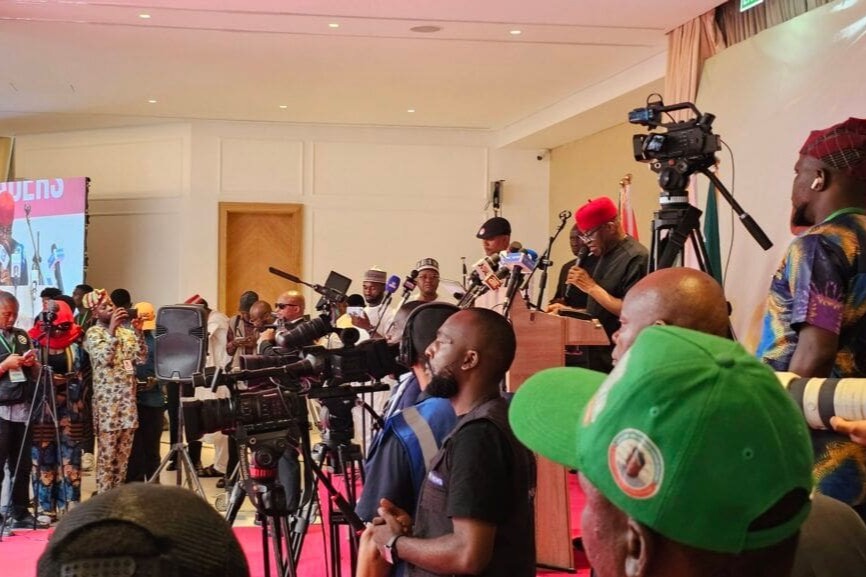
Mele Kyari, Group Chief Executive Officer (GCEO) of NNPCL, broke this news at the Nigerian Association of Petroleum Explorationists (NAPE) conference in Lagos, which is focused this year on “Resolving the Nigerian Energy Trilemma: Energy Security, Sustainable Growth and Affordability.” In his speech, Kyari underscored that the NNPC, for the first time in years, would no longer import fuel but would instead source entirely from domestic refineries, especially the Dangote Refinery. The announcement signals a long-awaited shift toward self-reliance in fuel supply, but it also raises pressing questions about the impact on Nigeria’s struggling economy.
A Nation’s Dependency on Fuel Imports: Shocking Statistics
For decades, Nigeria, despite being a top crude oil producer, has paradoxically relied on imported fuels due to its inability to refine its crude domestically. In August, President Bola Tinubu exposed the staggering financial toll of this dependency, revealing that Nigeria spends an average of N2 trillion monthly on fuel importation. This revelation has laid bare the vast potential for cost savings, emphasising that the country’s fuel import bill alone amounts to a staggering N24 trillion annually. The burden of this expense has constrained economic growth, diverting resources that could have been deployed in healthcare, education, and infrastructure development.
President Tinubu’s statement on compressed natural gas (CNG) as a viable alternative to imported petroleum, if properly implemented, could theoretically save Nigeria “over N2 trillion a month” while redirecting funds towards critical sectors. But will sourcing from the Dangote Refinery fulfil the same promises, especially with the newly exposed reality of high fuel pricing? Some stakeholders are not convinced, especially petroleum marketers who argue they can import fuel at lower costs than what is projected from Dangote’s $20 billion mega-refinery. Their assertion that fuel sourced from Dangote may ultimately be more expensive introduces a thorny dimension to this issue, questioning whether the local sourcing strategy will yield economic relief or further stress an already embattled populace.
A Strategic Shift or an Economic Gamble? Examining NNPCL’s New Fuel Supply Approach
Mele Kyari’s announcement has prompted a wave of speculation about the NNPC’s motivations and the economic soundness of sourcing fuel exclusively from local refineries. In his address, Kyari vehemently denied any allegations that the NNPC is undermining the Dangote Refinery, calling out what he termed “media stunts” that paint the NNPC as obstructing domestic refining efforts. On the contrary, Kyari insisted that the NNPC is proud to be a part-owner of the Dangote Refinery, and its decision to prioritise the local refinery was driven by “a very informed business decision.”
Kyari further explained that NNPC’s strategic choice to secure local crude supply for the Dangote Refinery and others is not just about cost but about ensuring energy security and positioning Nigeria as a refinery self-sufficient nation. “We don’t need to be persuaded; we don’t need anyone to talk to us,” he said, emphasising that the NNPC’s commitment to supporting domestic refineries stems from a calculated approach, rather than from pressure or public outcry.
However, questions loom large. How feasible is it to depend solely on domestic refineries when a significant portion of Nigeria’s population is already struggling under skyrocketing fuel prices? While Kyari expressed confidence in the local supply’s long-term benefits, the challenges of high fuel quality and associated costs remain a contentious issue. Nigerian crude, dubbed “Lamborghini crude” by Kyari himself, is a high-grade crude oil that costs more to refine compared to heavier, “dirtier” crudes that are often blended for cost-effective processing. This reality has led some experts to caution that relying on high-grade local fuel may not necessarily equate to lower costs for consumers.
Dangote Refinery: A High-Cost Solution for Low-Income Consumers?
The irony of Nigeria producing “Lamborghini crude” while struggling to meet basic energy needs is not lost on the populace. Kyari candidly noted that most global refineries prefer not to purchase Nigerian crude for direct processing due to its high cost. Instead, international buyers often blend Nigerian crude with cheaper, lower-quality crudes to optimise refining costs. In the context of Nigeria’s domestic energy market, where affordability remains a top concern, the potential price implications of sourcing exclusively from high-quality domestic refineries are troubling.
According to Kyari, Nigeria’s high-quality crude translates to premium-grade fuel, which many consumers may not necessarily need. “You are driving a Keke-Napep and you want Lamborghini fuel; you do not need it,” he stated, underscoring a fundamental mismatch between the quality of Nigerian crude and the economic reality faced by average Nigerians. This disparity has stoked fears that while NNPC’s local sourcing strategy could enhance energy security, it might paradoxically saddle consumers with higher fuel costs, counteracting the intended economic relief.
Moreover, the decision to source solely from Dangote and other domestic refineries comes amid Nigeria’s grappling with rising inflation and currency devaluation. Although Kyari and the NNPC have taken strides to alleviate this concern by working with the government on pricing solutions, the prospect of sustained high fuel costs remains a potent concern.
NNPC’s Reliance on Domestic Refineries: A Pivot or Political Necessity?
The decision by the Nigerian National Petroleum Company Limited (NNPCL) to halt fuel importation and pivot to sourcing from domestic refineries, especially the Dangote Petroleum Refinery, has sparked intense discussion. It is a move that on the surface appears to be a bold step toward self-sufficiency and economic prudence, a long-overdue strategy for an oil-producing nation such as Nigeria. However, many critics and industry insiders argue that this shift was not solely an economic choice but perhaps a strategic necessity pushed by internal pressures, political factors, and the need for NNPCL to restore its fiscal credibility on both national and international fronts.
NNPCL’s reliance on the Dangote Refinery, the largest in Africa, places it in a unique position. However, this dependency may also pose risks in terms of pricing and supply monopolisation, given the substantial scale of the refinery relative to Nigeria’s oil processing needs. Mele Kyari’s assertion at the conference that NNPCL is now off-taking from local refineries alone signifies a major change in operations that may not be universally advantageous. While the narrative of “fuel independence” is attractive, this shift also gives rise to debates on the potential economic repercussions of relying on domestic refineries as sole suppliers.
Cost Considerations and Pricing Challenges
One of the core concerns surrounding the shift from fuel importation to reliance on local refineries is cost. President Tinubu highlighted that the country had previously been spending N2 trillion monthly on fuel imports, an expenditure that NNPCL and the administration are keen to reinvest into other critical areas such as healthcare and education. The end of these costly imports may relieve Nigeria of this massive burden, but it does not guarantee that fuel costs will drop significantly in the short term.
Kyari acknowledged that Nigerian crude, known colloquially as “Lamborghini crude,” is a high-quality product. As such, refining it domestically presents unique cost challenges due to its high value and the costs associated with maintaining the quality of processed products. Global traders often blend Nigerian crude with cheaper, lower-quality crudes to create a balance in cost-efficiency, a practice that domestic refiners, including Dangote, will now face without international import options. For the Nigerian consumer, this reliance on “Lamborghini” fuel means that fuel prices could continue to remain high unless a cost-effective refining solution is found.
With local refiners supplying high-quality products, Kyari expressed the need for flexibility in fuel standards. This suggestion raises questions: will Nigerians be paying premium prices for high-grade fuel that may not be necessary for everyday vehicles? Kyari’s analogy about using “Lamborghini fuel” for “Keke-Napep” (auto-rickshaws) underscores the impracticality of high-cost fuel for the average consumer. The balancing act of maintaining fuel quality while ensuring affordability looms as a complex challenge for NNPCL, which will likely face intense scrutiny as prices stabilise or, potentially, increase.
Subsidy Removal: Financial Freedom or Economic Setback?
The removal of fuel subsidies has been touted as a necessary step to liberate NNPCL from financial distress, particularly in terms of its historical debt obligations. Under President Tinubu’s leadership, this policy shift signals a pivot away from years of dependency on subsidy allocations to stabilise prices. According to Kyari, this policy will ultimately allow NNPCL to focus on more sustainable development initiatives within the oil and gas sector. The significant cash-call debt, a longstanding fiscal liability for NNPCL, had previously reached a staggering $2.4 billion, stemming from years of subsidy-backed operations that prioritised price controls over profitability.
While the subsidy removal represents a landmark decision with the potential to redirect funds toward the upstream sector and clear NNPCL’s balance sheet, its impact on the average Nigerian has been severe. Fuel prices have surged following the removal, escalating costs of living and creating a situation that critics argue is worsening the economic hardship for citizens.
Subsidy policies, however, had their own flaws, contributing to inefficiencies and corruption within the sector, with reports of fuel smuggling and subsidy misappropriation rife. These issues have given ammunition to proponents of subsidy removal who argue that a price-based market will ultimately lead to greater transparency, efficiency, and investment in the oil sector. However, as the NNPC has turned off its subsidy taps, the absence of alternative economic buffers has exposed the extent to which Nigerians relied on these price controls.
Naira-for-Crude: Addressing Foreign Exchange Woes
One of the most controversial aspects of NNPCL’s recent announcements concerns the possibility of a Naira-for-crude arrangement with the Dangote Refinery and other domestic refiners. Kyari refuted claims that NNPCL had intentionally delayed or blocked this form of transaction as a means to sabotage Dangote’s operations. Instead, he argued that such an arrangement could be mutually beneficial. If NNPCL were to supply crude in Naira, it could effectively bypass the FX (foreign exchange) pressures associated with importing fuel, which in turn could stabilise the Naira’s value by removing a significant chunk of the foreign exchange burden.
The question of how this would work in practice, however, remains unclear. Critics argue that any attempt to price crude in Naira for domestic transactions might risk market distortions, especially if Naira-denominated crude is still sold at premium rates. Furthermore, setting a fixed Naira-for-crude rate may undermine other financial policies designed to combat inflation and encourage fair market practices.
Energy Security and Accessibility: A Broader Issue Beyond PMS
Kyari’s remarks on energy security revealed the broader, systemic gaps in Nigeria’s energy infrastructure. According to him, fuel supply—specifically, the availability of Premium Motor Spirit (PMS)—is but one component of a more complex energy crisis. Over 50% of Nigerians lack access to electricity, while more than 70% do not have access to clean, reliable fuel sources. This reality underscores the stark contrast between Nigeria’s natural resource wealth and its domestic energy infrastructure deficit.
The emphasis on energy security, as explained by Kyari, aligns with NNPCL’s mission to ensure availability not only of fuel but also of electricity and gas. NNPCL’s plans to expand its scope of services beyond petroleum to include gas and electricity provision reflect a holistic approach to energy challenges, yet critics argue that these are still early-stage initiatives with uncertain timelines and impacts.
A New Focus: Domestic Market Prioritisation Amid Global Oil Shifts
Kyari acknowledged that the Nigerian oil and gas industry was initially designed for export rather than for fulfilling domestic demand. This legacy of export-driven operations has hindered the industry’s ability to address the local energy deficit, a gap that the NNPCL now seeks to close through policy shifts like those initiated under Tinubu’s administration. The government’s goal to “domesticate” Nigerian oil aligns with broader economic policies that emphasise self-reliance and import substitution, yet the practical implementation of these policies is not without significant challenges.
At the NAPE conference, Kyari admitted that domestic energy provision has historically been a secondary consideration for oil and gas companies. Their focus has traditionally been on extracting maximum profit from foreign sales rather than prioritising the needs of the Nigerian population. Reorienting the sector to serve domestic needs, then, requires not only regulatory adjustments but a complete overhaul of business models and investment strategies within the industry.
This pivot also comes at a time when global oil markets are in flux, with increasing exploration and production occurring outside of traditional oil-producing countries. As more nations discover and produce their own oil, Nigeria faces growing competition, putting pressure on its export revenue. Hence, prioritising the domestic market may prove to be not just a strategy for energy security, but a financial necessity as international markets diversify.
CNG Initiatives and the Promise of Affordable Energy Alternatives
As Nigeria shifts away from subsidies and towards local refining, the government has introduced Compressed Natural Gas (CNG) as a possible alternative to the high costs of Premium Motor Spirit (PMS). President Tinubu, along with NNPCL, has touted CNG as a more sustainable, cleaner, and affordable solution to Nigeria’s energy demands. The administration envisions CNG as a way to relieve pressure on citizens affected by surging PMS prices, while also promoting environmental sustainability.
However, critics argue that the CNG initiative, while promising, has been met with delays and a lack of infrastructure necessary to make this a practical option for most Nigerians. Rolling out CNG on a nationwide scale requires not only significant investment in distribution networks but also in modifying existing vehicles. According to industry experts, Nigeria currently lacks enough refuelling stations and conversion centres to make CNG a viable replacement for PMS, especially in rural and underserved regions.
While NNPCL’s pivot to CNG is being positioned as an answer to economic hardship, the path forward appears rocky. For one, the cost of converting vehicles to CNG is currently prohibitive for many Nigerians, with conversion kits estimated to cost upwards of N100,000 to N200,000. Without government-subsidised conversion schemes or substantial price drops in conversion kits, the impact of CNG on the broader economy may remain limited. NNPCL will need to engage in aggressive infrastructure development, along with subsidy or financing programs, if CNG is to become a meaningful alternative for the masses.
Towards a Debt-Free NNPCL: Prospects and Challenges
At the heart of NNPCL’s transformation is its commitment to operating as a profitable, debt-free entity. Under Kyari’s leadership, NNPCL has taken aggressive steps to clear historical debt, particularly the cash-call arrears owed to joint venture partners. By settling these debts, NNPCL aims to position itself as a more financially stable and attractive investment opportunity. This debt-clearing initiative is not only a move to regain investor confidence but is also part of NNPCL’s broader goal to function independently without government bailouts.
The task, however, is monumental. Years of dependency on subsidies and price controls have left NNPCL with a legacy of financial liabilities and inefficiencies. While the subsidy removal has alleviated some fiscal burdens, NNPCL’s obligation to fund and support Nigeria’s domestic refining infrastructure poses new financial challenges. Furthermore, with fluctuating oil prices and ongoing FX pressures, NNPCL’s journey to financial independence is fraught with potential risks. Success will depend on careful financial management, strategic partnerships, and transparent governance, a tall order given Nigeria’s historically opaque oil sector.
Kyari has made bold commitments to debt-free operations, yet the question remains whether this objective is achievable without further straining Nigeria’s fiscal policy. By redirecting revenues from subsidies to debt settlement, the government hopes to increase public spending in areas such as healthcare, education, and infrastructure. However, given Nigeria’s limited revenue streams and high debt-to-GDP ratio, the reallocation of funds may prove challenging, and NNPCL’s financial independence may require more drastic cost-cutting measures within the organisation.
NNPCL’s Role in Nigeria’s Energy Market: Dominance or Collaboration?
As NNPCL expands its operations to include energy solutions beyond petroleum, the organisation faces a critical choice between dominance and collaboration. With control over both crude sourcing and refining capacity, NNPCL is in a powerful position to influence market dynamics. This has led some industry analysts to speculate about NNPCL’s potential to monopolise the domestic fuel market, especially with its close ties to the Dangote Refinery and other emerging local refineries.
Such monopoly concerns are not unfounded. Should NNPCL maintain exclusive rights over Nigeria’s crude supply, it could set prices at will, potentially to the detriment of competition and consumer affordability. Kyari has repeatedly emphasised that NNPCL’s goals include ensuring fuel availability and price stabilisation, yet without regulatory oversight, there is a risk of monopolistic practices.
This raises the question of regulatory intervention and whether Nigeria’s Petroleum Industry Act (PIA) will play a stronger role in preventing monopolistic tendencies. By fostering partnerships with private refineries, NNPCL could theoretically support a more diverse, competitive market, which could lead to lower prices for consumers. The success of this approach hinges on transparent collaboration with stakeholders, as well as adherence to regulatory frameworks that promote fair competition.
The Outlook for Nigeria’s Energy Independence: A Tangible Reality?
President Tinubu’s administration has championed the idea of energy independence as a cornerstone of Nigeria’s future economic policy. For a nation with vast oil reserves, the prospect of achieving energy self-sufficiency is both practical and politically appealing. The recent moves to end fuel importation and prioritise domestic refining reflect this ambition, but whether it is sustainable remains uncertain.
Achieving true energy independence will require more than relying on Dangote’s refinery and NNPCL’s refineries; it will necessitate the development of a robust refining infrastructure that can handle domestic demands at a consistent quality and cost. This entails not only ramping up production capacity but also ensuring that refineries are maintained and operated efficiently to prevent the chronic breakdowns and supply shortages that have plagued the sector for decades.
Experts argue that genuine energy independence must also address the structural issues that have hindered Nigeria’s energy sector for years. These include corruption, mismanagement, and lack of technological advancement. Without addressing these root problems, NNPCL’s efforts to end fuel importation could turn into yet another unsustainable policy, with the burden eventually falling back on the government and, by extension, Nigerian taxpayers.
Global Competition and Shifting Oil Demand
NNPCL’s efforts to prioritise the domestic market come at a time when global demand for oil is undergoing fundamental shifts. The rise of renewable energy and the global push for cleaner fuel sources are reshaping the energy market. Many countries are reducing their dependency on oil, with some aiming for net-zero carbon emissions within the next few decades. This trend raises questions about the long-term sustainability of an oil-dependent economy such as Nigeria’s, especially as global markets evolve.
The transition to cleaner energy sources worldwide implies that Nigeria may face diminishing demand for its oil in the future. Kyari has acknowledged this global trend and hinted at NNPCL’s potential diversification into renewable energy and natural gas. However, the transition from fossil fuels to renewables requires substantial investment and expertise, which Nigeria may need to develop or acquire from international partners.
Should Nigeria remain overly reliant on oil revenues, it risks economic instability as global demand shifts. A diversified energy portfolio, including renewables and CNG, could provide a buffer against the economic impact of reduced oil demand. For NNPCL, balancing its oil-based revenue with investments in alternative energy sources will be critical to ensuring long-term sustainability.
Conclusion: A Path Forward Amidst Challenges
NNPCL’s recent policy shifts and initiatives signal a profound transformation in Nigeria’s energy sector. The end of fuel importation, emphasis on local refining, CNG initiatives, and the push toward financial independence represent a new chapter for the company and, by extension, for Nigeria’s energy policy. Yet the challenges are vast, and the risks are high. For Nigeria’s ambitions of energy independence and economic stability to materialise, NNPCL will need to maintain a delicate balance between profitability, regulatory compliance, and public welfare.
As Kyari and NNPCL navigate these uncharted waters, they face scrutiny from both domestic critics and international observers. The stakes are high, with the lives of millions of Nigerians impacted by NNPCL’s decisions and the government’s policies. Success will depend on transparency, adherence to best practices, and a willingness to innovate beyond traditional oil-based paradigms.
For now, Nigeria’s path to energy independence remains a work in progress, with NNPCL at the forefront of a sector in transformation. As the journey continues, one thing is clear: the road to energy independence will test not only NNPCL’s resilience but also Nigeria’s ability to adapt to a rapidly changing global energy landscape.
Additional report by Taiwo Adebowale, Atlantic Post Senior Business Correspondent