Five months after Ghana walked away from a similar US health compact, Nigeria faces fresh questions over data access, pathogen sharing, drug regulation, faith-based funding and the price of accepting Washington’s new health model
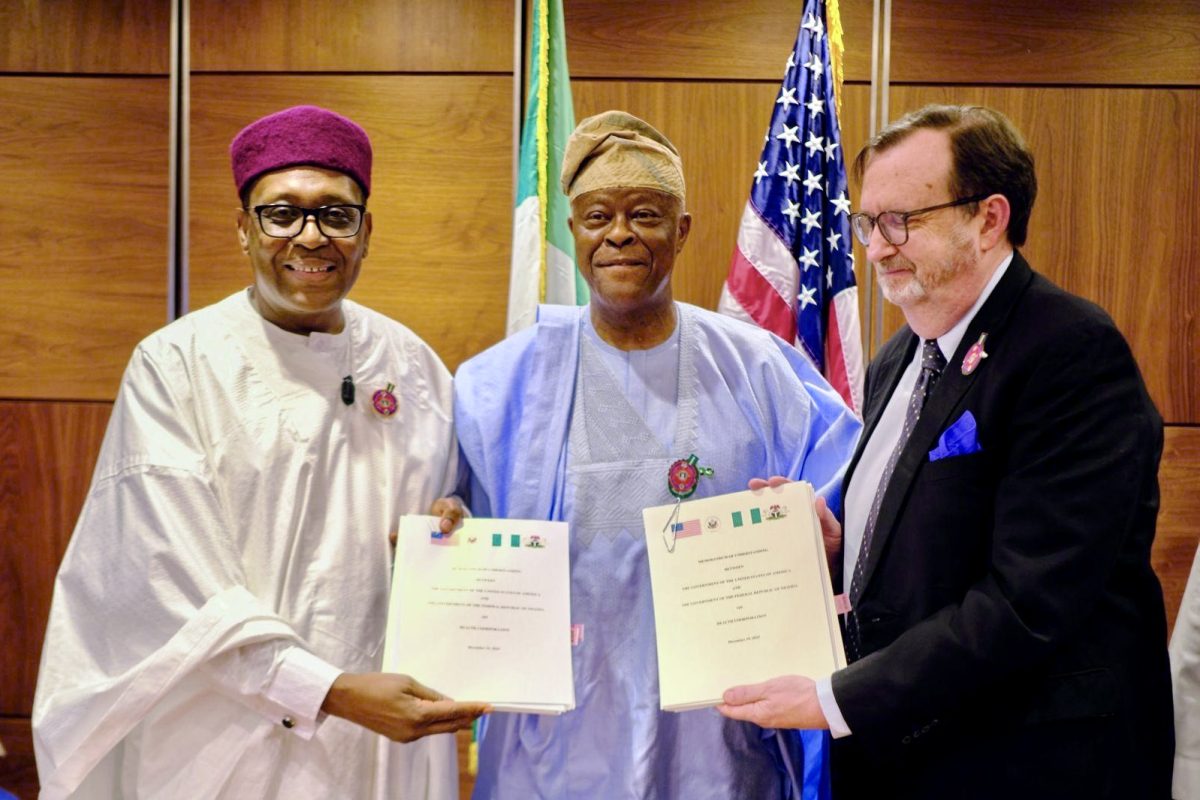
Nigeria did not simply sign a health agreement with the United States.
It signed into a new American model of foreign health assistance that asks recipient countries to put more of their own money into healthcare, open parts of their health systems to stronger external oversight and cooperate on health data and pathogen surveillance.
The agreement can bring billions of dollars into Nigeria’s health sector.
But the controversy now revived by Ghana’s refusal to sign a similar compact is not whether Nigeria needs the money.
It is what Nigeria agreed to disclose, finance and accept in return.
That question has become harder to ignore because the full Nigerian agreement was not originally made public by the Federal Government. A copy of the 41-page signed memorandum has since been obtained and published by Public Citizen, while separate arrangements dealing with data and specimens remain more difficult to scrutinise.
And that distinction matters.
The available Nigerian text does confirm commitments on health data, pathogen specimens, genetic sequence information, audits and co-financing.
It does not, on the evidence currently available, establish that Nigeria agreed to hand over all citizens’ medical records or that NAFDAC surrendered its statutory power to inspect US-supplied medicines in the way Ghana’s president said his country was asked to do.
That is the line between what is documented and what remains an unanswered question.
Ghana Said No. Nigeria Said Yes
Ghana rejected a proposed US health compact in April 2026 after negotiations broke down over concerns about sensitive health data. Reuters reported at the time that the proposed five-year arrangement would have provided about $109 million in US health assistance.
But the issue became much more serious when President John Dramani Mahama publicly explained the decision on September 25 at the Council on Foreign Relations in New York.
Mahama said Ghana’s Health Ministry reviewed the document before it went to Cabinet.
Among the provisions he said were flagged were requirements relating to Ghana’s pathogen profile, medical records, domestic funding and the regulatory treatment of imported medicines.
He said the proposed agreement would require Ghana to give the United States its pathogen profile and medical records.
He also said the document would prevent Ghana’s Food and Drugs Authority from inspecting medicines and medical products entering the country under the programme.
“That was strange,” Mahama said of the medical-record provision.
Of the regulatory provision, he said it was “humiliating”.
He said Cabinet rejected the proposal rapidly and instructed the Health Minister to inform the US ambassador that Ghana would not accept it.
The Ghanaian president’s comments immediately changed the Nigerian story.
Nigeria had already signed its agreement with Washington months earlier.
The question therefore became simple.
Did Nigeria agree to the same things Ghana rejected?
The evidence does not support saying yes.
But it does show why the question is legitimate.
The Nigerian Agreement Is Bigger Than the Headline
Nigeria and the United States signed their health Memorandum of Understanding on December 19, 2025.
The Federal Ministry of Health said it would run from April 2026 to December 2030.
Under the arrangement, Washington expected to provide nearly $2 billion in grants, while Nigeria committed to allocating at least six per cent of executed annual federal and state budgets to health, which the government estimated could mobilise almost $3 billion in domestic financing.
The US version of the announcement put the American commitment at nearly $2.1 billion and described Nigeria’s domestic contribution as the largest co-investment made by any country under the America First Global Health Strategy.
The strategy itself, unveiled by the Trump administration in September 2025, was a major departure from the older US global-health model.
It emphasises bilateral agreements, co-investment by recipient governments, increased country ownership, performance benchmarks and a gradual transfer of responsibility for commodities and frontline health workers to national governments.
The Nigerian deal therefore forms part of a much bigger restructuring.
The US is no longer presenting health assistance simply as a donor-funded programme.
It is increasingly presenting it as a negotiated partnership in which the recipient country must also finance the system, assume more responsibility and accept defined reporting and accountability requirements.
That is the financial logic.
The political and sovereign questions sit inside the fine print.
What Nigeria Actually Agreed to Share
The published Nigerian MoU contains provisions concerning surveillance and outbreak response.
Most significantly, it says Nigeria planned to negotiate a specimen-sharing arrangement under which specimens and related data, including genetic sequence data from detected pathogens with epidemic potential, could be provided on a case-by-case basis after approval by a data and specimen governance committee.
The arrangement was envisaged for five years, renewable for another five years by mutual agreement.
That is important because pathogen data can be extraordinarily valuable.
Genetic sequences help scientists identify how pathogens change, track outbreaks and develop diagnostics, medicines and vaccines.
But they can also have scientific, commercial and strategic value.
That is why pathogen-sharing has become one of the most sensitive issues in the new American health agreements.
Public Citizen, after examining several bilateral specimen-sharing agreements, reported that the US model permits onward sharing with other entities and has raised concerns about what countries receive in return for the biological information they provide.
The Nigerian specimen agreement contains at least one protection that is worth noting.
Public Citizen says Nigeria negotiated language under which the US government intends to share relevant findings arising from the use of Nigerian specimens or related data where those findings could support Nigeria’s public-health objectives.
Nigeria and Uganda were also among the countries that secured provisions recognising their contributions in publications and related materials.
Yet the larger issue remains.
A health partnership can involve legitimate sharing of outbreak information without automatically requiring unrestricted access to identifiable patient records.
The distinction matters.
No Evidence Yet of a Blanket Medical-Records Handover
The phrase “medical records” has dominated the political argument since Mahama’s remarks.
But a search of the published Nigerian MoU does not find the phrase “medical records”.
What the Nigerian agreement does contain are requirements concerning health data systems, regulated access to information, programme monitoring and data-sharing arrangements.
The agreement says Nigeria and the US intended to establish a data-sharing arrangement for monitoring the long-term performance of the MoU and accountability to the US Congress.
It says the arrangement would remain in force for five years, renewable for another five, subject to Nigerian laws on the storage of personally identifiable information and respecting ownership, access rights and hosting requirements.
That is a significant obligation.
It is not the same thing as proof that Nigeria agreed to surrender every citizen’s medical history to Washington.
Yet it would be equally misleading to portray the agreement as containing no meaningful data-access provision.
It does.
The MoU also says Nigeria must provide regulated data access or other information required for certain audits.
Those audits can cover selected health facilities, laboratories and programmes.
The published agreement says access can extend to up to five per cent of randomly selected or specified facilities identified by the two governments, subject to the data-sharing arrangement.
It further allows access connected with audits of supply-chain leakage and Nigeria’s domestic co-investment.
And it contains a particularly consequential provision.
Failure to provide requested regulated access or information can result in changes to planned US assistance or discontinuation of the MoU.
Failure to meet commitments under the specimen and data-sharing arrangements can also trigger changes in US assistance or termination.
So the argument is not really about whether data exists in the agreement.
It does.
The unresolved issue is exactly what data can leave Nigeria, in what form, under whose authority, for how long and with what restrictions on onward use.
The related data-sharing agreement is not contained in the published 41-page main document.
The MoU simply points to it in an appendix.
That makes the annex as important as the headline agreement itself.
The 25-Year Claim Needs Care
A March 2026 lawsuit filed at the Federal High Court in Abuja alleged that a related “Specimen Sharing Agreement” could permit certain information and biological materials to remain subject to the arrangement for as long as 25 years.
The suit raised constitutional, privacy and data-protection objections.
But that claim should not be presented as an established term of the signed Nigerian health MoU.
The published main MoU says its specimen-sharing arrangement is for five years, renewable for another five.
So the 25-year allegation belongs to the court challenge and its interpretation of related documents, not to the plainly stated duration in the published main text.
That distinction is crucial for any serious investigation.
Then There Is NAFDAC
This is where Nigeria’s case begins to diverge visibly from Mahama’s description of the Ghanaian proposal.
The Nigerian MoU does mention medicines and regulatory cooperation.
But it does not contain, in the published text, a provision saying NAFDAC has “absolutely no right” to inspect American medicines.
Instead, the agreement refers to the NAFDAC-FDA Mutual Recognition Framework and says Nigeria intends to rely on its regulatory directive on reliance to accelerate evaluation of relevant applications.
In other words, the document points towards faster regulatory assessment.
It does not show a blanket removal of NAFDAC’s regulatory authority.
That matters because NAFDAC remains Nigeria’s national regulator for drugs and related products.
Its published regulatory framework continues to provide for registration and regulatory oversight of imported medicines, while its own materials describe testing and regulatory control of imported and locally manufactured products.
So the claim that Nigeria accepted the precise Ghanaian drug-inspection condition remains unproven from the documents publicly available.
That is not a minor technicality.
It is the difference between regulatory cooperation and regulatory surrender.
Nigeria’s Six Per Cent Promise Is Another Test
The financial side of the agreement may prove more consequential for Nigerians than the diplomatic language.
Nigeria pledged to increase domestic health spending while American funding declines over the life of the agreement.
The published MoU is explicit that Nigerian co-investment must come from money raised directly by the Nigerian government.
Donor and multilateral grants cannot be counted as part of that co-investment.
The transition is designed to shift the burden steadily towards Abuja and the states.
The MoU’s implementation schedule anticipates US-funded frontline workers being moved progressively towards Nigerian financing.
Its workforce table shows thousands of positions shifting during the period of the agreement, with the US-funded component falling to zero by 2030 while Nigerian funding takes over the full stated complement.
This is perhaps the strongest argument for treating the agreement as a financing transformation rather than simply another aid package.
Nigeria is being asked to take ownership.
The question is whether the Nigerian fiscal system can carry it.
The Federal Government reported in 2026 that health spending had risen to 5.2 per cent of the national budget, while the Basic Health Care Provision Fund had increased to ₦299 billion.
President Bola Tinubu’s 2026 budget speech, using a different calculation basis, put health investment at six per cent of the budget excluding liabilities and proposed ₦2.48 trillion for health.
Those figures are not directly interchangeable.
But together they reveal the pressure point.
Nigeria has made a multiyear commitment that depends on sustained domestic financing while the US plans to reduce its role.
The agreement will succeed or fail partly on whether the Nigerian government can keep putting the money behind the signatures.
What Happens When a Country Does Not Sign?
The consequences of refusing the new American model are no longer theoretical.
Zimbabwe rejected an agreement after negotiations broke down over data-sharing concerns, and the Trump administration announced on September 30, 2026 that US global health funding to Zimbabwe would end at the close of the month.
That development is a warning about the changing architecture of US health assistance.
The American strategy is not simply offering more money.
It is attaching the future of that assistance to new bilateral arrangements.
The State Department’s own strategy says future funding can be linked to performance and co-investment benchmarks.
For Nigeria, that creates both an opportunity and a dependency.
The country receives a large financing commitment.
At the same time, Washington retains significant leverage over implementation.
The Nigerian MoU itself states that failure to meet certain information, data-sharing and co-investment commitments could lead to changes in planned assistance or discontinuation.
The Faith-Based Clause
There is another Nigerian-specific provision that deserves closer examination.
The US Department of State publicly described the Nigerian agreement as placing a “strong emphasis” on Christian faith-based healthcare providers.
The main MoU published by Public Citizen goes further than the general language appearing in Nigeria’s own December announcement.
It says the US plans to allocate 10 per cent, approximately $208 million, of funding within the MoU to faith-based service delivery providers, subject to US law.
That provision is unusual.
Public Citizen’s review found Nigeria was the only MoU among the agreements it examined that expressly specified a percentage of US funding for faith-based groups.
The US Embassy has defended the provision by saying Nigeria has about 900 faith-based clinics and hospitals serving more than 30 per cent of the population, and that most are Christian but provide services to Nigerians generally.
That is the US justification.
The unanswered Nigerian question is different.
What safeguards ensure access remains based on health need rather than religious identity?
And how will the government demonstrate that public health benefits from the arrangement are distributed fairly in a country where both Christian and Muslim populations are substantial?
The published agreement says “faith-based”.
The US announcement specifically emphasises Christian providers.
That difference deserves public explanation.
The Transparency Problem Is Now Harder to Defend
Nigeria’s Health Ministry released a detailed summary when the agreement was signed.
But the summary did not reveal every operational provision now visible in the published copy of the MoU.
The US Embassy in Abuja told Premium Times in March 2026 that the agreement was not publicly available.
By August, Public Citizen reported that it had obtained the Nigerian text through US government records and made it available. Public Citizen’s records also show that the Nigerian agreement was among those disclosed through the US Case Act/FOIA process.
That creates an awkward democratic reality.
A Nigerian agreement affecting Nigerian health data, public spending, laboratories, medicines and thousands of health workers became more accessible through an American transparency process than through the Nigerian government’s own public-information machinery.
That is precisely why the latest demand from former Vice-President Atiku Abubakar has gained renewed attention.
Atiku has called on the Federal Government to publish the full agreement and related documents following Mahama’s disclosure.
He said Nigerians should not have to guess what was agreed in their name and specifically asked whether the Nigerian arrangement contains provisions concerning medical information, pathogen samples and NAFDAC’s regulatory authority.
Those are political statements and should be treated as such.
But the underlying request is independently testable.
The documents can answer the questions.
What the Documents Show — and What They Do Not
Documented: Nigeria signed a five-year US health MoU covering April 2026 to December 2030.
Documented: The US commitment is about $2.1 billion, while Nigerian domestic co-investment is projected at about $3 billion.
Documented: The agreement covers disease surveillance, laboratories, medicines, frontline healthcare workers and health-data systems.
Documented: Nigeria agreed to work towards specimen sharing involving pathogen material and genetic sequence data.
Documented: Nigeria accepted defined audit and regulated data-access provisions.
Documented: Failure to satisfy certain data, specimen or financial commitments can affect future US assistance.
Documented: The agreement contains a 10 per cent, approximately $208 million, faith-based service-delivery allocation in the published text.
Not established from the published main Nigerian MoU: that Nigeria agreed to surrender all citizens’ medical records to the US.
Not established from the published main Nigerian MoU: that NAFDAC has lost its general authority to inspect US medicines.
Not established: that the Nigerian and Ghanaian agreements contained identical clauses.
Those distinctions are more important than the political theatre surrounding them.
The Unanswered Questions
The real investigation is now sitting in the annexes.
Where is Nigeria’s full data-sharing agreement?
What categories of identifiable or pseudonymised health information can be transferred?
Can genetic information be transferred outside Nigeria?
Who owns discoveries generated from Nigerian specimens?
Can US agencies pass Nigerian specimens or related data to private companies or other governments?
What precise conditions govern onward sharing?
What happens if Nigeria refuses a data request?
What is the legal role of the Nigeria Data Protection Commission?
How are patient confidentiality obligations under Nigerian law reconciled with the international data-sharing framework?
And does NAFDAC retain full inspection and enforcement powers over US-funded medicines and medical products?
Those are not abstract sovereignty questions.
Nigeria’s National Health Act contains confidentiality protections for patient information, while the Nigeria Data Protection Act regulates the processing and cross-border transfer of personal data. The Nigeria Data Protection Commission says transfers abroad must meet statutory requirements for adequate protection.
That means any international health-data arrangement must ultimately be measured against Nigerian law as well as diplomatic commitments.
Nigeria’s Choice Is Now Entering Its Most Important Phase
Ghana’s decision has reopened a debate that Nigeria thought it had settled when its officials signed the agreement in Abuja.
There is no evidence that Ghana and Nigeria signed identical documents.
There is strong evidence that both were dealing with the same broader American strategy.
And there is now documentary evidence that Nigeria accepted more than the original government summary revealed.
The Nigerian agreement is not simply a cheque.
It is a financing compact, a public-health surveillance framework, a workforce transition plan, a data-governance arrangement and a mechanism through which Washington can monitor compliance with financial and programme obligations.
For Nigeria, the largest unresolved issue may therefore not be whether the deal was worth billions of dollars.
It is whether Nigerians can see the full terms of a bargain involving their taxes, their health institutions, their public-health infrastructure and potentially their most sensitive health information.
Ghana has already shown that governments can say no to terms they consider unacceptable.
Nigeria said yes.
The next question is no longer why Ghana said no.
It is whether Nigeria will now show the public exactly what it said yes to.
Follow us on our broadcast channels today!
- WhatsApp: https://whatsapp.com/channel/0029VawZ8TbDDmFT1a1Syg46
- Telegram: https://t.me/atlanticpostchannel
- Facebook: https://www.messenger.com/channel/atlanticpostng