FG’s $25m Ship Financing: The Nigerian Businesses and Jobs That Could Emerge
For more than 20 years, Nigeria has had an unusual problem: a country surrounded by water, blessed with extensive inland waterways and deeply dependent on shipping, yet struggling to finance the ships needed for Nigerians to capture a larger share of the maritime economy.
That equation may finally be changing.
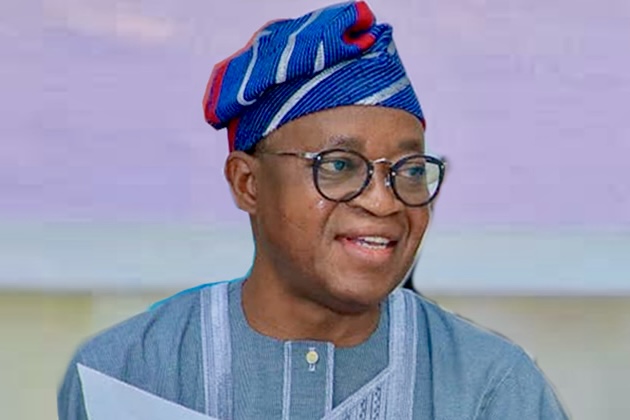
The Federal Government has moved again to operationalise the Cabotage Vessel Financing Fund (CVFF), with Minister of Marine and Blue Economy Adegboyega Oyetola directing the Nigerian Maritime Administration and Safety Agency (NIMASA) and 12 participating banks to accelerate the processing of applications.
The latest development is potentially significant for far more than shipowners. It could affect seafarers, marine engineers, shipyards, logistics companies, vessel maintenance businesses, maritime insurance, banks, freight operators and thousands of Nigerians looking for skilled employment.
But the headline figure requires careful reading.
The Federal Government is not handing every Nigerian shipowner a $25 million grant. The programme provides financing of up to $25 million to successful applicants, subject to assessment, approval and other conditions. NIMASA’s published requirements include Nigerian ownership, an acceptable equity contribution, managerial and operational capacity, feasibility studies and adequate collateral or security.
At an indicative rate of about ₦1,321 to the US dollar, $25 million is equivalent to roughly ₦33 billion. The actual naira equivalent will fluctuate with the exchange rate and the facility itself is dollar-denominated in the programme’s published terms.
That is a huge financing opportunity for a Nigerian company, but equally a huge responsibility
The money is finally moving
The CVFF was established by Section 42 of the Coastal and Inland Shipping (Cabotage) Act 2003 to provide financial assistance for developing indigenous ship-acquisition capacity.
The legislation also provides that the fund receives, among other sources, a 2 per cent surcharge on the contract sum performed by vessels engaged in coastal trade, together with certain tariffs, fines, waiver fees, interest and loan repayments. Beneficiaries are Nigerian citizens and shipping companies wholly owned by Nigerians.
Yet the fund became one of Nigeria’s most striking examples of policy stuck between legislation and implementation.
In April 2025, Oyetola directed NIMASA to commence disbursement, describing the move as an attempt to break more than two decades of delay. The Federal Government subsequently launched the CVFF application portal in January 2026 to create a more structured and transparent application process.
Oyetola said at the launch:
“The CVFF is structured as a strategic development instrument.”
He added that the objective was to reduce dependence on foreign-flagged vessels, retain more economic value domestically, create employment for Nigerian seafarers and stimulate shipbuilding, ship repair and other maritime services.
That ambition is now being tested by the numbers.
92 applications, but only one has reached final approval
According to the latest figures released by Oyetola, NIMASA has received 92 applications. Twenty have been forwarded to the approved Primary Lending Institutions, while only one has so far been reviewed and forwarded for approval.
That creates perhaps the most important question surrounding the programme:
Can Nigeria prevent another generation of shipowners from spending years waiting for financing?
The concern is not theoretical.
The CVFF has already survived several attempted launches and disbursement announcements. In 2023, the House of Representatives backed the release of about $360 million held in the CVFF structure after an investigation into the fund. NIMASA later described the broader intervention as about $700 million, with a financing structure involving NIMASA, commercial banks and beneficiary equity.
In April 2025, NIMASA said the financing structure would comprise 50 per cent from NIMASA, 35 per cent from banks and 15 per cent equity from shipowners. The agency also expanded the number of Primary Lending Institutions from five to 12 in an attempt to strengthen risk assessment and improve access.
This explains why the oft-quoted “$700 million fund” and earlier “$360 million” figure can appear contradictory. The 2023 House investigation found $360 million represented the government-side 50 per cent of a broader financing arrangement, while the later NIMASA figure refers to the intervention framework as a whole.
The biggest opportunity may be outside the ships
For Nigerians looking for jobs and businesses, the most important part of the announcement may not be the $25 million itself.
A ship does not operate in isolation.
Every additional vessel can generate demand for captains, engineers, deck officers, ratings, electricians, welders, fabricators, ship surveyors, safety specialists, accountants, procurement professionals, lawyers, insurers, freight forwarders, chandlers, caterers, security personnel, information-technology specialists and maintenance contractors.
NIMASA itself has identified the wider ecosystem likely to benefit, including shipyards, marine engineering, vessel maintenance and maritime logistics. Oyetola said the programme could generate more than 30,000 direct and indirect jobs.
That 30,000 figure, however, should be understood as a government projection rather than an independently audited employment forecast. The actual number of new jobs will depend on how many vessels are ultimately financed, their types and sizes, their operating contracts, local-content requirements and whether supporting infrastructure expands alongside them.
That distinction matters.
Nigeria has seen many government programmes accompanied by impressive job projections that did not translate into comparable numbers of sustainable private-sector jobs.
The real test this time will be whether CVFF-funded vessels generate recurring commercial activity.
A new market for marine engineers and technical workers
Nigeria’s shortage of vessel-financing capacity has historically affected more than shipowners.
Where companies cannot afford modern vessels, they cannot create sustained demand for workers who build, operate and maintain them.
NIMASA has been trying to tackle the manpower side simultaneously. Oyetola said 222 seafarers had received free professional training, 333 cadets had completed academic training and obtained degrees, 135 Nigerian Seafarers Development Programme cadets had obtained Certificates of Competency, and 7,059 Nigerian seafarers had been placed onboard vessels to obtain sea-time experience.
The government’s wider scorecard also indicates that average seafarer earnings have risen significantly, although these are government-reported figures rather than an independent industry-wide wage survey.
For young Nigerians, this points to an opportunity that is often overlooked.
The biggest maritime employment opportunities may not necessarily be obtained by people who want to become shipowners. They may go to people who acquire valuable technical skills.
Marine engineering, marine electrical systems, welding and fabrication, naval architecture, vessel operations, logistics, maritime law, safety compliance and shipping documentation could become more commercially valuable as the indigenous fleet expands.
Nigerian shipyards could become major beneficiaries
Another important question is where the vessels financed under the CVFF will be purchased, repaired and maintained.
If most of the money leaves Nigeria immediately through foreign vessel purchases and foreign technical services, the domestic multiplier will be weaker.
But if a meaningful share of procurement, fabrication, repairs, maintenance and technical services takes place locally, the economic impact could be considerably larger.
NIMASA has been pushing in that direction. In 2025, the agency said Nigeria had demonstrated the capability to undertake sophisticated vessel repair and construction work locally. By late 2025, NIMASA had accredited 27 shipyards for ship repair, dry-docking and vessel construction services, with facilities concentrated in Lagos, Rivers and Delta states.
That creates an important potential business chain:
CVFF financing → vessel acquisition → vessel operations → maintenance → repairs → engineering → logistics → employment.
The more of that chain Nigeria captures locally, the greater the economic value of the fund.
The foreign-ship problem is finally being confronted
The CVFF is also being deployed alongside a much harder regulatory push.
NIMASA has recently strengthened enforcement of indigenous participation requirements under the Cabotage regime. Under the enhanced enforcement approach, entities requiring vessels for cabotage operations are expected to use vessels satisfying applicable Nigerian ownership, registration, manning and construction requirements and registered in the appropriate Special Register.
That could fundamentally alter the commercial equation.
For years, Nigerian shipowners have complained that they cannot compete with foreign operators without access to affordable finance, yet struggle to build capacity because lucrative contracts are difficult to secure.
The government is now attempting to attack both sides simultaneously: finance the local fleet and tighten the rules governing indigenous participation.
Oyetola has also warned that the era of indiscriminate waivers for foreign vessels is coming to an end, reflecting the administration’s stated intention to strengthen Nigerian ownership and participation.
This is potentially where the CVFF becomes much more than a loan programme.
Nigeria has a market large enough to justify the investment
The economic scale of Nigeria’s maritime market provides the rationale for the intervention.
UNCTAD’s 2024 maritime profile for Nigeria recorded 971 ships under ownership with about 9.709 million deadweight tonnes, while the national-flag fleet was listed at 6.825 million deadweight tonnes. Nigeria also recorded more than 1.46 million TEUs of container port throughput in the same profile.
That tells the story in simple terms: there is substantial maritime activity, but the challenge is getting Nigerians to capture a larger share of its commercial value.
The Federal Ministry of Marine and Blue Economy has separately reported that agencies under the ministry generated ₦1.83 trillion in 2025, up sharply from ₦700.79 billion in 2023. The government attributes the increase to reforms, digitisation, stronger revenue assurance and efforts to reduce leakages.
The CVFF is therefore arriving at a time when Abuja is trying to turn the maritime economy into a more significant source of revenue, investment and employment.
But there is a major accountability question
The biggest danger is that the CVFF becomes successful financially but fails economically.
A shipowner can receive financing, buy a vessel and still struggle if the vessel has no profitable contracts.
That is why access to finance alone cannot solve Nigeria’s maritime problem.
There must be cargo availability, predictable regulation, workable port infrastructure, affordable insurance, efficient customs procedures, reliable security, functioning shipyards and sufficient demand for Nigerian-owned vessels.
Even the NIMASA financing model recognises the need for lender discipline and risk assessment. The agency says the banks are expected to play a central role in ensuring credible operators receive funding.
There are also legitimate concerns about the history of the fund.
The Guardian reported in 2026 that stakeholders had raised questions about differing estimates of the fund’s accumulated balance and had called for greater scrutiny, including a forensic examination of historical transactions. Those concerns reflect a wider challenge: after more than two decades, Nigerians deserve not merely disbursement but an auditable trail showing what entered the fund, what was earned, what was spent and what is now available for lending.
Transparency will ultimately determine whether the CVFF is remembered as an economic intervention or another expensive government promise.
The global environment is becoming more favourable
There are signs that Nigeria’s maritime operating environment is improving.
In August 2026, the United States Coast Guard lifted a 12-year Condition of Entry imposed on vessels arriving from Nigerian ports. The government said the change followed four assessments of Nigeria’s maritime security framework and could reduce additional security procedures, improve vessel turnaround and strengthen Nigeria’s attractiveness to international shipping.
That is relevant to the CVFF because shipping is ultimately a confidence business.
A Nigerian-owned fleet needs contracts. Contracts need reliable vessels. Reliable vessels need financing. And financing works best when the wider regulatory and security environment supports commercially viable operations.
What the CVFF could mean for ordinary Nigerians
For most Nigerians, the opportunity is unlikely to arrive as a $25 million cheque.
It could arrive as a job.
It could be a marine electrician hired by a vessel operator. A welder working at a shipyard. A graduate trained as a deck officer. A logistics company supplying vessels. A software developer building maritime tracking tools. An insurance professional handling marine risks. A local manufacturer supplying safety equipment. A caterer providing provisions to vessels. Or an entrepreneur building a specialist maintenance business around the emerging fleet.
The real prize is therefore not simply who gets the CVFF money.
It is how much economic activity the money creates after it leaves the bank.
Oyetola has put the objective bluntly:
“Our objective is to ensure that more Nigerian-owned vessels operate on Nigerian waters, more Nigerian businesses participate in our maritime economy, and more Nigerians benefit from the wealth our waters generate.”
That is a much bigger promise than vessel acquisition.
It is a promise to change who owns the assets, who receives the contracts, who provides the services and who earns the wages generated by Nigeria’s maritime economy.
The clock is now ticking
There is no shortage of ambition.
The CVFF portal is live. NIMASA says 92 applications have been received. Twenty have reached the participating lenders. Twelve institutions have been appointed to support the financing process. The facility is expected to carry a single-digit interest rate, with NIMASA previously outlining a two-year moratorium and eight-year tenure.
But only one application had been reviewed and sent forward for approval at the time of the minister’s latest intervention.
That is the contradiction at the heart of Nigeria’s $25 million ship-financing story.
The country may finally have the money, the policy framework and the applicants. What it has not yet demonstrated is the speed and consistency required to turn financing into ships, ships into contracts, and contracts into sustainable Nigerian jobs.
After more than two decades, that is the real test.
Follow us on our broadcast channels today!
- WhatsApp: https://whatsapp.com/channel/0029VawZ8TbDDmFT1a1Syg46
- Telegram: https://t.me/atlanticpostchannel
- Facebook: https://www.messenger.com/channel/atlanticpostng