A comprehensive investigative report detailing the unfolding crisis in Nigerian embassies, where 450 foreign service officers in 109 missions face six-month unpaid salaries. An in-depth analysis of budget mismanagement, delayed ambassadorial appointments, and the far-reaching impact on Nigeria’s global diplomatic standing.
ABUJA, Nigeria — In a scandal that threatens to undermine Nigeria’s global diplomatic standing, recent revelations expose a systemic crisis across Nigerian embassies abroad. At least 450 foreign service officers serving in 109 missions have not received their salaries for the past five to six months—a situation that has plunged these embassies into disarray, leaving staff unable to meet essential living expenses and operational costs.
This explosive report lays bare the financial negligence, administrative dysfunction, and long-standing mismanagement that have culminated in this embarrassing debacle.
The Grim Reality on the Frontline
For months now, foreign service officers stationed in key embassies across the globe have been grappling with severe financial distress. With salaries withheld for up to half a year, many are forced to dip into personal savings just to cover basic expenses such as rent, school fees for their children, and even daily necessities.
The growing unrest among diplomatic staff is not just a matter of personal hardship—it is a ticking time bomb that could jeopardise Nigeria’s diplomatic efficacy and international image.
Acting spokesperson for the Ministry of Foreign Affairs, Kimiebi Ebienfa, has acknowledged the dire straits. He stated:
“The ministry is aware of the difficulties faced by the missions abroad, and the leadership is working seriously to address the situation.”
Yet, his reassurances appear to fall on deaf ears as financial mismanagement continues unabated.
A Deep-Rooted Budgetary Quandary
An examination of the ministry’s expenditure reveals an alarming trend. Over the past four years, the Ministry of Foreign Affairs has disbursed a staggering N251.71bn on salaries—a figure that should, in theory, have underwritten smooth operations across its international missions. However, the reality is starkly different.
In 2021, the ministry’s budget stood at N73.14bn with N34.38bn allocated for personnel. The following year, 2022, saw an allocation of N88.09bn, of which N55.27bn was consumed by salaries. In 2023, a further N98.11bn was approved, with N62.30bn dedicated to personnel costs, and in 2024, a massive N160.06bn was appropriated, with N99.76bn earmarked for salaries.
Despite this apparent upward trajectory, the proposed 2025 budget—totalling N353.77bn, with N214.64bn set aside for personnel, N72.24bn for overheads and N66.82bn for capital expenditure—has yet to be fully realised at the embassies, with delays in budget approval exacerbating the crisis.
This chronic underfunding, compounded by delays in budgetary disbursement, has not only resulted in unpaid salaries but has also led to the accumulation of debts. Service providers, left unpaid for months, have initiated legal proceedings to recover dues—a sign of deep institutional decay.
Renovation or Redemption? Misplaced Priorities
Adding salt to the wound is the simultaneous announcement of a N53bn proposal to renovate 103 foreign missions this year. While these funds are ostensibly intended for refurbishing chanceries, staff quarters, ambassadors’ residences, and the procurement of official vehicles and office furniture, the prioritisation of cosmetic upgrades over the fundamental welfare of embassy staff is both perplexing and infuriating.
Specific allocations for renovation further highlight the disparity. Missions in Abidjan, Banjul, Brazzaville, Port of Spain, Caracas, Kingston, Libreville, Buenos Aires, and Niamey have been earmarked with amounts ranging from N409m to N899m.
These figures underscore an administrative emphasis on physical infrastructure rather than the very lifeblood of diplomatic service: the personnel who are the face of Nigeria abroad.
Leadership Vacuum and Diplomatic Dysfunction
At the heart of this crisis is a glaring leadership vacuum that continues to plague Nigerian diplomacy. With the recall of 83 ambassadors in September 2023 under President Bola Tinubu’s reassessment of Nigeria’s foreign policy, the appointment of competent new envoys has been stymied by financial shortfalls and bureaucratic inertia.
Senior officials within the Presidency and the Foreign Service have estimated that nearly $1bn is required to clear the backlogs of bills and adequately finance the nation’s 109 missions, including 76 embassies, 22 high commissions, and 11 consulates globally.
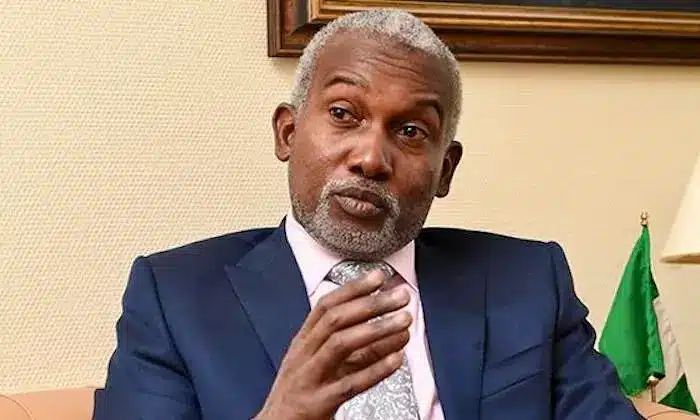
Minister of Foreign Affairs, Yusuf Tuggar, bluntly acknowledged the shortfall.
“There is no point sending out ambassadors if you do not have the funds for them to even travel to their designated country and to run the missions effectively,” he remarked during a ministerial briefing in May 2023.
His words resonate with an undeniable truth: without financial stability, even the most seasoned diplomats are rendered ineffective.
Moreover, critics have pointed out that diplomatic appointments in recent years have too frequently been treated as rewards for political loyalty rather than based on merit. This practice has resulted in a leadership class that is neither adequately trained nor financially empowered to advocate for their missions’ operational needs.
Foreign affairs analyst Charles Onunaiju argues that the absence of a substantive head of mission severely undermines the capability of embassies to negotiate with government officials, manage funds, or even secure timely salary payments for their staff.
A Historical Burden of Neglect
The roots of this crisis extend far deeper than recent budgetary mishaps. Ex-diplomat Rasheed Akinkuolie traces the problem back to the 1983 coup and the subsequent era of military rule—a period when the importance of Nigeria’s international diplomatic presence was grossly underestimated.
“The underfunding of Nigerian diplomatic missions started from around 1983, with the overthrow of the second civilian administration and long military rule. The military did not appreciate the critical role Nigerian missions play in economic, social, security, and the image of Nigeria abroad,” Akinkuolie contends.
This historical neglect has left an indelible mark on the current administration’s approach to funding and management. Even with increased budgetary allocations in recent years, the systemic inefficiencies and a persistent culture of underfunding have rendered these financial injections ineffective.
Akinkuolie laments that the 2025 budget, when spread across 109 missions, amounts to a paltry sum—hardly enough to sustain operations, let alone invest in future diplomatic capital.
The Currency Conundrum and Operational Inefficiencies
Compounding the problem of insufficient funds is the issue of fluctuating exchange rates. Allocations in naira, which are then subject to the vagaries of the forex market, have eroded the real value of the funds available to the missions.
This issue is so critical that Akinkuolie has proposed a return to dual budgeting—allocating funds in both US dollars and naira—to stabilise operations.
“The old practice of budgeting in USD and naira will solve this perennial problem. The allocation to missions should be remitted directly to missions in USD by the Central Bank,” he advises, a suggestion that has yet to receive the political attention it merits.
Such operational inefficiencies have had a direct impact on staff morale and retention. Numerous officers have reportedly been forced to use personal funds to cover even the most basic consumables such as printer ink and paper.
This erosion of professional resources is driving talent away from the service, with some opting to seek positions with international organisations like the United Nations—a trend that poses a grave threat to Nigeria’s diplomatic effectiveness.
The Urgent Call for Reform
The cascading crises of unpaid salaries, mounting debts, delayed ambassadorial appointments, and operational inefficiencies call for urgent, systemic reform.
As Nigeria stands at a critical juncture in its foreign policy, the need for a professional, merit-based approach to diplomatic appointments has never been more pressing.
The current system, steeped in political patronage and historical neglect, has proven incapable of sustaining the nation’s international interests.
Without decisive action, Nigeria risks not only further tarnishing its global image but also compromising the safety and livelihoods of its diplomatic staff. The absence of competent leadership and the failure to secure timely funding have created an environment where corruption, inefficiency, and bureaucratic inertia thrive.
As one anonymous embassy official lamented:
“This is mid-February, and the budget has not been approved or signed. The debts are piling up, and some service providers have dragged some missions to court for redress.”
The way forward must involve a radical overhaul of budgeting practices, coupled with a reinvigoration of the diplomatic corps. A dual-currency budgeting system, direct remittances to embassies, and a meritocratic system for ambassadorial appointments are not merely desirable—they are essential for Nigeria to reclaim its standing on the global stage.
In conclusion, the crisis unfolding in Nigeria’s diplomatic missions is a potent symbol of a broader malaise within the nation’s foreign affairs management.
The failure to pay salaries, the misallocation of funds, and the systemic underfunding are not isolated incidents but are indicative of deep-rooted structural failings that have persisted for decades.
With each passing day, the situation worsens, risking not only the welfare of the officers but also the credibility and influence of Nigeria abroad.
The government’s recent efforts to secure the 2025 Appropriation Act may offer a glimmer of hope, but unless these measures are accompanied by sweeping reforms in management, transparency, and accountability, the diplomatic corps will continue to operate under conditions that are not only unsustainable but potentially damaging to Nigeria’s international interests.
As the nation grapples with these challenges, it is imperative that both political leaders and foreign policy experts take heed of the warnings. The crisis at 109 embassies is not just an administrative failure—it is a clarion call for change.
For Nigeria to maintain its stature on the world stage, the nation must prioritise the welfare of its diplomatic personnel, ensure timely and adequate funding, and restore confidence in its international missions.
Failure to do so could see a once-proud diplomatic legacy crumble under the weight of bureaucratic neglect and chronic underfunding.
Atlantic Post will continue to follow this developing story closely and bring you the latest updates on Nigeria’s diplomatic crisis as well as insights into the proposed reforms that may yet reshape the nation’s foreign affairs landscape.